

We Survived the SaaSpocalypse (Here is Our Next Move)
Published 14-MAR-2026 17:11 P.M.
|
20 minute read
Disclosure: S3 Consortium Pty Ltd and its associated entities may hold direct or indirect interests in securities referred to in this publication and may receive fees or other forms of consideration from entities mentioned. These interests and arrangements may create a potential conflict of interest in the preparation of this material.
The information contained in this communication is provided for general information purposes only and may relate to speculative investments. It does not constitute financial product advice, and has been prepared without taking into account your personal objectives, financial situation or needs. You should consider obtaining independent financial advice before making any investment decision.
Any forward-looking statements are uncertain and not a guaranteed outcome.
Day 21 and we still have our job...
You probably do too?
There are a few theories going around that major AI companies going into giant capital raises need to make BIG announcements...
Announcements with aggressive, near term timelines on when their AI will totally upend the world as we know it...
All this to help close out funding rounds.
And then social media runs with it and scares the bejesus out of everyone, including the markets.
Kinda like when a small ASX stock suddenly releases a bunch of “exciting” announcements in quick succession followed by a cleansing statement = here comes a cap raise.
Ever had a breathless stockbroker call you and generate huge amounts of FOMO about a company to get you to put money into a capital raise?
(it works)
Then a week later when the stock is trading at 20% below the placement price you wonder why you got so hot and bothered on the phone call?
All these “AI is going to disrupt everything” announcements are sort of like that... except at a global scale.
Has your company ditched its software systems for AI vibe coded replacements yet?
Probably not.
Two weeks ago we said the “SaaSpocalypse” selloff was overdone:
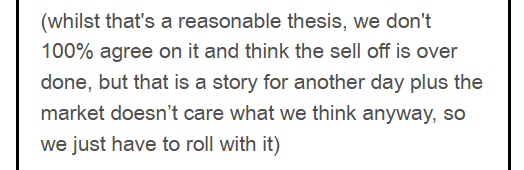
We think there are currently some great ASX listed SaaS businesses out there with share prices that have taken a big haircut in recent weeks, and valuations are very attractive during peak SaaSpocalypse fear.
We just took a pretty big swing at a placement into an ASX listed SaaS company, we can’t say who yet but we can reveal once it starts trading again on Monday.
(we also invested in a different, private SaaS company this week, we think there is a lot of value to be found in SaaS right now).
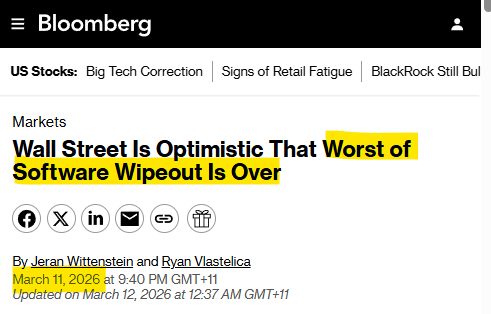
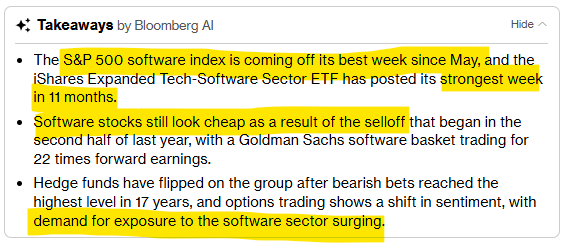
We also saw this article about Wall Street’s emotions on the matter:
(source)
We’ll announce the company we Invested in on Monday.
And what about the Iran conflict that's also been roiling the markets?
It's hard to disagree that US President Donald Trump has excellent political instincts.
With US mid term elections coming up, and Trump having been voted in on a “no new major wars” promise, we think he will be looking to wind down the Iran situation very soon.
Once whatever the strategic objective for hitting Iran at this specific time has been achieved.
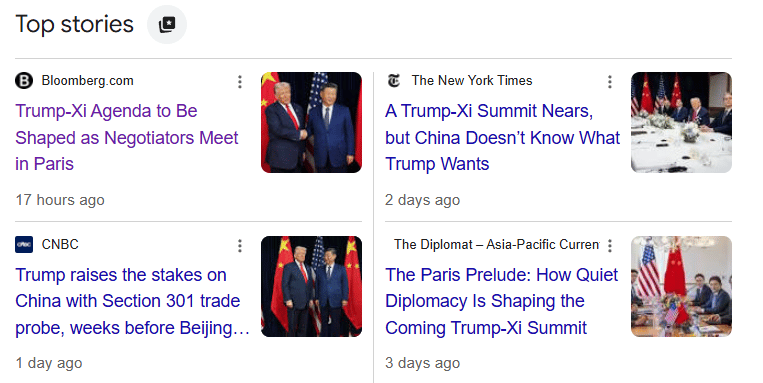
We think a lot of the “use of US military force” lately has been to “set the scene” for (and provide a timely reminder of US military might ahead of) an upcoming meeting between Donald Trump and China’s President Xi Jinping.
The Trump-Xi meet in China is scheduled from March 31st to April 2nd.
So why attack Iran now?
Iran supplies roughly 13–20% of China’s oil imports.
(“did” supply, past tense now...)
A couple of months ago the USA snatched up the leader of Venezuela.
Coincidentally, Venezuela supplies about 3–4% of China’s oil imports
(“did” supply, past tense now...)
Whether deliberate or a coincidence, messing with China’s supply of important resources could step up the tit-for-tat on withholding of critical minerals supply by China.
OR be an important bargaining chip in the upcoming Trump-Xi meeting in two weeks.
(source)
We suspect that the world should get a bit less nuts shortly after the Trump-Xi meeting.
Which will be good for investor confidence and markets.
(but who knows what could happen - despite Trump's best laid plans things can always get out of control)
Whatever the outcome of the meeting, we think the USA is going to keep going hard at rebuilding their domestic supply of metals critical for military, AI and robotics.
Today we will provide a quick update on our favourite macro themes for this year:
Gold and silver (financial system instability and increased money printing from AI taking jobs, increased war)
Military metals (rebuilding of militaries, equipment and ammo as world moves to war footing)
AI metals (needed to build data centres, AI chips and energy transport)
Robot metals (needed to build the 10 billion robots forecast to be built next 10 years)
Energy (needed to power AI) and Oil & Gas (still the lifeblood of the world, which more people will realise if the price keeps going up from the new Middle East war)
Here is quick update the macro themes we are Investing in for 2026:
Silver
We are still very bullish on silver and silver stocks.
Back in 2024, I was watching the silver price like a hawk (as usual).
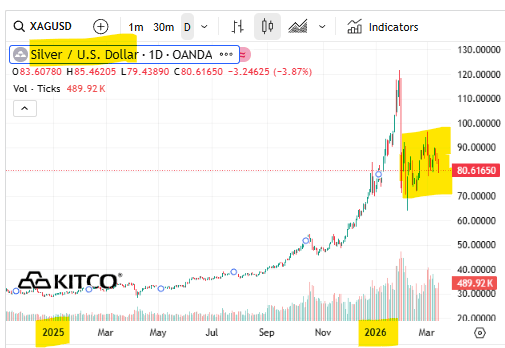
Earlier that year it rose above US$30 for the first time in over a decade (happy days!)
But then it dropped from highs of US$34 down to lows of US$28 in a few weeks.
“Oh no...”
BUT - If you had told me that just 18 months later, silver would be trading above US$80 for most of the last 3 months, I would have rested easy
(and wouldn't have believed you given what a never ending grind it was just to get above US$30).
Anyway, after a face melting run in 2025, silver has entered into a sideways pattern at the highest range in its history.
(source)
The past performance is not and should not be taken as an indication of future performance. Caution should be exercised in assessing past performance. This product, like all other financial products, is subject to market forces and unpredictable events that may adversely affect future performance.
Our favourite momentum and technical analyst, Michael Oliver, is calling a US$300 to US$500 silver price over the next 6 months.
He's the guy who correctly called the triple top silver breakout at $36 back in early 2025.
He also says there's going to be a correction on the journey to those targets - which could be what we experienced over the past two months.
Of course he can also get things wrong - it's just one prediction that may not eventuate.
But if silver DOES do something silly like go to US$200 or US$300 it's game on for a second (hopefully much stronger) rally in silver stocks.
Even if we only get a fraction of what Oliver is predicting and silver runs to US$150 per ounce we think silver stocks could do really well.
Check out that video of Oliver here:
Silver Price Breaks the 50-Year Range, Most Gains By Summer | Michael Oliver
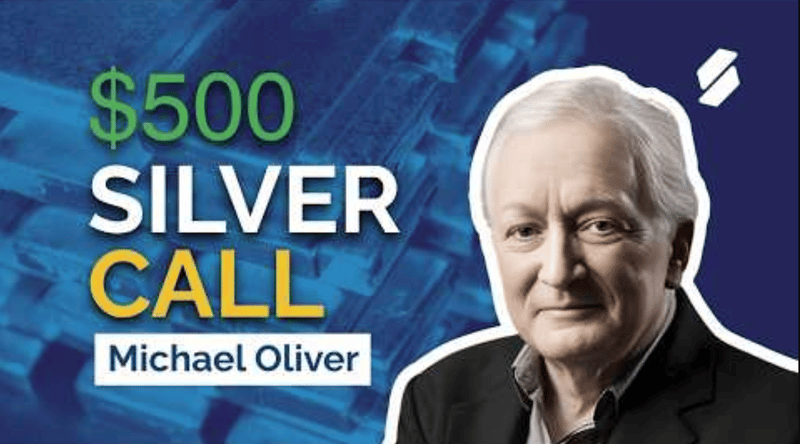
(his predictions are way higher than we are personally hoping for — but it's a fun “confirmation bias” listen if you're long on silver like we are)
We think the silver price needs to consolidate the recent gains - go sideways for a bit, prove the re-rate is real - for the broader market to start believing and the big boys to start buying.
Once that happens, institutional capital can adjust their models to a higher floor price for silver, and generalists can feel comfortable knowing the price rally wasn't a temporary flash in the pan.
If you're a glass-half-full person, this is the consolidation before the next leg higher.
If you're a glass-half-empty person, silver just fell 47% from its all-time high and you're still underwater from January. It could stay sideways for a long time OR even go another leg lower.
We're in the glass-half-full camp. Obviously.
(we're also the people who are overweight in silver and silver stocks, checking the silver chart at 4am, so our judgment should probably be questioned)
Once again - all commodity prices are extremely hard to predict, and there’s no guarantee that any future silver price will eventuate.
We are still bullish on silver and maintain our overweight position.
Here are all the silver stocks we are Invested in (click the link to read our Investment Memo for the stock):
- SS1 ($301M) - Silver (& antimony) in Nevada, USA.
- IVR ($188M) - Silver in South Australia.
- BKB ($119M) - Silver in Texas (gold in Nevada), USA.
- WCE ($67M) - Silver in Western Australia.
- MTH ($63M) - Silver (and gold) in Mexico.
- RCM ($55M) - Silver in New South Wales.
- AVM ($47M) - Silver in Mexico (and gold in Victoria).
- PFE ($10M) - Silver (& antimony) in Arkansas, USA.
(you can see all our live holdings of all our Portfolio stocks at any time here)
Gold
We are also bullish gold right now.
It looks to us like every major trend in the world right now ends with more money getting printed.
War costs money.
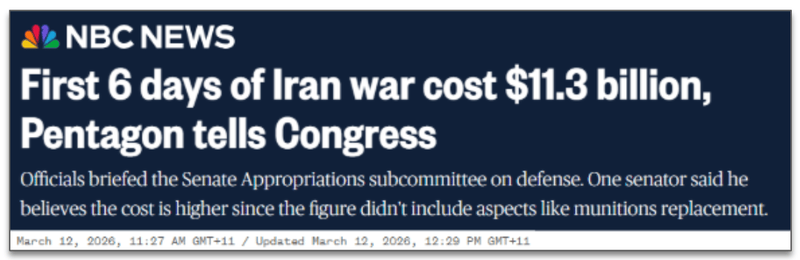
The Pentagon told Congress this week that the first six days of the Iran war cost US$11.3 billion.
The CSIS estimated the first 100 hours ran at ~$900 million per day.
And that number doesn't even include the cost of deploying all the military assets before the first bomb dropped.
If this war drags on - or escalates - those costs go exponential.
The Pentagon has already prepared a $50 billion supplemental budget request to replace Tomahawks, Patriots, and missile interceptors used in the first week alone.
(also good for critical military metals - comments on this theme coming next)
Where does that money come from?
Most countries are already running deficits. The US is sitting on $38 trillion in debt and so the US$50BN (and any other costs) will come from more debt (by printing it...)
(More money printing usually means the value of that currency depreciates against gold)
Then there's the US dollar’s status as the global reserve asset...
The US dollar's reserve currency status is largely built on the petrodollar system - Saudi Arabia prices oil in USD, and the US provides an implicit security guarantee.
That arrangement has underpinned global dollar demand for 50 years.
Now, with Iran launching strikes on gulf states and blocking oil and gas shipping lanes - the Gulf States find themselves in the middle of a war they didn’t start.
We have no idea what happens next - but surely there is a risk now that the Gulf States question that security guarantee that is part of the exchange for USD oil/gas pricing...
If Saudi Arabia, the UAE, or Qatar start even partially moving away from USD-denominated energy trade - and that risk is real - the structural demand for US dollars takes a hit.
A weaker dollar means everything priced in dollars (like gold) goes up.
We haven’t even spoken about Europe yet - Europe could be one of the most impacted by the war (European gas prices are up over 100% since the war started). (source)
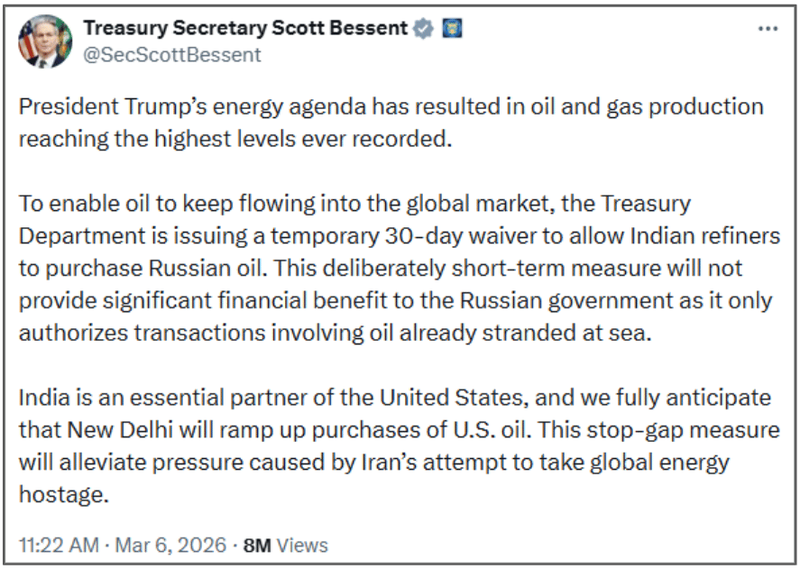
And then this week the US Treasury Secretary Bessent issued a 30-day waiver allowing India to buy Russian crude that's stranded at sea. Trump said they're "waiving certain oil-related sanctions to lower prices."
(source)
The same Russia that was the great adversary two years ago...
So to summarise:
War = money printing.
Deficits = money printing.
Societal instability from AI = money printing.
Potential USD reserve status erosion = dollar weakness.
All roads lead to the same place.
Gold is the asset that can't be “printed out of thin air”.
And in a world where the answer to every major problem is "print more money," that makes gold very attractive to us.
Again - it's very hard to predict commodity prices - so there’s no guarantee the gold price will always go up, it can go sideways and down too.
Here are all of the gold stocks we hold in our Portfolio:
- TTM ($279M) - Gold in Ecuador (projects include copper).
- KAU ($192M) - Gold producer in Tasmania and Victoria.
- RML ($120M) - Gold in Idaho (project includes tungsten and antimony).
- BKB ($119M) - Silver in Texas (and gold in Nevada).
- MTH ($63M) - Silver in Mexico (project includes some gold).
- AVM ($47M) - Silver in Mexico (and gold in Victoria).
- BMG ($40M) - Gold in Western Australia.
- BPM ($31M) - Gold in Western Australia.
- TG1 ($25M) - Gold in Western Australia (projects include copper and other metals).
- PUR ($22M) - Gold in Argentina (and lithium in Argentina).
- LSR ($18M) - Gold in Western Australia (and copper in Chile plus heavy rare earths in Arizona).
- L1M ($5M) - Gold in Queensland.
Military metals
This is probably the most topical and where we are seeing the most urgency.
(while gold and silver spend some time catching their breath and going sideways)
Military metals - the minerals that go into missiles, jets, ships, tanks, electronics, and armour plating...
We saw the following article which said the first six days of war in Iran had cost the US ~US$11.3BN...
(source)
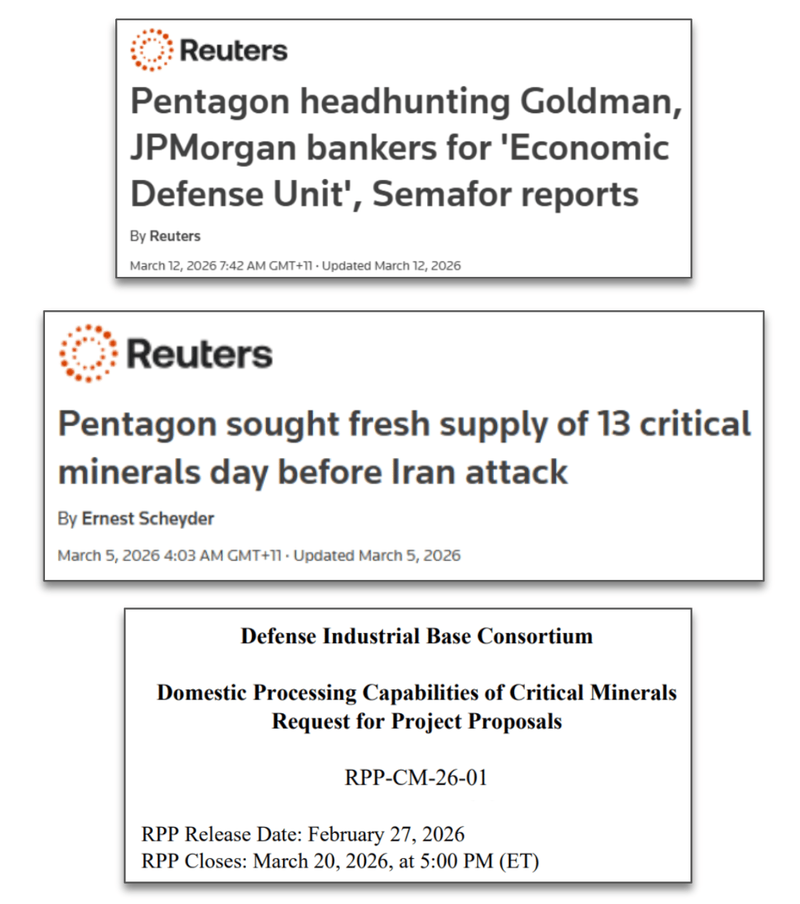
Three things happened in quick succession over the last few weeks that tell you everything about how seriously the US is taking this:
- 2 days ago - The Pentagon was reported to be headhunting investment bankers from Goldman Sachs, Morgan Stanley, JPMorgan and Bank of America to build an "Economic Defense Unit" - a team to help deploy funds over three years into projects that support the military.
- 12 days before that - The Pentagon sent a formal solicitation to the Defence Industrial Base Consortium, a network of over 1,500 companies asking for proposals to mine, process, or recycle 13 specific critical minerals.
- And on that same day - The DIBC opened up funding for projects - up to US$500 million per proposal - that can produce critical minerals inside the US. The deadline for proposals is March 20. That's seven days from now.
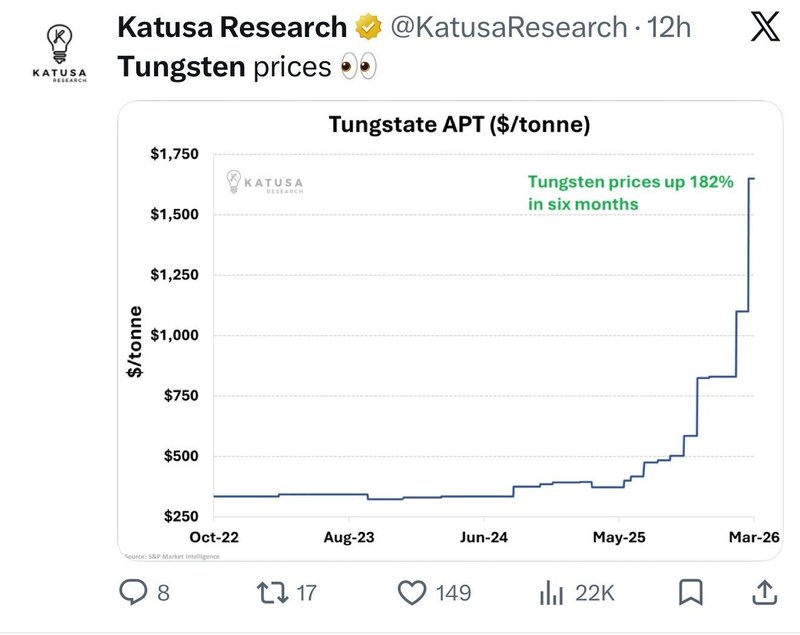
The standout move this week was in tungsten - where prices just keep running.
(makes sense for it to run in a war scenario)
Tungsten hit another all time high this week - up 124% since the start of the year. More than 7x higher than at the beginning of 2025:
(source)
China controls ~75% of global tungsten supply. Chinese exports have effectively fallen to zero and no US or Canadian tungsten concentrate has been produced since 2016.
Here are all of our military metals exposures:
- SS1 ($301M) - Silver (& antimony) in Nevada, USA.
- RML ($120M) - Gold in Idaho (project includes tungsten and antimony).
- LKY ($70M) - Antimony and rare earths in California.
- AW1 ($49M) - Indium (& gallium) in Utah, copper in Canada (includes base metals).
- VKA ($46M) - Tungsten in Nevada.
- OD6 ($29M) - Fluorspar in Nevada (plus rare earths in Western Australia).
- ION ($29M) - Rare earths (and other critical minerals) recycling, with a presence in the USA.
AI metals
The "AI can't mine the minerals it needs to build itself" thesis isn't going anywhere.
Before we get to all knowing AI overlords controlling the world, we need to actually build the infrastructure for them to exist.
The world is building data centres at an incredible rate.
To put it in perspective - one of Australia's biggest property groups, Goodman Group, has 73% of its $18 billion development pipeline dedicated to data centres all over the world. (source)
Microsoft. Amazon. Google. Oracle. OpenAI - they are all doing the same thing - racing to build AI capacity as fast as possible.
And all of those builds need metals.
According to the World Economic Forum, every megawatt of data centre capacity requires 60 to 75 tonnes of minerals - mainly in power and cooling systems, not even the servers themselves.
A single hyperscale AI data centre can require up to 50,000 tonnes of copper per facility.
By 2030, global data centre capacity could be almost double today's installed base.
The IEA is warning that copper may face a supply shortfall of up to 30% by 2035.
And it's not just copper.
Rare earths go into high density hard drives.
Gallium and germanium go into the chips.
Nickel goes into the batteries.
Even fluorspar - used in chip manufacturing.
Every component of an AI data centre traces back to something that came out of the ground.
The AI revolution runs on minerals. If you can't mine them, you can't build the future.
(Hey ChatGPT - mine me a tonne of copper for my data centre cooling system? Still can't do it.)
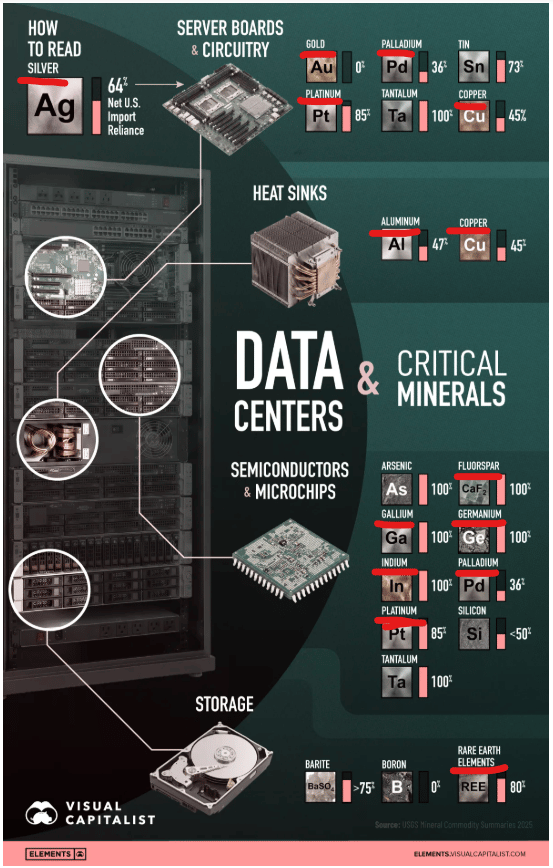
Here are the minerals we would classify as primary exposures to the “AI minerals” thematic (we have exposure to the minerals underlined in red):
(source)
Here are our stocks across those minerals (we have left out our gold and silver stocks which you can see above):
- SGQ ($553M) - Rare earths in Brazil.
- CAY ($320M) - Bauxite (Aluminium) in Cameroon.
- TTM ($279M) - Copper in Ecuador (projects include gold).
- LKY ($70M) - Antimony and rare earths in California.
- AW1 ($49M) - Indium & gallium in Utah, copper in Canada (includes base metals).
- PNN ($41M) - Rare earths & gallium in Brazil (plus lithium in Argentina).
- GAL ($39M) - PGEs (including platinum and palladium) plus nickel/copper in Western Australia.
- OD6 ($29M) - Fluorspar in Nevada (plus rare earths in Western Australia).
- NC1 ($29M) - Nickel in Western Australia.
- ION ($29M) - Critical minerals recycling & a rare earths deal in the US.
- TG1 ($25M) - Copper in Western Australia (projects include gold and other metals).
- LSR ($18M) - Copper in Chile plus heavy rare earths in Arizona (also gold in Western Australia).
Robot metals
"Robot metals" is one of the macro thematics we are most excited about over the next 5-10 year period.
Billions of autonomous robots are expected to be built over the coming decade.
"Billions and billions" of them, according to Elon Musk.
Robots in the home. Robots in factories. Robots in the military.
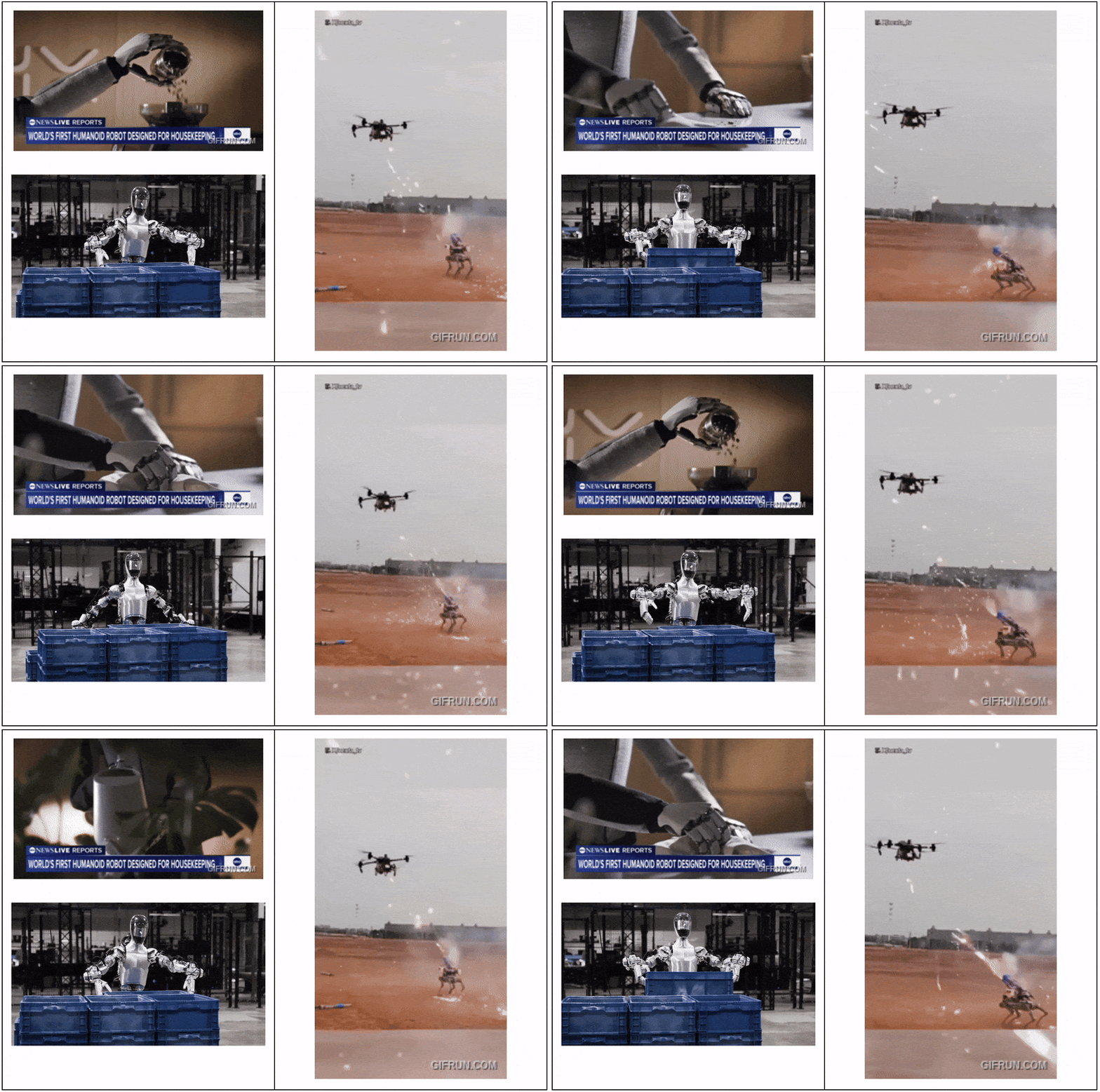
Musk’s Tesla's Optimus humanoid robot is targeted for public sale by end of 2027.
Musk even said at Davos in January that ~1,200 Optimus robots are already working at Tesla’s battery gigafactory in Texas (doing simple logistics and assembly tasks, with more complex work expected by the end of this year).
And it's not just Tesla - China alone has over 150 humanoid robot startups.
It just so happens that many of the same "battery metals" that were loved (then hated) by the market, go into the batteries that power autonomous AI robots.
(Lithium, nickel, cobalt, copper, rare earths, aluminium)
According to S&P Global (source), Musk’s 10 billion robot goal would need:
- Copper: 4x current global production
- Lithium: More than 10x current global production
- Rare earth magnets (NdFeB): More than 100x current global production
Each robot needs 30+ motors, each using rare earth magnets. The supply chain simply does not exist yet to build robots at scale.
Robot metals also have a strategic angle - we saw the following article which reported on the Pentagon and Ukraine testing AI-powered humanoid soldiers — robots that can carry rifles and breach doors:
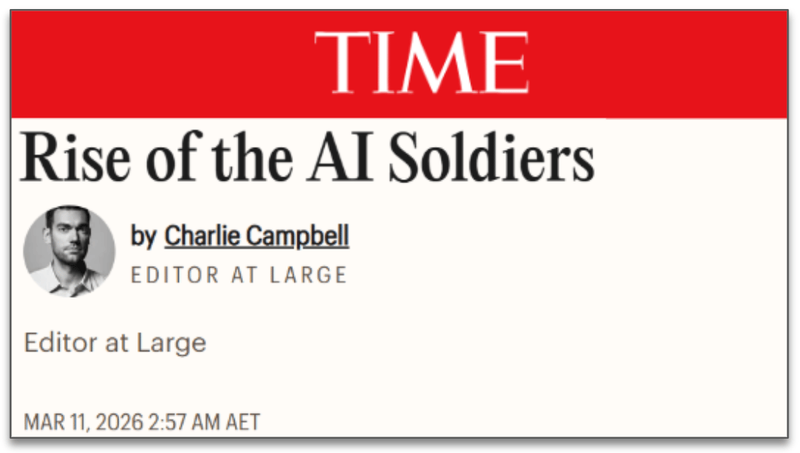
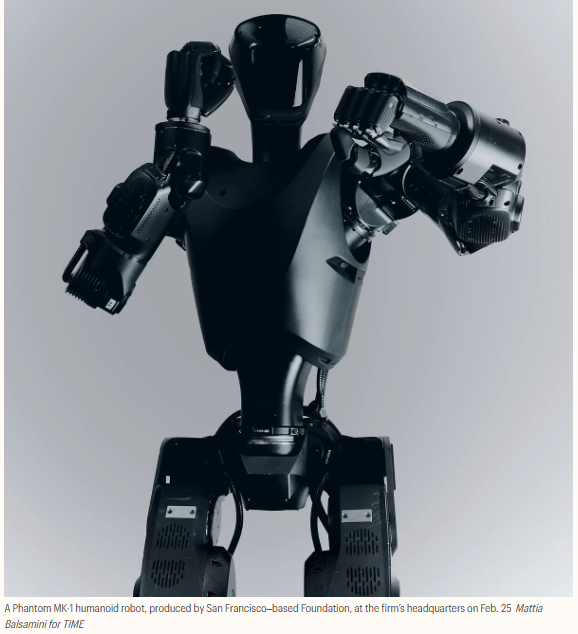
(source)
The country to win the AI and AI robot race will likely become the new global superpower, both from robot-driven productivity gains and robot-driven military dominance.
(So securing metals supply domestically OR from allies has become urgent and of strategic importance).
Here are our stocks across those metals/minerals:
Rare earths -
- SGQ ($553M) - Rare earths in Brazil.
- LKY ($70M) - Rare earths and Antimony in California.
- PNN ($41M) - Rare earths in Brazil (plus gallium in Brazil and lithium in Argentina).
- LSR ($18M) - Heavy rare earths in Arizona (also copper in Chile plus also gold in Western Australia).
Copper -
- TTM ($279M) - Copper in Ecuador (projects include gold).
- AW1 ($49M) - Copper in Canada (plus Indium & gallium in Utah, includes base metals).
- TG1 ($25M) - Copper in Western Australia (projects include gold and other metals).
- LSR ($18M) - Copper in Western Australia (and gold in Chile plus heavy rare earths in Arizona).
Nickel -
- NC1 ($29M) - Nickel in Western Australia.
Lithium -
- PNN ($41M) - Lithium in Argentina (plus rare earths and gallium in Brazil).
- PUR ($22M) - Lithium in Argentina (and gold in Argentina).
Aluminium -
- CAY ($320M) - Bauxite (Aluminium) in Cameroon.
One thing to watch over the coming weeks on rare earths
On the 25th of March, the CCCMC (China Chamber of Commerce of Metals, Minerals & Chemicals Importers & Exporters) is holding a briefing in Beijing.
The topic?
Possible new rare earth export controls.
(a week before the Trump-Xi meeting is scheduled to happen... coincidence?)
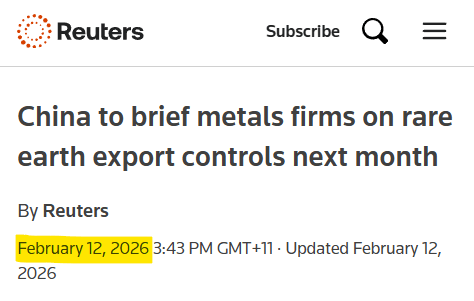
(source)
Last time China announced restrictions - October 2025 - rare earth stocks doubled in weeks.
Lynas - the world's biggest non-Chinese rare earths miner - just locked in a floor price agreement with Japan. (source)
That's the Japanese government basically saying - we will guarantee you a price because we need a supply that doesn't come from Beijing...
There’s no guarantee of what might happen here.
But the next few weeks could be very interesting for rare earths.
Oil & Gas
Oil and gas are the original "critical minerals"?
(OK geologists, you got us - oil and gas are technically not minerals, however our point is more around them being ‘critical’)
We spend a lot of time talking about tungsten, antimony, rare earths - minerals most people have never heard of.
But strip it all back to basics and the world still runs on oil and gas.
Every mine site needs diesel.
Every military needs fuel.
Every country needs energy to function. Every data center needs power.
Even oil by-products like plastics and lubricants.
We think the current war in the Middle East could remind everyone of all of that.
Iran war. Day 14...
That’s 14 days of disruption to the big oil and gas production hub of the world - the Middle East.
The world has found itself in a position where huge chunks of global oil and gas are not flowing to the parts of the world that need it.
25% of the world's oil. 20% of seaborne LNG. Just... not flowing.
(see our take on what the war means for oil and gas from last weekend here)
The main change this week was the big producers in the region calling force majeure on their supply contracts AND/OR outright stopping production.
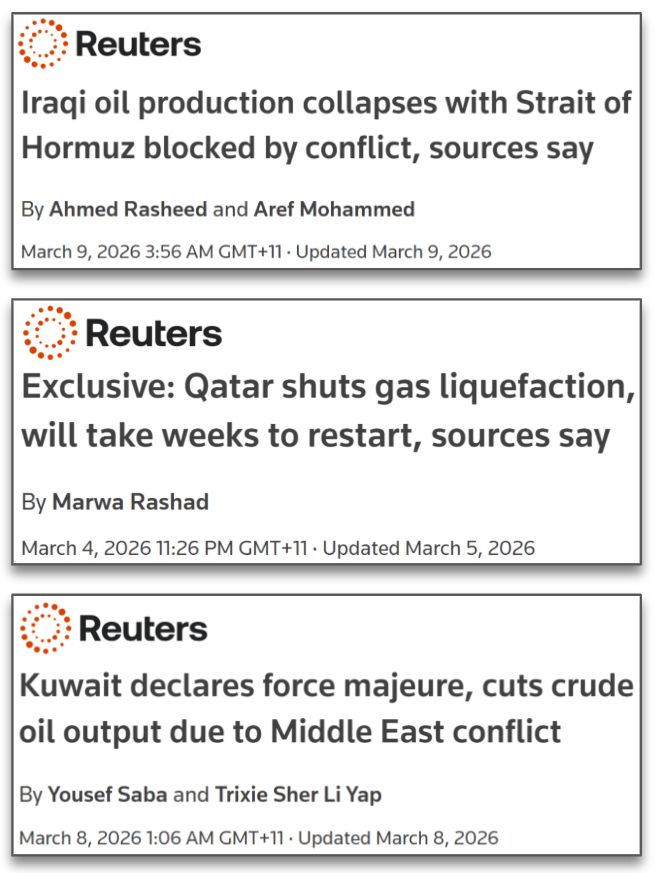
Iraq for example suspended ALL oil port operations on March 12 after Iranian drone boats attacked two foreign tankers in Iraqi waters.
And of course the Strait of Hormuz is still closed.
Iran is laying mines in the strait and it looks like the strait won't be opened unless there is some sort of peace deal.
The IEA (International Energy Agency) is calling the strait’s closure the "largest disruption to the global oil market in history".
It’s also prompted a release of ~400 million barrels from strategic reserves - the biggest coordinated release ever.
(and oil and gas prices are not really responding as they would normally to a reserve release that size).
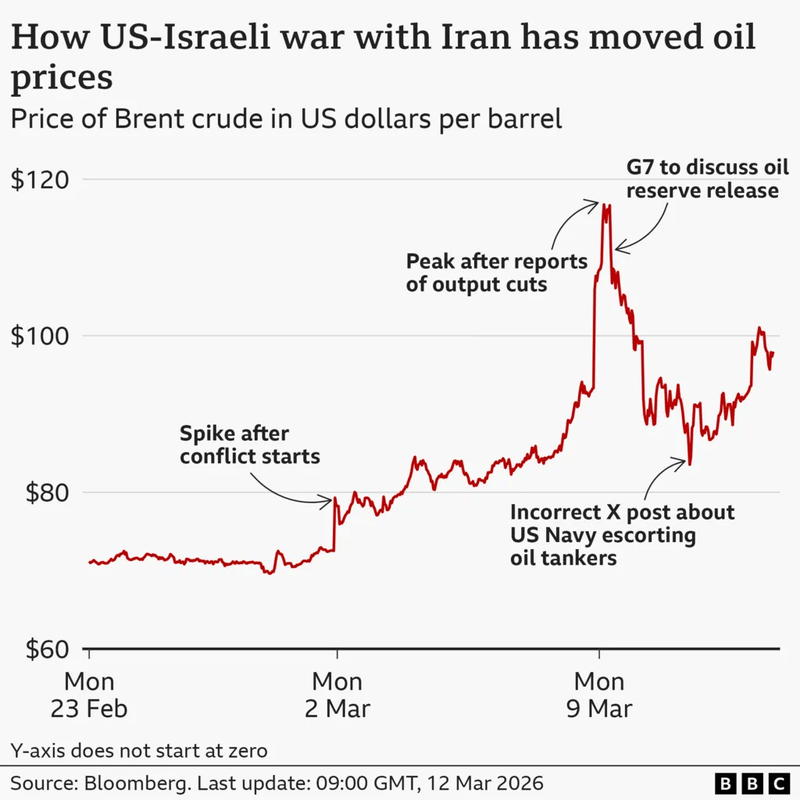
(source)
The real signal for us was the X post we mentioned earlier in today’s note from US Treasury Secretary Scott Bessent - easing sanctions on Russian oil:
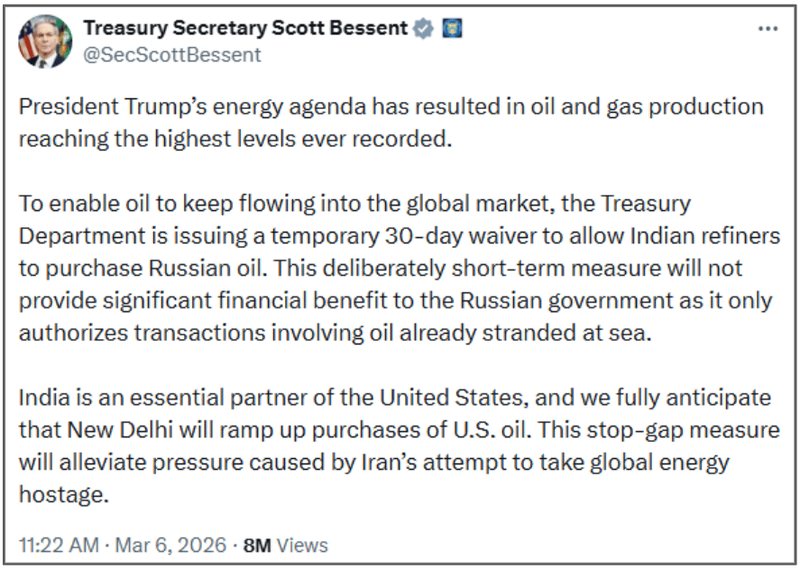
(source)
We double-taked after seeing that one.
The US government, which spent the last two years sanctioning Russian oil to punish Russia for invading Ukraine, is now lifting those sanctions to plug the gap created by bombing Iran.
Bessent went further on Fox Business:
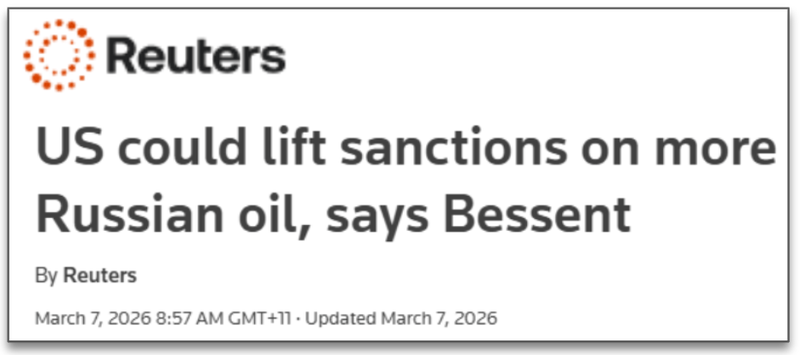

(source)
IF the US is willing to start making concessions like that, then it tells us a lot about the tightness in the market.
We hold the following oil and gas stocks in our Portfolio:
- EXR ($155M) - Oil and gas explorer in Queensland’s Taroom Trough.
- IVZ ($79M) - Oil and gas explorer/developer in Northern Zimbabwe.
- 88E ($39M) - Oil and gas explorer in the North Slope of Alaska, plus offshore exploration interests in Namibia.
- CND ($15M) - Oil and gas explorer in offshore Peru.
- GGE ($12M) - A working interest in some US oil fields in Louisiana, USA (plus recently acquired antimony project in Utah).
In summary:
We have been positioning our Portfolio for a “chaotic world” and “major geopolitical shifts” for the last few years.
The last couple of weeks has been a bit “too much” chaos for the markets’ liking...
We have seen a broader sell off in most markets, with no sector spared.
This happens when major new unpredictable events occur (Iran attack), fear and uncertainty take over and many investors will indiscriminately sell everything.
But as mentioned at the start of this note, we think the ACUTE uncertainty that has been driving this sell off (Iran situation) should subside after the Trump-Xi meet post April 2nd.
(it might not though, anything can happen)
We expect the GENERAL global uncertainty should continue post meeting, except with buyers stepping back into the market looking to position their portfolios accordingly.
See you next week, and have a great weekend
Next Investors
Did someone forward this to you? Subscribe Here
General Information Only
This material has been prepared by StocksDigital. StocksDigital is an authorised representative (CAR 000433913) of 62 Consulting Pty Limited (ABN 88 664 809 303) (AFSL 548573).
This material is general advice only and is not an offer for the purchase or sale of any financial product or service. The material is not intended to provide you with personal financial or tax advice and does not take into account your personal objectives, financial situation or needs. Although we believe that the material is correct, no warranty of accuracy, reliability or completeness is given, except for liability under statute which cannot be excluded. Please note that past performance may not be indicative of future performance and that no guarantee of performance, the return of capital or a particular rate of return is given by 62C, StocksDigital, any of their related body corporates or any other person. To the maximum extent possible, 62C, StocksDigital, their related body corporates or any other person do not accept any liability for any statement in this material.
Conflicts of Interest Notice
S3 and its associated entities may hold investments in companies featured in its articles, including through being paid in the securities of the companies we provide commentary on. We disclose the securities held in relation to a particular company that we provide commentary on. Refer to our Disclosure Policy for information on our self-imposed trading blackouts, hold conditions and de-risking (sell conditions) which seek to mitigate against any potential conflicts of interest.
Publication Notice and Disclaimer
The information contained in this article is current as at the publication date. At the time of publishing, the information contained in this article is based on sources which are available in the public domain that we consider to be reliable, and our own analysis of those sources. The views of the author may not reflect the views of the AFSL holder. Any decision by you to purchase securities in the companies featured in this article should be done so after you have sought your own independent professional advice regarding this information and made your own inquiries as to the validity of any information in this article.
Any forward-looking statements contained in this article are not guarantees or predictions of future performance, and involve known and unknown risks, uncertainties and other factors, many of which are beyond our control, and which may cause actual results or performance of companies featured to differ materially from those expressed in the statements contained in this article. S3 cannot and does not give any assurance that the results or performance expressed or implied by any forward-looking statements contained in this article will actually occur and readers are cautioned not to put undue reliance on forward-looking statements.
This article may include references to our past investing performance. Past performance is not a reliable indicator of our future investing performance.