MNB: It looks like they are actually building it (finally)
Disclosure: S3 Consortium Pty Ltd (the Company) and Associated Entities own 42,049,459 MNB Shares and 39,378,833 MNB Options. Some Shares and Options are subject to shareholder approval. The Company has been engaged by MNB to share our commentary on the progress of our Investment in MNB over time. This information is general in nature about a speculative investment and does not constitute personal advice. It does not consider your objectives, financial situation, or needs. Any forward-looking statements are uncertain and not a guaranteed outcome.
We have been Invested in Minbos Resources (ASX:MNB) for six years.
(at 3c, 8c, 11c, 7c and most recently 1.5c)
We Invested to see them build a phosphate (fertiliser) mine and processing plant in Angola (global food security thematic).
There were a few years in a row where the company was signalling:
“We have almost secured financing” and
“We are about to build the plant and start selling fertiliser".
A project that according to MNB's 2022 Definitive Feasibility Study was supposed to generate ~US$55M in EBITDA per year over a 20 year mine life, with a post-tax NPV of US$203M. (source)
However we note that MNB’s development plan has changed since that study - MNB simplified the plant flowsheet in late 2025 - so these numbers could be different now.
We only use the study as a basis for what the project could look like.
But the promised build didn't happen on time...
and the market stopped trusting what MNB promised = share price went down a lot.
So why is MNB share price moving up in the last few days (off a low base), while everything else in the small end of the market is getting smoked?
(MNB is up over 30% over the last 4 trading days, just look at your watchlist to see how everything else is going)
It looks like the long promised and awaited plant build is finally happening... and fast:
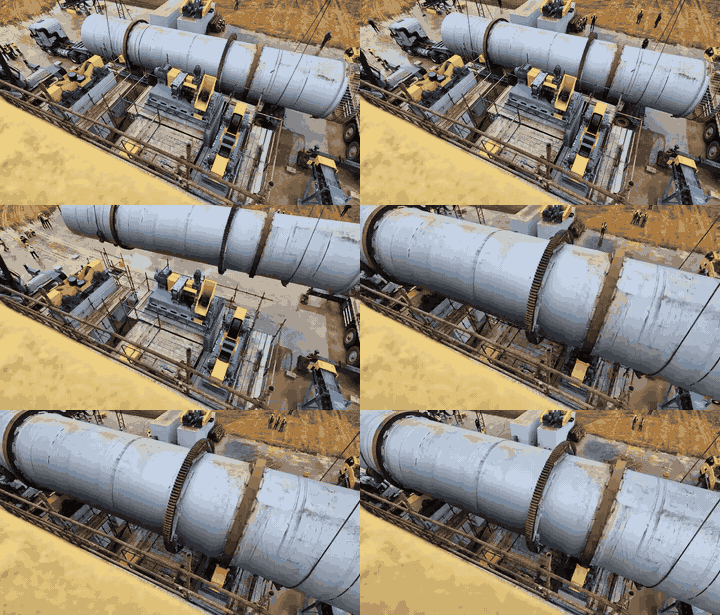
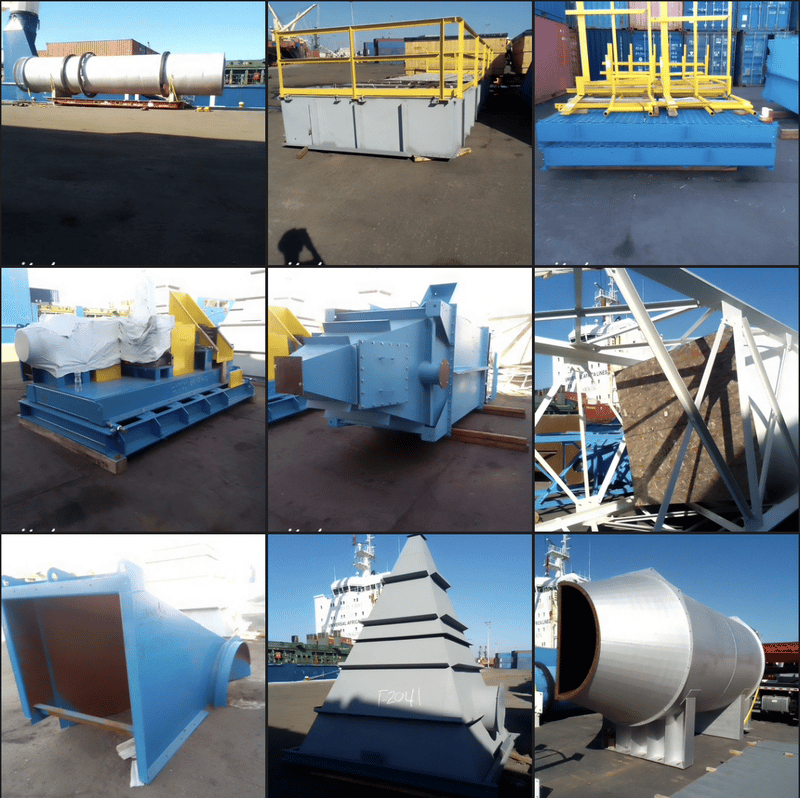
A rotary dryer getting hoisted up at MNB site - it removes the moisture from the mined phosphate rock
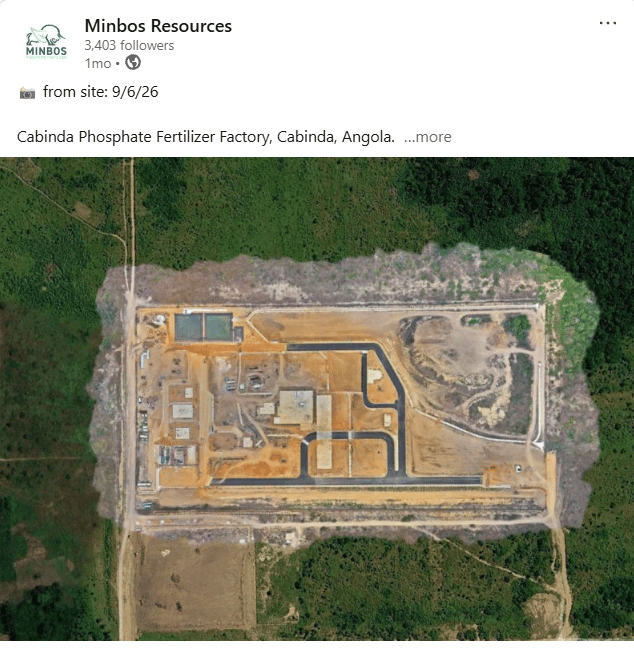
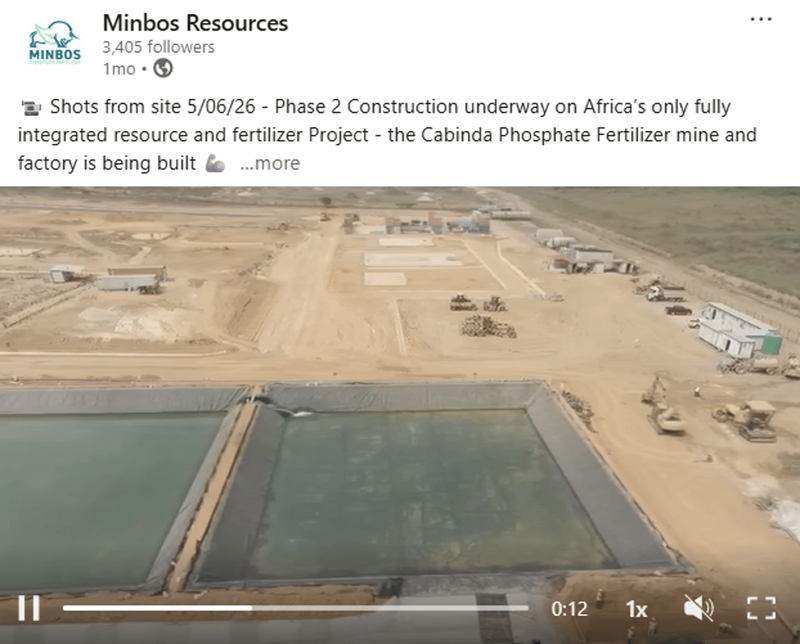
In just the last three months MNB has gone from this:
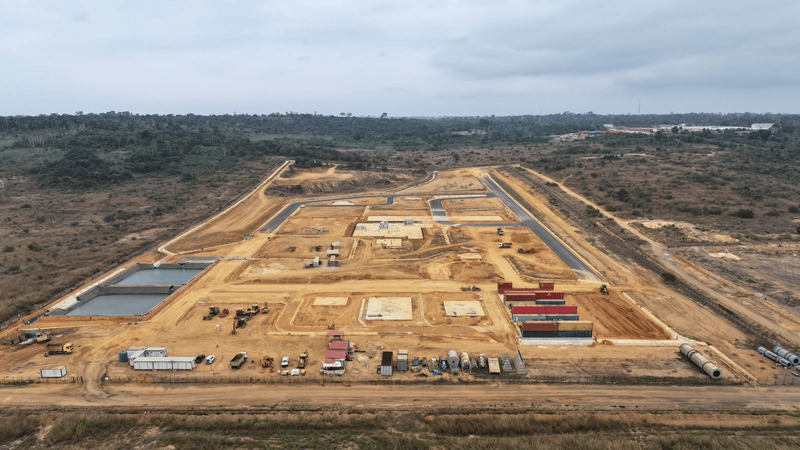
To this:
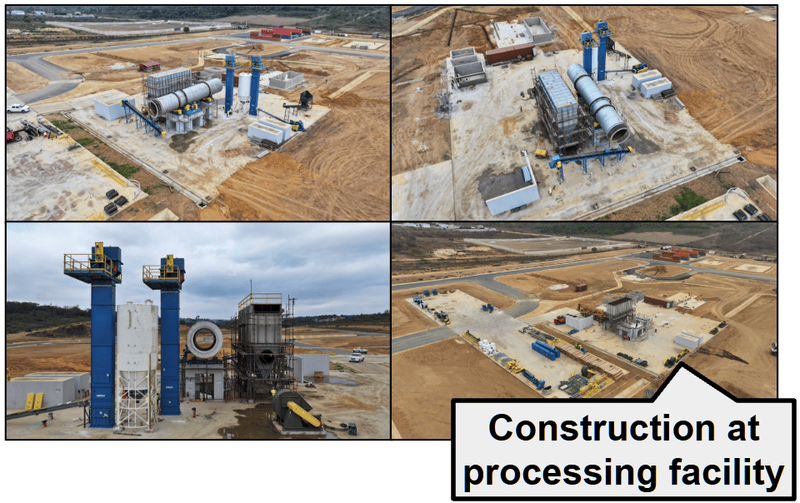
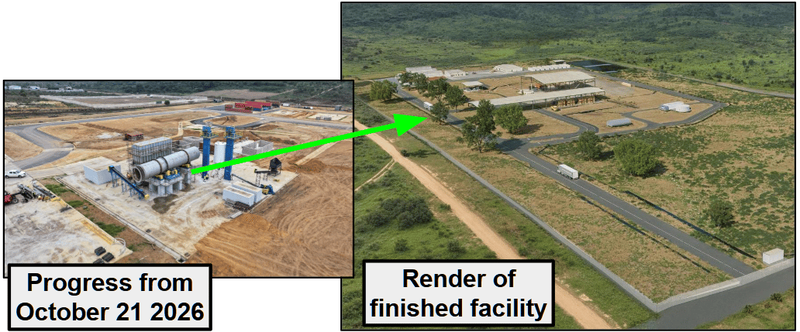
And here is where MNB is at relative to what it is supposed to look like when it's finished:
(source - MNB socials)(source)
Hard to argue with that visual progress... even for the most sceptical long term MNB followers.
IF MNB can deliver the timelines its saying, we should see:
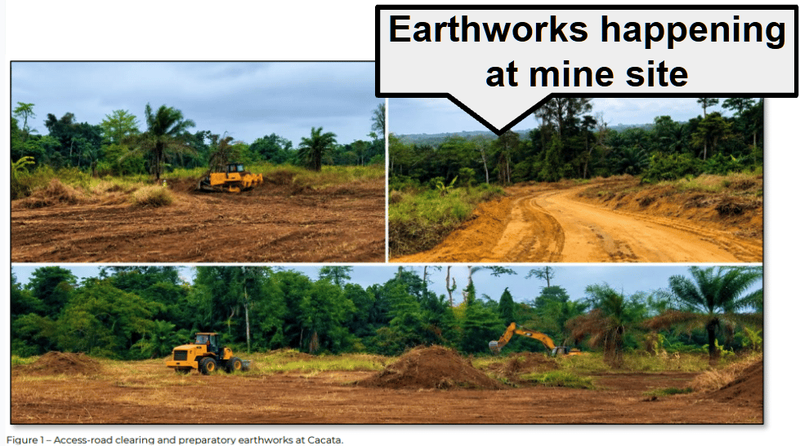
- Mine mobilisation "in H2 2026" - Earthworks started two weeks ago so on a technicality we could say this one has happened. (source)
- A Ministerial site visit "scheduled in December" to inspect the completed plant structures. (source)
- And the plant "on track for completion and dry commissioning in Q2 2027" - subject to financing, deliveries and approvals. (source)
(long suffering MNB holders don't have much trust in MNB’s timeline predictions, and rightly so - but we haven’t seen them make this much progress in previous attempts so maybe these timelines will finally be the real deal)
Once in production, MNB will own Angola's first and only integrated phosphate mine and fertiliser plant.
(and become our first ever pre-development stage to production Investment, after the apo-CAY-lypse took CAY out of the running for now it seems)
A project that according to MNB's 2022 Definitive Feasibility Study was supposed to generate ~US$55M in EBITDA per year over a 20 year mine life, with a post-tax NPV of US$203M. (source)
In a nice stroke of luck for MNB (for once), the TSP (triple superphosphate) price has been trading around MNB’s "spot case" scenario from that DFS back in 2022 - averaging ~US$705 per tonne in the September quarter. (source)
Using the spot-case had the project generating US$95M EBITDA per year and a post-tax NPV of US$399M. (source)
Again, the plan did change, MNB simplified the plant flowsheet in late 2025 - so these numbers could be different now. We only use the study as a basis for what the project could look like)
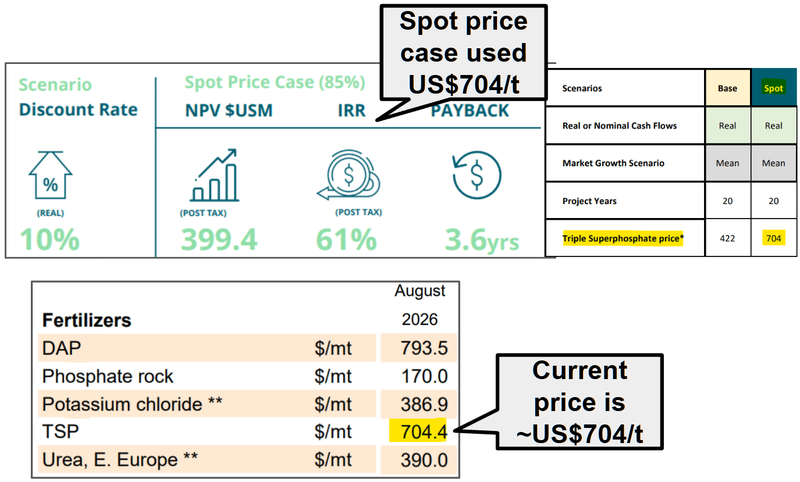
So somehow, with the delays, MNB might be coming into production into a strong pricing environment...
(a rare bit of luck for MNB... for a change)
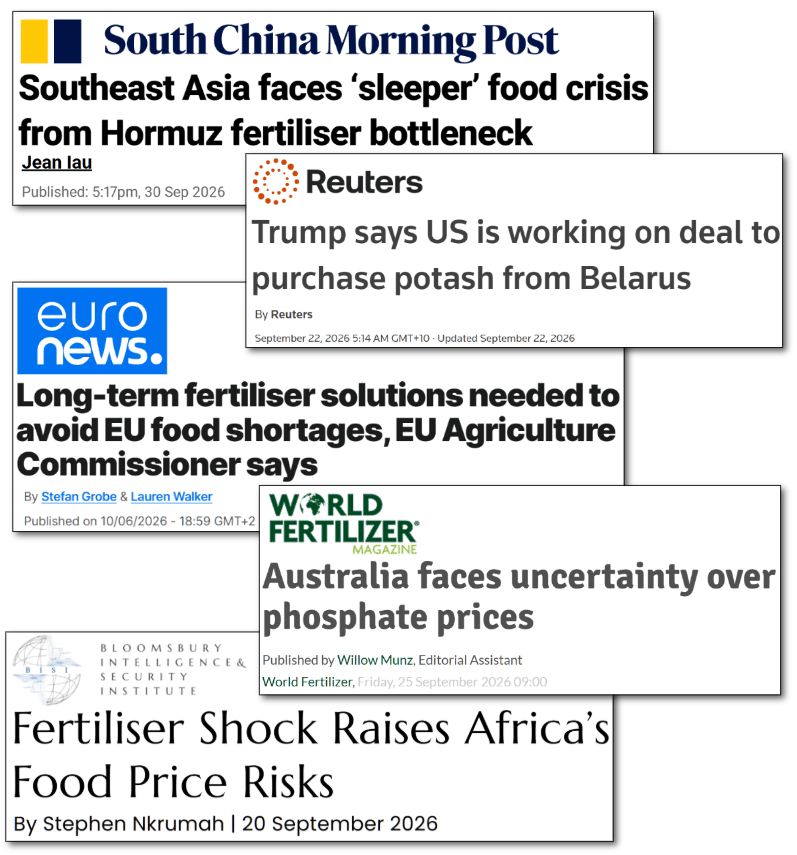
And just as the macro investment environment for phosphate/fertiliser has turned in MNB's favour (mainly because of the war in the Middle East).
(source)(source)(source)(source)(source)
A big part of our MNB thesis is the "food security" macro - the idea that governments would eventually start treating fertiliser like a strategic resource.
We had expected this to come from mainly within Africa, which has well documented food security issues over many decades.
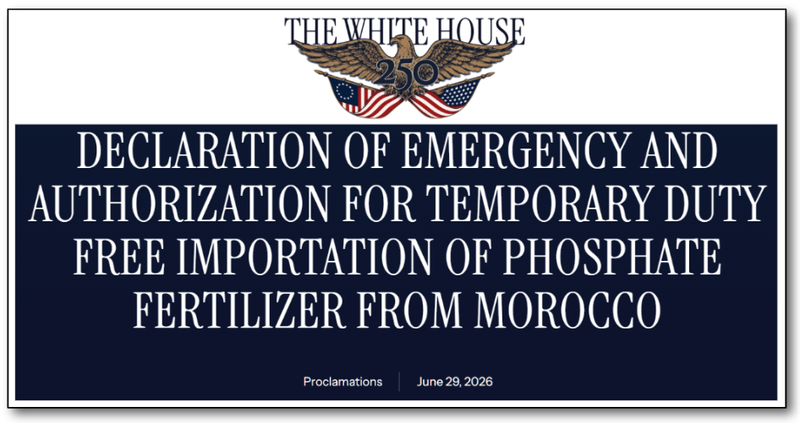
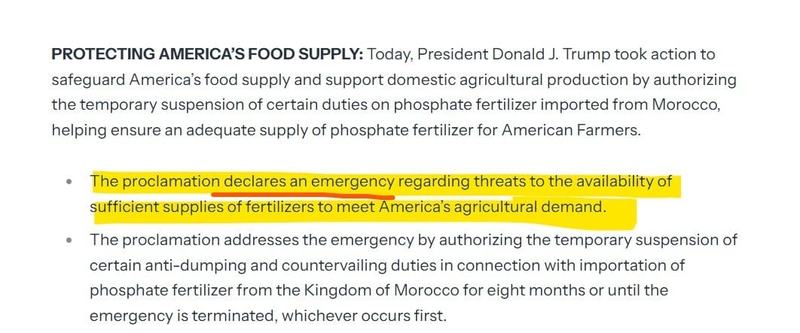
But then on the 29th of June, President Trump signed the following Executive Order, declaring:
“an emergency regarding threats to availability of sufficient supplies of fertilizers to meet America’s agricultural demand”.
(source)
The US cutting duties on Moroccan phosphate makes two things clear, both of which are clearly outlined in the Executive Order.
- Firstly, domestic production is not enough to cover what American farmers need.
- Secondly, the US is willing to look toward Africa for phosphate supply in the meantime.
The Strait of Hormuz situation doesn't look like it's going to get resolved any time soon.
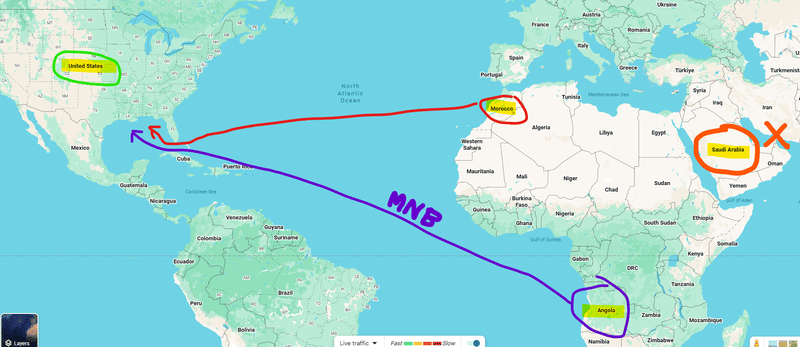
Saudi Arabia’s Ma'aden's Ras Al-Khair complex (one of the world's biggest integrated phosphate operations) sits on the Gulf coast - every export cargo must transit Hormuz, no workaround.
Unlike USA’s newly crowned phosphate best mate Morocco on the West African coast, which has a clear, Houthi free, Atlantic Ocean run to the USA.
MNB’s phosphate fertiliser project is in Angola, also on the West African coast which has the same clear run to the same ports in the USA:
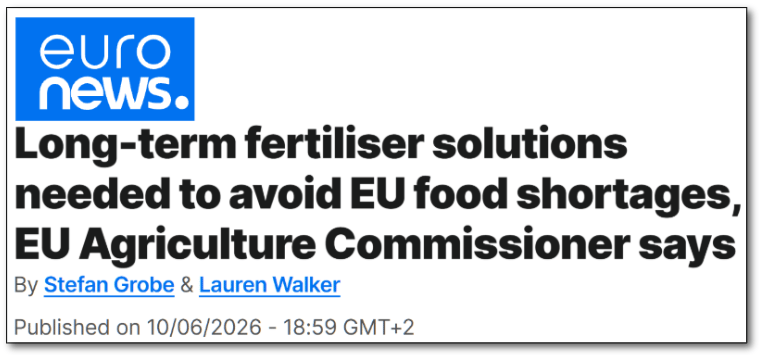
And it's not just the US looking for fertiliser solutions.
The EU Agriculture Commissioner is calling for "long-term fertiliser solutions" to avoid food shortages in Europe.
(source)
No surprises, ALL of this is happening at a time where fertiliser exports globally are at risk from the US-Iran war.
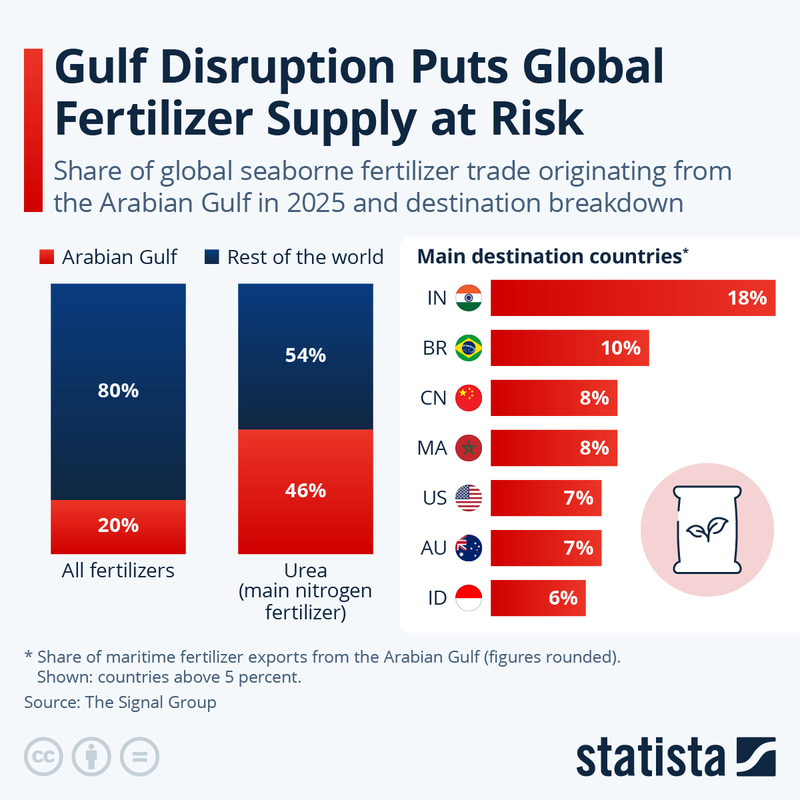
Around 20% of the world's seaborne fertiliser normally moves through the Strait of Hormuz.
Including around a third of global urea exports and close to half of all the sulfur used to make phosphate fertiliser.
The buyers left most exposed are import-dependent countries (which is why we think there is a tailwind at play for MNB right now):
(source)
Here is how the strait closure has impacted fertiliser prices so far:
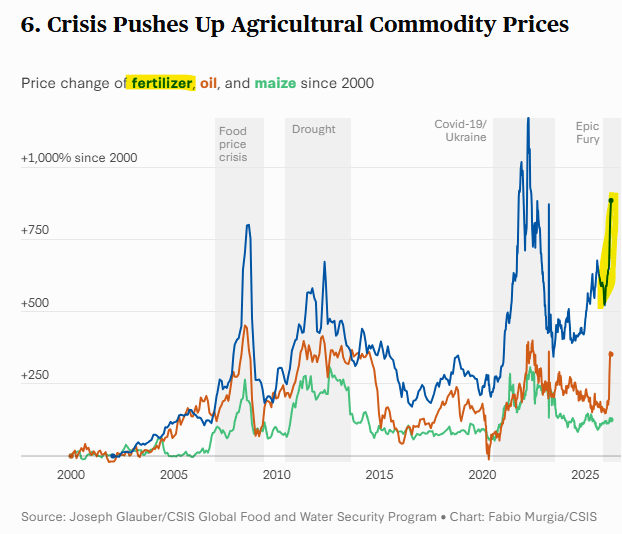
(source)
Why does all this matter to MNB?
Because MNB's go to market strategy for its product is to sell locally into the Angolan market AND sell product into the export market.
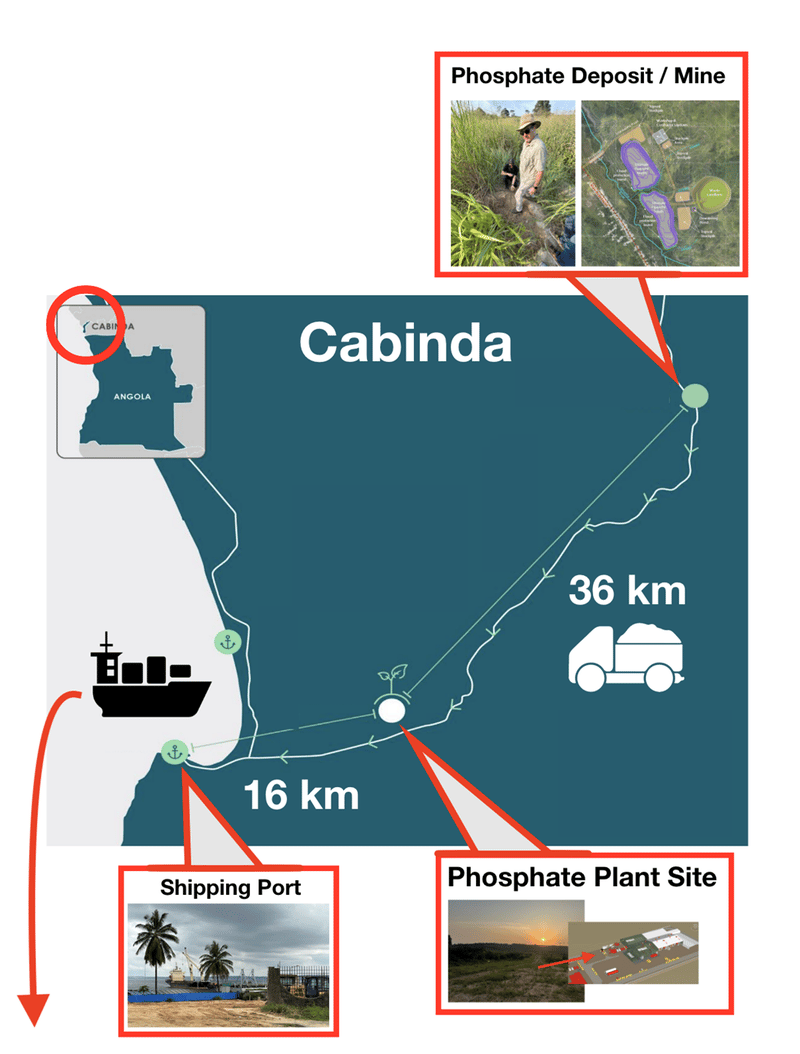
MNB expects to be shipping export product through the Porto do Caio deepwater port in H1 2027. (source)
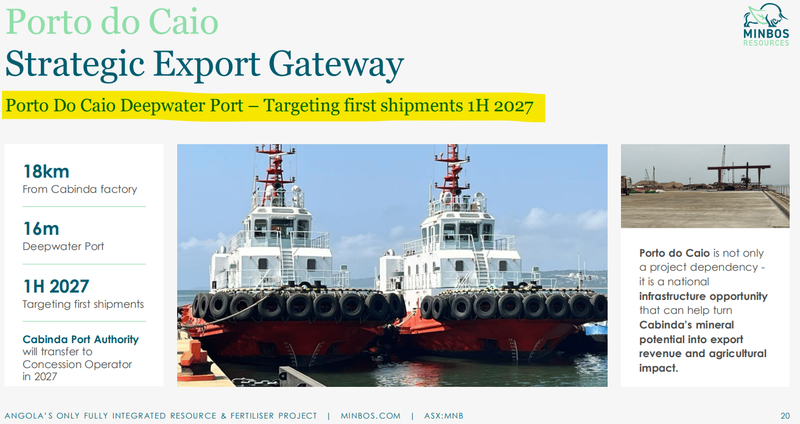
(source)
We saw this port getting built when we visited MNB’s project back in 2023:
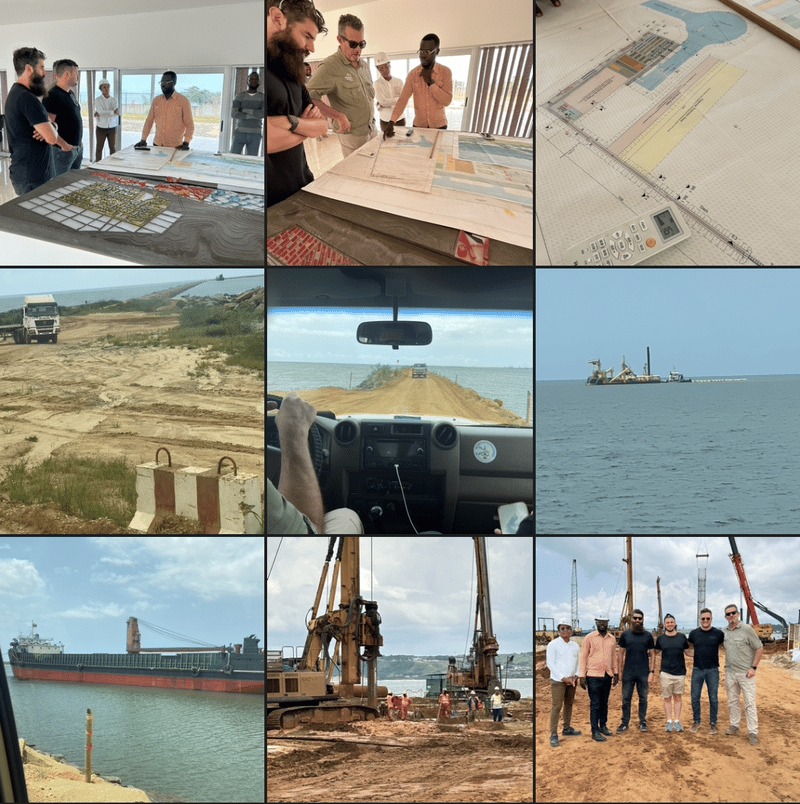
(read our MNB site visit article here)
Three years later and the port is ~79% complete (pretty specific) and its inauguration is expected by the end of this year. (source)
We think the news out of the US has made the export story more interesting for MNB.
And on the domestic side, twenty of Angola's largest commercial growers have committed to MNB's 2026/27 fertiliser demonstration program. (source)
IF the export demand materialises, we would expect it to feed into more urgency by domestic buyers to lock up any supply MNB can provide.
The main thing we are watching out for now
The single biggest thing to watch now is MNB's capacity to fund the rest of the build AND ramp-up production from the project.
Mine build and ramp-up is usually the riskiest stage of the morph from explorer to producer.
A time where there is a lot of cash going out the door, but nothing coming back (YET).
MNB has so far secured:
- ✅ US$10M equity from Angola's Sovereign Wealth Fund (FSDEA) - received in full and already spent getting the project to where it is today. (source)
- ✅ US$16M project loan from the Industrial Development Corporation (IDC) of South Africa - A$6.94M drawn so far, A$16.19M still undrawn which MNB should be able to use throughout its build. (source)
- ✅ $6M equity placement at 1.5c (July/August) - fully completed now.
The last remaining funding piece is the ~US$5.48M loan facility from Banco de Fomento Angola (BFA) - one of Angola's largest commercial banks. (source)
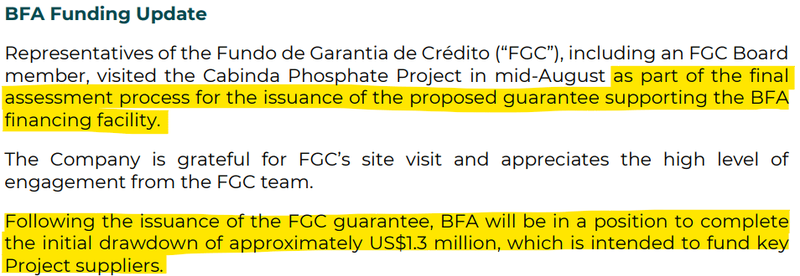
For that one, in early September MNB said representatives of the lender visited site in mid-August as part of the final assessment for the guarantee supporting MNB's loan facility:
(source)
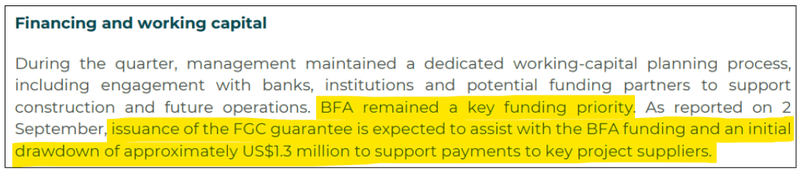
And then in the quarterly that came out yesterday, MNB said the guarantee is still pending and that:
"BFA funding remains a key priority” and that “Issuance of the FGC guarantee is expected to assist BFA funding with the BFA funding and an initial drawdown of approximately US$1.3 million to support payments to key project suppliers".
(source)
So that one is still a 🔄 - “pending”.
Next we want to see that funding deal closed ahead of that big "Ministerial site visit in December" - which is when the government is expected to be on site to see the plant structures completed.
Hopefully not long now until we see that first sack of phosphate...
AND hopefully the bigger re-rate toward our Big Bet happens once the market sees product being produced and ready to ship to customers.
MNB right now is capped at $25M.
Our new MNB Big Bet
"MNB re-rates to a $200M+ market cap by completing construction of its Phosphate Project, moving into production and generating its first fertiliser sales - and/or attracts a strategic investment or takeover bid at multiples of our Entry Price."
NOTE: our “Big Bet” is what we HOPE the ultimate success scenario looks like for this particular Investment over the long term (3+ years). There is no guarantee that our Big Bet will ever come true. There is a lot of work to be done, many risks involved, including development risk, country risk and commodity price risk - just some of which we list in our MNB Investment Memo.
Success will require a significant amount of luck. Past performance is not an indicator of future performance.
The 10 reasons we are Invested in MNB
Here are the 10 reasons we are Invested in MNB from our note on the 20th of July, 2026:
We just put more money into MNB...here's why.
Given some time has passed since then, we have put updates below these reasons where necessary:
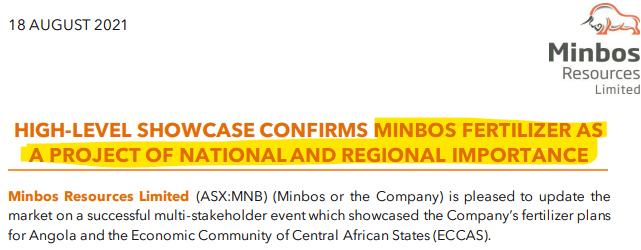
1. The Angolan government labelled MNB’s project “nationally important”
Angola imports the overwhelming majority of its fertiliser, and the government has designated MNB's project as being of national importance.
(source)
2. Angola's Sovereign Wealth Fund is a shareholder
The Angolan Sovereign Wealth Fund (FSDEA) is a shareholder in MNB’s project.
The sovereign wealth fund owns 22% of MNB’s project - investing US$10M into the asset at a look through valuation of ~US$45M back in 2024. (source)
When the country's own sovereign wealth fund is aligned with MNB shareholders, we think the usual "African project" financing and permitting risks look different.
The FSDEA has also formed a joint task force with MNB to help secure additional working capital for the ramp up. (source)
3. Definitive Feasibility Study (DFS) with strong economics
MNB’s phosphate fertiliser project’s Definitive Feasibility Study (DFS) shows the project could generate ~US$55M in EBITDA per year (base case, on average) over a 20 year mine life.
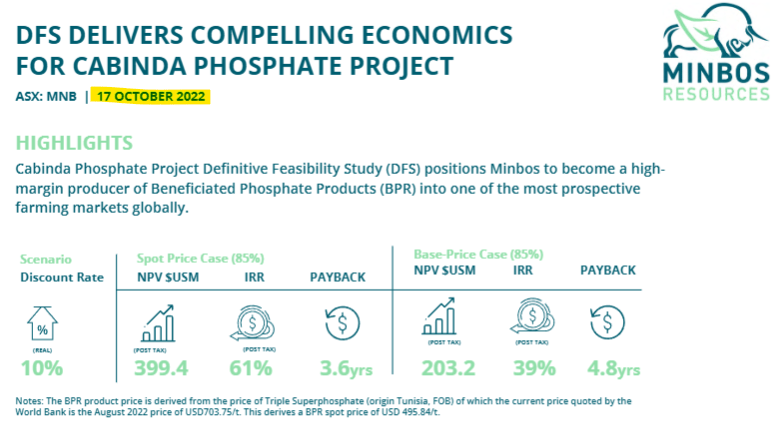
(NOTE* this study is now 4 years old, so the numbers could look very different nowadays. We only use it to form a basis for the technicals of the project)
🚨UPDATE:
The World Bank TSP price (US$704/tonne) is now sitting at the DFS’ “spot-case” assumption which modelled US$95M of EBITDA per year and US$399M of post-tax NPV.
(NOTE* this study is now 4 years old, so the numbers could look very different nowadays. We only use it to form a basis for the technicals of the project)
4. The hard part is done - civils complete, final build contract signed
~US$33M has been put into MNB’s project to date. (source)
MNB’s platform, roads, drainage, slabs and foundations are now COMPLETE. (source)
MNB has signed a US$13.8M Phase 2 construction contract covering ALL remaining works to take the plant to dry commissioning.
(dry commissioning is when you switch a plant on and test everything works - before feeding in the real material)
🚨 UPDATE:
MNB now says construction is "on track for completion and dry commissioning in Q2 2027". (source)
5. After years of delays, the build funding is secured
MNB’s now secured:
- ✅ US$10M equity from the Angolan Sovereign Wealth Fund (FSDEA) - received in full. (source)
- ✅ US$16M loan from the Industrial Development Corporation (IDC) of South Africa - the first US$4.8M drawdown was received a few weeks ago. (source)
- ✅ Today’s $4M capital raise at 1.5c (which we participated in)
- 🔄 A Term sheet signed with Banco de Fomento Angola (one of Angola’s largest and most established commercial banks) for ~US$5.48M. (source)
With build financing now secured, MNB is in a position to FINISH the build - which is already well underway.
🚨 UPDATE:
The $4M placement was upsized to $6M, MNB says it is getting close to securing that US$5.48M funding deal from BFA AND there is ~A$16.19M still undrawn from the IDC facility.
6. The plant is already bought, paid for, and sitting in country
MNB's plant was designed and shipped to Angola back in 2023 - it has been sitting in storage a short drive from the site ever since.
(we saw the plant parts with our own eyes on our site visit in February 2023)
🚨 UPDATE:
It’s no longer sitting in storage, it's now on site... see our photos from earlier in the note.
7. Fertiliser sold inside Africa carries an “inland premium” and MNB’s product has been tested in country
Angola has some of the best uncultivated arable land in Africa, a government hell-bent on food security, and almost no domestic Fertiliser production.
And Fertiliser sold within Africa captures what's known as the "Africa inland premium" - imported product carries heavy shipping and logistics costs, which a local producer pockets instead.
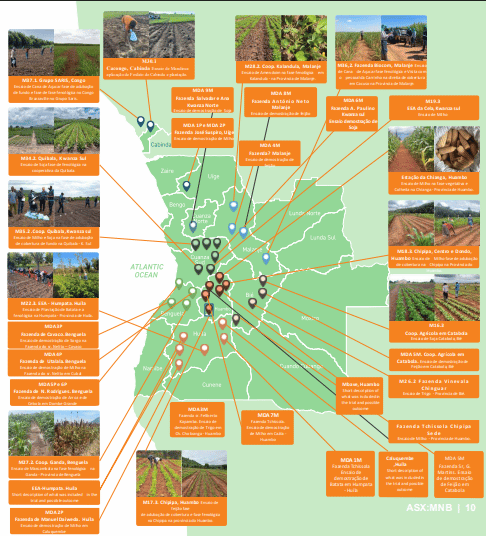
The product MNB plans to produce has been tested in 70+ field trials inside Angola over 7 years improving crop yields by 60-110%.
(source - Page 10 of the presentation)
8. MNB can produce a product that domestic and export customers want
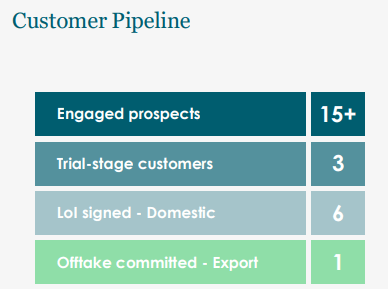
MNB has 15+ engaged potential customers, 3 in trial-stage, 6 domestic buyers with Letter Of Intent’s signed and 1 committed export offtake partner.
(source)
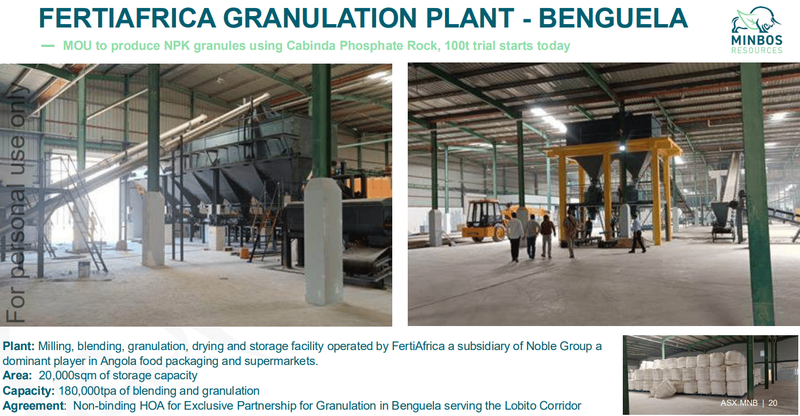
MNB has also signed a Heads of Agreement with Fertiafrica for granulation services at its Benguela facility - which would produce the first locally granulated fertiliser in Angola's history, using MNB rock as the prime ingredient. (source)
(granulation = turning fertiliser into the small, round, spreadable pellets farmers actually use)
(source)
9. MNB is moving into production now
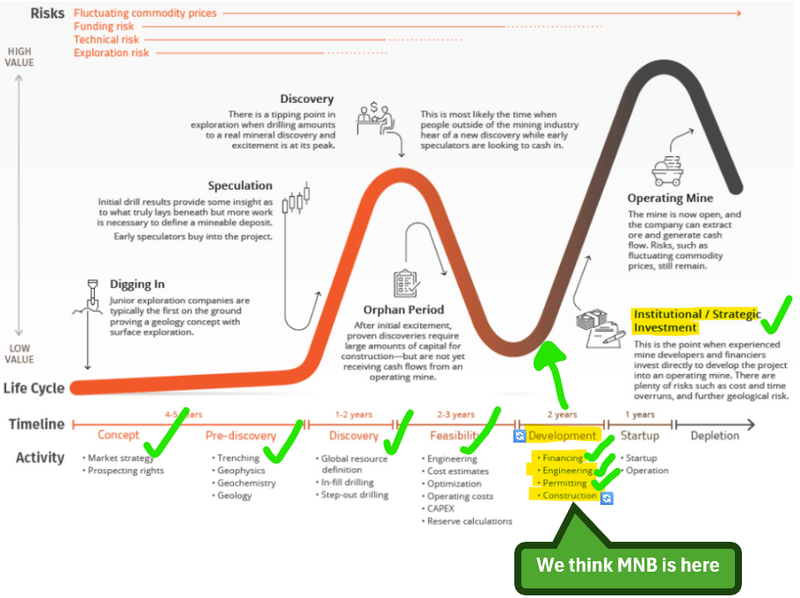
MNB has spent four years stuck in the trough of the "Lassonde Curve" - the stage between discovery and production where share prices generally tend to drift lower.
We think MNB is now in a position to re-rate higher as it moves into production:
10. (BONUS REASON) MNB also has a green ammonia project
MNB also has a Green Ammonia Project - with access to hydroelectric power at ~US$0.004 per kilowatt hour, some of the cheapest electricity on earth.
In October 2025, MNB signed an agreement with a modular ammonia plant company to jointly develop the project and lodge a joint bid into a major European green ammonia procurement process. (source)
We have covered that project in detail before here: What is MNB’s Green Ammonia Project?
MNB’s gone quiet on this one for now, but we think that once the fertiliser project is up and running it could come to the front again.
We think MNB’s current valuation isn’t really placing any value on that project.
You can read up on the reasons in full from our recent MNB note: The 10 reasons we are Invested in MNB
What do we want to see MNB deliver over the coming months?
🔄 Complete Phase 2 construction
We want to see the plant assembled and reach dry commissioning.
Here are the milestones we are tracking:
- ✅ Civil works complete
- ✅ Structural steel installation started
- ✅ Mining contractor appointed
- 🔄 Site prep + access roads
- 🔄 Mechanical modules delivered to Cabinda and installed
- 🔲 Electricals, instrumentation and process control installed
- 🔲 Ministerial site visit (December)
- 🔲 Dry commissioning (Q2 2027)
🔄 Complete the funding package
We want the full project funding closed out to cover construction AND ramp-up to full operations (“wet commissioning”).
Here are the milestones we are tracking:
- 🔄 Transfer of Mining Investment Contract and Mining License
- ✅ US$10M FSDEA equity received
- ✅ US$16M IDC loan signed, drawdowns underway
- 🔄 US$5.48M Banco de Fomento Angola facility formalised
- 🔄 Working capital facility secured
🔲 First production and first sales
We want to see the plant wet commissioned, first product produced, and first revenue banked.
Here are the milestones we are tracking:
- 🔲 Wet commissioning
- 🔲 The first sack of Angolan-produced phosphate Fertiliser
- 🔲 First shipment to a customer (including any early unprocessed rock sales)
- 🔲 Binding offtake agreement(s) converted from existing MoUs/HOAs
- 🔲 First revenues reported
What could go wrong?
WIth construction underway and the ground having been broken on the mining side of things, the biggest risk in the near term is “Construction and commissioning risk”.
Construction and commissioning risk
This is the big one right now.
Plants rarely bolt together on time and on budget, and commissioning a first-of-its-kind-in-country plant can surface problems that take months to fix.
Any delay would likely hit the share price hard given MNB's history.
Source: "What could go wrong" - MNB Investment Memo 20 July 2026
Another risk in the short-medium term is “funding risk”.
MNB needs access to funds while it completes its build and ramps-up its mining operations.
IF the lenders stop contributing toward the project, there is a real risk everything stops and the company needs to raise equity to continue with the build.
Funding and dilution risk
MNB has needed repeated equity raises through the development phase, including at deep discounts. If the BFA facility or working capital lines are delayed, or construction runs over budget, MNB may need to raise again at unattractive prices.
Source: "What could go wrong" - MNB Investment Memo 20 July 2026
Other risks
Like any small-cap resources development company, MNB carries significant risk, here we aim to identify a few more risks.
The macro tailwind we describe in this note can reverse. Phosphate prices are elevated because the Strait of Hormuz is closed to fertiliser cargo, sulphur is scarce and China has curbed exports.
If the US and Iran agree to the UN escort mechanism, or the conflict ends, Gulf DAP/MAP and sulphur would come back onto the market and prices could fall quickly - potentially before MNB has sold its first tonne.
MNB is a tiny new producer entering a market dominated by very large, low-cost incumbents like Morocco's OCP.
Its ability to sell export products depends on Porto do Caio operating, on logistics in a province that has never shipped bulk fertiliser before, and on buyers being prepared to take a new, unproven product from a new, unproven source.
We also note MNB's Chief Financial Officer resigned at the end of August, during the most capital-intensive phase of the project. Lender certifications, drawdown conditions and working capital negotiations all run through the finance function, and a gap there could slow the flow of funds at the wrong time.
The Mining Convention and the transfer of the Mining Investment Contract and Mining Licence also remain outstanding, and these gate parts of the mining and local sales plan.
Investors should consider these risks carefully and seek professional advice tailored to their personal circumstances before investing.
Our MNB Investment Memo
You can read our MNB Investment Memo in the link below.
We use this memo to track the progress of all our Investments over time.
In our MNB Investment Memo, you can find the following:
- What does MNB do?
- The macro theme for MNB
- Our MNB Big Bet
- What we want to see MNB achieve
- Why we are Invested in MNB
- The key risks to our Investment Thesis
- Our Investment Plan
General Information Only
This material has been prepared by StocksDigital. StocksDigital is an authorised representative (CAR 000433913) of 62 Consulting Pty Limited (ABN 88 664 809 303) (AFSL 548573).
This material is general advice only and is not an offer for the purchase or sale of any financial product or service. The material is not intended to provide you with personal financial or tax advice and does not take into account your personal objectives, financial situation or needs. Although we believe that the material is correct, no warranty of accuracy, reliability or completeness is given, except for liability under statute which cannot be excluded. Please note that past performance may not be indicative of future performance and that no guarantee of performance, the return of capital or a particular rate of return is given by 62C, StocksDigital, any of their related body corporates or any other person. To the maximum extent possible, 62C, StocksDigital, their related body corporates or any other person do not accept any liability for any statement in this material.
Conflicts of Interest Notice
S3 and its associated entities may hold investments in companies featured in its articles, including through being paid in the securities of the companies we provide commentary on. We disclose the securities held in relation to a particular company that we provide commentary on. Refer to our Disclosure Policy for information on our self-imposed trading blackouts, hold conditions and de-risking (sell conditions) which seek to mitigate against any potential conflicts of interest.
Publication Notice and Disclaimer
The information contained in this article is current as at the publication date. At the time of publishing, the information contained in this article is based on sources which are available in the public domain that we consider to be reliable, and our own analysis of those sources. The views of the author may not reflect the views of the AFSL holder. Any decision by you to purchase securities in the companies featured in this article should be done so after you have sought your own independent professional advice regarding this information and made your own inquiries as to the validity of any information in this article.
Any forward-looking statements contained in this article are not guarantees or predictions of future performance, and involve known and unknown risks, uncertainties and other factors, many of which are beyond our control, and which may cause actual results or performance of companies featured to differ materially from those expressed in the statements contained in this article. S3 cannot and does not give any assurance that the results or performance expressed or implied by any forward-looking statements contained in this article will actually occur and readers are cautioned not to put undue reliance on forward-looking statements.
This article may include references to our past investing performance. Past performance is not a reliable indicator of our future investing performance.