PR1’s carbon nanotube fibre’s 5.5x lighter than copper suitable for use in drones, robotics and defence systems.
Our advanced materials Investment Pure Resources (ASX: PR1) just released the second of four planned data sets on its carbon nanotube fibre (CNTF) - this one is about weight.
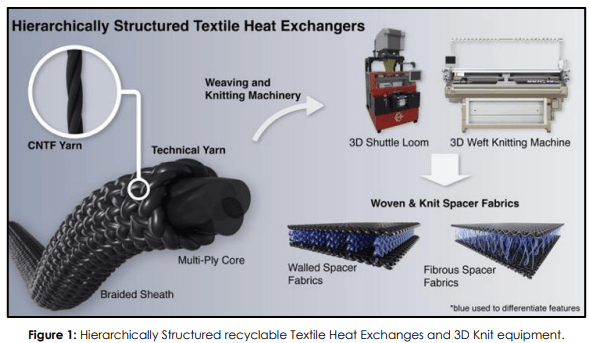
PR1 is developing tech that uses CNTF fibres as thermal management material together with Rice University in the USA.
Things like heat sinks and cooling hardware inside AI data centres, drones, robots and defence systems.
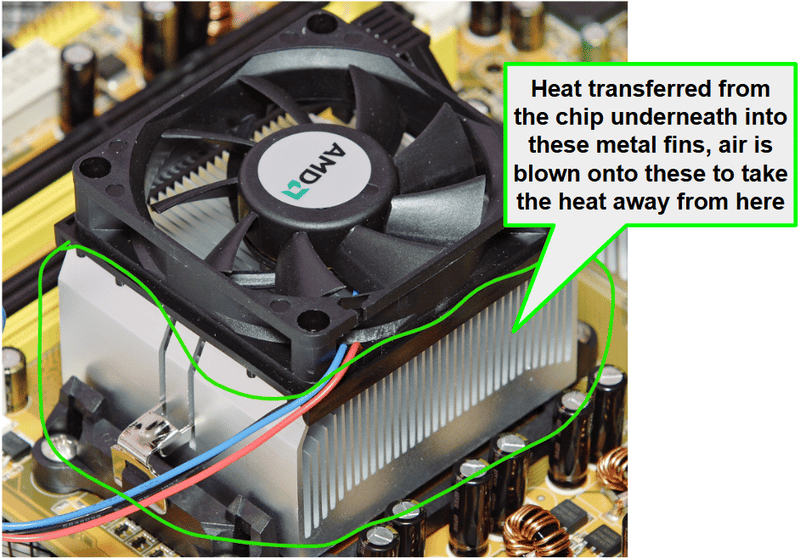
Currently the materials of choice for those applications are aluminium and copper.
PR1 is essentially trying to find a replacement for copper that can perform at higher temperatures with lower weight (increasing its use cases).
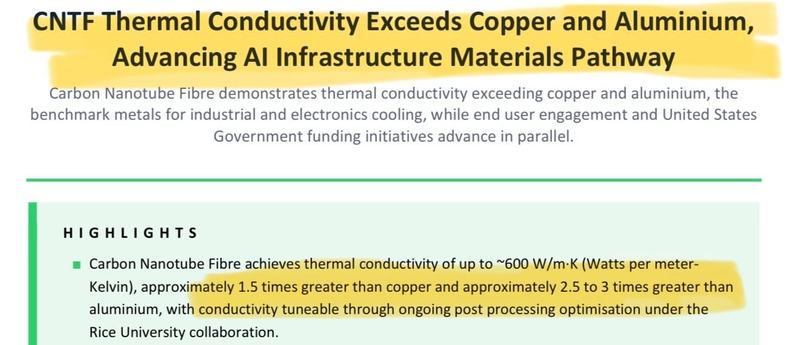
A few weeks back PR1 showed that CNTF’s had 1.5x the conductivity compared to copper:
(source)
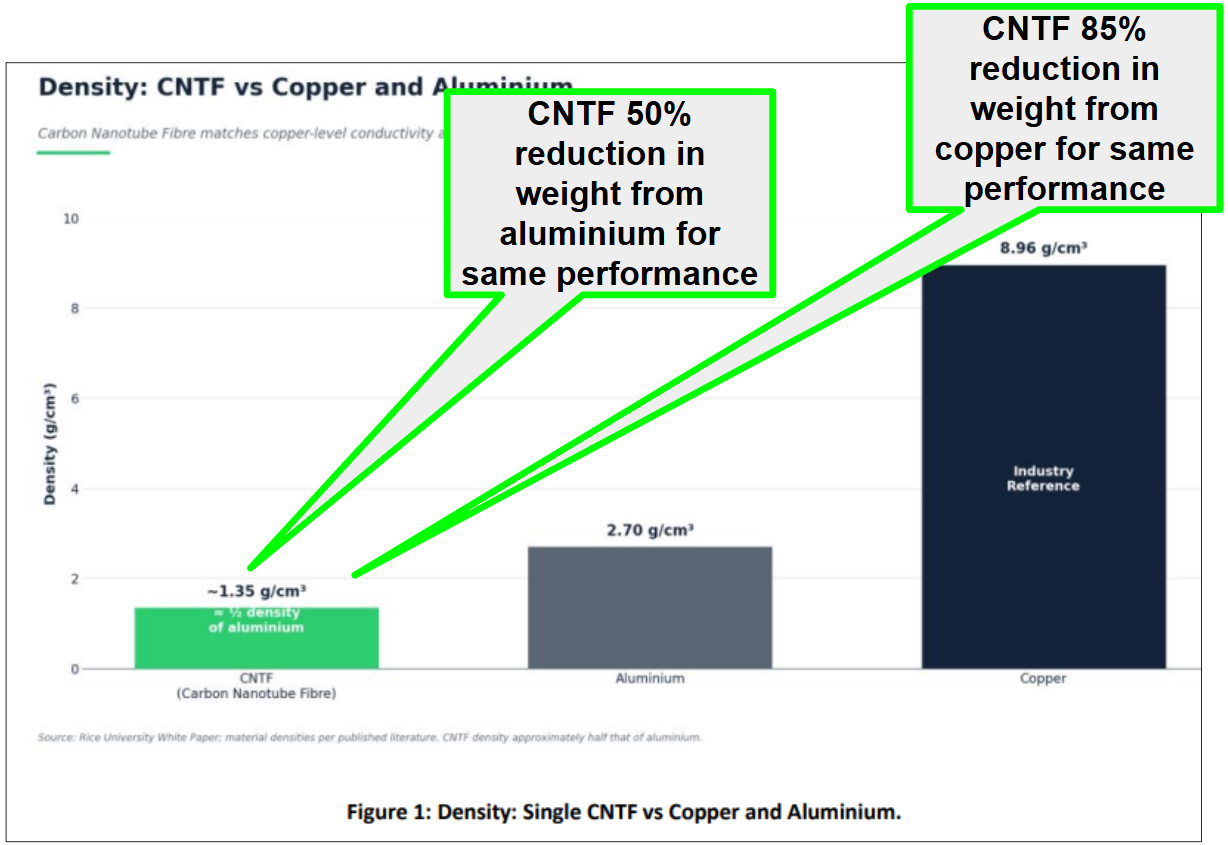
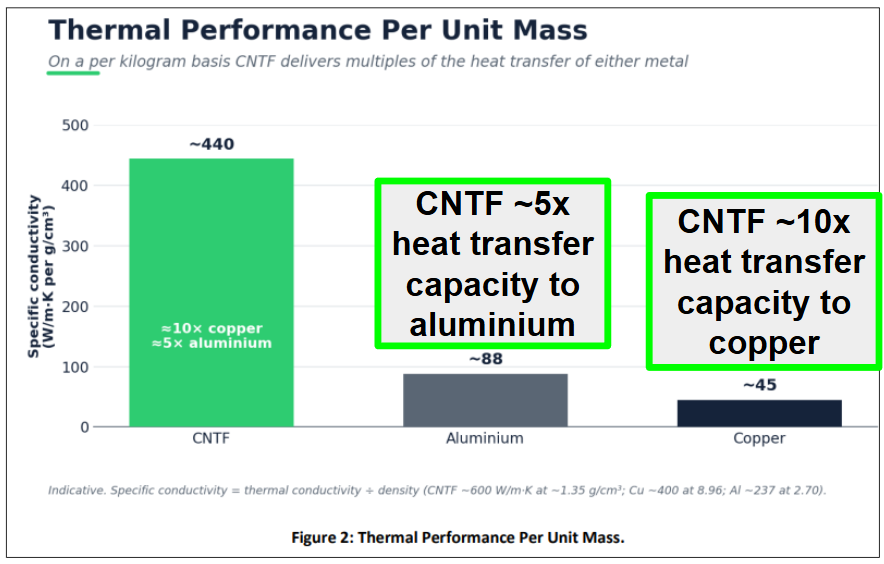
And now today, PR1 confirmed that CNTF’s are ~5.5x lighter than copper and 3x lighter than aluminium.
(source)
Which makes it more suitable in use cases where weight is important (like drones/robots and defence systems).
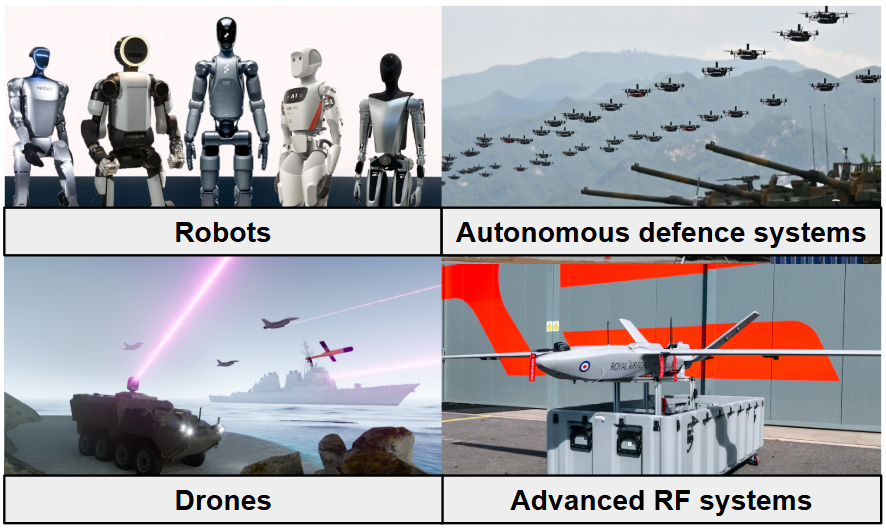
(source)(source)(source)(source)
On a per-unit-mass basis (the metric that matters most when every gram of cooling hardware is constrained) it works out to specific thermal conductivity of the order of ~10x copper and ~5x aluminium.
(source)
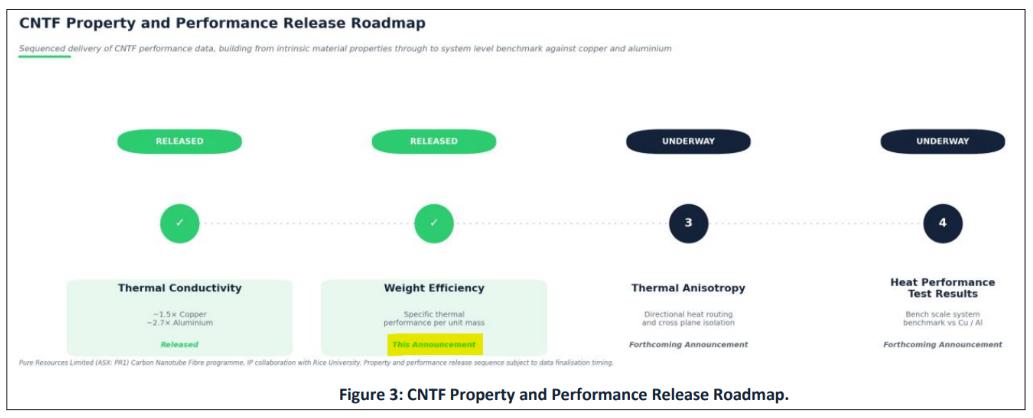
This is release 2 of PR1's four-part data sequence:
- Conductivity ✅
- Weight efficiency ✅ (today)
- Thermal anisotropy (testing the directional heat transfer properties along the material)
- System-level heat performance (A final test to compare to currently used systems)
(source)
That final system-level head-to-head against matched copper and aluminium references is the release we think could attract real industry attention.
The funding and customer pathways PR1 is chasing
Alongside the tech results, PR1 says it is running two pathways in parallel.
On the commercial side, it has early-stage engagement underway with:
- Hyperscale data centre operators,
- Defence prime contractors, and
- Drone and robotics manufacturers
This covers jointly funded development, prototype evaluation and integration testing (these are sti|l only early discussions, not signed deals).
Again, we think the final system-level head-to-head against matched copper and aluminium references is where these engagements can start to come into play.
On the funding side, PR1 says its United States Government funding strategy is progressing across:
- Department of Defence (DoD) and
- Department of Energy (DoE)
These are the avenues PR1 has been targeting across its earlier announcements - DPA Title III, the Office of Strategic Capital, the IBAS program, DARPA advanced-materials programs and AUKUS Pillar 2.
More on what carbon nanotube fibre is
We went deep on the CNTF thesis - what the material is, the Rice University team behind it, and the four target markets - when the first (conductivity) results landed back in May
(source - PR1 announcement)
Check out our recent note here: PR1: Test results show 1.5x more conductive than copper, 2.5x more than aluminium - an alternative material for cooling AI datacentres, robots and weapon systems?
What we want to see next from PR1
🔄 US government funding outcomes
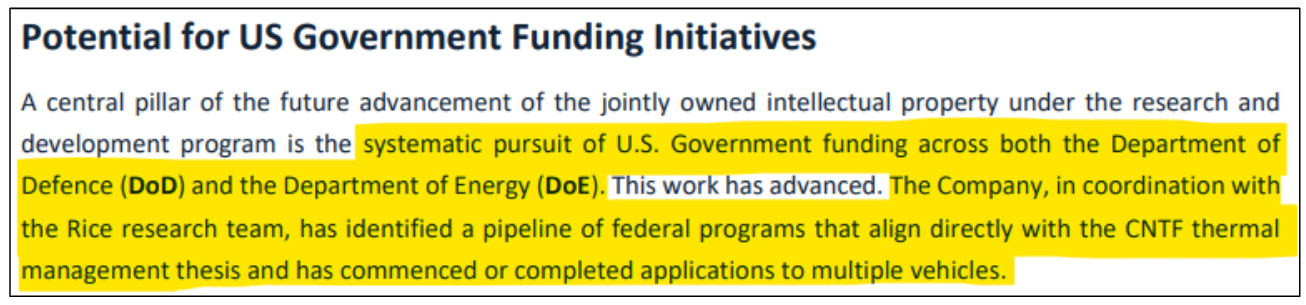
PR1 has commenced applications to DoE and DoD funding programs. We want to see at least one of these land - it would validate the program and provide additional capital:
(source)
🔄 End user collaboration progress
Multiple organisations are already engaging. We want to see this progress toward joint development agreements or testing partnerships with named parties.
🔄 Workstream milestones
With 8 workstreams now defined, we want to see PR1 start ticking off deliverables - starting with feedstock qualification and fibre synthesis.
PR1’s recent announcement confirmed that feedstock has been collected for characterisation, the very first step of Step 1.
Just prior to that PR1 confirmed the 8 step program to get this underway:
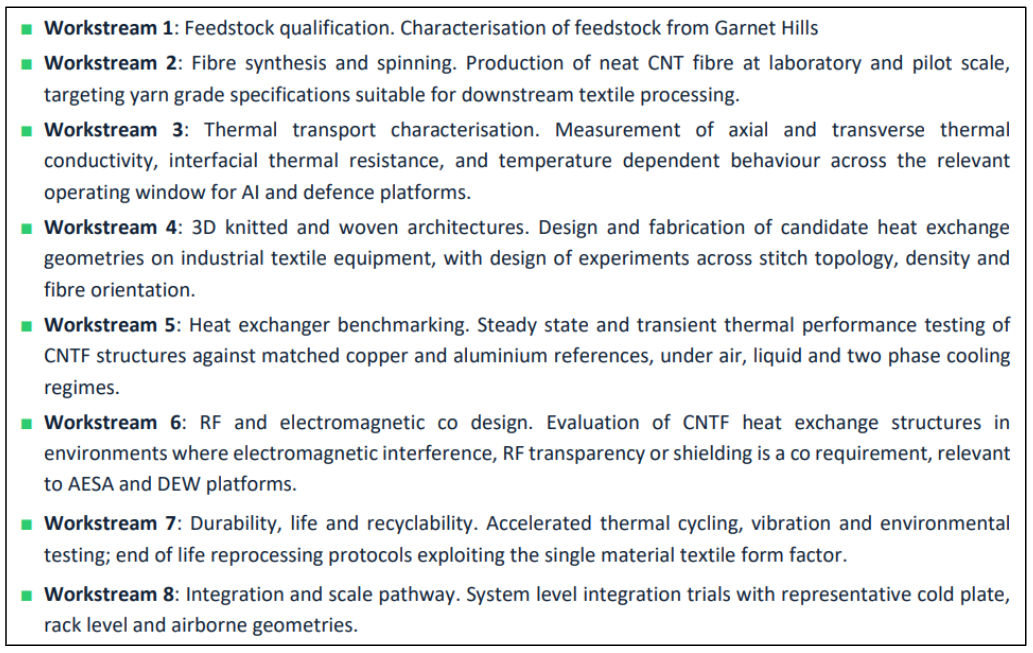
(source)