PR1: Tech now approved for use by USA Defense Advanced Research Projects Agency (DARPA) participants
Disclosure: S3 Consortium Pty Ltd (the Company) and Associated Entities own 3,100,000 PR1 Shares at the time of publishing this article. The Company has been engaged by PR1 to share our commentary on the progress of our Investment in PR1 over time. This information is general in nature about a speculative investment and does not constitute personal advice. It does not consider your objectives, financial situation, or needs. Any forward-looking statements are uncertain and not a guaranteed outcome.
We Invested in Pure Resources (ASX:PR1) for its “carbon nano tube fibre (CNTF)” cooling tech’s potential to replace copper/aluminium for thermal management...
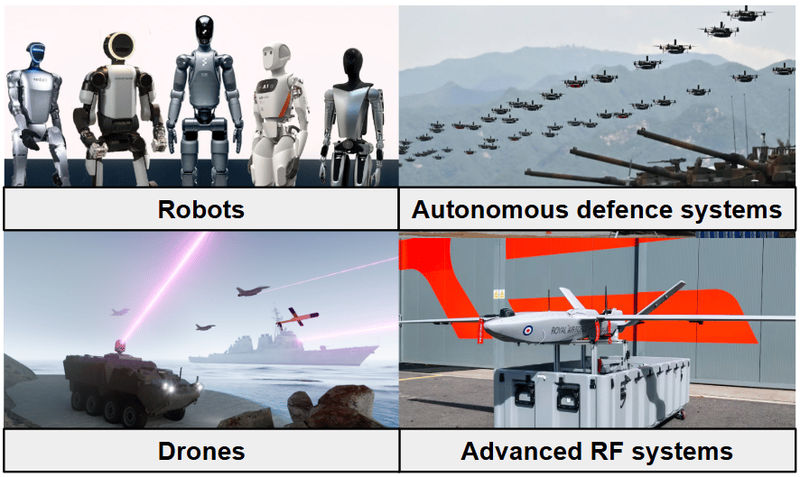
... in AI data centres, drones, robotics and advanced military equipment.
(meaning it could replace copper and aluminum traditionally used for heat management in these advanced technologies)
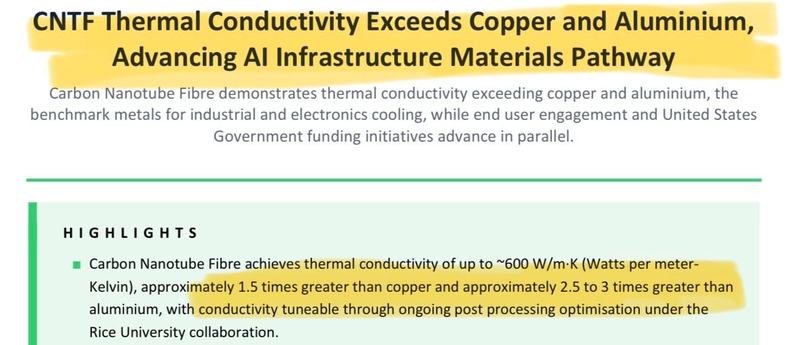
About six weeks ago, PR1 announced research findings (from its R&D partner Rice University) demonstrating that CNTFs are ~1.5x MORE CONDUCTIVE than copper AND ~2.5x to 3x more than aluminium at lab scale. (source)
(ie: BETTER for cooling/heat management)
Then last week, PR1 announced more research findings demonstrating that this CNTF cooling tech is ~5x LIGHTER WEIGHT than copper, ~3x lighter weight than aluminium in the lab. (source)
Making it a potential copper replacement in drones and robots...
(anything lighter and more conductive than copper is a big win for the ultra tight spaces and light weight requirements for drones and robots)
Over the last two weeks PR1 made two key appointments to its USA team:
- Retired three-star US Navy Vice Admiral Jeff Trussler.
- Mr Shubham Garg as Vice President for Technology and Commercialisation in the US.
TODAY: PR1 announced “awardable” status with the USA Defense Advanced Research Projects Agency (DARPA).
DARPA is a research and development agency operating within the United States Department of War.
DARPA has no labs of its own.
Instead, it operates with a small team of about 100 program managers who oversee contracts with top scientists in universities, industry, and government.
Notable DARPA participants include Lockheed Martin, Raytheon, Northrop Grumman, Google, Boeing and even SpaceX.
Today’s announcement means PR1's carbon-nanotube cooling tech passed DARPA's vetting and now sits in a catalogue where US Defense buyers can award it contracts
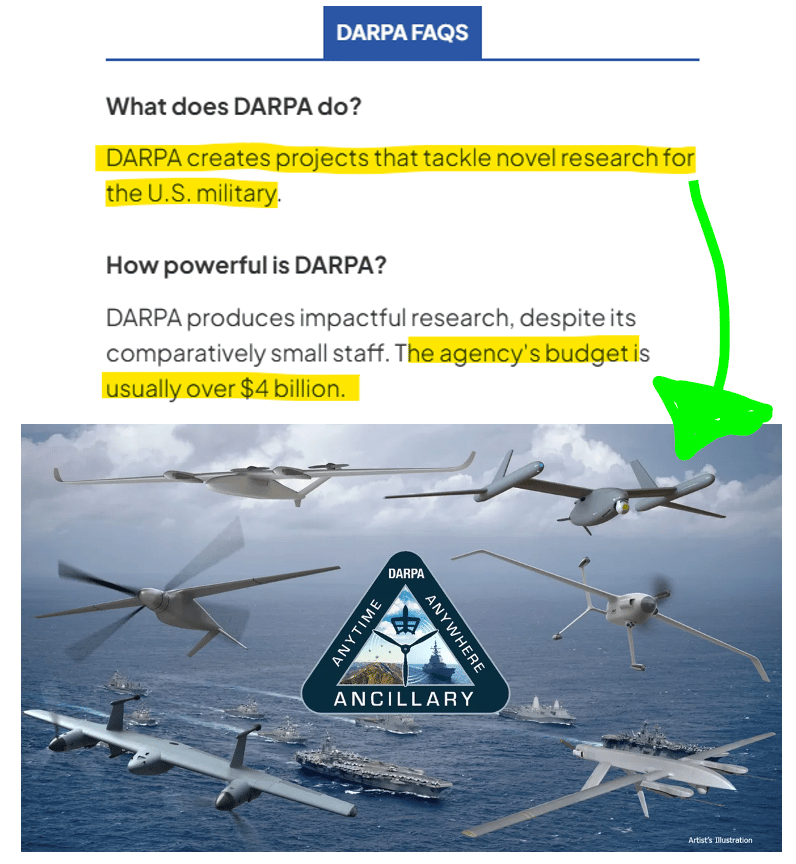
DARPA works on pioneering “impossible technologies” that eventually transition into the civilian world.
DARPA was funding robotics research back in 2005, AI back in 2002, micro satellites in the early 2000s and was heavily involved in establishing the foundation for the F-47 fighter jet (a highly classified, sixth-generation air superiority stealth fighter).
Including partnering with some of the big US defence contractors to commercialise those technologies:
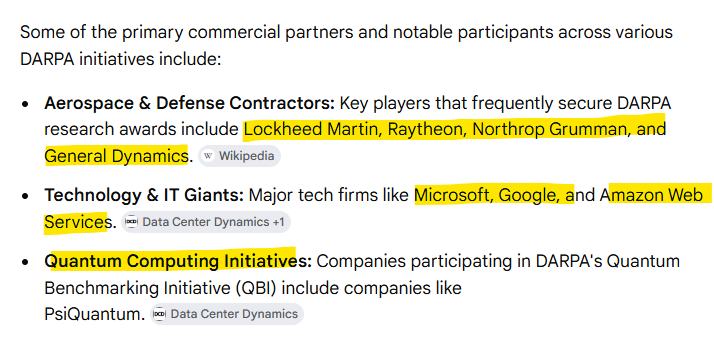
(source: googled it)
(now PR1’s recently appointed advisors - retired three star US Vice Admiral and a US VP for Technology and Commercialisation - can reach out to these DARPA members to try PR1’s CNTF for tech for their R&D projects)
Have a look at the innovation timeline on DARPA’s website showing everything that’s been developed over the years:
(well maybe not everything - being the US military’s central R&D arm, it might hold a few classified secrets...)
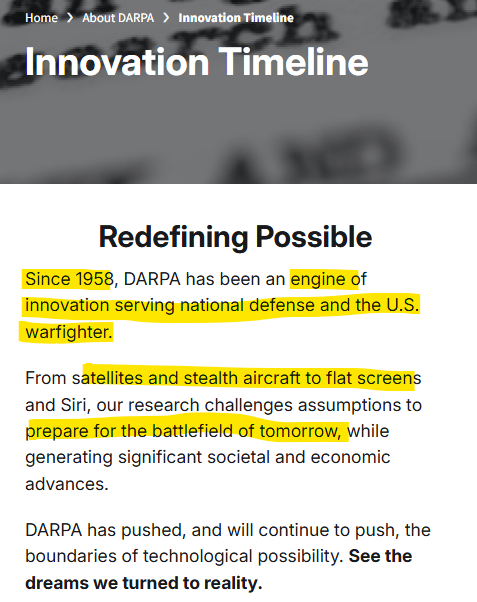
(source)
PR1’s tech now sits inside the DARPA’s marketplace accessible by the Department of War, along with a video that “demonstrates CNTF 3D architectures for next generation thermal management”.
In the video that PR1 shares on the its DARPA listing, we get to hear a comment from each of the four scientists working on the technology and why they think it's a better thermal management solution:
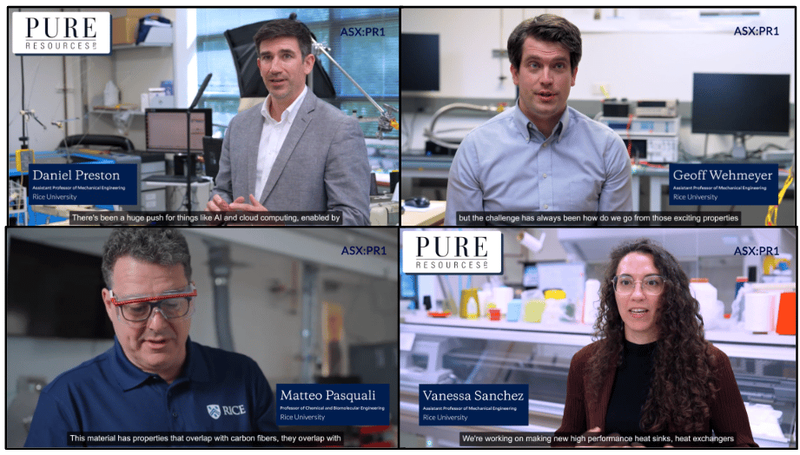
(Watch it here - more on the team’s profiles later in today’s note)
This is essentially the “elevator pitch” in video format to Department of War researchers who can then decide whether or not PR1’s tech might be useful for any of the drone/robotics/AI and defence programs - or at the very least start a conversation with PR1 / Rice University.
With the peace of mind of knowing PR1’s tech passes all of DARPA’s pre-screening before anything makes it onto its “ERIS” marketplace.
(the video is also pretty handy for PR1 investors like ourselves to get our heads around what it is doing)
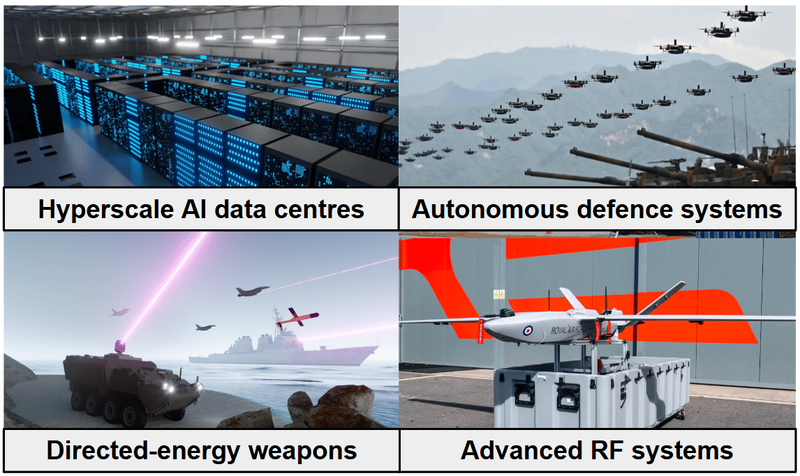
PR1 is developing carbon nanotube fibre tech (CNTF) and applying it to thermal management - the biggest bottleneck for AI, drones, humanoid robots and missile systems.
(more on what carbon nanotube fibres are in a second)
For now, all you need to know is that PR1’s tech is trying to solve the chip overheating problem in things that are using smaller, more powerful chips in more compact spaces.
(source)(source)(source)(source)
The chips inside the latest and greatest tech in these fields are getting smaller and more powerful.
More power in less space = a lot more heat concentrated into smaller areas.
And the materials tasked with solving the heat problem right now (copper and aluminium) are struggling.
This isn't the first time humans have run into a wall like this.
Back in 1997, IBM ripped aluminium out of its chip wiring and swapped in copper.
The result? IBM's chips became around a third more powerful just off one material change.
The lesson:
When the old metal hits a wall, the industry trades up to a better conductor.
Right now it’s copper hitting a wall and chipmakers are trialling replacements for different materials.
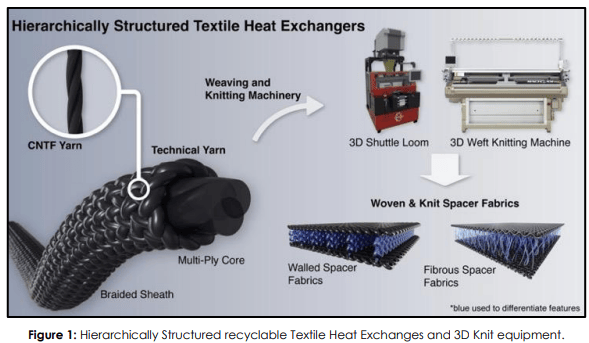
PR1’s solution to the problem is carbon nanotube fibre tech (CNTF) made of densely packed carbon nanotubes, processed into continuous fibres and thin films.
(source - PR1 announcement)
So in 1997 IBM improved its chips swapping aluminium for copper, then we discovered fan assisted cooling for heat sinks and eventually innovated to liquid cooling...
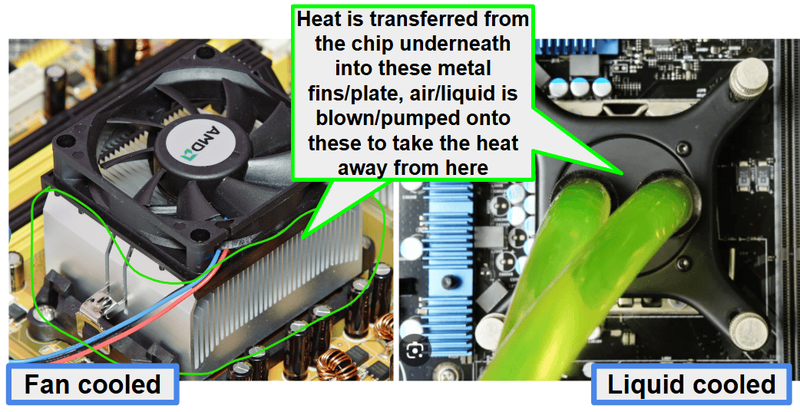
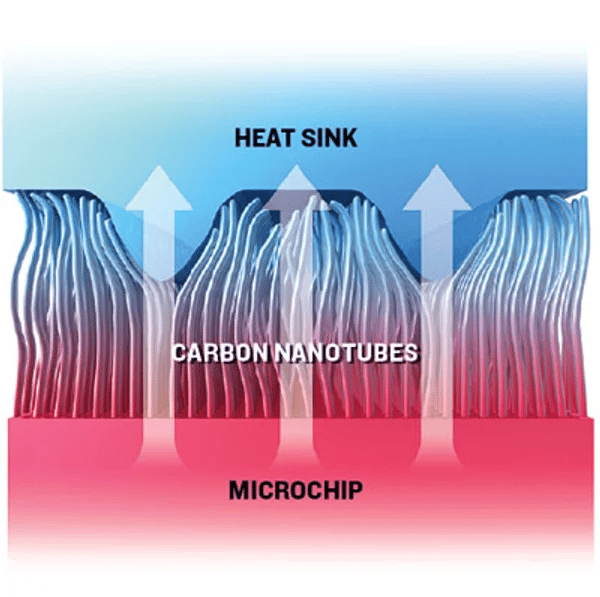
Carbon nanotube fibres would replace the (mostly aluminium or copper) heat sink materials - because carbon nanotube fibres are more conductive and can transfer heat away from the chip more effectively.
More efficient heat transfer = lower cooling requirements.
(Source)
So far PR1’s confirmed that its CNTF tech was ~1.5x more conductive than copper AND ~2.5-3x more than aluminium.
And with some manufacturing improvements (weaving trillions of CNTF into one fibre) could potentially be ~15x more conductive than copper.
(source)
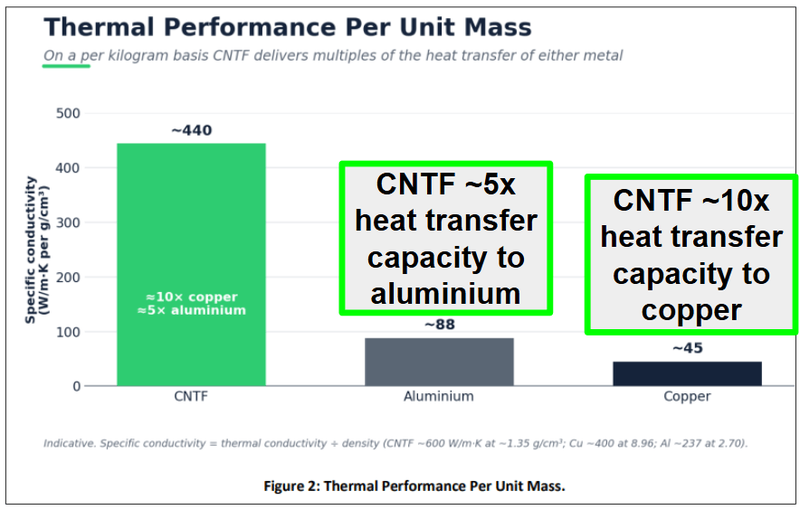
Last week PR1 confirmed that its CNTF tech is also ~5.5x lighter than copper and 3x lighter than aluminium.
Which means that on a per-unit-mass basis that PR1’s tech has conductivity/weight ratios ~10x copper and ~5x aluminium.
(source)
Which is exactly what’s needed in things like drones/robots and defence systems, where being compact, and high performance is important.
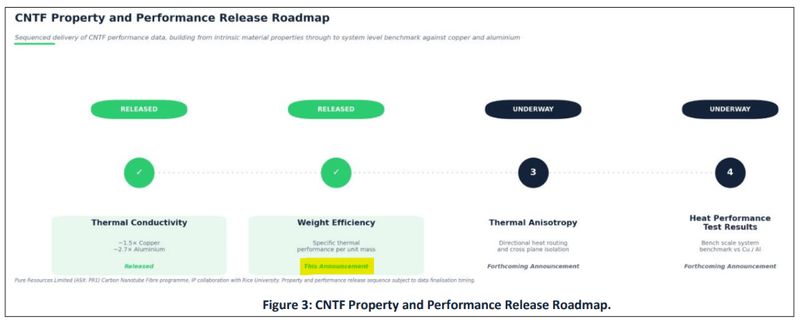
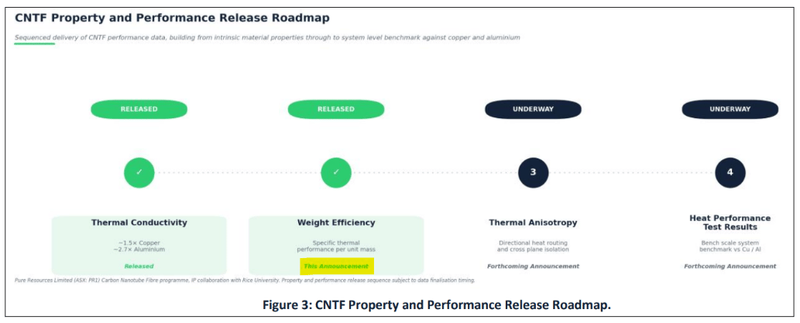
Last week’s news was PR1’s second release out of a four-part data sequence:
- ✅ Conductivity (How well the material can absorb/transfer heat from the source)
- ✅ Weight efficiency - (Basically measuring thermal performance relative to its weight)
- 🔲 Thermal anisotropy - (Measuring how well the material can direct heat)
- 🔲 System-level heat performance (This is the big one - actual tests in systems VS traditional materials - copper / aluminium)
(source)
We think that the last stage is when PR1 can really start ramping things up with its CNTF tech program.
That final system-level head-to-head comparison against matched copper and aluminium references is the data release we think could attract real industry/strategic attention.
We think a big deal could be the trigger for a re-rate in PR1’s valuation.
We wrote about this in our last note, but a recent PR1 peer that ran off a deal in the industry was ASX-listed Adisyn (ASX: AI1).
Adisyn had a strong data release then raised $14M cornerstoned by Regal Funds Management and Israel's largest investment house Meitav (~A$190B AUM).
Off the back of that placement, Adisyn ran by ~350%.
Adisyn is now capped at ~$200M.
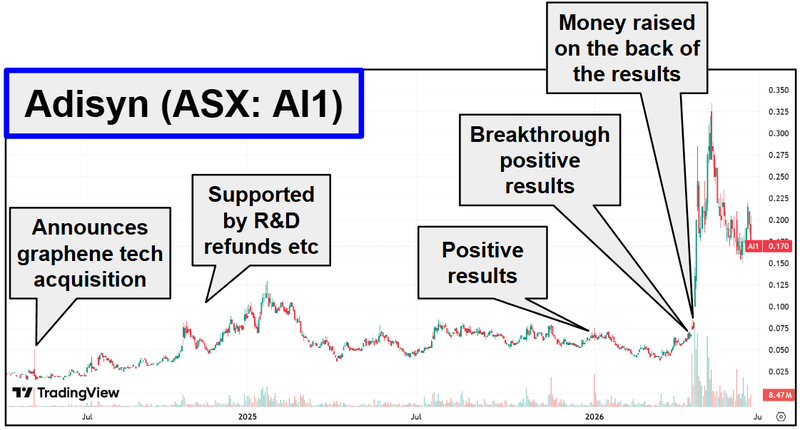
(source)
The past performance is not and should not be taken as an indication of future performance. Caution should be exercised in assessing past performance. This product, like all other financial products, is subject to market forces and unpredictable events that may adversely affect future performance.
We think there are a lot of similarities between that company and PR1.
Both are small ASX-listed companies with world-class university partnerships.
Both are working in the “materials science” space - with next gen materials looking to solve the shortcomings of existing materials (like copper).
The main difference between the two is AI1 is working with graphene and has some decent lab data - PR1 is working with Carbon nanotube fibre’s and lab data is incoming...
Here is how we rank the two side by side:
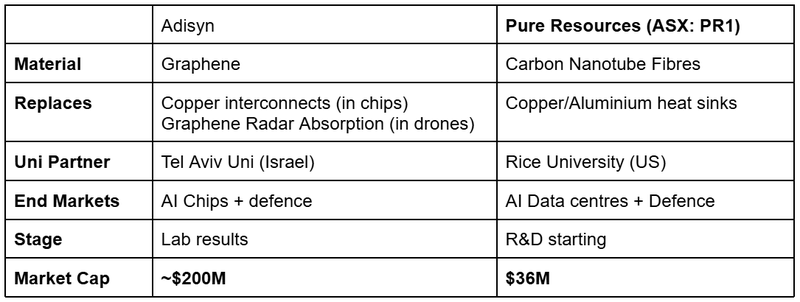
Going based on how the market’s re-rated Adisyn so far, we think PR1 could have a similar re-rate moment across three of the following milestones:
1. A reproducible lab milestone from Rice - IF PR1 can show its nanotube fibre as a working thermal interface material in an industry-relevant test the market could get interested in the stock and fast.
This is that “system level performance” milestone we mentioned earlier.
2. A defence or hyperscale customer signal - PR1 could do a deal with an AI data centre builder interested in CNTF heat sinks, with a US government agency OR with a defence contractor through the DARPA marketplace.
PR1 is already inside the US DOE ecosystem after signing a Strategic Partnership Agreement with Oak Ridge National Laboratory, after today is on the DARPA marketplace AND is engaging with DOE and DoD funding programs.
3. A cornerstone institutional capital event - Like Adisyn did, PR1 could have some specialised investment fund see the potential and take a position - which could wake up the broader market.
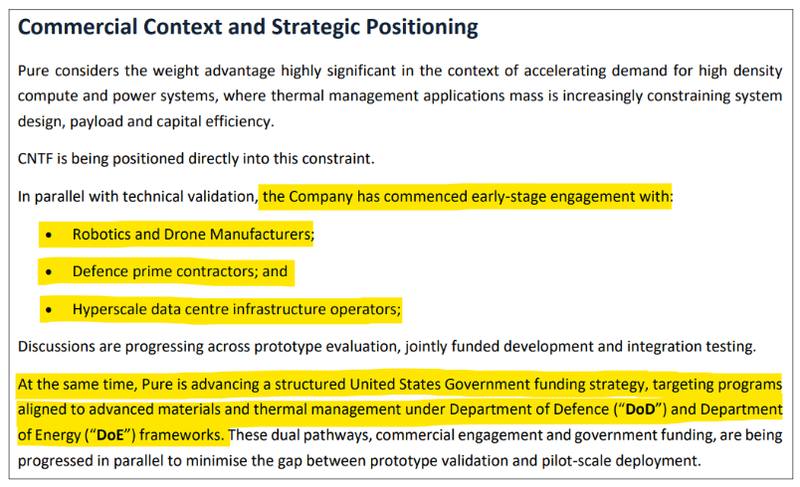
We note PR1’s announcement yesterday made explicit mentions of “early-stage engagement” being underway with:
- Hyperscale data centre operators,
- Defence prime contractors, and
- Drone and robotics manufacturers
This covers jointly funded development, prototype evaluation and integration testing (these are still only early discussions, not signed deals).
Again, we think the final system-level head-to-head comparison against matched copper and aluminium references is where these engagements can start to come into play.
And on the funding side, PR1 says its United States Government funding strategy is progressing across:
- Department of Defence (DoD) and
- Department of Energy (DoE)
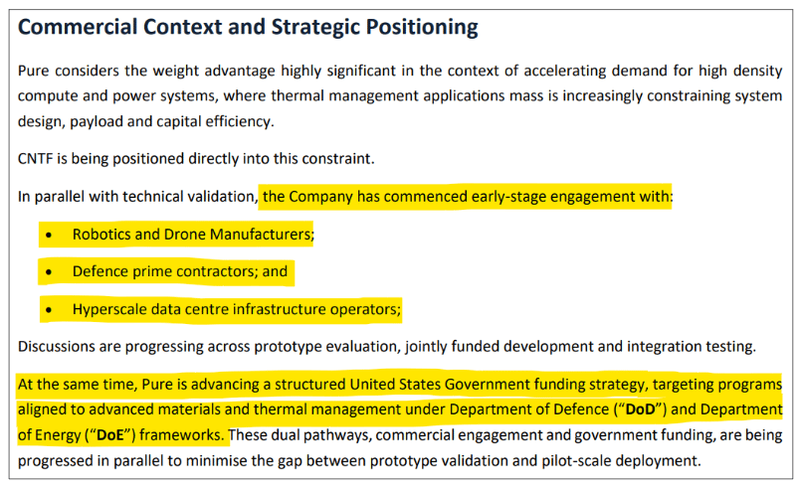
(source)
(none of those three are guaranteed. We could be wrong about the comparison entirely.)
We think that at this stage - there is still so much more to come from PR1...
And ultimately, we think one of the three above could contribute to PR1 achieving our Big Bet as follows:
Our PR1 Big Bet:
"PR1 re-rates to a +$200M market cap by securing a pathway into the carbon nanotube fibre thermal management supply chain, attracting strategic partnerships with major data centre or defence customers, and/or being acquired at a multiple of our Initial Entry Price."
NOTE: our “Big Bet” is what we HOPE the ultimate success scenario looks like for this particular Investment over the long term (3+ years). There is no guarantee that our Big Bet will ever come true. There is a lot of work to be done, many risks involved, including development risk, country risk and commodity price risk - just some of which we list in our PR1 Investment Memo.
Success will require a significant amount of luck. Past performance is not an indicator of future performance.
PR1 is partnered with Rice University - “The Birthplace of Carbon Nanotechnology”
A big part of the reason we Invested in PR1 was because of the R&D collaboration agreement with Rice University.
PR1 and Rice University will jointly own any IP that comes out of the R&D collaboration.
Rice University tech deals have a history of doing really well on the ASX:
- ~$2.02BN capped Weebit Nano (ASX: WBT) - ReRAM semiconductor - up ~700% at peak.
- ~$306M capped Metallium (ASX: MTM) - Flash Joule Heating - up ~800% at peak, AND
- ~$25M capped Locksley Resources (ASX: LKY) - one of our best performers of 2025 - up over 40% the day they announced their Rice collaboration.
Past performance of these companies is not indicative of future performance of PR1.
We also like that Rice has what we think is the only complete chain in the world from carbon nanotube fibre chemistry through to deployable thermal-management systems:
- Prof. Matteo Pasquali - global pioneer in CNT fibre. Co-founder of Dexmat. Backed by Shell Ventures, with funding from US DOE, NASA, US Air Force and ARPA-E.
- Prof. Daniel Preston - The extreme heat guy - pushing heat rejection to its limits.
- Prof. Vanessa Sanchez - The textile engineer - turning fibres into real-world structures.
- Prof. Geoff Wehmeyer - The thermal switch guy - making the thermal system intelligent and adaptive.
Pasquali makes the fibre, Preston pushes the heat, Sanchez weaves it into something a customer can use and Wehmeyer makes it smart.
(we did a deep dive on the team in our initiation note here: The Rice University research team on PR1’s project)
IF there is anyone PR1 could have worked with on this type of technology we would have wanted it to be a group like the one at Rice.
What's next for PR1?
🔄 US government funding outcomes
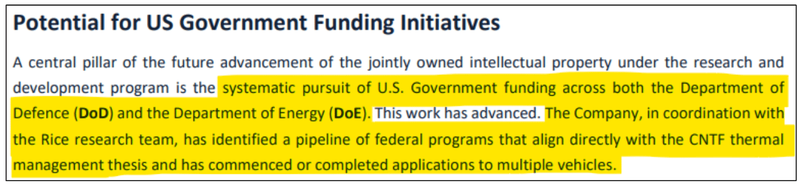
PR1 has commenced applications to DoE and DoD funding programs. (source)
🔄 End user collaboration progress
As mentioned earlier in today’s note.
PR1 started “early-stage engagement” with:
- Hyperscale data centre operators,
- Defence prime contractors, and
- Drone and robotics manufacturers
(source)
We want to see this progress toward joint development agreements or testing partnerships with named parties.
🔄 Next phase of work on CNTF & broader workstreams
From the CNTF program we want to see the following:
- ✅ Conductivity - (How well the material can absorb/transfer heat from the source)
- ✅ Weight efficiency - (Basically measuring thermal performance relative to its weight)
- 🔲 Thermal anisotropy - (Measuring how well the material can direct heat)
- 🔲 System-level heat performance (This is the big one - actual tests in systems VS traditional materials - copper / aluminium)
(source)
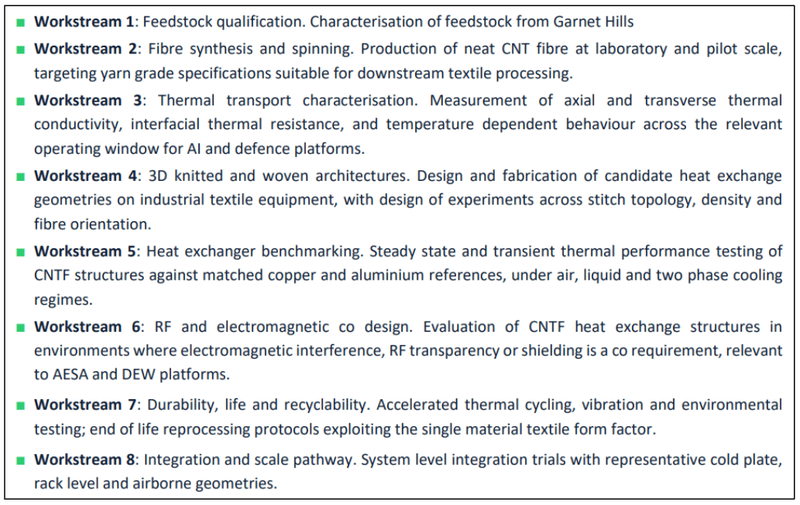
Here are the different workstreams building up to those milestones:
(source)
What could go wrong?
The two key risks in the short/medium term are “R&D risk” and “commercialisation risk”.
There is no guarantee that the R&D work PR1 does results in any positive data.
So there is always a risk the R&D program fails to deliver anything of commercial value.
There is also no guarantee that any of the R&D work results in any IP developed that is owned by PR1.
The terms of the R&D agreement with Rice University is that PR1 gets IP ownership on anything invented jointly.
There is no guarantee that occurs and in that case PR1 would have nothing to show for its R&D work.
Technology / R&D risk
PR1's research agreement with Rice University is early-stage R&D.
There is no guarantee that the collaboration leads to a commercial product.
Many research partnerships do not result in commercially viable outcomes.
Carbon nanotube fibre thermal management products are mostly in the “lab-demonstrated” but not yet commercially ready stage for PR1’s specific use case.
The gap between laboratory-scale and commercial-scale is real and has killed many promising technologies.
Source: “What could go wrong” - PR1 Investment Memo 31 March 2026
Other Risks
Like any small-cap technology company, PR1 carries significant risk, here we aim to identify a few more risks.
The jump from lab-based R&D to industrial-scale manufacturing is often where early-stage tech companies stumble. There is no guarantee PR1 will be able to achieve this.
PR1 is operating in a capital-intensive field and will likely require further funding rounds to reach commercial maturity.
Future capital raises are a common feature of small-cap life and can result in shareholder dilution if the company cannot secure non-dilutive funding or strategic partnerships.
The sales and integration cycles for the defence and high-performance computing sectors are notoriously long and complex.
Gaining the necessary certifications to replace established materials like copper in mission-critical hardware could take much longer than investors anticipate.
The company’s heavy reliance on the Rice University partnership and its key professors creates a level of key-person risk.
Should the collaboration face challenges or the joint IP ownership become complicated, it could significantly impact PR1's ability to commercialise the technology.
Investors should consider these risks carefully and seek professional advice tailored to their personal circumstances before investing.
Our PR1 Investment Memo
Our PR1 Investment Memo sets out our full thesis:
- What PR1 does
- The macro theme for PR1
- Our PR1 Big Bet
- What we want to see PR1 achieve
- Why we are Invested in PR1
- The key risks to our Investment Thesis
- Our Investment Plan
General Information Only
This material has been prepared by StocksDigital. StocksDigital is an authorised representative (CAR 000433913) of 62 Consulting Pty Limited (ABN 88 664 809 303) (AFSL 548573).
This material is general advice only and is not an offer for the purchase or sale of any financial product or service. The material is not intended to provide you with personal financial or tax advice and does not take into account your personal objectives, financial situation or needs. Although we believe that the material is correct, no warranty of accuracy, reliability or completeness is given, except for liability under statute which cannot be excluded. Please note that past performance may not be indicative of future performance and that no guarantee of performance, the return of capital or a particular rate of return is given by 62C, StocksDigital, any of their related body corporates or any other person. To the maximum extent possible, 62C, StocksDigital, their related body corporates or any other person do not accept any liability for any statement in this material.
Conflicts of Interest Notice
S3 and its associated entities may hold investments in companies featured in its articles, including through being paid in the securities of the companies we provide commentary on. We disclose the securities held in relation to a particular company that we provide commentary on. Refer to our Disclosure Policy for information on our self-imposed trading blackouts, hold conditions and de-risking (sell conditions) which seek to mitigate against any potential conflicts of interest.
Publication Notice and Disclaimer
The information contained in this article is current as at the publication date. At the time of publishing, the information contained in this article is based on sources which are available in the public domain that we consider to be reliable, and our own analysis of those sources. The views of the author may not reflect the views of the AFSL holder. Any decision by you to purchase securities in the companies featured in this article should be done so after you have sought your own independent professional advice regarding this information and made your own inquiries as to the validity of any information in this article.
Any forward-looking statements contained in this article are not guarantees or predictions of future performance, and involve known and unknown risks, uncertainties and other factors, many of which are beyond our control, and which may cause actual results or performance of companies featured to differ materially from those expressed in the statements contained in this article. S3 cannot and does not give any assurance that the results or performance expressed or implied by any forward-looking statements contained in this article will actually occur and readers are cautioned not to put undue reliance on forward-looking statements.
This article may include references to our past investing performance. Past performance is not a reliable indicator of our future investing performance.