PR1's carbon nanotube fibre tech gets peer reviewed validation
Our advanced materials Investment Pure Resources (ASX: PR1) is developing carbon nanotube fibre (CNTF) tech as a thermal management material - together with Rice University in the USA.
The tech is a carbon nanomaterial made of extremely aligned and densely packed carbon nanotubes, processed into continuous fibres and thin films.
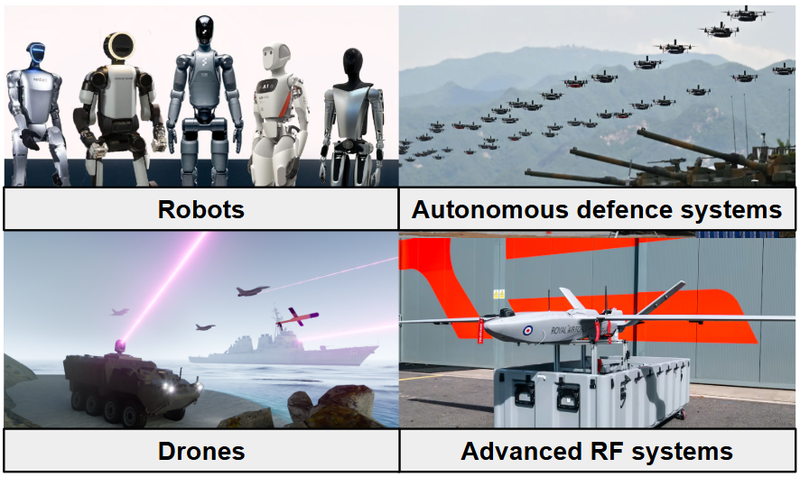
Think heat sinks and cooling hardware inside AI data centres, drones, robots and defence systems.
Today PR1 announced peer reviewed data on CNTF’s showing they can move large amounts of heat with a small temperature difference.
These results confirmed the high thermal conductivity which gives it the potential to perform better than the copper and aluminium alternatives commonly used today.
PR1 has kept the specific methods and data confidential to protect its competitive advantage ahead of a prospective patent filing and licensing process:
(source)
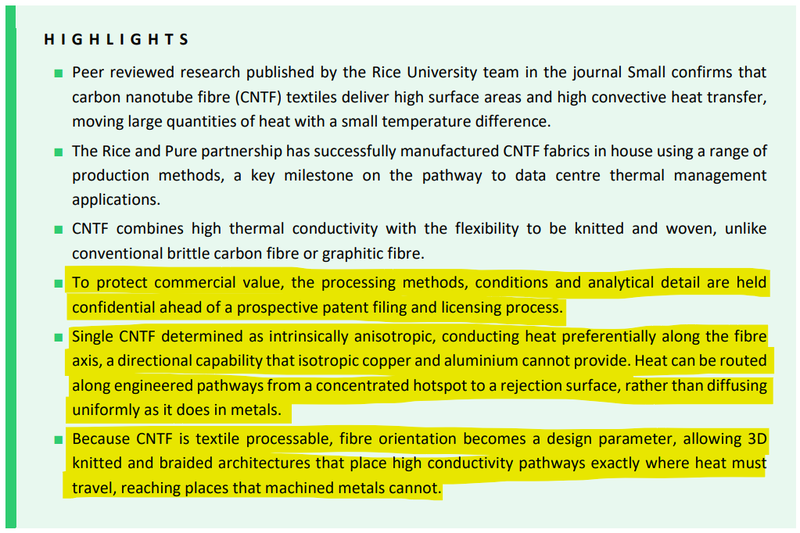
Also of note for the announcement is that single CNTF was determined to be intrinsically anisotropic.
(this means that the fibre conducts heat along its own axis, so heat can be routed along a chosen pathway instead of spreading evenly in every direction like metals do)
Basically, PR1’s tech could allow for inputs to be designed in ways where heat can be directed preferentially.
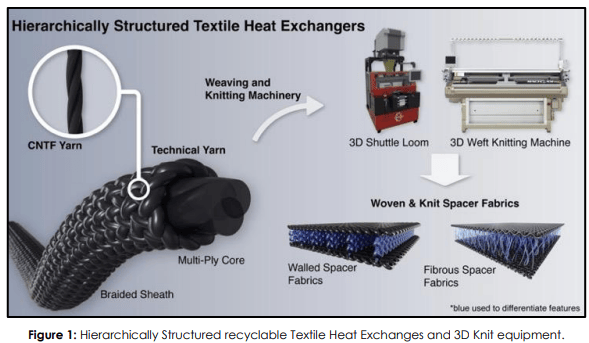
PR1 reaffirmed that the process to create the CNTF allows it to take full advantage of this property, as it can engineer into unique shapes and pathways (3D knitting, braiding and weaving).
So it is already manufacturing the material in a way that can achieve these outcomes here:
(source - PR1 announcement)
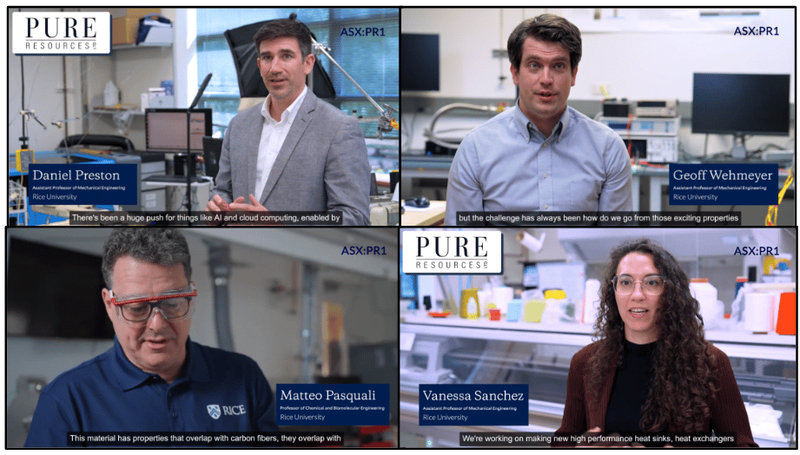
PR1 recently posted this video with the Rice team, so you can not only see some of the team in action, but can get an idea of how CNTF’s are made:
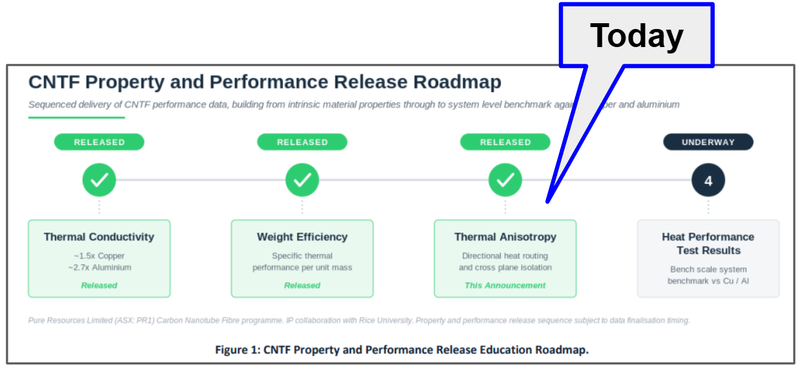
Today's news also ticks off the third of PR1's four planned CNTF data releases:
- ✅ Conductivity (~1.5x copper, ~2.5-3x aluminium)
- ✅ Weight efficiency (~5.5x lighter than copper)
- ✅ Thermal anisotropy (today - directional heat routing)
- 🔲 System-level heat performance - "the big one" (bench scale tests vs copper/aluminium - underway)
(source)
That final head-to-head is the release we think could attract real industry attention.
You can see or recent deep dive article here where PR1 was approved of DARPA: PR1: Tech now approved for use by USA Defense Advanced Research Projects Agency (DARPA) participants
What we want to see next from PR1
🔄 US government funding outcomes
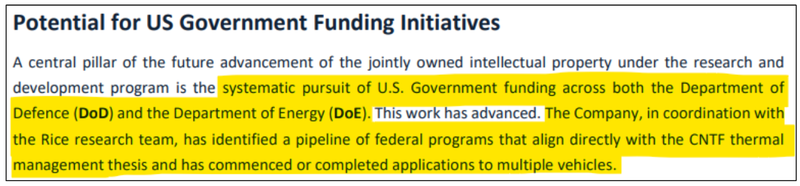
PR1 has commenced applications to DoE and DoD funding programs. (source)
🔄 End user collaboration progress
In our prior PR1 Deep Dive article we noted:
PR1 started “early-stage engagement” with:
- Hyperscale data centre operators,
- Defence prime contractors, and
- Drone and robotics manufacturers
(source)
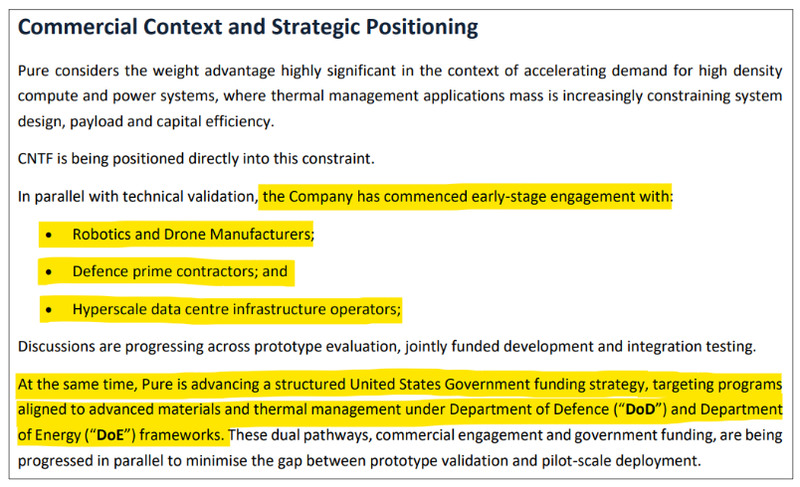
We want to see this progress toward joint development agreements or testing partnerships with named parties.
🔄 Next phase of work on CNTF & broader workstreams
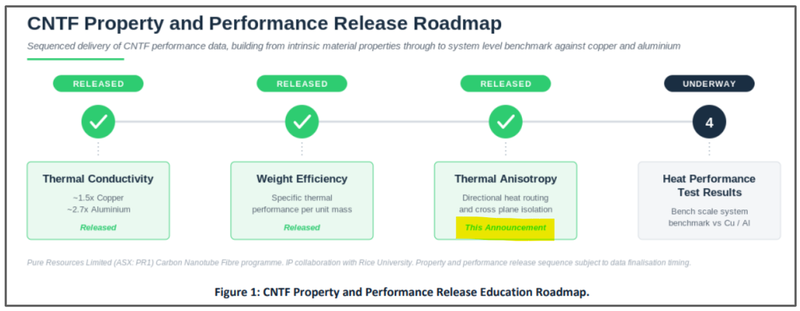
From the CNTF program we want to see the following:
- ✅ Conductivity - (How well the material can absorb/transfer heat from the source)
- ✅ Weight efficiency - (Basically measuring thermal performance relative to its weight)
- ✅ Thermal anisotropy - (Measuring how well the material can direct heat) - TODAY
- 🔄 System-level heat performance (This is the big one - actual tests in systems VS traditional materials - copper / aluminium)
(source)
Here are the different workstreams building up to those milestones:
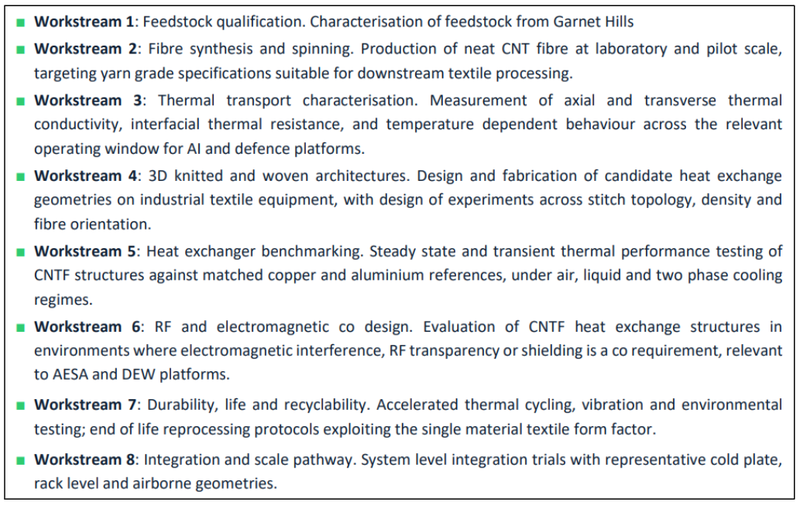
(source)