TRI to progress Phase 1 safety trial for brain tumour imaging tech - trials to start in H2 CY26
Our biotech Investment TrivarX (ASX: TRI) just engaged a specialist Contract Research Organisation (CRO) to progress the Phase 1 safety trials for its brain cancer imaging tech.
TRI will be working with Beyond Drug Development and the phase 1 safety trials are expected to start in H2-2026.
TRI is developing a non-invasive brain cancer imaging technology which is trying to solve the early detection issue that the current standard of care has.
More specifically by finding cancer before it's big enough for standard MRI to see in the brain.
Here is how the tech works:
- A patient swallows a small dose of a compound (a non-radioactive stable isotope)
- The stable isotope is taken up by “replicating cells” (these are the cancerous cells).
- A standard MRI machine then "sees" the labelled cells, because stable isotopes have slightly different magnetic properties from their normal counterparts.
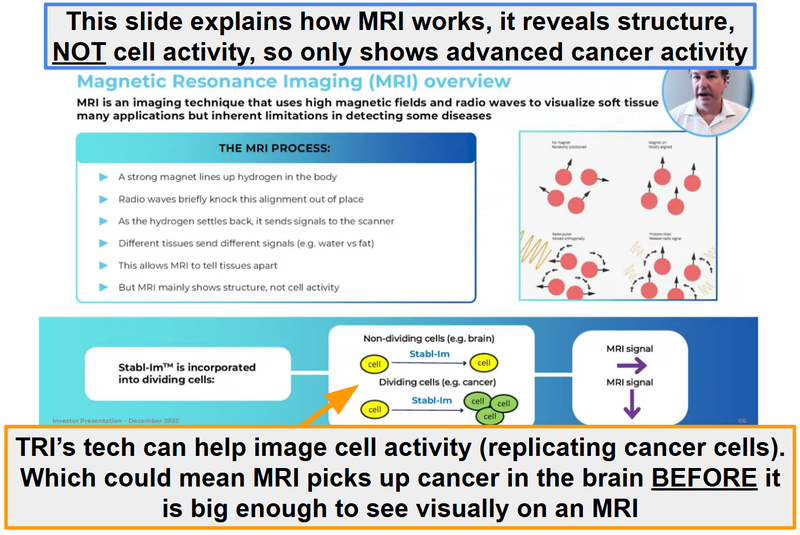
MRI’s are good at seeing things on a structural level, eg a tumour, but not a cellular level eg the cells in the early stages of forming the tumour.
That means MRI’s usually pick up cancers when they have already grown (2-3mm in size).
TRI’s tech (IF it works) could mean cancers in the brain are picked up at the earliest stage when they are tiny cells.
The end result? a non-invasive AND radiation-free way to see tumours early.
(source - video with Dr Daniel Tillett ) (slides from P3 here)
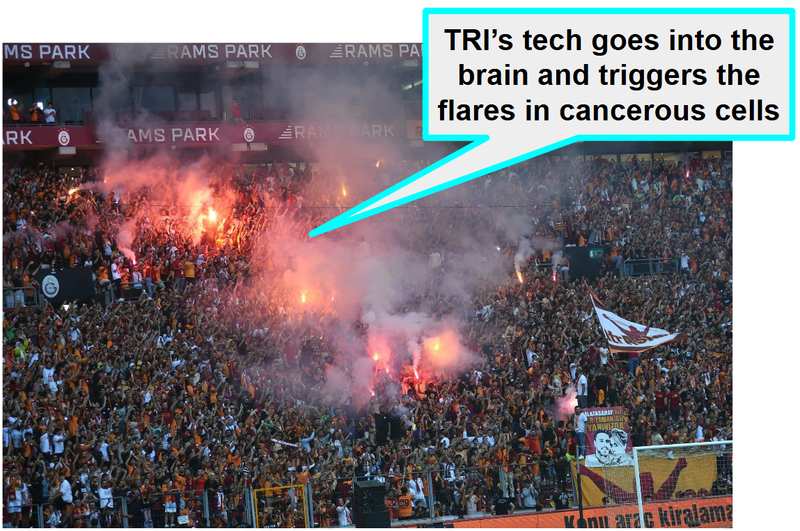
We compared it to trying to spot a handful of troublemakers in a stadium of 50,000 people.
From a distance, everyone looks the same. But hand every troublemaker a flare, wait for them to light them up and suddenly they're easy to pick out from the crowd.
That's what TRI's tech does, it makes the cells that matter light up on an MRI, so tumour activity can be spotted at a stage where it would otherwise blend into healthy tissue.
The initial engagement with the Contract Research Organisation will cover three key workstreams.
- Completion of the Phase 1 clinical protocol,
- Preparation of the supporting clinical, and
- Regulatory documentation, plus clinical site selection activities to support the planned study.
The phase 1 study will primarily be to find out if TRI’s tech is safe in humans.
TRI is targeting commencement of the Phase 1 safety study during H2 CY26.
That gives a relatively near term ~6 month window before TRI begins trials which will involve dosing the stable isotope into the first human volunteers.
Why the CRO Contract Research Organisation engagement actually matters
Engaging a specialist CRO (Contract Research Organisation) is the moment a biotech program moves from internal preparation to beginning to put in place the pieces to get the trial underway.
CROs are the operational backbone of how clinical trials actually get run, so choosing the right one matters a lot.
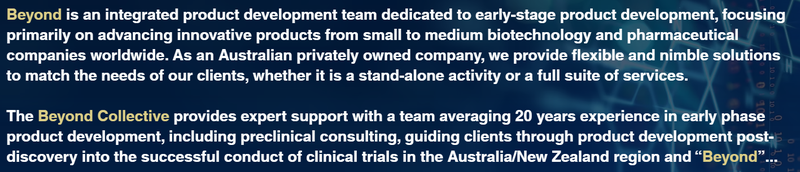
Beyond Drug Development is a boutique CRO focused on early-phase product development for biotech and pharma globally.
The team brings significant relevant expertise, with multiple members averaging more than 20 years of experience across clinical development, regulatory strategy and imaging product advancement.
So this is directly relevant to what TRI is setting out to achieve with these trials.
That experience also includes specialist regulatory toxicology support with over 30 years of experience working on therapeutic and imaging product development programs.
This is a snippet from beyond Drug Development’s website:
(source)
Importantly, incoming CEO Dr Danielle Meyrick has previously worked with the Beyond team before:

So this is already a known and trusted partner being sought out by the incoming CEO to help with the planning and running of the program, not an entirely brand new relationship.
For a small-cap biotech executing its first major clinical trial, that kind of pre-existing relationship can help to materially de-risk the execution side.
8 reasons why we are Invested in TRI
- Dr Daniel Tillett has delivered in the past for ASX investors - we are backing him again here
- Same backers behind our 2025 Biotech Pick of The Year
- Brain-tumour imaging that could be a game changer
- The ASX understands these stories.
- A peer comp is approaching a ~$5BN market cap
- TRI just appointed Telix’s ex- Chief Medical Officer
- Small market cap relative to addressable opportunity
- Free hit on TRI’s AI for detecting Current Major Depressive Episodes.
Earlier in the week we relaunched our new Investment memo for TRI, you can see the expanded reasons and more on the technology in the article we did here: TRI - Cancer diagnostics. Ex- $5BN Telix Chief starts as CEO in 13 days
What do we expect TRI to deliver?
In the short term it will be all about the phase 1 safety trial.
Phase 1 human safety trial
In the short term it will be all about the phase 1 safety trial, expected to begin in H2 this year (source).
We want to see TRI’s tech tested in patients with confirmed brain tumours, to demonstrate safety, imaging precision, and reliability.
Here are the milestones we are tracking:
- 🔲 Complete trial design
- 🔲 Manufacture stable isotope compounds
- 🔲 Animal efficacy studies & results
- 🔲 First-in-human dose
- 🔲 Phase 1 trial completed
- 🔲 Phase 1 trial results
FDA Regulatory Pathway
While the trials happen we also want to see TRI go through the regulatory process with the FDA.
Here are the milestones we are tracking for FDA engagement:
- 🔲 Pre-IND (Investigational New Drug) meeting with FDA
- 🔲 IND application submitted
- 🔲 FDA approved IND for TRI’s tech
- 🔲 (bonus) FDA Fast Track / Breakthrough / Orphan designation