TRI locks in Phase 1 clinical site - first participant Q1 2027
Our biotech Investment TrivarX (ASX: TRI) just locked in the clinical site for a Phase 1 study of its brain cancer imaging tech.
TRI is trying to solve the "early detection" problem for brain cancer.
TRI’s tech works by having patients swallow a small dose of a non-radioactive stable isotope, which is taken up by replicating (cancerous) cells.
A standard MRI can then "see" those labelled cells very early, before a larger tumour has developed.
The current standard of care is unable to do that and oftentimes picks up the tumours after its too late.
IF TRI’s tech works, it could mean brain cancers are caught early, non-invasively and radiation-free, using the MRI machines (which are already an accepted and well udnerstood way of imaging for brain cancer).
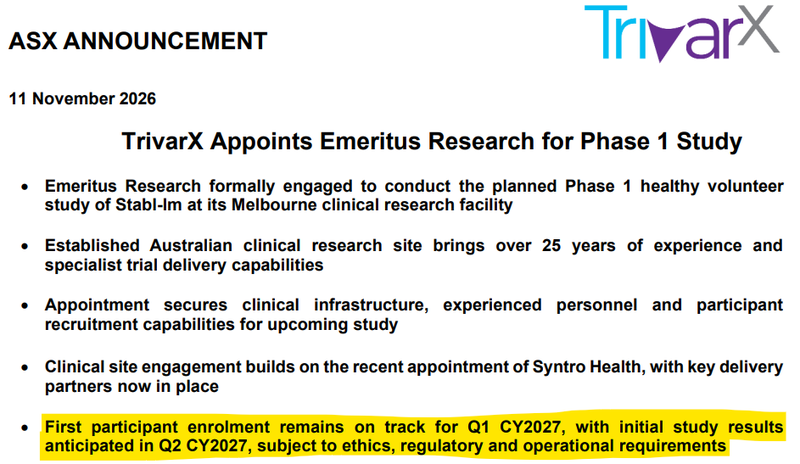
This week TRI announced that first participant enrolment for its phase 1 study is on track for Q1 2027.
Followed by initial results in Q2 2027 (subject to ethics and regulatory approvals).
Here are the highlights from this week’s announcement:
(source)
Helping TRI with the phase 1 study is Emeritus Research who have over 25 years of experience, and can bring the staff, infrastructure and participant recruitment needed for the trial.
The Phase 1 study will test safety in healthy volunteers, and help set the dosing for future studies.
It follows last month's engagement of pharma manufacturer Syntro Health to prepare the product for dosing (which we covered here), so the key delivery partners are now in place.
Next up is the dosing trial into the first patients, still on track for Q1.
What is TRI’s tech?
Here is how the tech works:
- A patient swallows a small dose of a compound (a non-radioactive stable isotope)
- The stable isotope is taken up by “replicating cells” (these are the cancerous cells).
- A standard MRI machine then "sees" the labelled cells, because stable isotopes have slightly different magnetic properties from their normal counterparts.
TRI's tech (IF it works) could mean brain cancers are picked up at the earliest stage, when they are still tiny cells.
The end result? Hopefully a non-invasive AND radiation-free way to see tumours early.

(source - video with Dr Daniel Tillett ) (slides from P3 here)
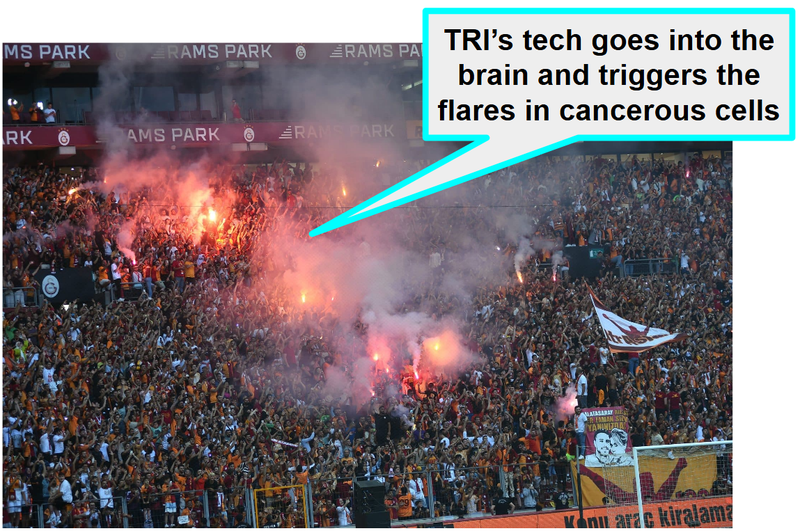
We have compared it to trying to spot a handful of troublemakers in a stadium of 50,000 people.
From a distance, everyone looks the same. But hand every troublemaker a flare, wait for them to light them up and suddenly they're easy to pick out from the crowd.
That's what TRI's tech does, it makes the cells that matter light up on an MRI, so tumour activity can be spotted at a stage where it would otherwise blend into healthy tissue.
See our most recent Deep Dive on TRI here: TRI - Cancer diagnostics. Ex- $5BN Telix Chief starts as CEO in 13 days
What do we expect TRI to deliver?
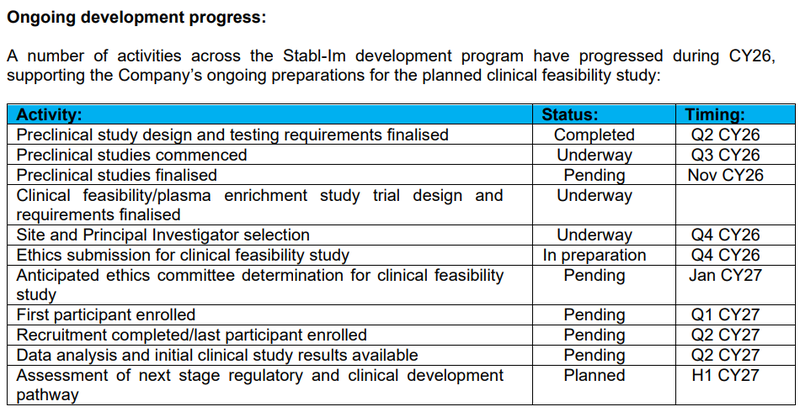
In September TRI included the below plan, so we can start to tick off the milestones:
(source)
In the short term it will be all about the Phase 1 safety trial.
Phase 1 human safety trial
The phase 1 safety trial is expected to begin before the end of the year (source).
We want to see TRI’s tech tested in patients with confirmed brain tumours, to demonstrate safety, imaging precision, and reliability.
Here are the milestones we are tracking:
- ✅ Complete trial design (source)
- 🔄 Manufacture stable isotope compounds
- 🔲 First-in-human dose (set for Q1)
- 🔲 Phase 1 trial completed
- 🔲 Phase 1 trial results (to follow in Q2)
FDA Regulatory Pathway
While the trials happen we also want to see TRI go through the regulatory process with the FDA.
Here are the milestones we are tracking for FDA engagement:
- 🔲 Pre-IND (Investigational New Drug) meeting with FDA
- 🔲 IND application submitted
- 🔲 FDA approved IND for TRI’s tech
- 🔲 (bonus) FDA Fast Track / Breakthrough / Orphan designation