SGQ produces separate high grade niobium AND rare earth concentrates in first flotation testwork
Our Investment St George Mining (ASX: SGQ) just produced a high grade niobium concentrate AND a separate rare earth concentrate from its project in Brazil.
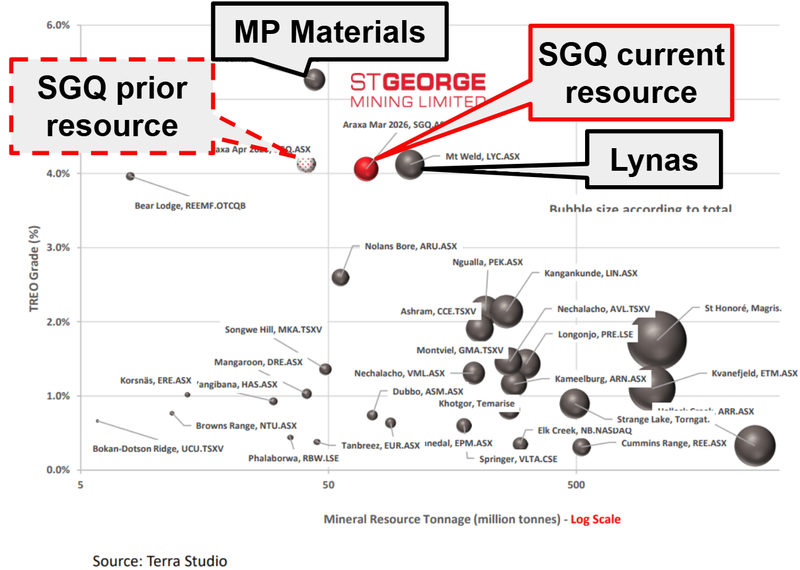
SGQ's resource is already the largest and highest-grade carbonatite-hosted rare earth deposit in South America...
... and the second highest grade REE deposit globally in the Western world.
The project’s resource is comparable to the two biggest hard rock carbonatite assets in the world owned by $14BN MP and $17BN Lynas:
(source)
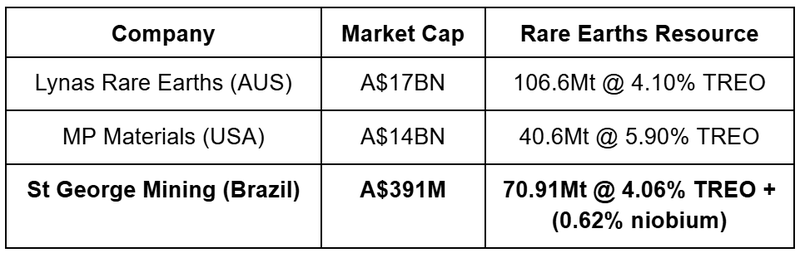
The difference maker for SGQ is that its resource also has a large niobium component.
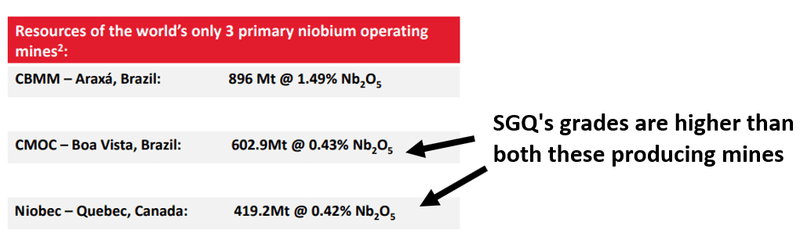
The resource above is for the TREO, if going by niobium only there is an additional 24.56Mt @ 0.52% which comes in at 95.47Mt for ~0.56Mt of contained niobium at 0.59% niobium.
That actually makes it higher grade relative to two of the three operating niobium mines in the world:
(source)
Today, SGQ put out metallurgical testwork results that show that niobium and rare earths can be co-produced at the same time.
- A niobium concentrate as one product stream, and
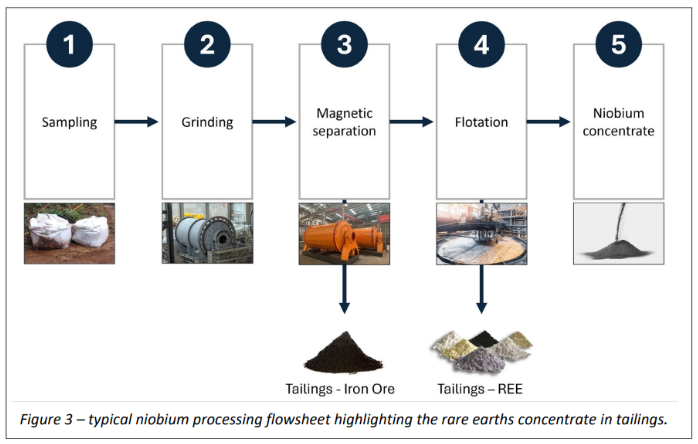
- A rare earth concentrate recovered from the tailings of that same process as a second.
Both of these products have two potential revenue streams:
- Niobium into steel, superalloys and EV fast-charge batteries,
- Rare earths into the permanent magnets that go into EVs, wind turbines, defence systems and AI infrastructure.
This is a look at the niobium flotation stages form the testwork:
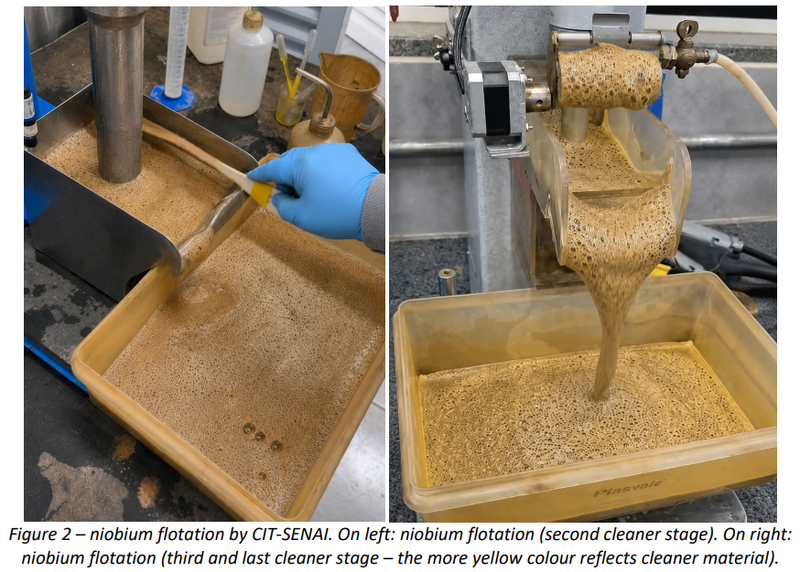
(source)
The testwork was run on a big, representative sample with approximately five tonnes of near-surface saprolite dug from a trench at the Central Araxá project area with head grades of 0.69% niobium and 9.29% TREO.
This is the style of material SGQ expects to mine in the early years of any future operation, so the results are from a realistic sample.
So it should be a good guide on how the actual plant feed should behave rather than a specific sample plucked to give it the best chance at eye grabbing numbers.
First, the niobium concentrate
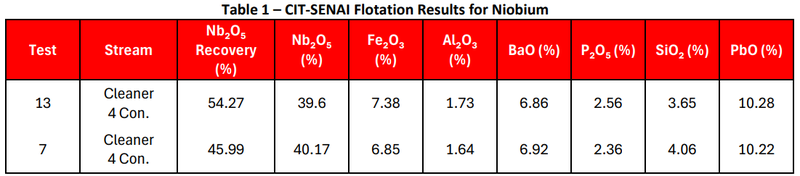
The headline numbers from the open circuit flotation testwork (completed by Brazilian scientific agency CIT-SENAI in Belo Horizonte):

(source)
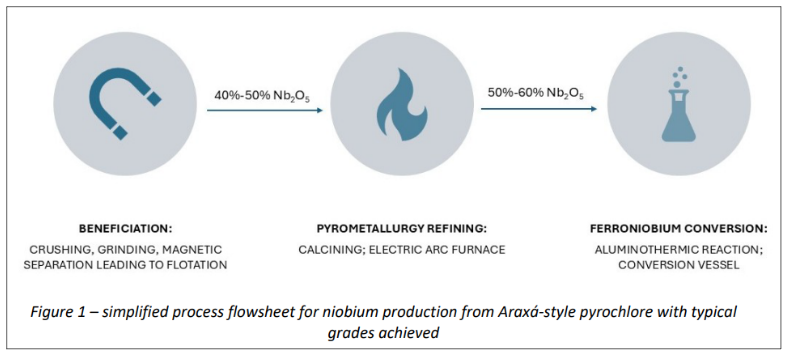
For context, the announcement notes that typical operations processing Araxá-style pyrochlore ore recover between 40% and 60% of the niobium, at flotation concentrate grades of 40% to 50%.
So SGQ's very first pass (in open circuit), before any of the recycling of intermediate streams that commercial flotation circuits use, is already sitting inside the ranges of operating niobium mines on this style of ore.
(In the refining stage that follows flotation, grades typically rise to 50%-60% with ~95% recoveries which is the ferroniobium pathway SGQ is now studying.)
(source)
Here is a less technical look at the process also included today:
(source)
And a separate rare earth concentrate recovered from the niobium tailings
This is the part we think could unlock value for how the SGQ story develops from here.
The rare earth concentrate wasn't produced in a separate, competing process, rather it was recovered from the tailings of the niobium flotation.
This was done using a technique called reverse flotation (commonly used in the iron ore industry).
That is the dual-processing flowsheet SGQ has been designing for Araxá by processing the ore once, taking the niobium out first, then upgrading the rare earths from what's remaining.
The first sighter test produced a rare earth concentrate grading 15.7% TREO, a ~1.6 times upgrade on the feed grade of the testwork sample.
The reverse flotation step recovered ~82% of the rare earths that made it here.
(In this open circuit test, ~59.7% of the rare earths followed the niobium into its concentrate, so SGQ expects a high portion of these to be recovered in the locked cycle and recycle testwork that is now underway.)
(source)
On the magnet metals, the rare earth concentrate carried 2.18% neodymium oxide and 0.66% praseodymium oxide (combined, NdPr).
This matters because NdPr is the critical input for permanent magnets, and SGQ's project has an NdPr ratio of ~20% (and as high as ~26% in recent drilling results).
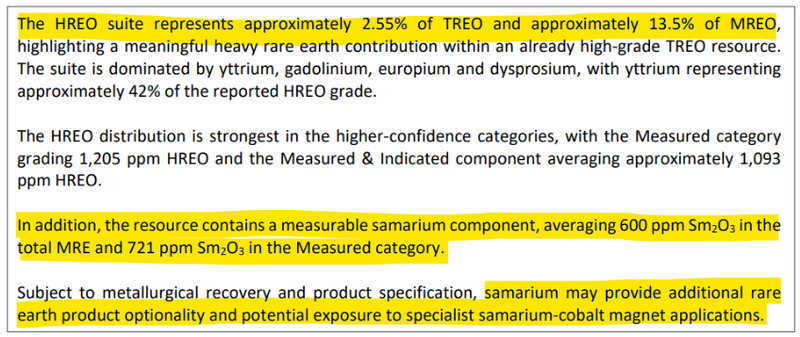
Today's announcement also expanded on SGQ's heavy rare earth content in more detail than we have seen before.
~1,037ppm HREO across the resource (dominated by yttrium), plus an average 600ppm samarium oxide that SGQ mentioned as potentially useful for samarium-cobalt magnets used in specialist defence applications.
What still needs work - and who is working on it
Here is what SGQ outlined as the future steps and expectations for the met program that is ongoing:
- Recoveries should improve from here - this was open circuit testwork only, locked cycle and recycle flotation testwork (the configuration commercial plants actually run) is underway now, aiming to lift both recovery and grade.
- Elevated lead levels in the niobium concentrate (~10% lead) - a known feature of Araxá-style pyrochlore that existing Brazilian niobium operations already manage. Downstream refining studies are planned to evaluate impurity removal pathways and ferroniobium processing options.
- Final rare earth recovery is not yet defined - further testwork will determine the likely overall rare earth recovery to a final product.
The broader program from here will cover comminution testwork, flotation optimisation and variability studies, downstream concentrate refining studies and ferroniobium process evaluation.
These will be running across multiple labs in Brazil and in Canada.
And the people running it know this orebody style better than almost anyone too, with a key emphasis on local knowledge, especially from the CBMM mine next door:
- Ricardo Nardi (Lead Processing Engineer) - former Head of Mineral Processing at CBMM with 30+ years in niobium processing
- Adriano Rios (Director of Mining Operations) - former Production Manager at CBMM
- Thiago Amaral (Brazil Country Head) - former CBMM Product Regulation Coordinator and ex-Head of Sustainability at CBMM
- Alaercio Viera (Metallurgy Manager) - previously Metallurgy Manager at Serra Verde, Brazil's only producing rare earth mine (currently subject to a US$2.8BN takeover by NASDAQ-listed USA Rare Earth), and a former Process Expert at the world's two largest niobium mines - CBMM at Araxá and CMOC at Catalão
The timeline from here is what we will be watching:
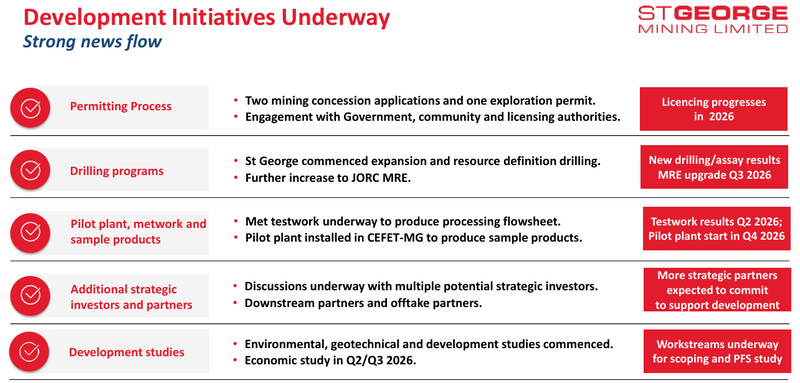
- July 2026 - CIT-SENAI (lab facility) runs a one month pilot plant study on niobium flotation
- Late Q4 2026 - SGQ's own large scale pilot plant (under construction at CEFET-MG in Araxá) is scheduled to be operating, with up to 300kg/hour throughput and the capability to produce flotation concentrate, ferroniobium AND a range of rare earth products (concentrate, mixed rare earth carbonate and rare earth oxides)
That pilot plant item has now moved from "agreement signed" which we covered here, to under construction with a start date.
This will be a meaningful step towards the economic studies due later this year as these works will be a key input into the study.
Meanwhile - the drills haven't stopped
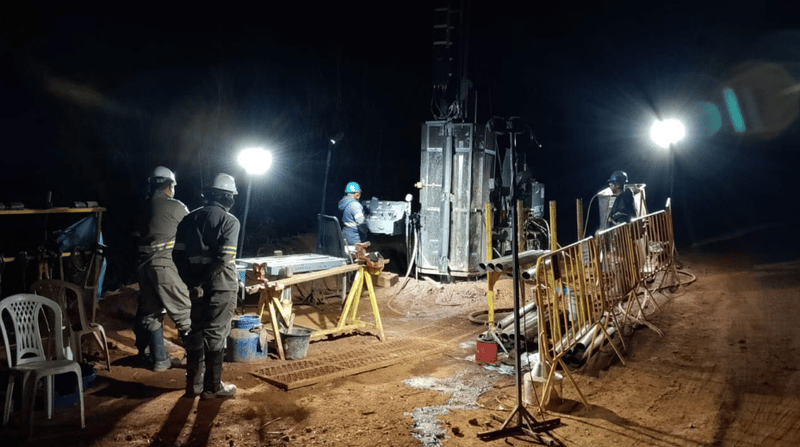
SGQ still has 4 rigs turning 24/7 at its project.
Today's announcement notes SGQ has now completed 108 diamond drill holes and 28 aircore holes since July 2025, targeting another resource upgrade in Q3. (source)
The macro backdrop keeps moving in SGQ's favour too.
Heavy rare earth prices have continued climbing - dysprosium is up ~105% year to date (~US$930/kg as of early June). (source)
Plus terbium up ~103% year to date (~US$4,028/kg), with ex-China prices running at multiples of Chinese domestic prices as Western buyers scramble for non-China supply. (source)
It’s worth noting that today's announcement highlighted SGQ's heavy rare earth and samarium content in detail.
(source)
And the Western rare earths story hasn't moved with US Pentagon procurement rules effectively banning Chinese-sourced rare earth magnets in US defence platforms from 31 December 2026.
What’s next for SGQ?
🔄 Drill results from expansion drilling
SGQ has 4 rigs turning 24/7 at its project right now.
(source)
The last update out of SGQ said that ~44 expansion holes had been completed that AREN’T in the current resource estimate.
We are hoping the current drill programs lead to another resource upgrade on the project later this year.
(SGQ has mentioned it is targeting another upgrade in Q3).
There is also ongoing met testing which we saw the initial results of today
🔄 Downstream processing updates - now on FOUR fronts
Here are the processing pathways we are tracking with four different companies across four different jurisdictions.
For rare earths processing:
- 🔄 With REAlloys (US) - Testing SGQ's rare earth product to see IF it meets specifications for US military-grade permanent magnets
- 🔄 Nanum Nanotecnologia (Brazil) - Cerium/lanthanum separation to upgrade NdPr concentration by removing lower-value rare earths early in the processing cycle
- 🔄 Tecnicas Reunidas (Europe) - Applying proprietary technology to SGQ's ore samples to design an optimal chemical flowsheet
And most recently - for the niobium:
- 🔄 With Boston Metal (US/Brazil) - testing processing tech on SGQ’s niobium resource.
We also note SGQ:
- Has signed an agreement for a joint pilot plant trial (building on a prior 9-month trial that successfully produced rare earth product at over 99% purity with 86% recoveries)
- Is participating in the MAGBRAS Initiative - a program with major automakers like Stellantis working toward building Brazil's first permanent magnet-making facility
Beyond all of that, we are also looking out for the following (specifically that economic study):
(source)