PR1 secures feedstock for three US workstreams
Our advanced materials Investment Pure Resources (ASX: PR1) just completed a sampling program at its graphite project in WA.
We Invested in PR1 primarily for the partnership with Rice University to develop thermal heat transfer technology related to the AI and data infrastructure buildout underway.
PR1 is looking to apply “carbon nanotube fibres” to tech where aluminium and copper are the current industry standard.
PR1 is our exposure to advances in materials science - essentially developing something that could replace copper or aluminium in advanced tech applications.
(more on what carbon nanotube fibres are in a few weeks)
Today’s announcement matters in that context because it means PR1 has collected physical feedstock that can go into its three different workstreams:
- Large-to-jumbo flake graphite (200-300µm) - Rice University Carbon Nanotube Fibre (CNTF) thermal management program (the main reason we are Invested in PR1)
- Premium andradite garnet - NAVSEA abrasive qualification for US naval shipbuilding
- Industrial garnet - Oak Ridge National Laboratory (ORNL) Heavy Rare Earth + Yttrium recovery program
The CNTF/Rice University workstream connection
This is the workstream that originally drew us into PR1.
The R&D collaboration with Rice University to apply carbon nanotube fibre tech to thermal management for AI data centres and defence systems.
Some interesting and key details form the sampling today:
- Petrographic and SEM analysis of PR1’s graphite-bearing samples confirms the flake size sits in the 200-300µm range - which is the large-to-jumbo flake category that commands premium pricing (petrology is the study of recks, SEM = Scanning Electron Microscope)
- This is the exact feedstock class sought for advanced thermal management applications, including next-gen CNTF
- PR1 will now mobilise sub-samples specifically to advance the CNTF thermal management collaboration with Rice
For reference - the CNTF being developed at Rice University is around ~10x more thermally conductive than copper at the individual fibre level, and 80% lighter (see our deep dive here).
PR1 has graphite of the right flake size, on a granted mining lease, and on strike of Green Critical Minerals’ (ASX: GCM) McIntosh Graphite Project
This is Australia’s 4th largest graphite project, so is a somewhat meaningful regional validation of the graphite in the area.
The Oak Ridge National Laboratory (ORNL)/Heavy Rare Earths workstream
This is the stream that just got the most concrete next step from today’s announcement.
Sub-samples of the industrial garnet will now be mobilised to ORNL to commence:
- Task 1: Heavy Rare Earth + Yttrium characterisation (delivering high-precision concentration data)
- Task 2: Digestion experiments (assessing the economics of Heavy Rare Earth + Yttrium recovery into aqueous solution)
This is under the Strategic Partnership Projects Agreement PR1 signed with UT Battelle, LLC (the operator of ORNL under the US Department of Energy), we covered that here.
The heavy rare earths PR1 is targeting (Dysprosium, Terbium, Erbium, Thulium, Ytterbium, Lutetium plus Yttrium) are critical inputs for:
- F-35 fighters,
- Virginia and Columbia-class submarines,
- precision guided munitions,
- AESA radar, and
- directed energy weapons
All of these important items and the US currently imports pretty much all of its Heavy Rare Earth + Yttrium supply.
The NAVSEA/abrasive garnet workstream
This could be the near term commercial entry point.
PR1’s premium andradite garnet has the naturally angular, microfracture-free grains and hardness profile sought by the global jet cutting and precision abrasive market.
Sub-samples will now be directed to:
- Huntington Ingalls Industries (largest US military shipbuilder)
- General Dynamics Electric Boat (US submarine builder)
For evaluation against US Navy NAVSEA specifications for jet cutting and naval hull preparation prior to coating application.
Here is a look at where the samples were taken;
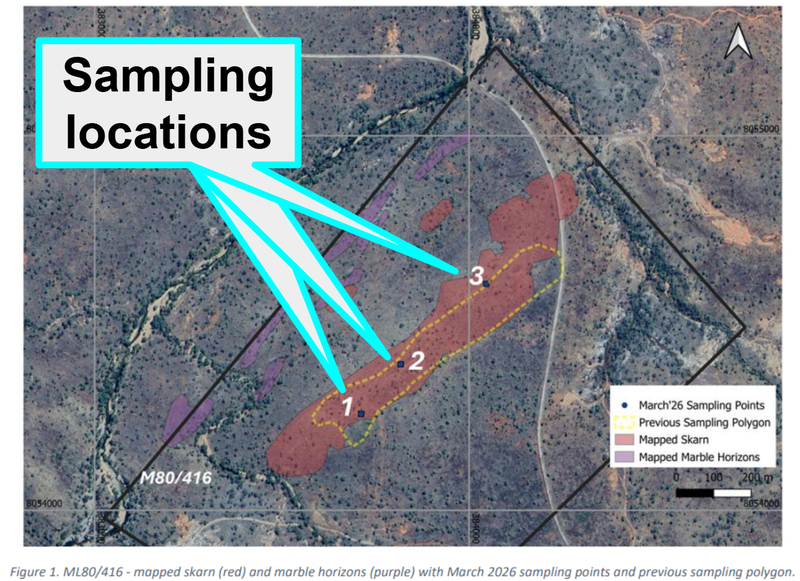
(source)
The strategic part is that PR1 has set up a structure where a single mining operation could feed three separate US-aligned revenue streams instead of one.
So it has three different potential revenue streams to work towards, three shots at goal.
Why we Invested in PR1 - Carbon Nanotube Fibre (CNTF)
The primary reason we Invested in PR1 is for the CNTF thermal management R&D collaboration with Rice University.
Garnet Hills is the upstream asset that feeds that downstream program (and the others since announced).
The carbon nanotube fibres (think of them like wires) have thermal conductivity that is around ~10x copper (this is the individual nanotube strands) from Dexmat’s website.
When built into larger structures Dexmat’s product is still ~17% more conductive relative to copper, and 80% lighter. (source)
(perfect for thermal management in tight compact places)
Higher thermal conductivity = higher cooling requirements.
That’s where thermal interface materials (TIMs) and heat sinks matter.
AND where PR1 is focusing with its collaboration deal.
Ever seen one of these inside a computer?
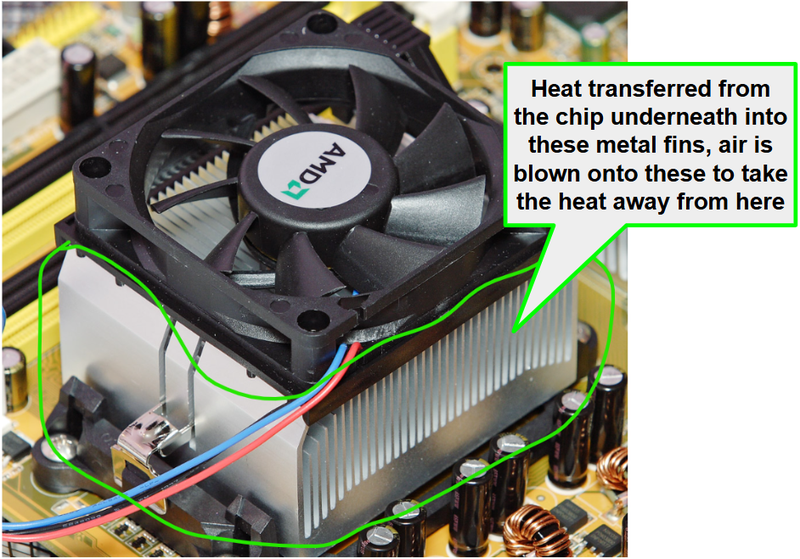
That's the heat sink that sits between the chip and the cooling equipment (in the above case a fan).
Here is where the carbon nanotubes would fit - replacing the (mostly aluminium or copper) heat sink materials - because carbon nanotube fibres are more conductive and can transfer heat away from the chip more effectively.
More efficient heat transfer = lower cooling requirements.
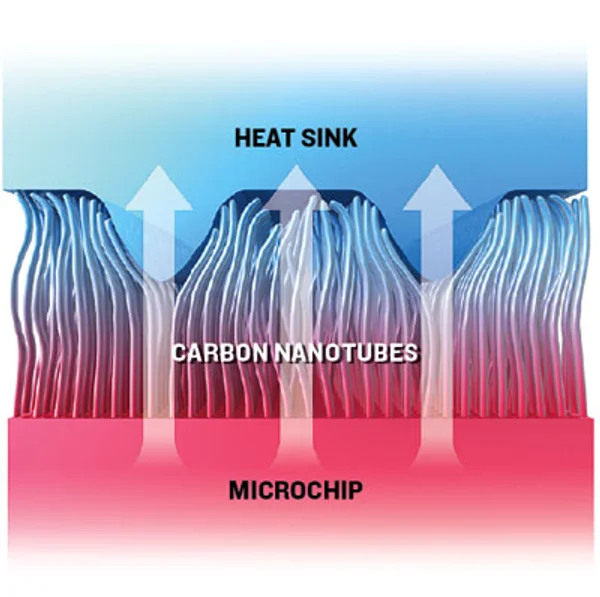
(Source)
A carbon nanomaterial made of extremely aligned and densely packed carbon nanotubes, processed into continuous fibres and thin films:
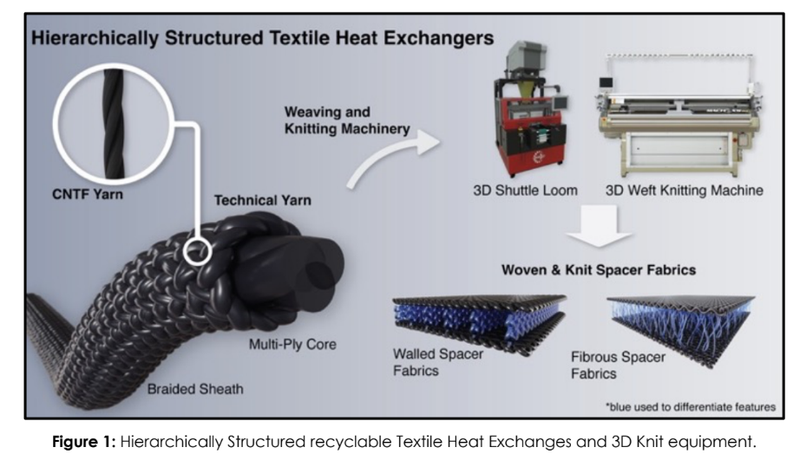
(source: PR1 announcement)
You can see our most recent DeepDive from last week on PR1: PR1: Test results show 1.5x more conductive than copper, 2.5x more than aluminium - an alternative material for cooling AI datacentres, robots and weapon systems?
What we want to see next from PR1
🔄 US government funding outcomes
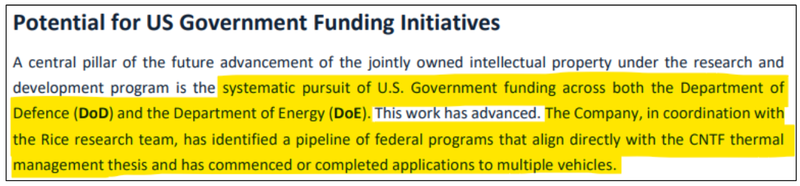
PR1 has commenced applications to DoE and DoD funding programs. We want to see at least one of these land - it would validate the program and provide additional capital:
(source)
🔄 End user collaboration progress
Multiple organisations are already engaging. We want to see this progress toward joint development agreements or testing partnerships with named parties.
🔄 Workstream milestones
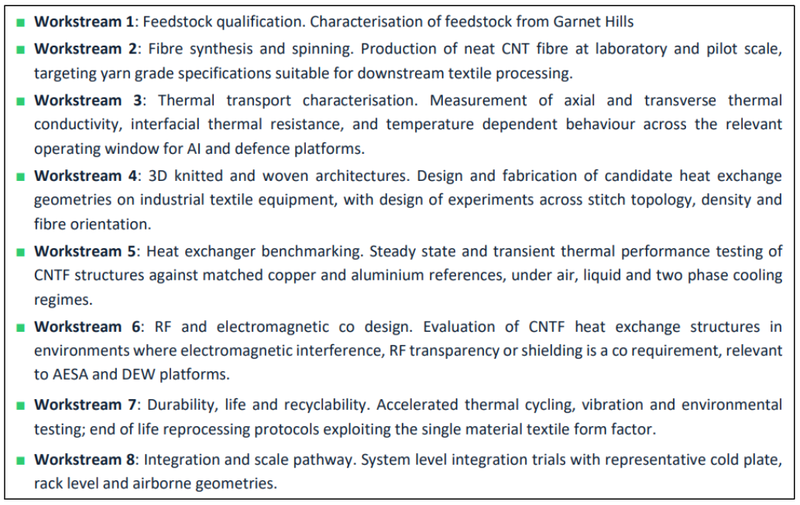
With 8 workstreams now defined, we want to see PR1 start ticking off deliverables - starting with feedstock qualification and fibre synthesis.
Today’s announcement confirmed that feedstock has been collected for characterisation, the very first step of Step 1.
Recently PR1 confirmed the 8 step program to get this underway:
(source)