ION achieves 85% silver recoveries from solar panel recycling tech
Our recycling Investment IonDrive (ASX: ION) just announced preliminary results from recycling end of life solar panels to recover silver (and silicon).
ION first announced the move into solar panel recycling back in September, looking to apply its Deep Eutectic Solvents (DES) technology to scrap solar panels.
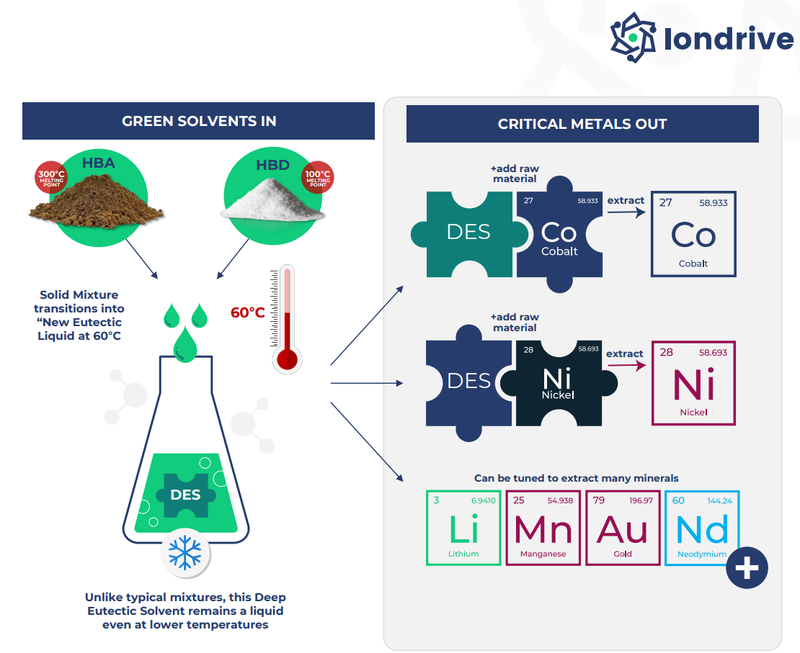
ION’s recycling tech is a hydrometallurgical process taking benign organic solvents and applying them to different materials to extract specific metals and minerals.
This process is more cost and energy efficient than traditional recycling methods in this space and uses non-toxic and biodegradable solvents.
See our deep dive into how ION’s DES process works here: How does ION’s tech work and how does it compare to other ASX listed players?
Today, ION showed that its technology achieved 85% silver recoveries from lab test results on solar panel recycling.
(Solar panels have a lot of valuable silver and silicon - more on that in a second)
Next, ION plans to test its tech on “mechanically prepared end-of-life” solar panel feedstock to be supplied by ASX listed Livium.
So we could see those recovery rates improve even further…
Solar panel recycling industry dynamics
ION is testing its tech in an industry that we think will grow exponentially.
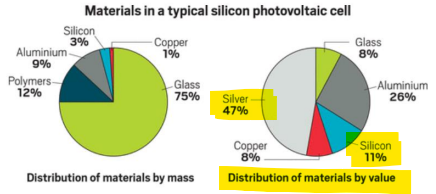
In Australia alone there are ~120M installed solar panels and by 2030 there is ~100,000 tonnes of panels expected to be considered “end-of-life” which wll have recoverable materials market worth over $1 billion in silver, silicon, aluminium, and glass…
The disposal/recycling costs of solar panels sit around ~$500–$1,000 per tonne in Australia (with landfill charges often >$400 per tonne)...
(so by 2030, the opportunity for ION could be pretty big - especially if silver prices have found a new floor price at these levels)
(Source)
In a recent webinar, ION’s new CEO Lewis Utting mentioned that at historical silver prices, it didn’t make much sense to target the silver (especially alone), and that the silicon is the primary payable.
But given silver's rapid rise in the past 6 months and that ION is already going after the silicon that is basically attached to the silver, it now makes plenty of sense to look to recover this also.
It turns out, there can be around 20 grams of silver in a 2m2 solar panel, which is just above 0.7 ounces. (source)
At 0.7 ounces silver per solar panel, the current silver price of ~US$85 silver/ounce and 85% recovery of this silver, that implies ~$72 Australian dollars of silver recovered from each solar panel.
As for the silicon - that is particularly interesting because ION will be looking to recover three different types that sell for up to ~US$308,000 per tonne:
- Metallurgical-grade material (typically $1,500– $4,600 per tonne)
- Solar-grade silicon ($15,000–$46,000 per tonne)
- Electronic-grade silicon used in advanced battery anodes and semiconductor wafers ($77,000–$308,000 per tonne)
What’s next for the solar panel recycling tech?
- Testing on End-of-Life (EoL) Feedstock: Trials have been conducted in a lab setting using mechanically prepared materials, now testing to move onto actual solar panels provided by Livium in a real world setting.
- Expansion to Polysilicon Recovery: The program is expanding its focus beyond silver alone to also include recovery pathways for polysilicon alongside silver.
- Process Integration Assessment: Evaluation of how mechanical preparation and dismantling of the solar panels (done by Livium) integrates with ION’s chemical recovery process.
- Laboratory Optimisation: Ongoing refinement of the IONSolv formulation to improve extraction efficiency beyond the initial 85% silver recovery baseline.
- Techno-Economic Assessment: Preliminary studies to evaluate the commercial and economic viability of the recovery process.
- Scalability Evaluation: Assessments to determine how the laboratory outcomes translate to larger-scale recycling operations.
How does ION’s tech work?
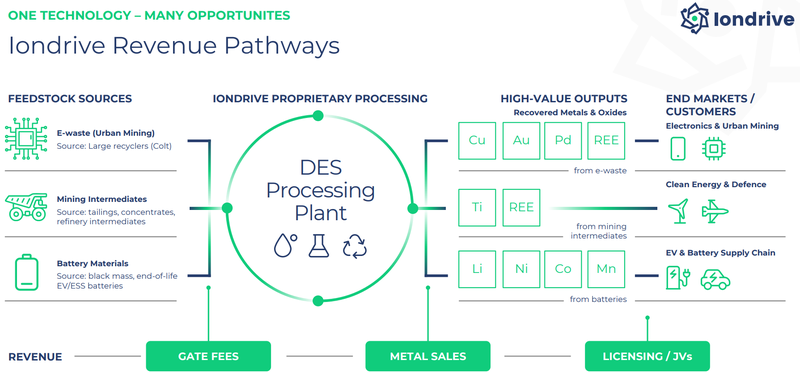
ION’s potential breakthrough technology has already shown at lab scale that it can produce very high recoveries of the following metals:
(Source)
(Source)
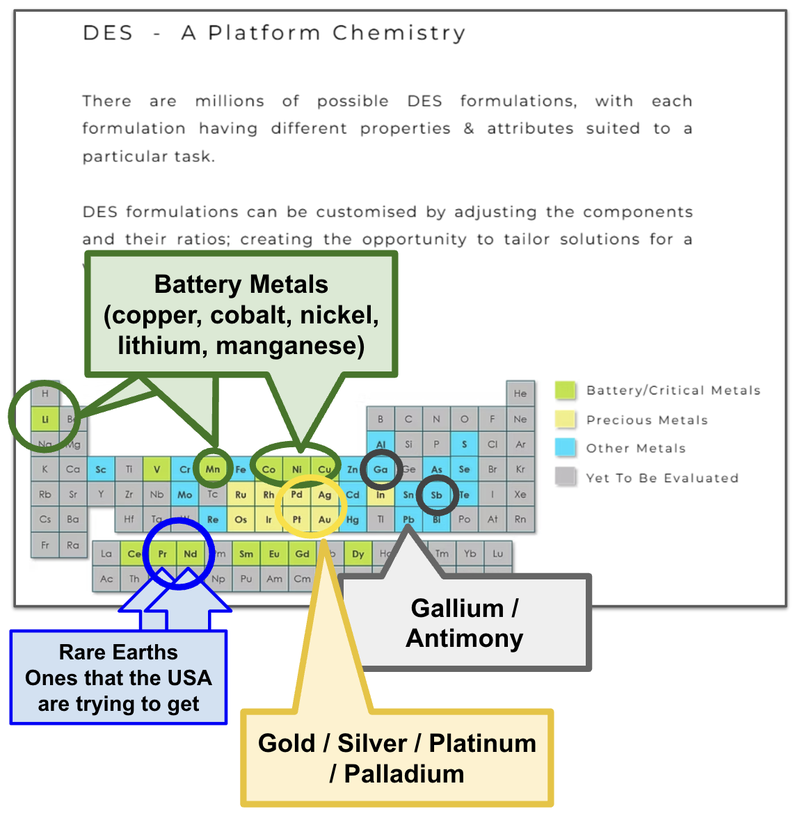
Below is a larger list of metals that Deep Eutectic Solvents (which ION uses in its IP protected processing technology) have been tried and tested on in metals extraction and recycling - we’ve highlighted some of the key critical metals:
(Source)
Note: this chart shows metals amenable to Deep Eutectic Solvent chemistry in general, and have not necessarily been specifically tested by ION.
What’s next for ION overall?
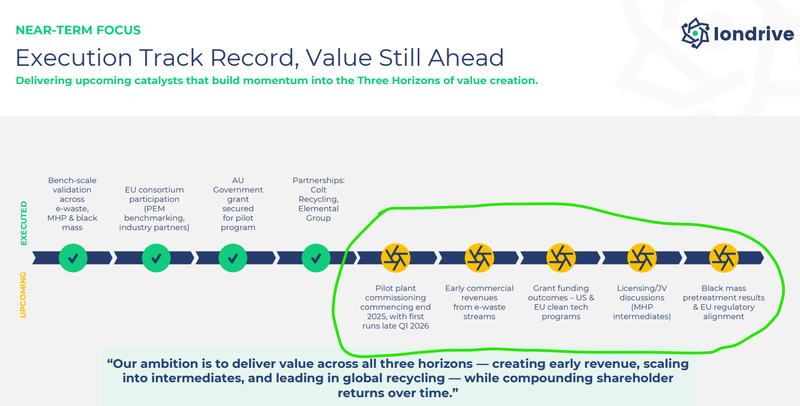
Over the next 6 or so months, we think one (or multiple) of the below catalysts could trigger a sustained re-rate in ION’s market cap:
- US rare earths partnership - ION will be testing its tech on e-waste feedstock to see if it can commercially recover rare earths. IF successful, ION’s tech could be rolled out across recycling facilities processing ~40M lbs of e-waste feedstock annually.
- Pilot plant build for battery recycling tech - as mentioned in a prior article we did, we think this will be a big inflection point for ION. ION expects to have the plant built and commercially producing by “early 2026”.
- EU consortium progress - The consortium has over €3M committed to trying to build battery cells using recycled battery metals from black mass (waste batteries). The consortium is partly funded by an EU grant of ~€2.07M.
- ION’s mineral processing tech gets de-risked - ION is testing its technology on “US sourced feedstock”. Any big feedstock supply deal, partnership deal or any strong recovery results could be a big unexpected catalyst for ION.
- Application into new markets - ION is aiming to recover copper, gold, silver, osmium and rare earth elements from e-waste (Printed Circuit Boards).
- Graphite upgrade results - If ION can produce anode-grade graphite from recycled black mass, it could add to the economics of its pilot plant and strengthen the commercial case for a bigger plant.
- Testing on EU cobalt deposit - ION has signed a deal with ASX listed Latitude 66 to test its tech on the company’s cobalt project in Finland.
- Updates on the Livium Binding agreement - ION signed an agreement to test its Deep Eutectic Solvent recycling tech on solar panels, battery black mass, and rare earth magnets, potentially leading to commercial supply and co-location agreements within Australia.
- Solar Panel Recycling - With University of Adelaide, ION is testing its DES recycling tech on end-of-life solar panels to recover high-value silver and silicon.
Here is a nice slide from ION’s latest presentation that summarises everything that is coming:
(Source)