

PKP: New name. New (big) customer. New alternative to drinking alcohol - cannabis beverages.
Disclosure: S3 Consortium Pty Ltd (the Company) and Associated Entities own 18,310,000 PKP Shares at the time of publishing this article. The Company has been engaged by PKP to share our commentary on the progress of our Investment in PKP over time. This information is general in nature about a speculative investment and does not constitute personal advice. It does not consider your objectives, financial situation, or needs. Any forward-looking statements are uncertain and not a guaranteed outcome.
Our “sell the picks and shovels in a gold rush” Investment for the THC drinks sector is Peak Processing Ltd (ASX:PKP).
THC is the active compound in cannabis that gives the high/buzz.
THC offers a controlled, alcohol-like effect with fewer drawbacks - no hangovers, less calories...
... a healthier, modern alternative to alcoholic drinks.
If you are struggling with Christmas party hangover horrors right now and “never drinking again”... perhaps this email is just for you.
We Invested in PKP because we think the THC drinks sector will rapidly grow over the next 5 years as people look for alcohol alternatives.
And PKP is our “sell picks and shovels in a gold rush” way of getting exposure to the growth in the sector.
(PKP recently changed its company name and stock code. It used to be called Althea Group Holdings - AGH - when we first Invested.)
PKP’s intellectual property is making the patent pending, tasteless, “THC infusion” liquid that can be added to ANY drink.
PKP then partners with existing drink makers who want to make a THC drink.
PKP can “infuse” THC into any kind of drink - from beer, cider, cocktails, iced tea, to soft drink, to THC-infused spirits...
For ANY drink company that wants to offer a THC version of their drink to its consumers.
The partner drink company handles marketing, promotion and distribution.
(hence the “picks and shovels in a gold rush” analogy)
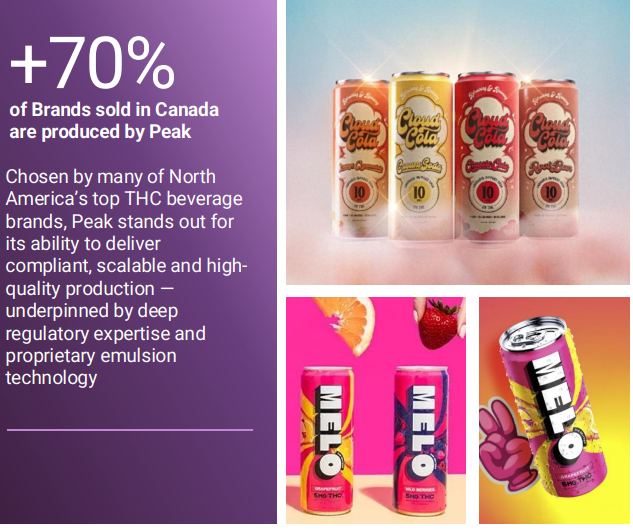
PKP’s manufacturing division has a ~33% share of the Canadian THC-infused beverage market. (source)
(PKP produces for ~70% of the brands operating in the Canadian market).
(source)
So PKP already has a well established business generating revenues now.
We are Invested to see PKP eventually become a highly profitable operation as the market grows in size.
(quite a different Investment to early stage binary resource exploration stocks that we would normally Invest in)
PKP is already in partnership with $3.25BN Boston Beer Co - maker of famous drinks brands such as Samuel Adams, Twisted Tea and Truly Hard Seltzer.
(this means that Boston Beer Co uses PKP to “infuse” THC into its popular drinks brands, instead of alcohol)
In Canada, PKP makes a non-alcoholic, THC-infused version of Boston Beer Co’s “Twisted Tea”.
(Twisted Tea is the best selling alcoholic tea in the US and one of Boston Beer Co’s segment leading drinks)
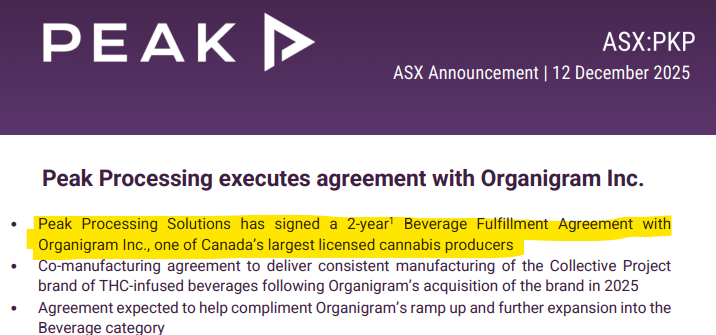
Today PKP signed a “co-manufacturing agreement” with Organigram - the biggest licensed cannabis producer in Canada.
(and is 45% owned by $193BN British American Tobacco - one of the biggest multinational tobacco companies in the world - more on this giant company below) (source)
(source - today’s PKP announcement)
Basically, the deal formalises PKP as the “picks and shovels” service provider to Organigram’s push to grow in the THC drinks space in Canada.
The big kicker for us is that Organigram, aren’t just some start up cannabis company - it is the hand-picked vehicle for British American Tobacco’s way of entering the cannabis space.
Capped at $193BN, British American Tobacco has been rapidly expanding into new category products, such as THC beverages through its Organigram Investment.
Over the last few years British American Tobacco has invested approximately C$345.6 million into Organigram through two major investment rounds.
They are now Organigram’s biggest shareholders owning ~45% of the company’s equity. (source)
So at a very high level - PKP has signed a deal to be the “picks and shovels” (meaning to supply the THC infusion and technology) for British American Tobacco’s (through Organigram) push into the most advanced THC drinks market in the world.
Canada is a HIGHLY REGULATED market and has reached US$580M in value as of 2023 (source).
Which makes it the perfect place for big conglomerates to build new products from scratch and have them ready for global launch - when regulations change in other jurisdictions.
And right now, British American Tobacco (through Organigram) and Boston Beer Co have hand picked PKP as their “picks and shovels” operator...
Eventually the big alcohol companies will want to transfer everything learnt in Canada into the US...
A major reason for why we are Invested in PKP is because we think that it could eventually replicate its success in Canada in the much bigger USA.
PKP already has the #1 THC drink manufacturing business in Canada.
(where THC drinks are legal and sold in regulated dispensaries)
PKP’s Canada facility has produced over 13 million cans in the last six years, and produces ~70% of all THC drink brands in the country.
So PKP has proven its business model in one jurisdiction.
Earlier in the year, PKP opened up a new manufacturing facility in Florida to target the US market where THC drinks are taking off. (Source)
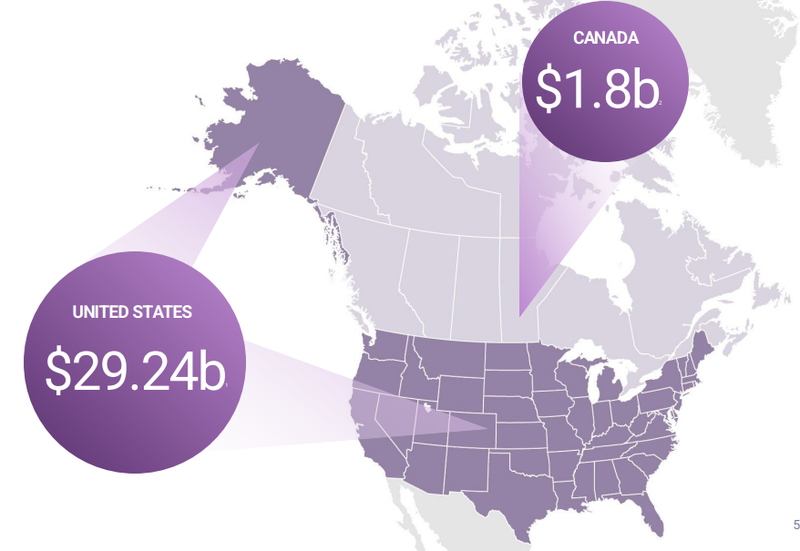
In the coming years, the USA is estimated to be a 15x bigger market (~$30BN by 2028) than Canada ($1.8BN by 2028).
We think PKP’s market leading position in the highly regulated Canadian market lays the groundwork for a much quicker entry into the US.
Especially if the currently “cowboy” USA THC drinks industry becomes regulated...
Which looks like it could happen in the medium term.
The latest on the THC drinks industry in the US
Back in November the US federal government gave a 12 month time frame before it “bans” certain THC drinks and products (source)
The ban comes into play on the 13th of November 2026. (source)
To us this looks like a blanket precursor ban before broader regulations - by first wiping out the “anything goes” loophole market and forcing a clear choice between prohibition and a properly controlled framework.
(expensive to implement and certainly a game that big alcohol can afford and knows how to play well)
If those efforts succeed, the current ban becomes a short‐term shock that accelerates the creation of a more formal, nationally recognised THC beverage industry rather than the end of it.
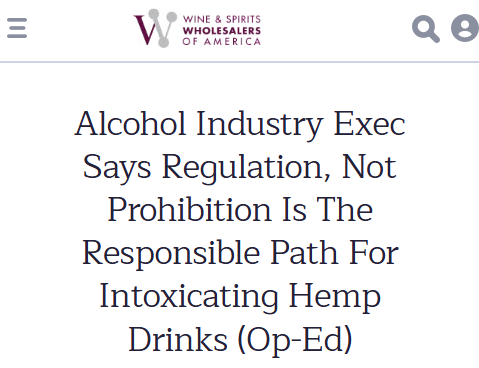
Even a consortium of big alcohol companies is supporting a temporary ban leading to regulation of THC drinks (source).
(source)
Of course they are...
A highly regulated environment is where alcohol companies operate, and it would give them the advantage to catch and keep market share in the emerging THC drinks industry.
It would also make it harder for smaller THC drinks companies with small balance sheets to enter and stay in the market.
(this business tactic is called “regulatory capture”)
A highly regulated industry is what PKP wants - given they are already the biggest manufacturer in the most advanced regulatory environment for THC drinks (the Canadian market).
IF PKP can become a market leader in an existing regulated market - then we would hope that it can do the same and become a market leader in the US IF/WHEN regulations come into the sector.
PKP’s already working with highly regulated, big alcohol companies
PKP is already working with the big alcohol company Boston Beer Co.
Boston Beer company has over US$2.1BN revenue per year and is best known for
- Samuel Adams (craft beer)
- Truly Hard Seltzer
- Twisted Tea (alcoholic tea)
- Angry Orchard (hard cider)
- Dogfish Head (craft beer)
- Hard Mountain Dew (in partnership)
Twisted Tea is an alcoholic tea that sold 33 million cans in 2024 - it's the best selling “hard tea” with more than 80% market share in the USA. (Source)
PKP partners with Boston Beer Co to make a non-alcoholic, THC-infused version of Twisted Tea for sale in Canada (branded as Teapot).
So far, Boston Beer Company hasn't launched a THC drink in the US...
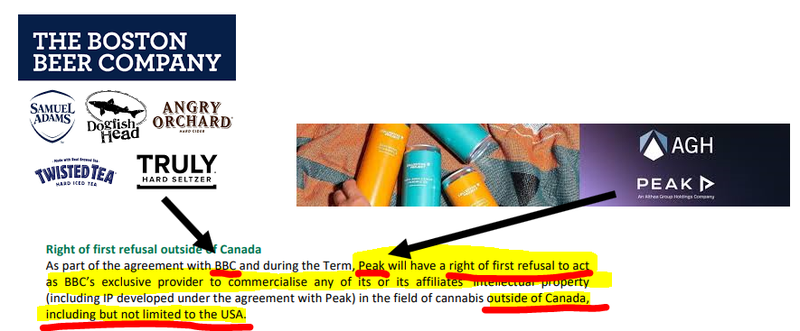
The big kicker with PKP’s Boston Beer Company partnership is PKP’s right of first refusal on contract manufacturing for them in the US. (source)
(Source)
So IF Boston Beer Company decides to launch any THC drink into the US... it could be a game changer for PKP.
And remember PKP’s THC-infusion can be applied to ANY drink, so any big alcohol company can use PKP to make a non-alcoholic, THC-infused version of any of their popular drink brands.
So if British American Tobacco (through Organigram) builds out a suite of drinks products in Canada (using PKP as their manufacturer)...
PKP could also have the handpicked cannabis drinks vehicle for $193BN British American Tobacco as a potential customer looking to enter the US market...
So in summary, PKP has:
- Established Canadian THC beverage business producing drinks for ~70% of brands operating in Canada. PKP is the #1 THC drink manufacturer in Canada.
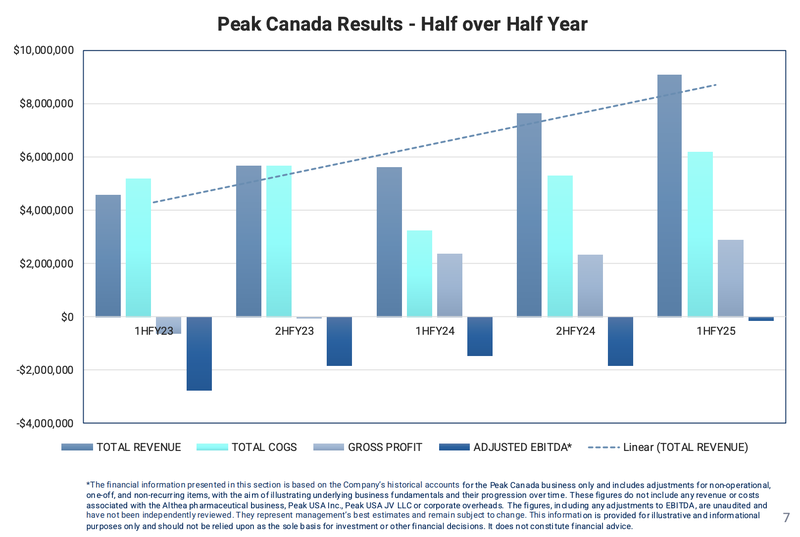
- Existing sales in Canada with $8.23M in revenue for the first half of FY25 (up 58% on the previous half year)
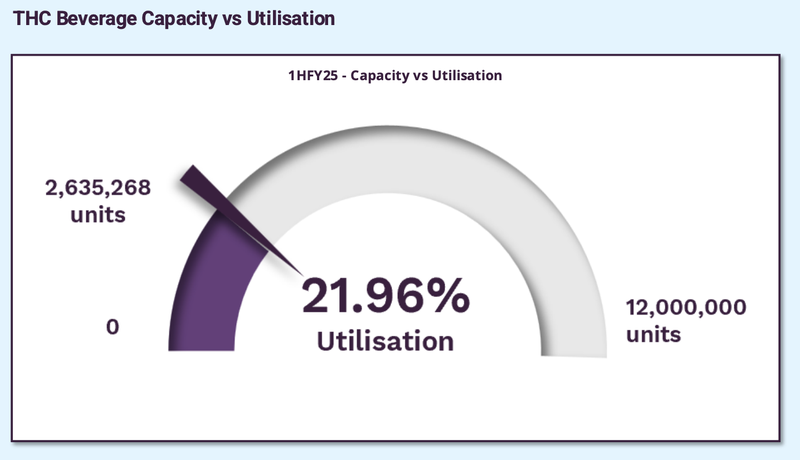
- A giant facility in Canada that can produce up to 12 million units (only running at ~22% capacity)
- Partnerships with large beverage companies including Boston Beer Company. (TODAY - PKP signed a deal with Organigram, who is majority owned by $193BN British American Tobacco).
- Just entered the US market with a processing facility in Florida. (looking to replicate the success of its Canadian business, in the much bigger US market).
- Opportunity to create new brands and go after more market share in the US
Next we want to see PKP:
- Increase capacity utilisation at its Canadian facility.
- Achieve profitability
- Clearly define its US growth strategy given the recent regulatory changes.
Ultimately we are Invested in PKP to deliver the following Big Bet:
Our PKP Big Bet:
“PKP re-rates to a $200M+ market cap on the back of strong THC Beverage sales growth in North America”
NOTE: our “Big Bet” is what we HOPE the ultimate success scenario looks like for this particular Investment over the long term (3+ years). There is no guarantee that our Big Bet will ever come true. There is a lot of work to be done, many risks involved, including financing risk, regulatory risk, and market adoption risk - just some of which we list in our PKP Investment Memo.
Success will require a significant amount of luck and good management. Past performance is not an indicator of future performance.
Peak Processing
ASX:PKP
11 Reasons why we Invested in PKP
We first Invested in PKP on the 11th of July 2025 where we detailed the 11 reasons why we Invested.
Here are those reasons again - we have included updates under some of these now that ~5 months have passed.
1. Consumer drinking habits are changing, THC drinks to replace alcohol?
Consumer drinking habits are changing. People are more health conscious than ever before and alcohol is becoming an ‘old person’ drink.
THC drinks are healthier and less toxic than alcohol, and the addressable market is growing.
The US cannabis beverage market is expected to grow to A$30BN and in Canada to A$1.8BN by 2028.

(Source - Bloomberg)
2. PKP is the biggest manufacturer of THC beverages in Canada
PKP has proven its business in North America already.
PKP is the biggest manufacturer of THC beverages in Canada with around ~40% market share.
Revenues from PKP’s Canadian facility were >$8M for H1-FY25 - up over 58% on the previous half year.
(Source)
3. Canadian business has capacity to grow even further
PKP’s Canadian business is currently operating at ~21.96% of its total capacity.
We think PKP’s financials could improve exponentially if capacity utilisation increases.
(Source)
4. PKP has just entered the US market - the fastest growing market for THC Beverages
PKP is now moving into the USA where the addressable market is a lot bigger than Canada.
THC drinks can be sold in liquor stores and online across most of the US - thanks to a quirk in the regulatory environment where THC drinks are considered hemp based products.
The US market for THC drinks is set to grow by almost 20x from where it was in 2024 to 2028.
(Source)
🚨Update:
Back in November the US federal government gave a 12 month time frame before it “bans” certain THC drinks and products (source)
To us this looks like a blanket precursor ban before broader regulations - by first wiping out the “anything goes” loophole market and forcing a clear choice between prohibition and a properly controlled framework.
If those efforts succeed, the current ban becomes a short‐term shock that accelerates the creation of a more formal, nationally recognised THC beverage industry rather than the end of it.
A highly regulated industry is what PKP wants - given they are already the biggest manufacturer in the most advanced regulatory environment for THC drinks (the Canadian market).
IF PKP can become a market leader in an existing regulated market - then we would hope that it can do the same and become a market leader in the US IF/WHEN regulations come into the sector.
5. PKP is adopting a Coca-Cola style distribution model in the US
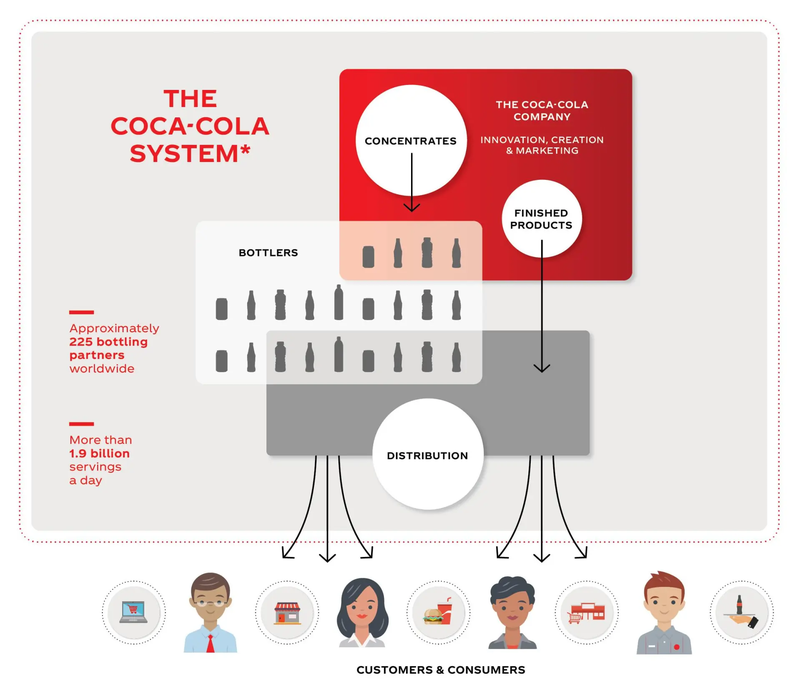
PKP is looking to replicate the Coca-Cola distribution model.
PKP can create an emulsified THC product in its central hub in Florida, and then distribute it through the US to satellite facilities (or its own facilities) for bottling and labeling.
It is the exact same distribution model that has been applied successfully by Coca-Cola because it allows the company to better manage all of the IP and R&D from one central location.
The first facility has opened in Florida and PKP has already sold 550,000 units.
(Source)
6. PKP already has deals with major companies like Boston Beer Co.
PKP already has deals signed with big players in the alcoholic beverages industry.
PKP is Boston Beer Company’s manufacturing partner for THC drinks in Canada.
AND PKP has a right of first refusal on manufacturing for Boston Beer Co in the USA.
(Source)
Boston Beer Company is capped at ~$3.25BN and did over US$2.1BN in sales last year.
They are also yet to launch a THC beverage in the USA...
Boston Beer Co is most famous for the Samuel Adams beer and for its Twisted Tea product which is the best selling “hard tea” with over 85% market share in that segment:
🚨Update:
Today, PKP signed a deal with Organigram - who as mentioned earlier are majority owned by the giant $193BN British American Tobacco.
Another partnership deal with a large company seeking to enter the THC drinks space - remembering that PKP already has a deal signed with Boston Beer Company...
7. PKP also has its own brands... one could go “viral”
Trends come and go, and there is always room for a new, innovative brand to capture the imagination of consumers.
In the past few years, the trend has moved towards “healthy alternatives” to drinking alcohol.
White Claw (a seltzer brand), was introduced in 2016, and has done $9 billion in cumulative sales since launch. (Source)
More recently Liquid Death (canned soda water), was introduced in 2022 and has done more than $333M in sales last year. (Source)
These beverage brands can and do go viral... but there needs to be some innovation behind them.
In the THC beverage market Pamos - a ‘cannabis spirit’ “says it expects 2024 sales of $20 million to $30 million, up from essentially nothing in 2023” (Source).
The bet for PKP is that it is in the right market for the next drinking trend, and that it has a brand which matches.
8. PKP has just gone through a restructure
PKP just spent the last 12 months restructuring the business and selling off non-core assets.
The most recent asset sale will net them over $1M in cash and take a lot of costs out of the business.
We like that we are coming into PKP as Investors when it’s focused on one segment - where it has the biggest competitive advantage.
AND at a time where a lot of costs have been stripped out of the business.
Ultimately, we like that PKP is now focused and all-in on the high-growth part of its business.
🚨Update:
Since we Invested PKP has done more on the restructuring front.
PKP put one of its subsidiaries into administration and through a DOCA (Deed of Company Arrangement) process.
Then PKP raised $2.55M at 1.8c per share in September and appointed Barry Katzman as the company’s new Managing Director (Barry was previously running the Canadian operations - so it was an internal promotion).
9. Big Alcohol has invested in THC drinks - will they do it again?
Big alcohol has made investments in the THC sector before.
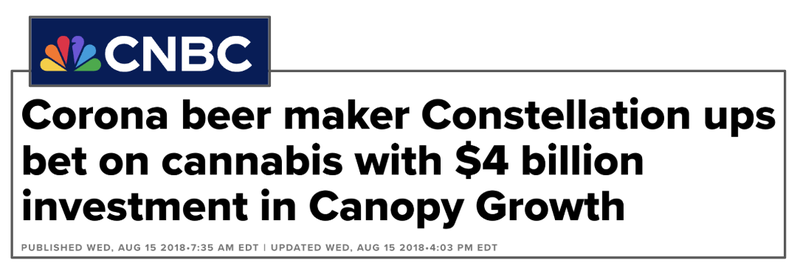
Constellation Brands (owner of Corona) invested over US$4BN into Canopy Growth and Heineken launched its first THC drink back in 2018.
Here is a news piece from 2018:
(Source)
Since then the majors took a step back from the industry and left it to smaller companies.
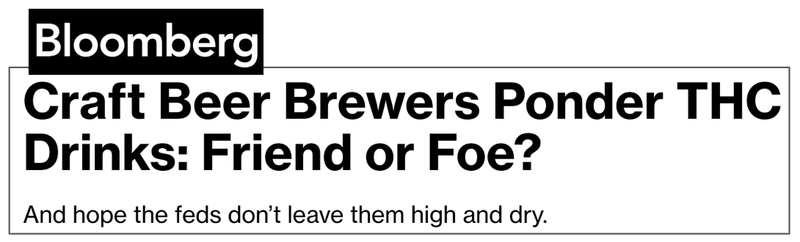
In February this year, US based New Realm Brewing released a line of THC infused seltzers.
We think it's only a matter of time before the bigger players in the industry come back into the space and launch THC drinks.
(Source)
10. PKP can make, design and produce THC versions of ANY existing and popular drink
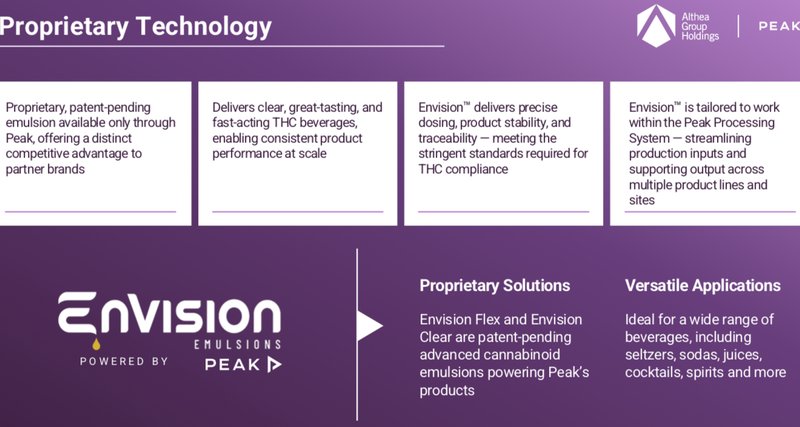
PKP’s proprietary emulsion tech means the company can produce a tasteless THC product that can go into any existing drink formula.
Imagine THC vodka, THC tequila, THC beer, THC cocktails, THC cider etc...
PKP can partner with any major drink brand to make a THC infused version of their existing drinks.
Imagine a THC infused Red Bull or a THC infused Fanta...
(Source)
11. THC drinks could have a “popularity” wave
As mentioned in reason #8 - the big alcohol players have entered this space before.
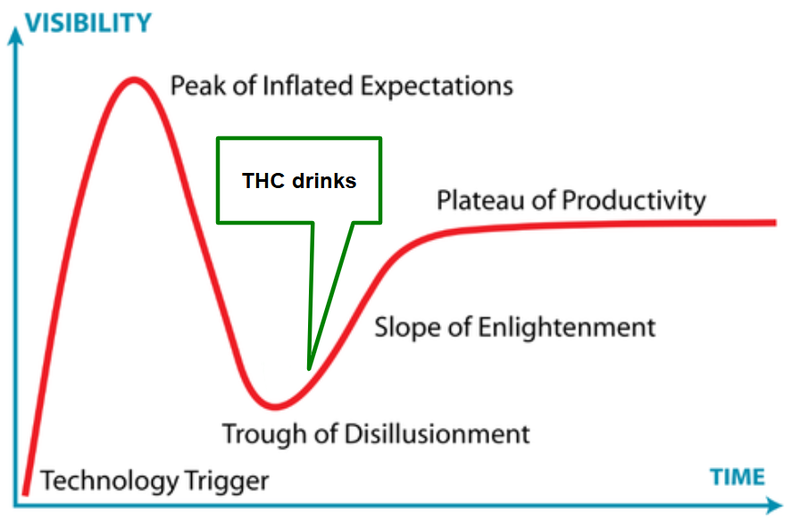
We think 2018 was the first period of “hype” for the cannabis sector in general - this big initial hype is typical for all new investment themes to go through.
The initial hype phase occurs when a shiny new “game changing” idea captures the market's imagination and share prices rise to reflect everyone’s excitement.
Then reality sets in and it takes years longer than imagined for the world to embrace that thematic.
We think there always comes a time when an investment thematic matures and finds its natural place in a market again.
If 2018 (when Heineken and the owners of Corona entered the cannabis space) was the initial peak, we think the sector is just starting to come out of the bottom of the disillusionment phase.
AND enter the “slope of enlightenment" phase here:
What are the risks?
In the short-medium term the two key risks we see for PKP is “regulatory risk” and “financing risk”.
A big reason for our Investment is for the US expansion - there is always a risk that the grey areas in the 2018 farm bill which permit hemp-derived THC are closed.
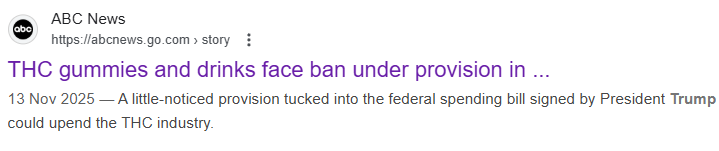
We did notice recently that Donald Trump signed a bill that would close the hemp-derived THC loophole to produce THC drinks - it’s not very clear how that impacts PKP at the moment.
BUT we think that in the short-term this could impact PKP’s US operations - and temper some of the market expectations that got priced into the PKP share price:
(source)
Regulatory Risk
Canada: The THC beverage market is tightly regulated. Any change in Canada’s regulatory environment could disrupt PKP’s ability to produce, sell, or distribute products.
United States: The market operates in a legal grey area under the 2018 Farm Bill, which permits hemp-derived THC (under 0.3% Delta-9 THC). However:
Several states are cracking down (e.g., Texas is attempting bans).
Regulatory uncertainty may limit national expansion, with state-by-state laws varying.
A potential federal reclassification of cannabinoids could change market dynamics overnight.
Source: “What could go wrong” - PKP Investment Memo - 11 July 2025
PKP also has ~$1.6M in debt outstanding and ~$2.9M cash at 30 September 2025. (source)
There is always a chance PKP needs to raise cash to sure up the company’s balance sheet.
PKP does generate revenues but the quarterly running costs for the company can be >$5M - in the September quarter so there is always a chance the company has short term working capital requirements that mean the company needs to raise cash.
Financing Risk
PKP is still in early commercialization in the US and may need additional capital to expand into new states or marketing spend to build its brands.
In the absence of profitability, PKP may dilute shareholders through capital raises or struggle to fund growth internally.
Source: “What could go wrong” - PKP Investment Memo - 11 July 2025
Our PKP Investment Memo
Our Investment Memo provides a short, high-level summary of our reasons for Investing. We use this memo to track the progress of all our Investments over time.
In our PKP Investment Memo, you can find the following:
- What does PKP do?
- The macro theme for PKP
- Our PKP Big Bet
- What we want to see PKP achieve
- Why we are Invested in PKP
- The key risks to our Investment Thesis
- Our Investment Plan
General Information Only
This material has been prepared by StocksDigital. StocksDigital is an authorised representative (CAR 000433913) of 62 Consulting Pty Limited (ABN 88 664 809 303) (AFSL 548573).
This material is general advice only and is not an offer for the purchase or sale of any financial product or service. The material is not intended to provide you with personal financial or tax advice and does not take into account your personal objectives, financial situation or needs. Although we believe that the material is correct, no warranty of accuracy, reliability or completeness is given, except for liability under statute which cannot be excluded. Please note that past performance may not be indicative of future performance and that no guarantee of performance, the return of capital or a particular rate of return is given by 62C, StocksDigital, any of their related body corporates or any other person. To the maximum extent possible, 62C, StocksDigital, their related body corporates or any other person do not accept any liability for any statement in this material.
Conflicts of Interest Notice
S3 and its associated entities may hold investments in companies featured in its articles, including through being paid in the securities of the companies we provide commentary on. We disclose the securities held in relation to a particular company that we provide commentary on. Refer to our Disclosure Policy for information on our self-imposed trading blackouts, hold conditions and de-risking (sell conditions) which seek to mitigate against any potential conflicts of interest.
Publication Notice and Disclaimer
The information contained in this article is current as at the publication date. At the time of publishing, the information contained in this article is based on sources which are available in the public domain that we consider to be reliable, and our own analysis of those sources. The views of the author may not reflect the views of the AFSL holder. Any decision by you to purchase securities in the companies featured in this article should be done so after you have sought your own independent professional advice regarding this information and made your own inquiries as to the validity of any information in this article.
Any forward-looking statements contained in this article are not guarantees or predictions of future performance, and involve known and unknown risks, uncertainties and other factors, many of which are beyond our control, and which may cause actual results or performance of companies featured to differ materially from those expressed in the statements contained in this article. S3 cannot and does not give any assurance that the results or performance expressed or implied by any forward-looking statements contained in this article will actually occur and readers are cautioned not to put undue reliance on forward-looking statements.
This article may include references to our past investing performance. Past performance is not a reliable indicator of our future investing performance.