Our New Portfolio Addition: Bounty Oil & Gas (ASX: BUY)
Disclosure: S3 Consortium Pty Ltd (the Company) and Associated Entities own 126,041,667 BUY Shares and 41,666,666 BUY Options and the company’s staff own 5,735,294 BUY Shares and 2,450,980 BUY Options at the time of publishing this article. The Company has been engaged by BUY to share our commentary on the progress of our Investment in BUY over time. This information is general in nature about a speculative investment and does not constitute personal advice. It does not consider your objectives, financial situation, or needs. Any forward-looking statements are uncertain and not a guaranteed outcome.
My first ever (successful) small stock was an oil and gas explorer in Africa way back in the 2010s.
And with oil prices and Middle East uncertainty surging right now - it looks like the window for markets funding, and rewarding, new mega oil discoveries is opening again.
ASX listed “blockbuster” mega drill campaigns have been few and far between lately - that seems to be changing now.
Given the size of the prize on this particular company’s offshore exploration project, we are looking forward to following its progress (and hopefully valuation growth) toward a big drilling event over the coming years.
Our latest Investment is:
Bounty Oil & Gas
(great ticker code by the way...)
BUY is acquiring an exclusive right to negotiate a “Production Sharing Contract’ on a deepwater offshore oil and gas exploration block in Liberia.
After today’s raise BUY will be capped at ~$16.4M (at 1.2c with over $4M in the bank).
(Moving up to ~$30M when transaction milestones are achieved and vendors shares issued).
The vendors of this right expect that this negotiation and Liberia parliamentary approval should be concluded by January 2027 or shortly after.
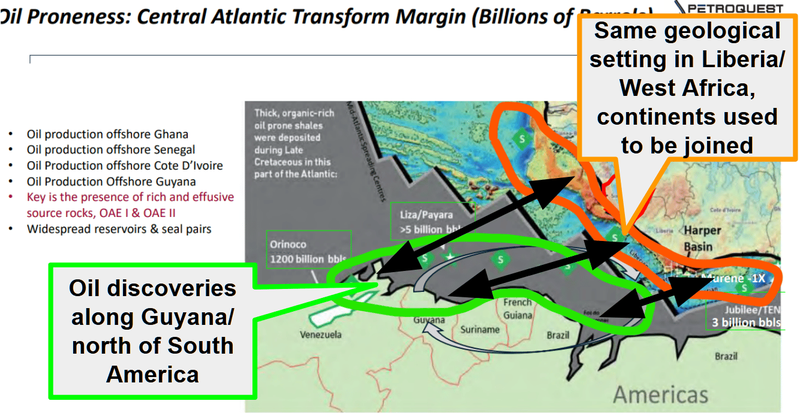
Liberia is on the west coast of Africa, and the offshore geological profile happens to be almost identical to the eastern top of South America - in particular offshore Guyana.
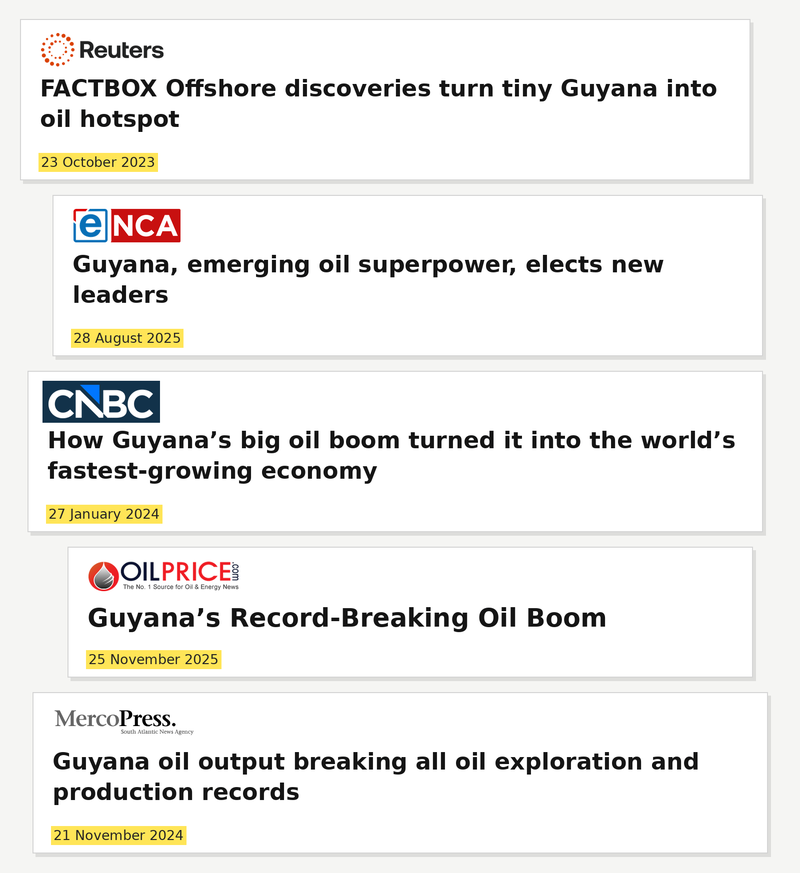
Offshore Guyana is one of the world’s newest oil hotspots, delivering over ~13BN barrels of discoveries since 2015. (source)
Offshore Liberia and offshore Guyana are known as ‘tectonic conjugate margins’.
Liberia and Guyana were directly connected as part of the supercontinent Gondwana until they began rifting and pulling apart between 120 and 100 million years ago.
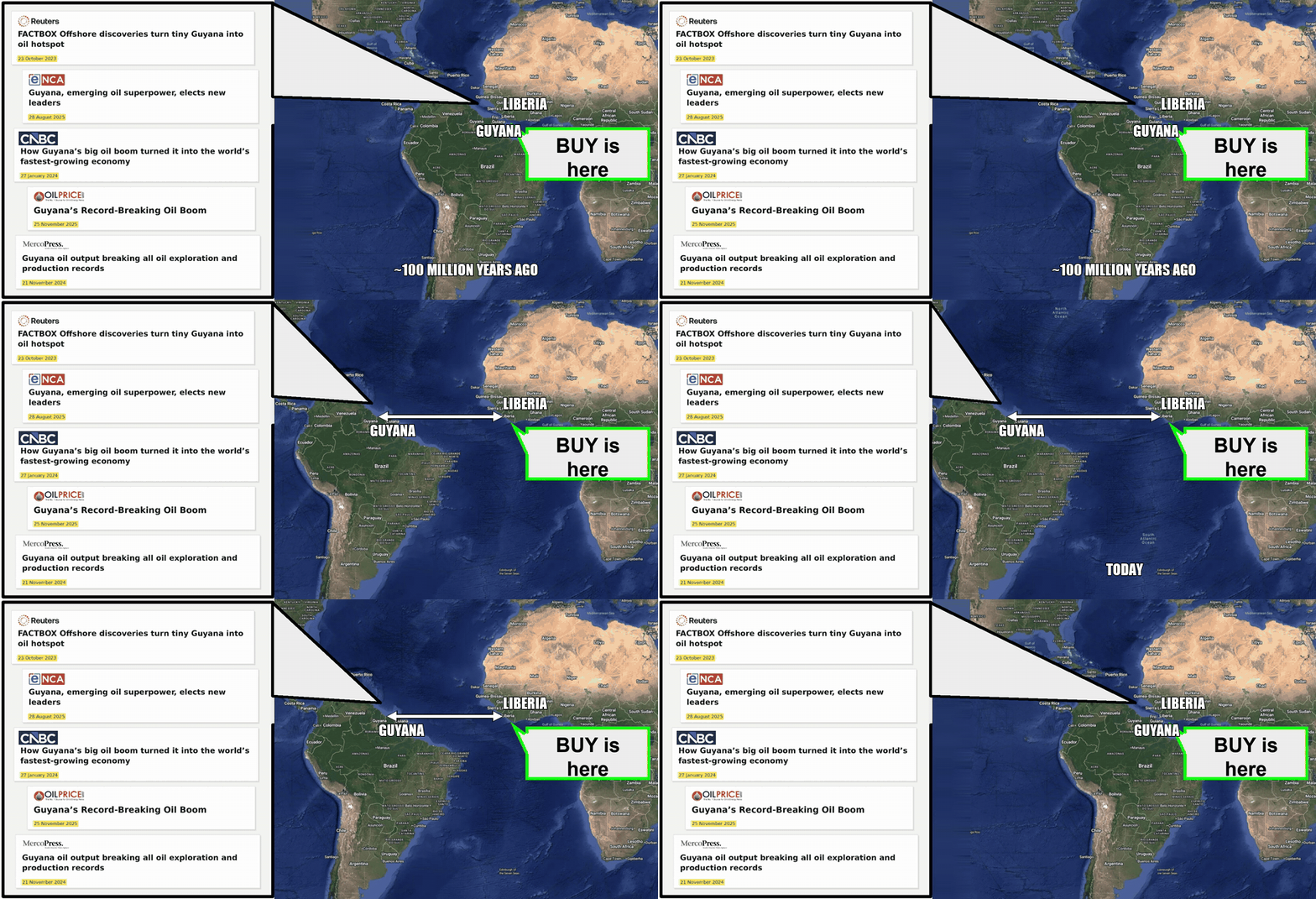
The energy supermajors who flooded to offshore Guyana and delivered multi-billion barrel discoveries have now started piling into offshore Liberia.
Here is what offshore Liberia looked like in 2024:
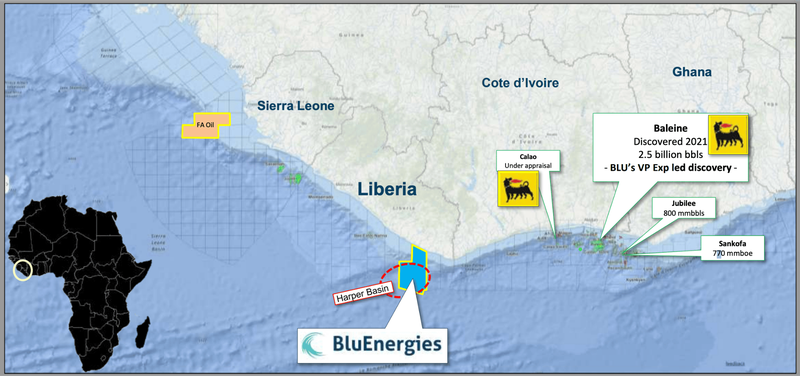
(source)
And here is what it looks like now:
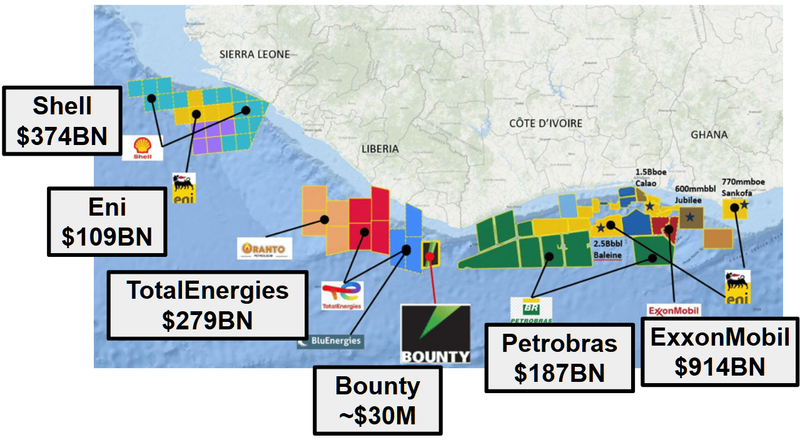
(source)
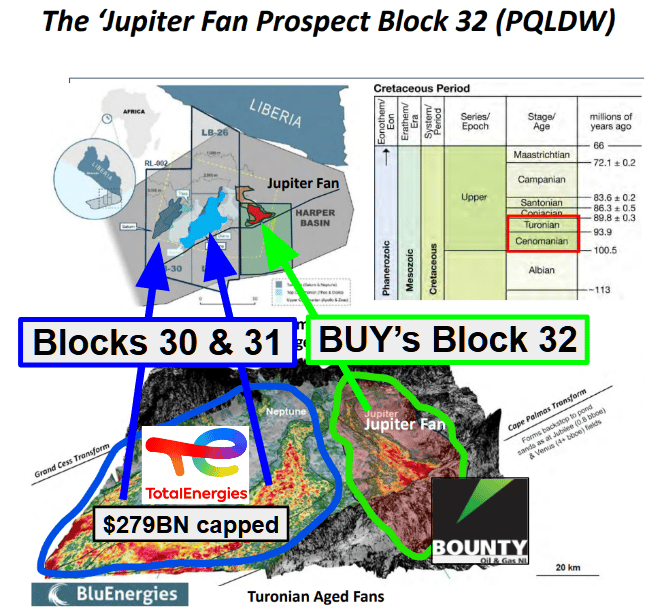
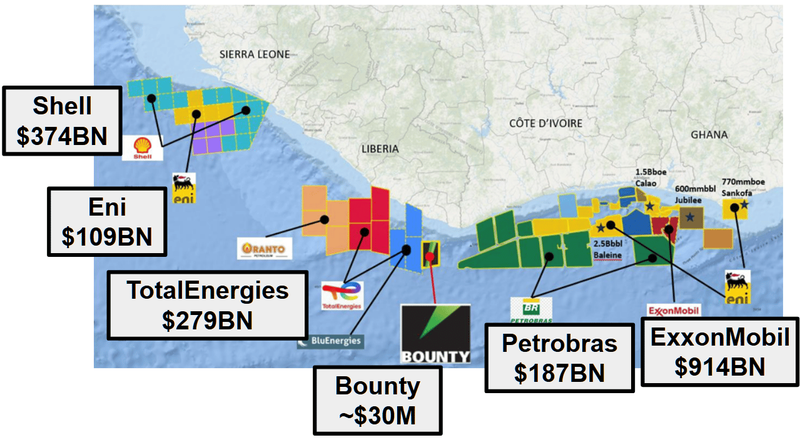
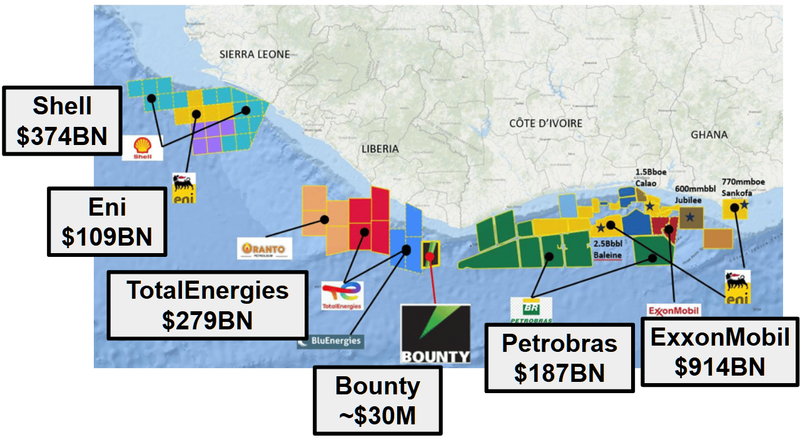
The offshore exploration block BUY is negotiating on is next door to blocks held by two energy supermajors.
$279BN TotalEnergies on one side and $187BN Petrobras on the other.
Little BUY is wedged in between.
(source)
This is proper deepwater, swing-for-the-fences, high risk, (potentially) high reward frontier oil exploration exposure (my first and favourite - buckle up it will be a ride...)
In a frontier basin that has yet to be opened up.
And BUY will have the exclusive right to negotiate a Production Sharing Contract (PSC) on a block with a potential multi-billion barrel target.
We poked around on the website of the vendors of the asset to BUY, and found this giant 127 page technical report.
Before reading, be mindful this is not an independent report, so approach with caution.
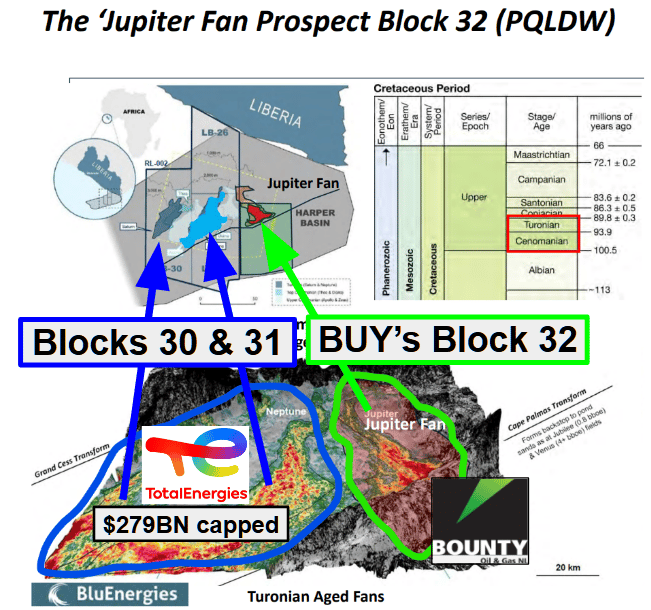
The report outlines a thesis that the block BUY is negotiating on could be an extension of the structures on Total’s block next door.
(the geophysicists and AI agents among you will love reading this report - if you are an oil geophysicist read it... OR paste this link into your favourite AI chatbot and ask it what it thinks)
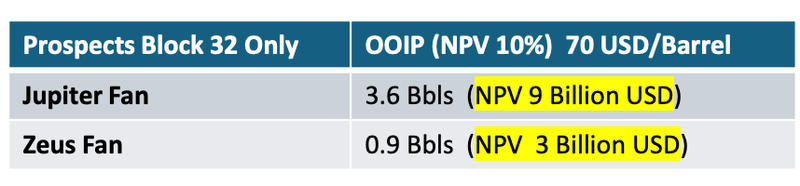
According to that report, the block BUY is negotiating on could contain ~4.5BN barrels of “OOIP” (Original Oil In Place), unrisked, based on the screening volumetrics.
(source)
Again some caution is needed here - it is the vendor’s exploration team quoting those massive numbers - so it's not independent and it wasn’t put together using any seismic data - so it will likely change once BUY does further work and releases an ASX compliant resource estimate.
The block BUY is securing is supposedly an extension of the targets inside $279BN TotalEnergies - which are estimated to contain ~7.3 billion barrels of oil equivalent. (source)
According to that technical report, BUY’s exploration targets are a mirroring of the geology that was responsible for the ~13BN+ barrels of oil discovered in Guyana starting in 2015.
But Guyana is a long way from Liberia - how is this possible?
As we noted above, there’s a strong geological link between offshore Guyana and offshore Liberia, despite sitting across an entire ocean.
Offshore Guyana has rapidly emerged as the world's newest oil hot spot (with no Strait of Hormuz style shipping issues)
(source) (source) (source) (source) (source)
The regions that are now Liberia and Guyana were directly connected as part of the supercontinent Gondwana until they began rifting and pulling apart between 120 and 100 million years ago.
And so there could be a chance that the same offshore oil discovery success had in Guyana can be replicated in Liberia:
(source)
There have been a few waves of exploration in the past trying to unlock offshore Liberia (and there has been some success) BUT no one has made a commercial discovery YET.
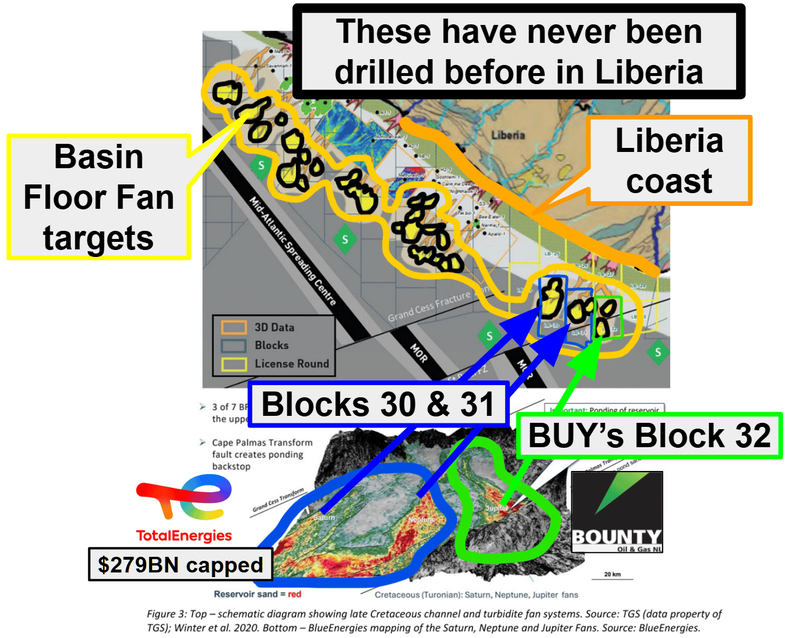
None of that previous drilling was on the deepwater Guyana style targets in deeper offshore Liberia - those have NEVER been drilled before.
All of the supermajor activity now is chasing those deepwater targets.
There aren’t many of these frontier “swing for the fences” explorers on the ASX right now.
So we have decided to Invest in BUY to see it work up this asset, try to attract a farm in partner, and eventually drill a well.
Yes, we know this could be years away - but there just isn’t that many of these in small cap land anymore.
We also recognise BUY is still at an early stage in terms of securing the asset.
At this point BUY is essentially acquiring a binding "letter of engagement" with Liberia's national oil company (NOCAL).
That means BUY has the “exclusive right to negotiate a PSC” (Production Sharing Contract) over the block with Liberia.
Yes it is an early stage Investment with some risk (like all small cap stocks), but we are comfortable going in this early because this was the same place $279BN Total Energies was at just before it was granted PSCs over its blocks in September 2025.
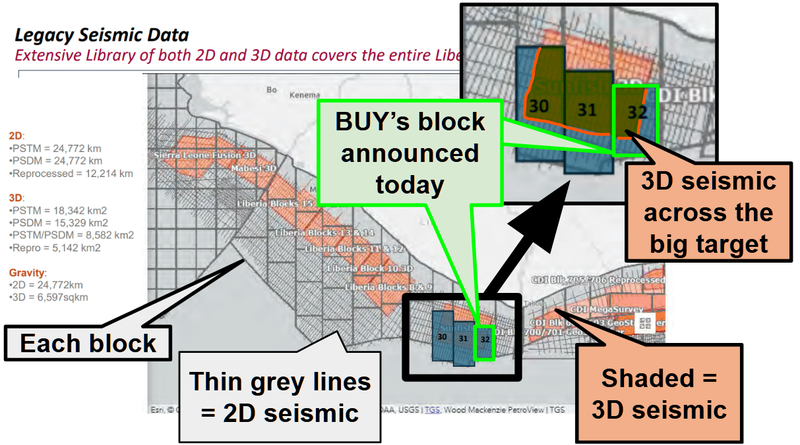
And because BUY’s whole block is covered by 2D seismic data and the corner of the block where the biggest target sits is covered by modern 3D seismic (shot in 2013).
(source)
BUY can acquire that data, reinterpret it, declare an ASX compliant prospective resource estimate - a process that shouldn’t take that long (and be fairly cheap).
After all of that we think BUY’s block will be “farm-out ready” on a potential multi-billion barrel prospect...
We won't know the ASX compliant numbers until BUY is able to release an independent prospective resource estimate.
In any case, that ~4.5BN barrel number does sound like a very solid starting point to us.
Especially when the block is supposedly an extension of the targets inside $279BN TotalEnergies - which are estimated to contain ~7.3 billion barrels of oil equivalent.
Here is how it looks from a technical perspective:
(source)
Ultimately, we are Invested in BUY for the long term to hopefully see a well drilled on a multi-billion barrel target, with all the typical, value building activities and share price catalysts along the way.
Any drilling event is probably at least 2 years away.
Between now and then we think BUY has four clear catalysts that could re-rate the stock:
- Reprocessed seismic data - squiggly lines on an image, where we want to see things like “flat spots”, “AVO’s” and “DHI’s” - all clues of potential oil locations (ask your AI chatbot what these are).
- An ASX compliant prospective resource estimate - this is when we find out how big the targets really are for the first time based on 2D/3D seismic data.
- The Production Sharing Contract (PSC) being awarded - converting the letter of engagement into a Production Sharing Contract. The vendor has advised BUY that this could happen as soon as January 2027.
- Then the big one, a farm-out to a partner to fund the first well.
We think BUY COULD have all of the above ticked off within the next 12 months (assuming nothing goes terribly wrong and the oil price is at a level where someone is willing to farm-in for a well).
The one big variable will be oil prices - where they are when BUY is farm-out ready will have a big impact on how good of a deal BUY can lock in.
If all of this Middle East supply stays offline for another few months, we think the oil price could really start to take off...
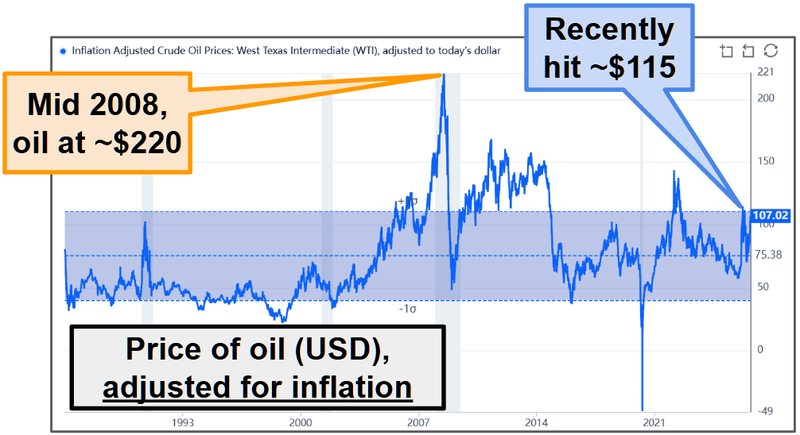
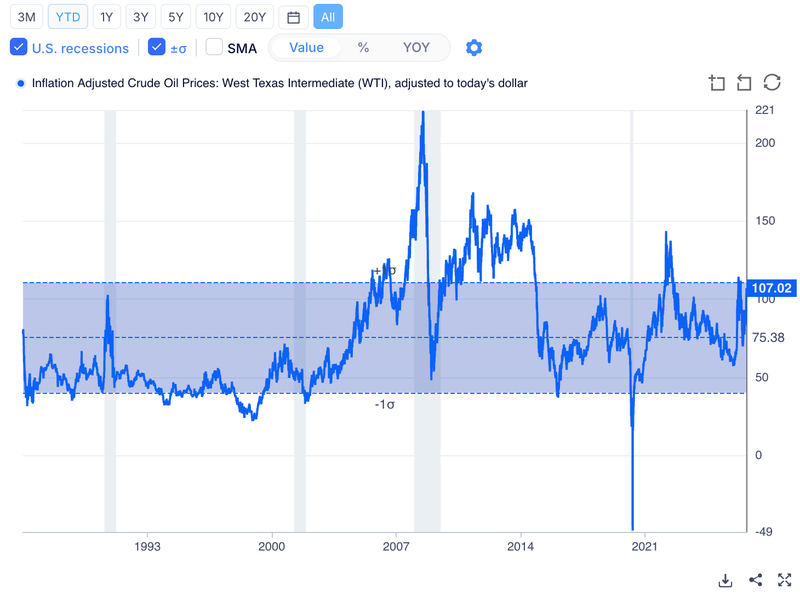
...like it did the last time the Middle East supply went offline - keep in mind we are nowhere near those inflation adjusted peaks yet - to go past those oil would need to go through US$220 per barrel:
(source)
Past performance is not an indicator of future performance. Commodity prices are volatile and can fall as well as rise.
No matter what happens, at oil prices above US$70–80 a barrel, big swing-for-the-fences exploration is still very attractive.
Especially when it's not in the Middle East - more on our bullish oil take later in today’s note, but first...
Here is the geological reason why supermajors might be interested in BUY’s block
The supermajors have had a crack at offshore Liberia before - and it looks like they are coming back into deepwater West Africa.
(source)
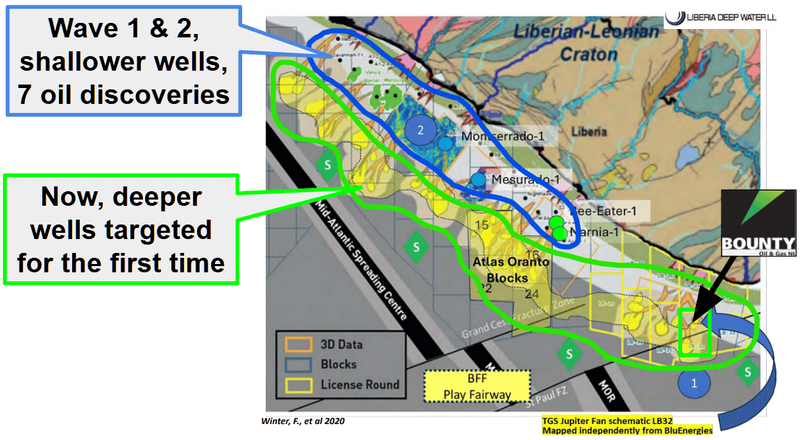
Historically there were two waves of exploration in Liberia:
Wave one: 1970s-80s where wells hit oil shows but no commercial discoveries were made.
Wave two: 2009-2016 where ~15 wells were drilled.
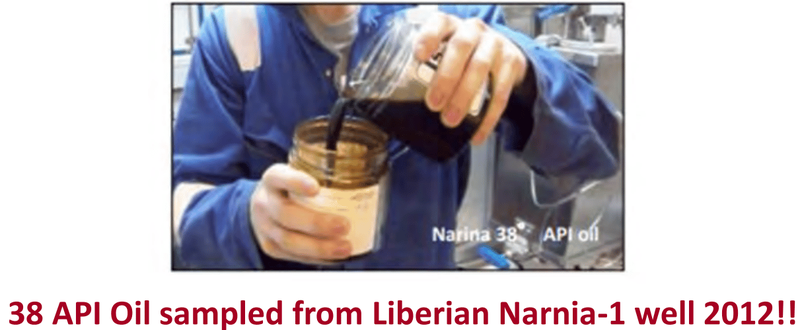
A few of those in wave two had decent oil shows (like the Narina-1 well with 32m of net oil pay) - but none were commercial discoveries.
(source)
The thing is that all of that drilling was on shallow close to shore targets sitting in ~1,000-2,000m deep water - mainly because that was considered ultra-deep water in the 2000’s and early 2010’s.
No one was drilling beyond that - because rigs literally couldn't do it.
(source)
Now supermajors are drilling in 3,000m+ water
Then in 2013, ~6,167km2 of 3D seismic was shot over the deeper-water target areas in ~3,000 to 4,000m of water.
Drill rig technology also improved in that time - by February 2013, rigs were drilling in 3,000m deep water. (source)
Then by 2016 - drilling in ~3,400m deep water. (source)
But the real reason the supermajors started dropping US$100M+ wells on deepwater targets was because of what happened in offshore Guyana in 2015.
In May 2015 Exxon made the Liza-1 discovery offshore in Guyana.
Then over the next 11 years over ~13BN barrels of oil equivalent have been discovered offshore in Guyana.
Then in 2022 TotalEnergies (yes the same TotalEnergies next door to the block BUY will be negotiating a license on) drilled Venus-1X offshore Namibia in ~3,000m of water and made a giant discovery. (source)
All of a sudden - the supermajors' attitude towards these ultra deep water targets had changed.
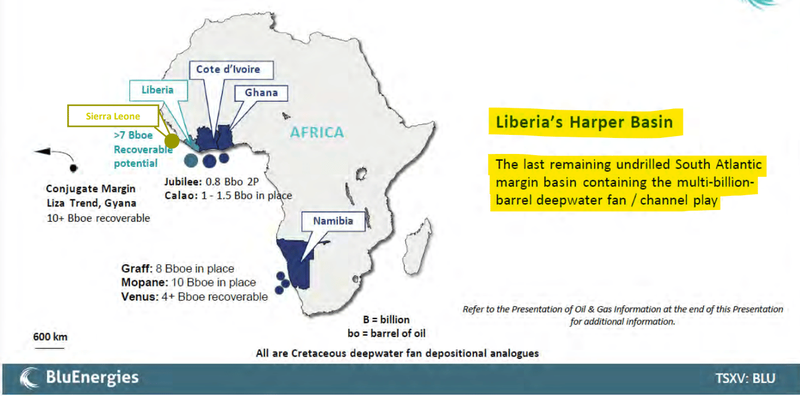
Now, the current wave of exploration offshore in Liberia is going after the same geological system that those ultra deep water discoveries were made in.
Called “basin floor fans” on the “South Atlantic Margin Basin” - like Guyana.
Liberia’s deep water targets are the last remaining undrilled deepwater targets across that structure.
(source)
Geologically the deep water changes things too (in a good way)
So, WTF is a “basin floor fan”? We didn't know until we went down the rabbit hole on that 127 page technical report either.
But deep diving on the Guyana example - it started making sense to us.
- Guyana before Exxon’s 2015 discovery had decades of failed “shelf” and “slope” wells.
- Guyana after Exxon’s 2015 discovery = 51 discoveries and over ~11 billion barrels discovered.
- What changed: someone finally drilled the “basin floor fan” targets...
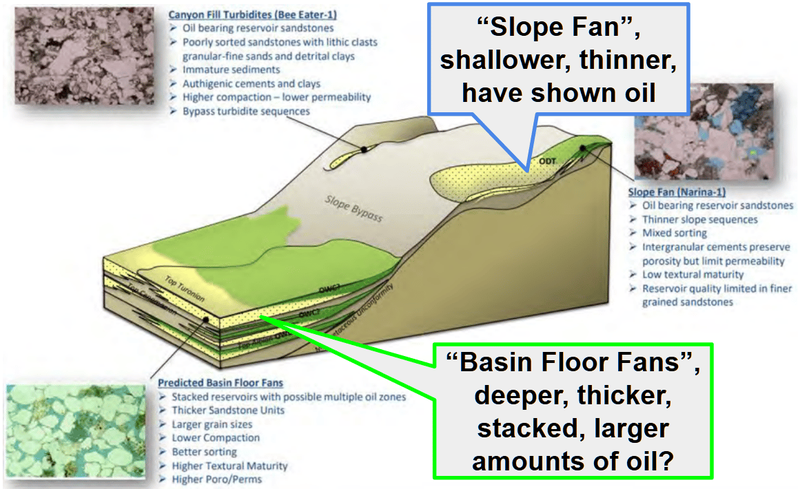
All the drilling in Liberia up to now has been on “slope fans” too.
The deeper water “basin floor fan” targets are UNDRILLED.
Even though, more than ~50% of discovered resources across offshore Africa came from just ~12 basin floor fan wells (versus over 115 on other targets).
We are not geophysicists, but looking at the image below - basin floor fans do look A LOT bigger AND are supposedly meant to solve all the technical risks that “slope fans” have.
(source)
Here are those Basin Floor Fan targets all across the deepwater in Liberia:
(source)
Now with this new way of looking at these ultra deep water blocks - and a way to actually drill them.
The supermajors are coming back into deep water exploration chasing the big elephants - here is that map from earlier again:
(source)
Based on the work Total is doing next door to BUY, it looks like the first well on those deep targets could also happen next door.
Between now and then, we are hoping one of two things happens:
- Either BUY works its project up to the point where it becomes an attractive farm-out opportunity (realistically for a super major like Total, Petrobras, Exxon etc).
- OR Total goes on to make a discovery next door and BUY’s block becomes more valuable on a look through basis.
Before all of that though, we will need to see BUY get a PSC granted over the block.
That is the key risk in the short term.
And of course the big unknown is how big BUY's targets will end up being once the seismic data has been processed.
Later in today’s note we will share our BUY Investment Memo which details:
- What BUY does
- The macro theme for BUY
- Our BUY Big Bet
- Why we are Invested in BUY
- What do we want to see BUY achieve
- The key risks to our Investment Thesis
- Our Investment Plan
But first, here are the 10 reasons why we Invested in BUY.
10 Reasons Why We Are Invested in BUY
1. BUY’s block could have ~4.5BN barrels of speculative “original-oil-in-place"
According to a giant 127 page technical report - BUY’s block could contain ~4.5BN barrels of “OOIP” (Original Oil In Place), unrisked, based on the screening volumetrics.
(A ~1.1BN recoverable target - risked by the vendor’s exploration team)
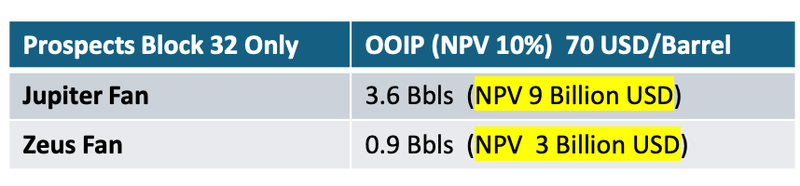
(read it or paste into your favourite AI chatbot here)
That's the vendor's exploration team's number, so they're biased - and it's a screening estimate worked up from the neighbours' published data, not from BUY's own seismic data YET.
2. BUY’s block has existing 2D and 3D seismic data
BUY’s whole block is covered by 2D seismic data and the corner where BUY’s main target sits is covered by ~6,167km2 of 3D seismic shot in 2013.
That's years of time and we would estimate at least US$50M+ of seismic data costs that BUY won’t have to incur.
The existing seismic should mean BUY can pretty quickly (and cheaply), put together an independently certified ASX compliant prospective resource estimate for its block.
Having 3D seismic is also a big plus because it's usually the minimum any supermajor wants to see before considering drilling a deepwater well offshore.
3. BUY can be farm-out ready relatively quickly
BUY has THREE clear catalysts to get its project farm-out ready.
We think they are all achievable in a relatively short period of time:
- Acquire and re-interpret existing 2D/3D seismic data.
- Put together a maiden prospective resource estimate number from that data.
- Convert its “exclusivity” into signed Production Sharing Contracts (PSC).
BUY could be farm-out ready right after the PSC is granted OR just before - where it could look to bring in the major partner to go in for the PSC together.
4. Liberia’s Guyana style deepwater targets (basin floor fans) have never been drilled before
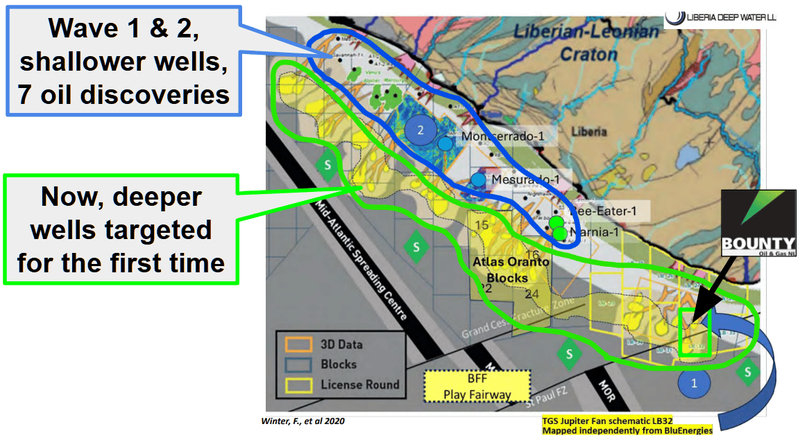
~15 wells were drilled offshore Liberia and Sierra Leone between 2009 and 2016 - all of them on the shallower "slope fans" in ~1,000–2,000m of water.
The deeper "basin floor fans" - the structures responsible for ~11BN + barrels discovered offshore in Guyana and the big discoveries in Namibia - have NEVER been tested offshore in Liberia.
(Partly because drill rigs couldn't drill them before ~2013 AND because no one ever thought to try those targets)
Basin floor fans are typically big - just ~12 wells are responsible for more than half of everything discovered offshore in West Africa.
Offshore Liberia is one of the last basins where these deeper targets are yet to be tested.
(source)
5. The supermajors are coming back into deepwater West Africa
The big mega discoveries in Guyana and Namibia in deepwater has changed the attitude of supermajors for these deepwater targets.
Now we have US$279BN TotalEnergies and Oranto (led by billionaire Arthur Eze) taking blocks on deepwater targets in offshore Liberia.
$914BN ExxonMobil has also been pre-qualified since 2023 and is now reportedly interested in new Liberian blocks. (source)
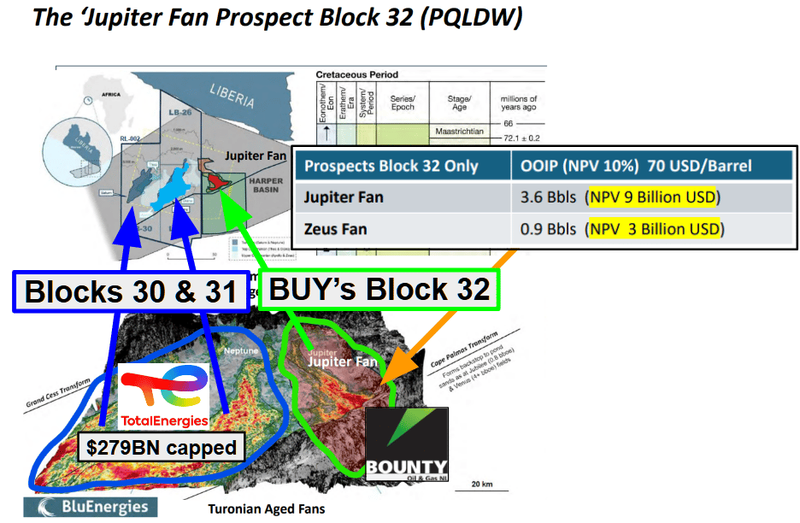
6. BUY's block is next door to $279BN TotalEnergies
BUY’s block sits in between blocks held by $279BN Total in Liberia and $187BN Petrobras in Cote D’Ivoire.
Also, again according to that giant 127 page technical report, the block BUY is negotiating a PSC over could be an extension to the Total block next door.
That is the blocks Total’s study partner (BluEnergies) says could contain ~7.3 billion barrels of oil equivalent.
IF Total makes a discovery next door, BUY's block could become a lot more valuable on a look-through basis without BUY drilling a thing.
(source)
7. BUY has the exclusive right to negotiate the licence - the same position Total was in before it got its blocks.
The Production Sharing Contract isn't signed yet, and that's without doubt the key risk.
But BUY is acquiring the company that has a “Letter of engagement” - the same permitting status that Total had before it signed its Production Sharing Contract with the Liberian National Oil Company (NOCAL).
Total went from exclusivity to granted blocks - that's why we're relatively comfortable backing BUY at this stage of the process.
8. We (and the ASX) like big African swing-for-the-fences oil explorers
With oil and gas, we are always looking to Invest in the big swing-for-the-fence explorers - where the upside is in the billions of barrels.
We had success with IVZ in Africa (our 2020 Pick of the Year).
At its peak IVZ was up 1057% from our Initial Entry Price.
(Past performance of IVZ is not an indicator of future performance.)
On the ASX there is also the Hardman Resources success story - which ended up a ~A$1.5BN takeover.
And other small caps which have farmed-out or had drilling success... we are hoping BUY is another one of those.
9. Small market cap leveraged to a potentially giant oil target
After today’s raise BUY will be capped at ~$16.4M (at 1.2c with over $4M in the bank).
(Moving up to ~$30M when transaction milestones are achieved and vendors shares issued).
Which gives the company plenty of room to re-rate in the lead up to a farm-out/drilling.
10. The oil price is strong - and we think it wants to run.
The oil price is rising again at ~US$95 per barrel.
~30% of oil and gas supply is offline or at risk right now because of the conflict in the Middle East.
If all of this Middle East supply stays offline for another few months, we think the oil price could really start to take off...
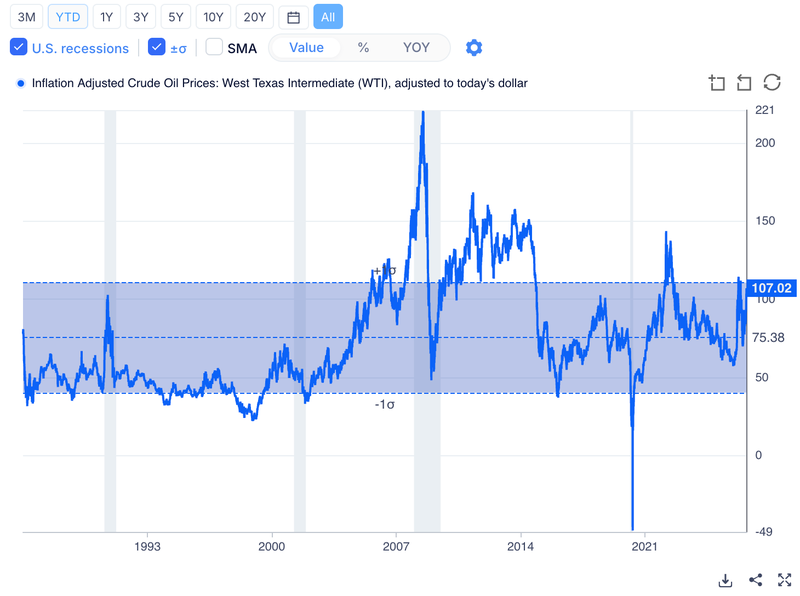
...like it did the last time the Middle East went offline - keep in mind we are nowhere near those inflation adjusted peaks yet - to go past those Oil would need to go through US$220 per barrel:
(source)
Past performance is not an indicator of future performance. Commodity prices are volatile and can fall as well as rise.
At anything above US$70 - 80 a barrel, big swing-for-the-fences exploration is very attractive.
IF oil ends up at US$150 - 200, the companies holding giant undrilled targets are the ones with the most leverage.
Ultimately, we are hoping those reasons contribute to our BUY Big Bet as follows:
Our BUY Big Bet
“BUY is granted a Production Sharing Contract over its offshore Liberia block, farms the block out and a discovery is made (on or next door to the block) re-rating BUY to a $300M+ market cap”.
NOTE: our “Big Bet” is what we HOPE the ultimate success scenario looks like for this particular Investment over the long term (3+ years). There is a lot of work to be done, many risks involved - just some of which we list in our BUY Investment Memo. Success will require a significant amount of luck. There is no guarantee that our Big Bet will ever come true.
Success will require a significant amount of luck. Past performance is not an indicator of future performance.
We think oil prices could run hard over the next few months
~30% of global oil supply (out of the Middle East) is as close to being halted as possible right now...
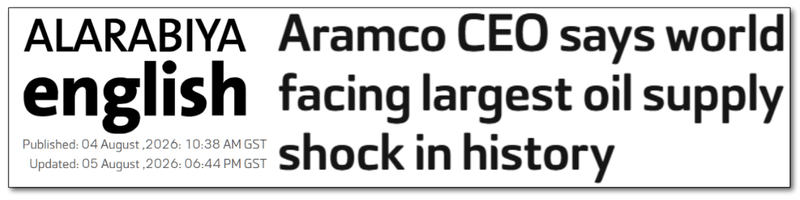
Saudi Aramco’s CEO is calling the Strait of Hormuz closure the “largest oil supply shock in the world”.
(source)
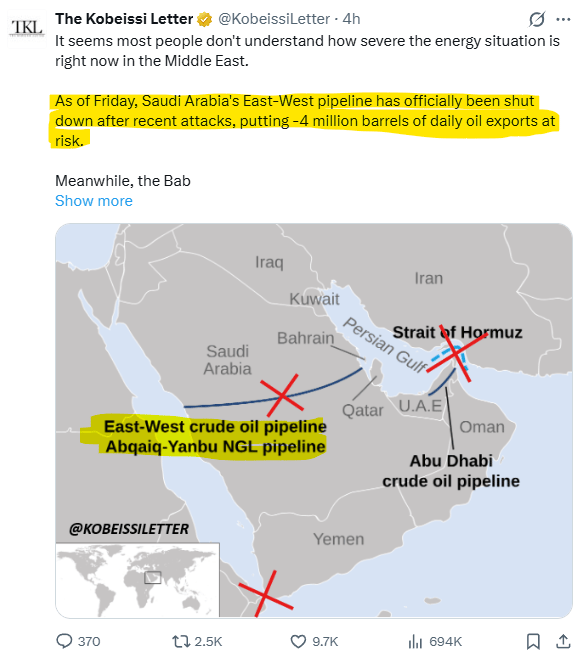
That was before LAST weekend, when one of the key pipelines helping soften that Hormuz blow went offline...
(the pipeline taking oil east-west through Saudi Arabia getting around the closed strait of Hormuz)
So now, three routes out of the Middle East are compromised - Hormuz, Bab al-Mandab and Saudi Arabia’s East-West pipeline:
(source)
For the first time in decades, the world is almost completely cut off from Middle East oil.
Despite all of this, oil prices haven’t really behaved like the “largest oil supply shock in history”.
(yet)
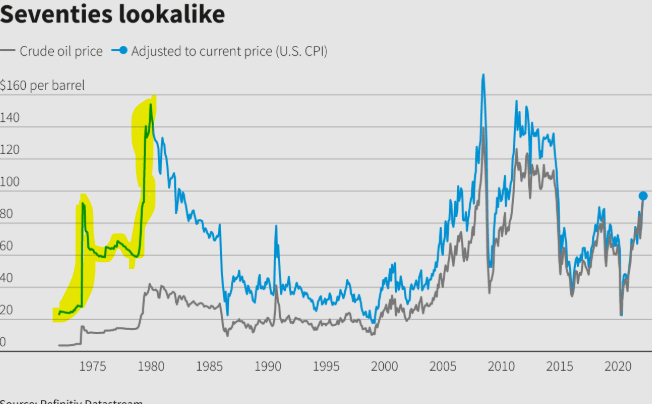
Shades of what happened the last time the world experienced a sustained supply shock out of the Middle East was back in 1973 during a war between Israel and other Middle Eastern countries.
Oil prices rallied hard, came off a bit and then rallied hard again - we have had the first leg up, now the pullback, IF things don’t calm down we could get a similar style second run up:
(source)
The past performance is not and should not be taken as an indication of future performance. Caution should be exercised in assessing past performance. This product, like all other financial products, is subject to market forces and unpredictable events that may adversely affect future performance.
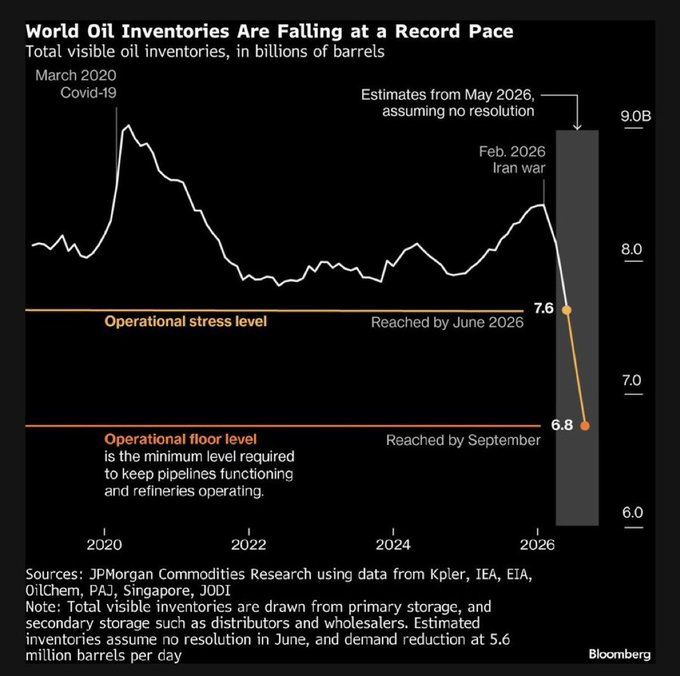
For now the world has been able to keep a lid on oil prices - mostly by drawing down reserves and above ground inventories.
And from countries like China pulling back on purchases (decreasing the demand for oil to match the disrupted supply). (source)
So far we have seen:
- 507 million barrels drawn out of global inventories since February (source)
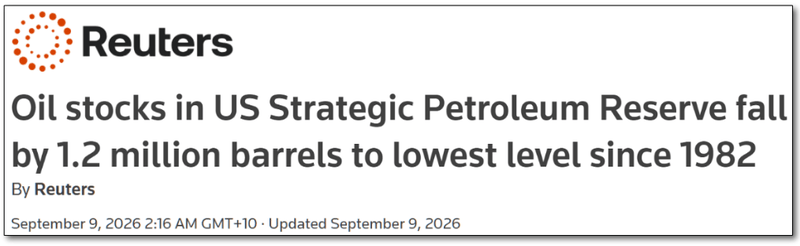
- 400 million barrels released from government emergency stockpiles in the IEA's coordinated action back in March (source)
- And 95 million barrels drawn in August alone - importantly with China leading the drawdowns... (source)
China coming back and aggressively drawing down tells us the reserve draw downs will only be able to keep a lid on prices for as long as they exist (and are not running seriously low).
If all of this Middle East supply stays offline for another few months, we think the oil price could really start to take off...
...like it did the last time the Middle East went offline - keep in mind we are nowhere near those inflation adjusted peaks yet - to go past those Oil would need to go through US$220 per barrel:
(source)
Past performance is not an indicator of future performance. Commodity prices are volatile and can fall as well as rise.
No matter what happens, at oil prices above US$70–80 a barrel, big swing-for-the-fences exploration is still very attractive.
Especially when it's not in the Middle East.
IF the oil price goes on a run and ends up at US$150 or US$200...
...then we think the companies with the giant, undrilled, swing-for-the-fences targets are the ones with the most leverage.
Which is why we are Invested in Bounty Oil and Gas (ASX:BUY).
In the rest of today's note we cover our BUY Investment Memo, where you can find:
- What BUY does and the macro theme
- Our BUY Big Bet
- The 10 reasons we Invested (summary)
- What we want to see BUY deliver - objectives and milestones
- What could go wrong
- Our Investment strategy
Here it is...
Investment Memo: Bounty Oil & Gas (ASX:BUY) - LIVE
Opened: 22-09-2026
Shares Held at Open: 126,041,667
Options Held at Open: 41,666,666
What does BUY do?
BUY is acquiring the exclusive right to negotiate a Production Sharing Contract on a deepwater exploration block (LB-32) in offshore Liberia, West Africa.
BUY's plan is to licence and reprocess existing 3D seismic, define an independent prospective resource, secure a Production Sharing Contract, and farm the block out to a major for drilling.
What is the macro theme?
Oil & gas is back on the market's radar after a couple years in the sin bin.
Small cap O&G explorers are active again and the market is willing to re-rate companies that are progressing assets.
Especially companies that provide exposure to frontier basins with multi-billion barrel potential.
BUY is one of the few ASX-listed companies with a potential multi-billion barrel prospect in frontier offshore basin that hasn’t been opened up YET.
Our BUY Big Bet
“BUY is granted a Production Sharing Contract over its offshore Liberia block, farms the block out and a discovery is made (on or next door to the block) re-rating BUY to a $300M+ market cap”.
NOTE: our “Big Bet” is what we HOPE the ultimate success scenario looks like for this particular Investment over the long term (3+ years). There is a lot of work to be done, many risks involved - just some of which we list in our BUY Investment Memo. Success will require a significant amount of luck. There is no guarantee that our Big Bet will ever come true.
Success will require a significant amount of luck. Past performance is not an indicator of future performance.
10 reasons why we Invested in BUY
- BUY’s block could have ~4.5BN barrels of speculative “original-oil-in-place"
- BUY’s block has existing 2D and 3D seismic data
- BUY can be farm-out ready relatively quickly
- Liberia’s Guyana style deepwater targets (basin floor fans) have never been drilled before
- The supermajors are coming back into deepwater West Africa
- BUY's block is next door to $279BN TotalEnergies
- BUY has the exclusive right to negotiate the licence - the same position Total was in before it got its blocks.
- We (and the ASX) like big African swing-for-the-fences oil explorers
- Small market cap leveraged to a potentially giant oil target
- The oil price is strong - and we think it wants to run.
What do we expect BUY to deliver?
Objective #1: Complete the LB-32 acquisition
- We want to see BUY complete the acquisition of the offshore Liberia block.
Objective #2: Acquire and interpret seismic data
- We want to see BUY acquire and then interpret the existing 3D/2D seismic datasets
Milestones:
🔲 Licence the 3D and 2D datasets
🔲 Reprocessing complete
🔲 Seismic data results
🔲 Targets confirmed (Zeus and Jupiter)
Objective #3: Independent prospective resource
- Post-seismic data we want to see BUY announce a maiden prospective resource over its block.
Objective #4: Production Sharing Contract
- We want to see BUY convert its “Letter of engagement” over its Liberian block into a Production Sharing Contract
Objective #5: Farm-out and drilling
- Ultimately we want to see BUY farm-out the project and lock in a carry on a well
Milestones:
🔲 Data room opened / farm-out process begins
🔲 Farm-in partner secured with a carry through the first well
What could go wrong?
Permitting risk
Right now, BUY’s claim over the offshore block is through an “exclusive right to negotiate”. There is no guarantee BUY will be granted the block. Especially considering it is offshore and BUY is a small cap which may struggle to show financial capacity to retain and explore an ultra deep water block.
Sovereign risk
West-Africa has a history of conflict - Liberia itself is also a post-conflict frontier jurisdiction (civil war ended 2003) with an evolving regulatory framework. There is always a risk of geopolitical instability in the region.
Resource risk
The ~4.5BN barrel “speculative oil-in-place resources” are all estimates of the current vendor based on public data released by BUY’s neighbours.. When the real 3D is reprocessed and interpreted, the targets could be a lot smaller, thinner, or not hydrocarbon-charged at all. An independent evaluator may land on a materially different number.
Exploration risk.
Even with a validated prospect, frontier deepwater exploration fails more often than it succeeds - the vendor's own risk is ~1-in-3 for this play type. Oil and gas discoveries on frontier blocks are rare and so there is no guarantee a discovery is made.
Funding and dilution risk.
A deepwater well in 3,000–4,000m of water costs US$100M+. BUY as a small cap can’t fund that alone. Without a farm-out BUY may struggle to attract financing to drill its well. Before then there are the signature bonus, data licensing, reprocessing and study costs, and based on the vendor of the project’s previous decks a potential Hybrid 3D Seismic survey (~US$10–20M per the vendor) if the legacy data proves inadequate for well placement.
Deal and liquidity risk.
BUY still needs to complete DD on the blocks and so there is no guarantee this deal completes.
Commodity price risk
Our thesis assumes a strong oil price. A reopening of Hormuz and the Red Sea, or a global recession driven by the energy shock, could see prices fall sharply. In that scenario, appetite for frontier farm-ins tends to evaporate quickly when oil falls.
Other risks:
Like any early-stage exploration company, BUY carries significant risk, here we aim to identify a few more risks.
The deepwater basin floor fan targets offshore Liberia have never been drilled before, meaning the presence of commercial hydrocarbons remains entirely unproven. The preliminary 4.5 billion barrel estimate comes from vendor screening numbers, and reprocessing the legacy 3D seismic could result in materially smaller targets (and maybe nothing at all).
Finally, operating in post-conflict frontier jurisdictions in West Africa carries inherent regulatory, sovereign, and political risks that could lead to unexpected delays or operational hurdles.
Investors should consider these risks carefully and seek professional advice tailored to their personal circumstances before investing.
What is our investment plan?
We are long-term holders and intend to hold the majority of our position for 3 to 5 years, through the seismic, prospective resource, PSC and farm-out milestones.
We will apply our standard de-risking strategy:
We may look to sell up to 20% of our holding if the company delivers on its key objectives and/or the share price materially re-rates, in accordance with our trading and hold policy disclosure.
General Information Only
This material has been prepared by StocksDigital. StocksDigital is an authorised representative (CAR 000433913) of 62 Consulting Pty Limited (ABN 88 664 809 303) (AFSL 548573).
This material is general advice only and is not an offer for the purchase or sale of any financial product or service. The material is not intended to provide you with personal financial or tax advice and does not take into account your personal objectives, financial situation or needs. Although we believe that the material is correct, no warranty of accuracy, reliability or completeness is given, except for liability under statute which cannot be excluded. Please note that past performance may not be indicative of future performance and that no guarantee of performance, the return of capital or a particular rate of return is given by 62C, StocksDigital, any of their related body corporates or any other person. To the maximum extent possible, 62C, StocksDigital, their related body corporates or any other person do not accept any liability for any statement in this material.
Conflicts of Interest Notice
S3 and its associated entities may hold investments in companies featured in its articles, including through being paid in the securities of the companies we provide commentary on. We disclose the securities held in relation to a particular company that we provide commentary on. Refer to our Disclosure Policy for information on our self-imposed trading blackouts, hold conditions and de-risking (sell conditions) which seek to mitigate against any potential conflicts of interest.
Publication Notice and Disclaimer
The information contained in this article is current as at the publication date. At the time of publishing, the information contained in this article is based on sources which are available in the public domain that we consider to be reliable, and our own analysis of those sources. The views of the author may not reflect the views of the AFSL holder. Any decision by you to purchase securities in the companies featured in this article should be done so after you have sought your own independent professional advice regarding this information and made your own inquiries as to the validity of any information in this article.
Any forward-looking statements contained in this article are not guarantees or predictions of future performance, and involve known and unknown risks, uncertainties and other factors, many of which are beyond our control, and which may cause actual results or performance of companies featured to differ materially from those expressed in the statements contained in this article. S3 cannot and does not give any assurance that the results or performance expressed or implied by any forward-looking statements contained in this article will actually occur and readers are cautioned not to put undue reliance on forward-looking statements.
This article may include references to our past investing performance. Past performance is not a reliable indicator of our future investing performance.