Our 2026 Small Cap Pick of the Year is Iondrive (ASX:ION)
Disclosure: S3 Consortium Pty Ltd (the Company) and Associated Entities own 25,913,727 ION Shares and the company’s staff own 460,000 ION Shares at the time of publishing this article. The Company has been engaged by ION to share our commentary on the progress of our Investment in ION over time. This information is general in nature about a speculative investment and does not constitute personal advice. It does not consider your objectives, financial situation, or needs. Any forward-looking statements are uncertain and not a guaranteed outcome.
Our 2026 Small Cap Pick of the Year is Iondrive (ASX:ION).
Our Small Cap Pick of the Year is reserved for companies we think have a strong setup for a 10x re-rate from where they trade today.
Every year we pick one Small Cap Pick Of The Year.
Here is how our past ASX Small Cap Picks of the Year performed from our Initial Entry Price to their peaks :
- VUL (2020): peak +8,225%
- PRL (2021): peak +892%
- SGA (2022): peak +243%
- SLM (2023): peak +571%
- SS1 (2024): peak +1,478%
- BKB (2025): peak +304%
The past performance is not and should not be taken as an indication of future performance. Caution should be exercised in assessing past performance. This product, like all other financial products, is subject to market forces and unpredictable events that may adversely affect future performance. Note: BKB and SLM were announced as Small Cap Picks of the Year subsequent to Initial Entry price shown.
ION is a processing technology company that recycles critical minerals, including rare earths.
ION has developed a technology that can extract MANY types of critical minerals from different types of electronic waste, scrap, old magnets, old industrial equipment etc.
The technology is based around chemical mixtures called “Deep Eutectic Solvents”.
In simple terms, think of them as special liquids that you put onto the scrap and it dissolves ONLY the desired critical minerals - allowing them to be extracted. Pretty cool stuff.
ION’s tech can be modified to target many different critical minerals from many different types of e-waste/scrap.
Critical minerals supply has become a matter of national strategic importance in the current global race to build AI, robots and advanced weapons.
All of which need critical minerals - which China dominates global supply of - and has recently been restricting exports.
(by the way, 3 days ago it was reported that MORE Chinese rare earths companies have been stopping rare earths supply to the West)
The USA and western nations have been scrambling to find and secure critical mineral supply.
In the last 8 weeks both US president Trump AND the G7 group of nations have called out the strategic importance and urgency of recycling rare earths from scrap and e-waste.
Especially MAGNET rare earths (MREOs) - specific rare earths used in AI, Robotic and Advanced Weapons:
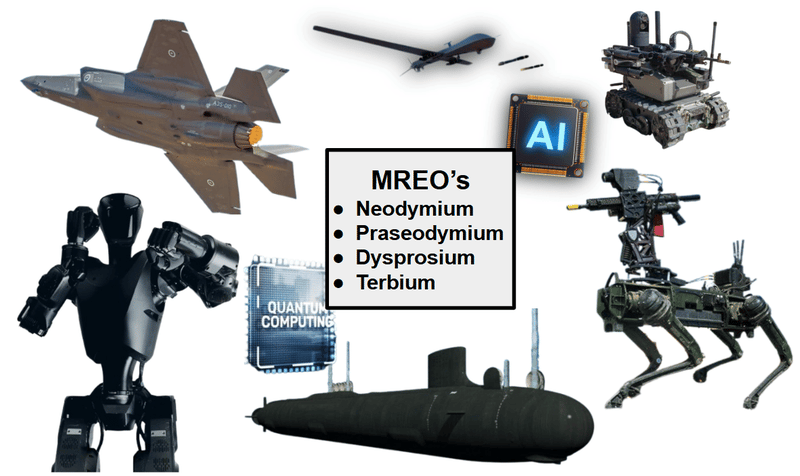
And recycling of magnet rare earths, inside US borders is EXACTLY what ION has been focusing on over the last 12 months.
This is what we think could be a company maker for ION inside 1-3 years.
In the last 12 months ION has delivered the following on its USA magnet rare earths (MREO) business:
- A binding agreement with America's largest e-waste processor (Colt Recycling) to supply feedstock (scrap to be recycled) (source)
- Independent lab tests showing ION's tech recovers rare earths - including heavy rare earths (93.5% dysprosium, 96.5% neodymium, 96.5% praseodymium). (source)
- A letter of support for up to ~US$15M from the Oklahoma Department of Commerce for a recycling plant (source)
- Started its first production run for 1.4 tonnes of rare earth oxide due within 150 days - this material will be used to qualify its product with potential offtakers... (source)
ION is now 1-3 months away (next quarter) from first production of mixed rare earth oxides from recycled e-waste in the US. (source)
🚨And BREAKING NEWS this morning:
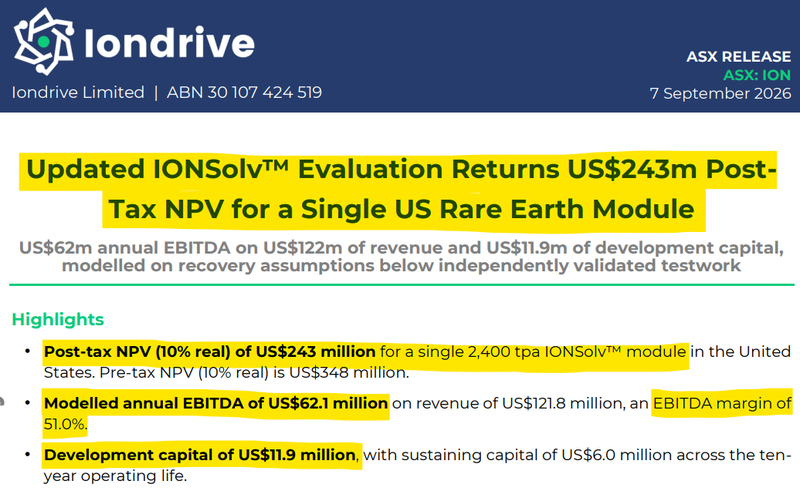
ION has just released updated economics for the SINGLE rare earths recycling module it plans to build in Oklahoma, USA:
US $243M NPV for US $11.9M CAPEX - with annual EBITDA of US $62.1M:
(source)
(Just quietly - that ~24x CAPEX to NPV ratio is incredible)
At last traded price of 8.6c ION’s market cap is A$110M - with $7M in cash.
Based on the latest study, just one of its rare earth recycling modules would have a post-tax NPV of US$243M.
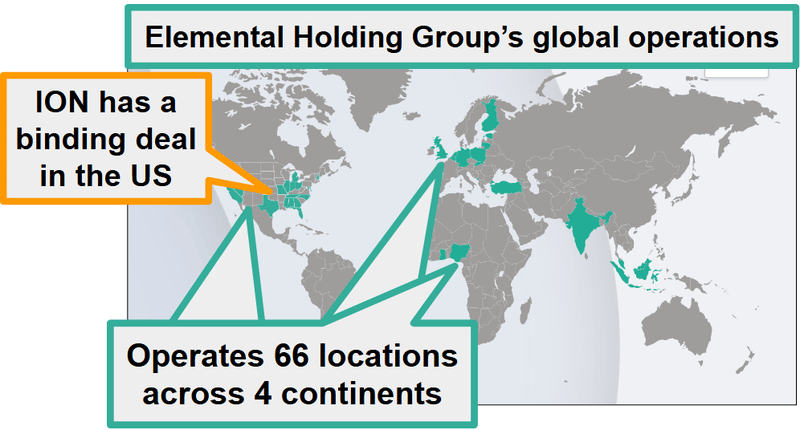
Remember - that company that ION has a binding agreement with (Colt Recycling) runs FOUR US e-waste facilities. (source)
AND is part of the Elemental Holding Group which has 50+ licensed scrap/e-waste collection and processing hubs across three continents. (source)
(source)
So IF ION can make it work in the US - there is a potential pathway to roll it out globally pretty quickly.
All of this is JUST for magnet rare earths recycling - which is where ION has focused its tech in the US.
ION’s Deep Eutectic Solvents (DES) recycling technology can recover many other critical minerals (from many other types of scrap/e-waste) including:
Copper, gold, cobalt, lithium, gallium, silver, antimony and indium...
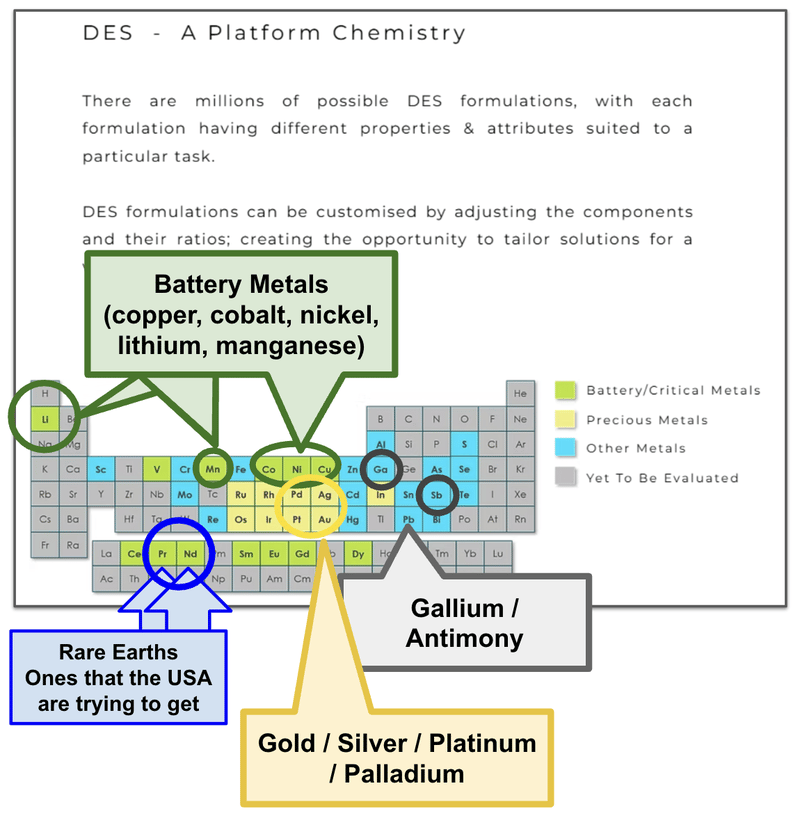
(source)
Plus ION has a minerals processing X factor - currently applying its tech at mine sites (helping miners optimise recoveries).
Any success in minerals processing could on its own be a company maker for ION - there is a US$2.5BN success case where one of ION’s directors are involved in... (more on that in a second).
The way we see it, ION only has to be successful in one mineral, in one industry (processing or recycling), for the company to achieve our Big Bet which is as follows.
(we are hoping the one to make it happen will be rare earths in the US)
Our ION Big Bet
"ION re-rates to a $1BN+ market cap by rolling out rare earth recycling modules across the US, and/or by securing important partnerships and funding with US downstream customers and government"
NOTE: our “Big Bet” is what we HOPE the ultimate success scenario looks like for this particular Investment over the long term (3+ years). There is no guarantee that our Big Bet will ever come true. There is a lot of work to be done, many risks involved, including technology risk, scale up risk, regulatory risk and development risk - just some of which we list in our ION Investment Memo.
Success will require a significant amount of luck. Past performance is not an indicator of future performance.
Our 2026 Pick of the Year - why rare earths, why recycling, and why now? And why ION?
Recycling metals isn't a new concept.
Copper and aluminium have been recycled commercially for decades - recycled copper makes up ~30% of global supply...
What IS new is recycling scrap metal, magnets and old electronics to extract the critical minerals that the West suddenly can't get out of China.
So why Rare Earths?
Rare earth magnets are what make motors and actuators smaller, lighter and more powerful.
So they are in fighter jets, submarines, drones, missiles, radar, precision-guided weapons and every humanoid robot.
And on Friday, Reuters reported that some Chinese rare earth suppliers have simply stopped shipping to US companies.
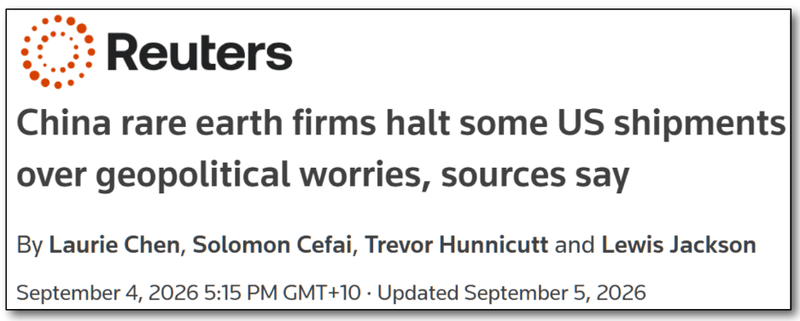
(source)
China mines about 60% of the world's rare earths.
Where China is almost the only game in town is in processing/refining rare earths.
~91% of the world's magnet-grade rare earth refining and 94% of finished magnet production comes from China. (source)
And for the heavy rare earths - dysprosium and terbium, the ones that go into jet engines or missiles - China's dominance is ~100%...
So the China dependency is strongest for processing and refining rare earths.
(which is why we are bullish on ION as a potential near term domestic producer in the USA).
2 days ago there was a report out by Sprott Asset Management saying Pentagon demand for rare earth magnets will nearly triple by 2030.
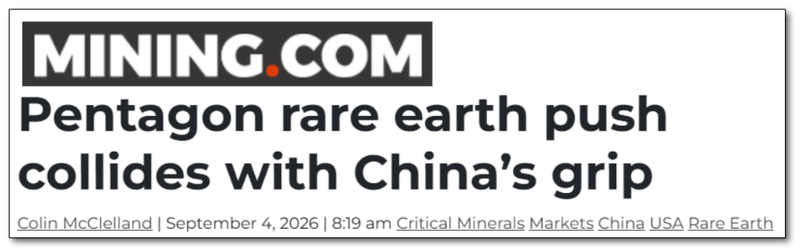
(source)
The same report also said "Reliability and source of supply matter more than cost to this buyer." (source)
Easy to see why - no rare earths = no magnets = can't build drones, humanoid robots, f-35s or missile systems...
All because the dominant global supplier China (and the US competitor for position of global superpower) is restricting exports of rare earths and rare earths magnets ...
According to an International Energy Agency Report - full rare earth export controls (on supply out of China into the US) could put at risk ~US$6.5 TRILLION of downstream production.
So you can see why domestic supply is so important for the US.
Which brings us to the “why recycling?”
We think the best (and most reliable) way of securing domestic US supply is to find it INSIDE US borders.
Why not extract the critical minerals needed to build AI, robots and advanced weapons from old industrial magnets, mobile phones, TV’s, and other electronic waste that has piled up over the decades INSIDE your own borders...
(stuff that was imported BEFORE China started restricting exports)
The US exports (gets rid of) nearly 33,000 metric tons of electronic waste PER MONTH.
And all the valuable critical minerals inside it.
WAIT... isn’t the USA in a mad scramble to secure domestic critical minerals supply?
This is the “why now”?
~9 weeks ago, US President Donald Trump said: STOP exporting scrap that contains critical minerals, immediately!
US President Donald Trump signed an Executive Order to restrict the export of e-waste, black mass (old batteries) and old magnets - that contain critical minerals.
SO that the critical minerals inside them can be recycled and extracted INSIDE the USA.
(exactly what ION is doing)
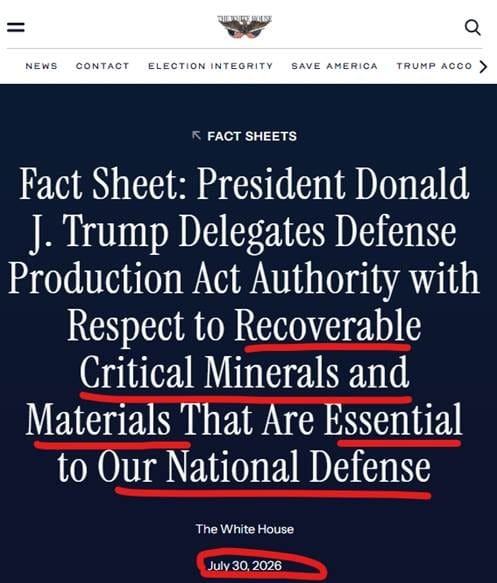
(source)
And so we think ION has quietly positioned itself in an industry where there is the most urgency, the most money and the most attention - recycling of rare earths in the US...
Which is why we made ION our 2026 Small Cap Pick of the Year.
(No guarantees on performance of course - ION is an early stage small cap where anything can happen)
Attention and capital are flowing into recycling tech companies in the USA.
We are seeing a lot of capital flow into recycling tech companies - especially in the US for companies able to recover critical minerals.
We have already seen:
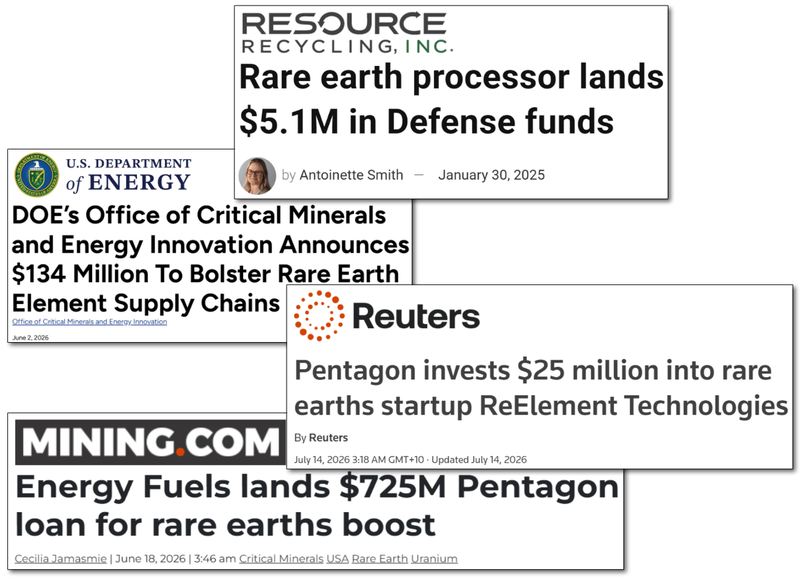
- Jan 2025: the Pentagon put US$5.1M into a recycler pulling rare earths from old electronics. (source)
- June 2026: the Department Of Energy put US$134M for heavy rare earth recovery from e-waste and scrap. (source)
- The Department Of War made a US$25M strategic investment in ReElement, and handed Energy Fuels a ~US$725M conditional loan for rare earths processing (source)(source)
(source)(source)(source)(source)
We think Trump's Executive Orders have been a signal to private capital to allocate to critical minerals companies.
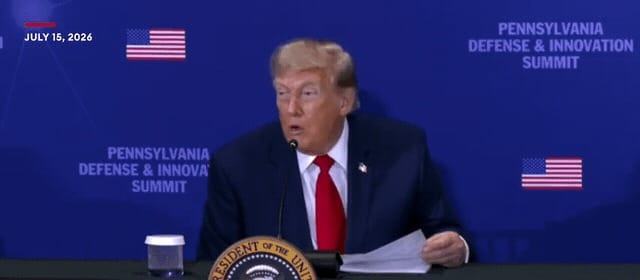
He is literally on record saying to get into rare earth magnets if you want to make money
(Here he is at a defense and innovation summit in July saying “I’ll tell you how to make money, do magnets”)
He isn't beating around the bush...
It is pretty clear to us that the US approach has been to use policy (and government funding) to de-risk sectors and to then mobilise private capital into that same sector.
We think 2024 and 2025 was the de-risking (through government policy) stage.
Now in 2026 (and over the next few years) we expect to see private capital really go after the companies that are in the strongest positions across different critical minerals.
(companies like ION)
Like the two deals we saw get done earlier this year:
- Noveon Magnetics (recycled magnets) raise US$215M (Jan 26).
- Cyclic Materials (rare earth recycling) raise US$75M (Aug 26)
Fun fact: There is a connection between Cyclic and ION.
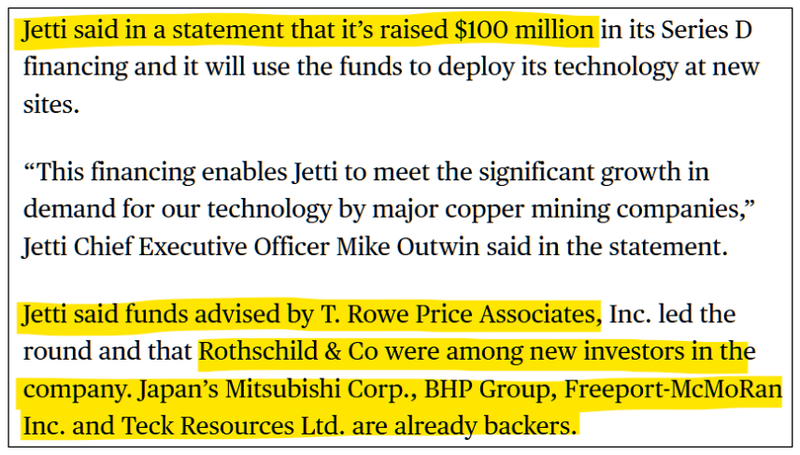
Cyclic’s raise was led by US fund “T. Rowe Price” - the same group that led a raise for copper processing tech company Jetti Resources at a US$2.5BN valuation.
Jetti is where ION’s non-exec director Hugo Schumann was CFO.
(surely ION comes up in conversation when the Jetti crew catch up these days)
(source)
Especially when we think ION has put itself in a position where financiers are more comfortable cutting big cheques:
- Having a line of sight to feedstock through that Colt Recycling agreement.
- Independently validated rare earth recoveries on real feedstock
- First product incoming - 1.4 tonnes of oxide within 150 days for customer qualification
- BREAKING: Project economics - a US$243M NPV study on a US$11.9M module
- A site and a state - Oklahoma, with ~US$15M of support on the table
- And a downstream buyer next door - $6BN USA rare earths explicitly looking for third party heavy rare earth feedstock (what ION can recover through recycling) (source)
So there is precedent set for US Government funding, private capital...
AND
For some reason we can't shake the feeling that this cycle will start peaking the same way the battery metals cycle did with the downstream guys writing the big cheques.
For the electric vehicle battery metals boom it was major car makers like Stellantis, Tesla, Volkswagen (ahhh the heady days of the electric vehicle battery metal boom)
For the US critical minerals boom we think it's going to be the defence contractors - RTX, Lockheed Martin, L3Harris, Boeing.
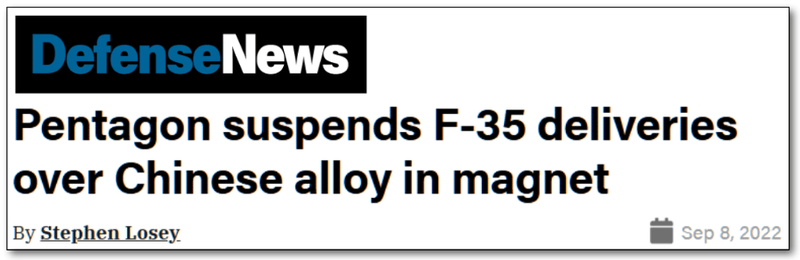
Remember when F-35 fighter jets had to stop being delivered because of a Chinese Alloy that put the “plane at risk”...
Surely the Lockheed procurement team will never want to lose sleep over something like that again.
(source)
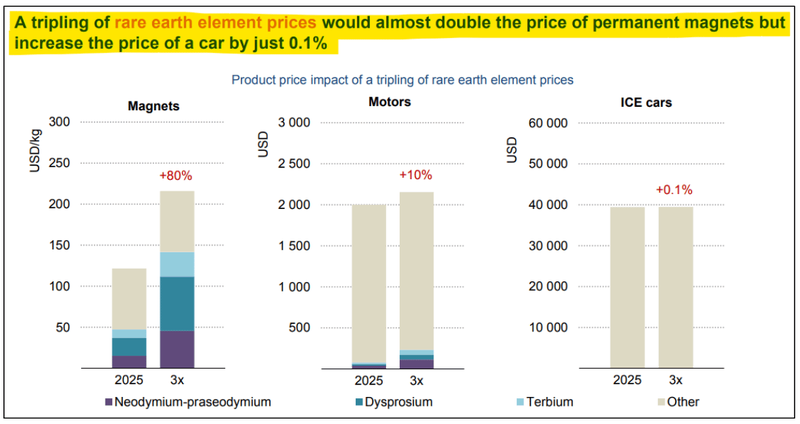
Especially when rare earth material prices have such a tiny impact on the end value of products.
For example for rare earths - tripling prices impacts 0.1% of the value of the end product.
So if the trade off is Lockheed incentivising supply by paying 10x rare earths prices and the government needing to pay 0.3% more for its F-35 fighter jets...
Its probably a trade off all parties can live with.
(source)
Setting aside any disruption to supply chains.
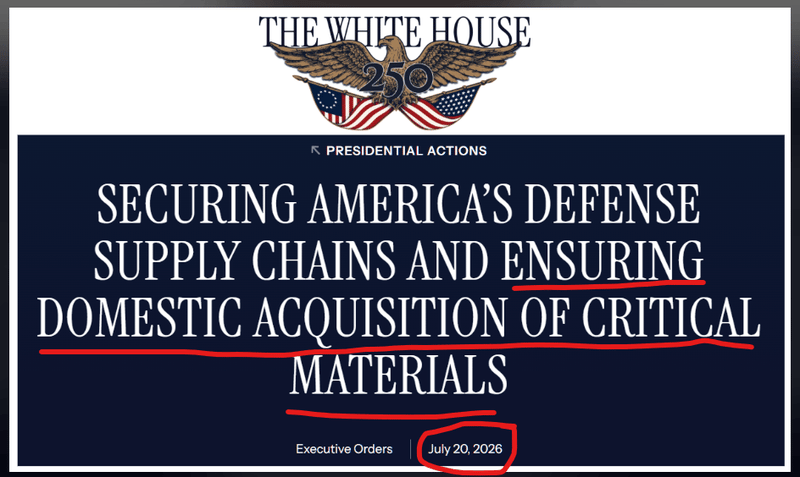
Trump signed the following EO in July - "Securing America's Defense Supply Chains and Ensuring Domestic Acquisition of Critical Materials".
Which told the trillion dollar US military Industrial complex can no longer get the required US government waiver allowing importing of critical minerals from non-compliant sources (i.e. China)...
UNLESS they demonstrate SERIOUS efforts to source these critical minerals domestically INSIDE US borders first.
(like ION is about to do - magnet rare earths produced in the USA)
So the trillion $ machine that is the USA military industrial complex has suddenly been told, by the US President, to urgently prioritise domestic USA supply of critical minerals.
(Read the full Executive Order here)
We have already seen Lockheed do an offtake option deal with Sunrise Energy Metals - so there is precedent for that too.
(The stock that did that offtake option was the best performing stock on the ASX in 2025).
We think there will be more deals like this over the coming months/years.
As mentioned earlier - ION could also take its platform tech global
The US is where the capital and the urgency are biggest right now - so it makes sense for ION to go the hardest on a US facility right now.
But, rare earths supply chains are a global problem.
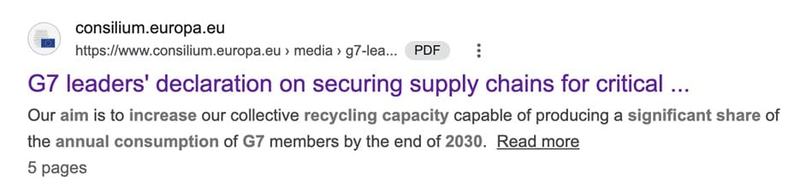
12 weeks ago the G7 group of nations (basically all the western big dogs) met and made explicit commitments to “boost recycling of critical minerals”.
(The G7 are Canada, France, Germany, Italy, Japan, the United Kingdom and the United States. The EU also sits at the table as a non-enumerated member, but it's not counted as one of the seven.)
Specifically calling out urgency around China dominated rare earths supply - rare earths being critical inputs in advanced technologies like AI, robotics and advanced weaponry.
One stated G7 aim was to make recycling capacity account for a “significant share” of annual consumption by 2030.
(source)
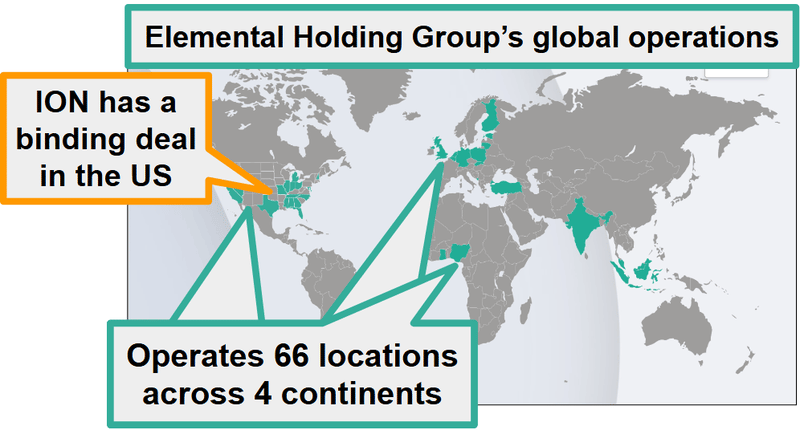
Remember ION’s binding agreement in the US is with a company inside the Elemental Holding Group which has operations across 20+ countries across four continents.
(source)
So ION could technically prove its business model in the US with Colt - then expand internationally through the same partnership...
(No guarantees this ever happens of course - just us speculating)
So the G7 (and us) think that for the West to fix its China dependency for critical minerals, it will need to lean heavily into recycling tech.
In ION’s case, first for rare earths - then potentially later for silver, copper, gallium and so many others.
(oh, we almost forgot to mention, but ION is almost finished building a battery metals recycling pilot plant - that is targeted for commissioning later this year)
The same solvents that ION uses for rare earths can be tuned to pull copper, gold, silver, cobalt, lithium, gallium, antimony and silicon etc etc.
We think the US rare earths business could be a company maker in its own right.
The blue sky upside is in ION taking its platform into other critical minerals.
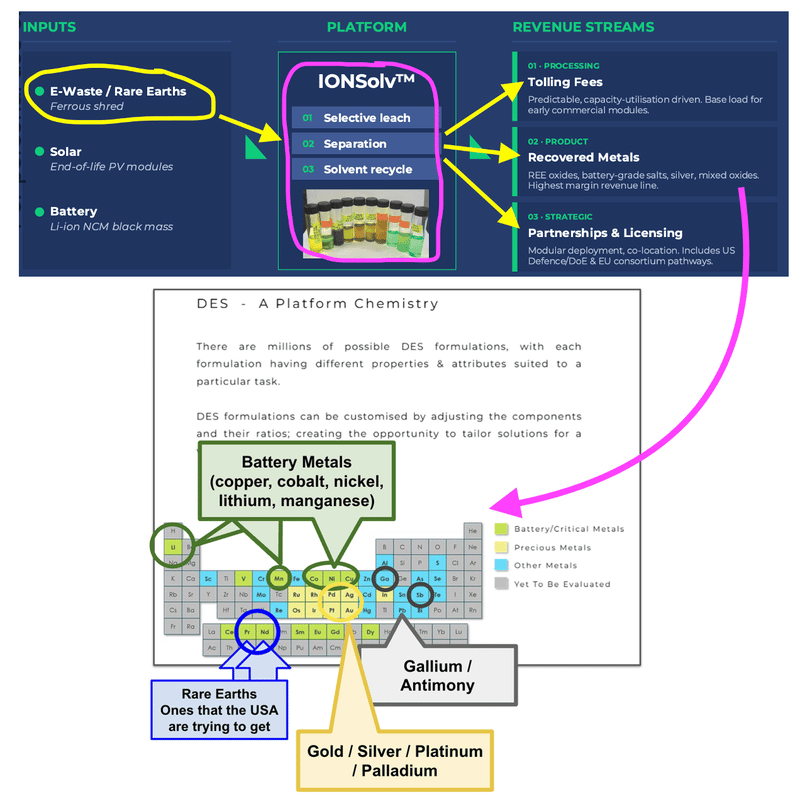
(source)
Note: the above chart shows metals amenable to Deep Eutectic Solvent chemistry in general, and have not necessarily been specifically tested by ION.
The 10 reasons ION is our 2026 Pick of the Year:
1. ION doing magnet rare earths recycling in the USA - where there is the most urgency, money and attention.
China’s export restrictions on rare earths kick started the whole “US Critical Minerals” macro thematic.
Rare earths are receiving the most US government attention, the most capital from inside the US with the most urgency.
Which is why we think ION’s tech is being focused on the right critical mineral in the right jurisdiction at the right time.
2. ION is moving fast - and the pieces are in place.
ION, for its rare earth business in the US already has:
- A binding agreement with America's largest e-waste processor (Colt Recycling) to supply feedstock
- Independent lab tests showing ION's tech recovers rare earths - including heavy rare earths (93.5% dysprosium, 96.5% neodymium, 96.5% praseodymium)
- A letter of support for up to ~US$15M from the Oklahoma Department of Commerce for a recycling plant
- A first production run underway for 1.4 tonnes of rare earth oxide due within 150 days
3. Trump executive orders are positive for ION
The 20-July order forces US military contractors to prove "serious efforts" to source critical minerals domestically before they can import them - with a 1 January 2027 deadline on Chinese-origin materials in US defence systems.
(They either show they have tried or risk losing defence contracts)
Then there is the 30-July Presidential Determination that gives the Department of Commerce the power to ban exports of e-waste, black mass and magnets so they get recycled at home.
Two executive orders that will mean more capital going into potential domestic supply sources (like ION) and also more feedstock for a business like ION.
4. The G7 group of countries is also bullish critical minerals recycling
In June the G7 group of nations (basically all the western big dogs) met and made explicit commitments to “boost recycling of critical minerals”. (source)
Specifically calling out urgency around China dominated rare earths supply - rare earths being critical inputs in advanced technologies like AI, robotics and advanced weaponry.
One stated G7 aim was to make recycling capacity account for a “significant share” of annual consumption by 2030. (source)
Remember ION’s binding agreement in the US is with a company inside the Elemental Holding Group which has operations across 20+ countries across four continents.
5. Recycling can be a lot faster than mining
S&P Global's July 2026 study puts the average time from discovery to production at 16 years - and nearly 30 years for mines not yet operating, with permitting the main culprit. ION's modules bolt onto e-waste facilities that already exist, with US$11.9M of development capital per module - and its first rare earth oxide is due within 150 days. (S&P Global, Jul-2026)
6. US$243M NPV for each module - ION can build multiples of them around the US (and more globally)
One of ION’s 2,400tpa rare earths “modules” has the following economics:
- ~US$243M post-tax NPV,
- US$62M EBITDA
- US$122M revenue, and
- US$11.9M of development capital
That company (Colt Recycling) ION has a binding agreement with, runs FOUR US e-waste facilities.
AND is part of the Elemental Holding Group which has 50+ licensed scrap/e-waste collection and processing hubs across three continents. (source)
So those modular plants can be plugged into a global network pretty quickly (IF they work) - at US$243M NPV each...
7. A facility in Oklahoma, USA would be next door to $6BN USA Rare Earths which is explicitly looking for third party feedstock.
Oklahoma is where the US government just handed out a US$1.6BN funding deal to USA Rare Earth - which includes ~US$50M to expand a magnet manufacturing plant. (source)
USA Rare Earths has in the past explicitly mentioned “third party feedstock” would be used in the ramp up stages of its magnet plants.
Especially for heavy rare earths which are almost impossible to find in the US. (source)
Remember: ION can recover heavy rare earths from e-waste.
8. Critical minerals recycling and processing tech is getting funded - by governments AND private capital, right now.
We are seeing a lot of capital flow into recycling tech companies - especially in the US for companies able to recover critical minerals.
We have already seen the US government back:
- Jan 2025: the Pentagon put US$5.1M into a recycler pulling rare earths from old electronics. (source)
- June 2026: the Department Of Energy put US$134M for heavy rare earth recovery from e-waste and scrap. (source)
- The Department Of War made a US$25M strategic investment in ReElement, and handed Energy Fuels a ~US$725M conditional loan for rare earths processing
And private capital get behind the following two deals this year alone:
- Noveon Magnetics (recycled magnets) raise US$215M (Jan 26).
- Cyclic Materials (rare earth recycling) raise US$75M (Aug 26)
We think ION is in a position with its US rare earths business to attract this sort of funding.
9. ION’s tech works on other critical minerals too
ION has already shown it can recover:
- Silver from solar panels (95%+ recoveries at bench scale).
- Battery metals from scrap batteries (black mass) - 89% lithium, 100% nickel, 98.6% cobalt, 98.4% manganese with a pilot plant due for commissioning in Q4-2026, AND
- Copper, gold and silver from circuit boards.
ION’s underlying Deep Eutectic Solvent tech has also been shown to recover other critical minerals like gallium, antimony and indium (plus many more).
We think that once ION commercialises its tech in one domain, it can expand into other critical minerals.
10. ION also has the “minerals processing” X factor
ION is also using its tech to solve extraction issues that miners have (getting a certain mineral out of a certain type of rock).
ION is currently focused on two markets for mineral processing:
- Cobalt (also a critical mineral where the US is import dependent) - ION signed a binding term sheet with Latitude 66 to apply its technology on concentrates that would be produced from Latitude's project in the EU (Finland). (Source)
- Nickel - ION is testing its tech on US sourced feedstock in the nickel industry. (Source)
Processing tech, when it works can be very valuable - like the company ION’s director Hugo Schumann was CFO of (Jetti Resources) which raised US$100M at a US$2.5BN valuation.
We think any success in minerals processing can on its own be a company maker.
Ultimately, we are hoping the above reasons contribute to ION delivering our Big Bet as follows:
Our ION Big Bet:
"ION re-rates to a $1BN+ market cap by rolling out rare earth recycling modules across the US, and/or by securing important partnerships and funding with US downstream customers and government"
NOTE: our “Big Bet” is what we HOPE the ultimate success scenario looks like for this particular Investment over the long term (3+ years). There is no guarantee that our Big Bet will ever come true. There is a lot of work to be done, many risks involved, including technology risk, scale up risk, regulatory risk and development risk - just some of which we list in our ION Investment Memo.
Success will require a significant amount of luck. Past performance is not an indicator of future performance.
Will ION be our first US critical mineral producer?
We think so.
Because ION already has:
- The feedstock deal - with the biggest e-waste processor in the US - a binding agreement with Colt Recycling, signed in September 2025. (source)
- Proof the tech works on actual e-waste feedstock - Independent testwork in the US on commercial e-waste with recoveries of 93.5% dysprosium, 96.5% neodymium and 96.5% praseodymium. (source)
- First production incoming within 150 days - ION has commissioned its first ~5 tonne production campaign - targeting 1.4 tonnes of mixed rare earth oxide (neodymium, praseodymium, dysprosium) within 150 days.
That product goes to "potential customers" for qualification which could unlock offtake from Defence contractors? Magnet makers? Refiners?
Who knows... They will all have product samples ready to look at and qualify soon.
4. The economics for a single 2,400 tonne-per-annum module in the US:
Post-tax NPV of US$243M, EBITDA of US$62.1M AND development capital of only US$11.9M.
NPV to CAPEX ratio of ~24x...
And capable of producing ~630 tonnes a year of rare earth oxide, of which ~624 tonnes is payable neodymium, praseodymium and dysprosium oxide
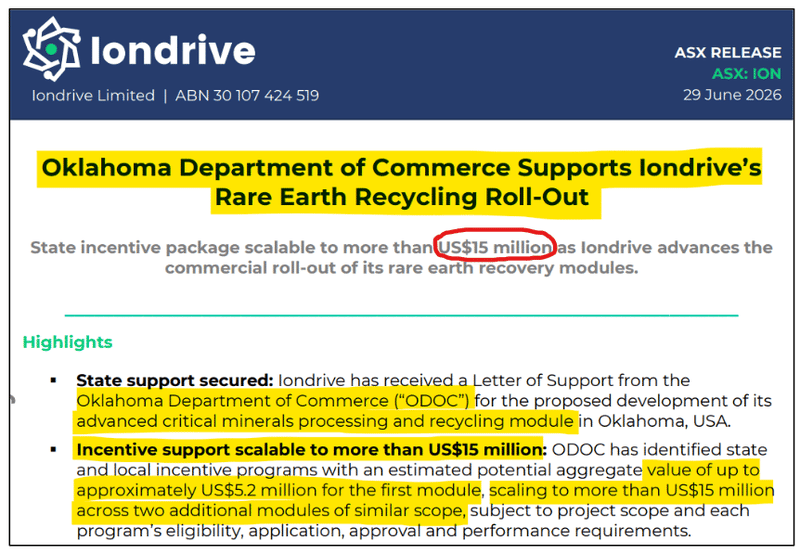
5. A planned site in the right location (Oklahoma) - ION has a letter of support from the Oklahoma Department of Commerce for up to ~US$15M in incentives for its first US facility.
(source)
The letter of support ION received is from the Oklahoma Department of Commerce.
The same department responsible for turning Oklahoma into a rare earths hub.
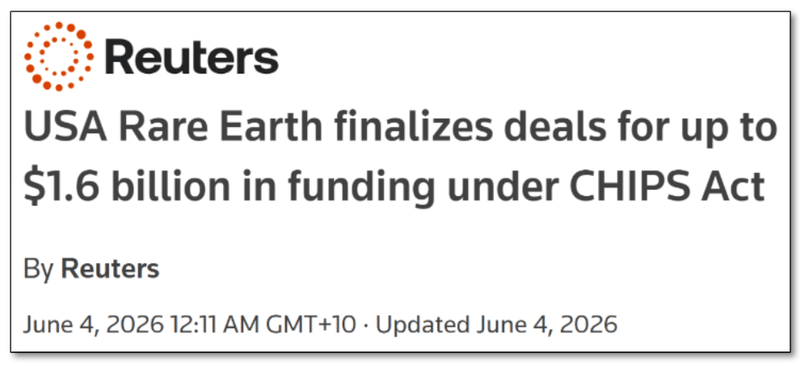
Oklahoma is where the US government just handed out a US$1.6BN funding deal to USA Rare Earth - which includes ~US$50M to expand a magnet manufacturing plant. (source)
(source)
USA Rare Earths has in the past explicitly mentioned “third party feedstock” would be used in the ramp up stages of its magnet plants.
Especially for heavy rare earths which are almost impossible to find in the US.

(source)
Phase 1a of that plant was commissioned in March this year. (source)
So it makes a lot of sense to build ION’s plant next door to a potential customer (that's been backed by the US government in a big way).
Remember: ION can recover heavy rare earths from e-waste.
(so that product qualification samples could end up in USA Rare Earth’s hands too)
We think ION’s production run in Q4-2026 could be a big catalyst for unlocking big funding deals.
(no guarantee of course)
If USA Rare Earth (or maybe a defence contractor) is going to source Mixed Rare Earths including heavies - ION might just be a viable partner.
Especially considering how much quicker ION’s tech could deliver critical minerals relative to building a mine from scratch.
That's why, we think ION could be one of the dark horses on the ASX that gets to actual US rare earths production first.
How does ION’s tech work and how does it compare to other ASX listed players?
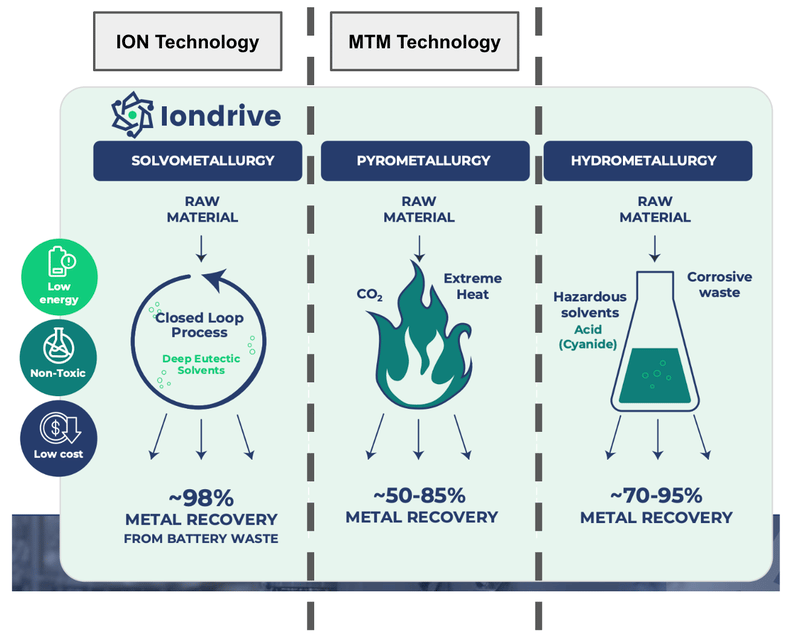
One of the key reasons we Invested in ION was because its technology is different to other recycling technologies in the market.
Most battery metals recycling technologies are some form of a pyrometallurgical process OR a hydrometallurgical process:
- Pyromet - where things are heated to extremely high temperatures using heaps of energy. Energy that can be expensive and depending on the location of the plant, not very environmentally friendly.
- Hydromet - where acids/solvents are applied to treat waste. Sometimes these acids/solvents can be environmentally damaging/toxic.
ION’s tech is a different form of hydromet which uses “Deep Eutectic Solvents (DES)” together with “benign organic solvents”.
The combination means ION’s approach uses solvents that are non-toxic and oftentimes biodegradable.
This chemical approach should be a lot more cost effective and have lower energy requirements compared to existing recycling methods.
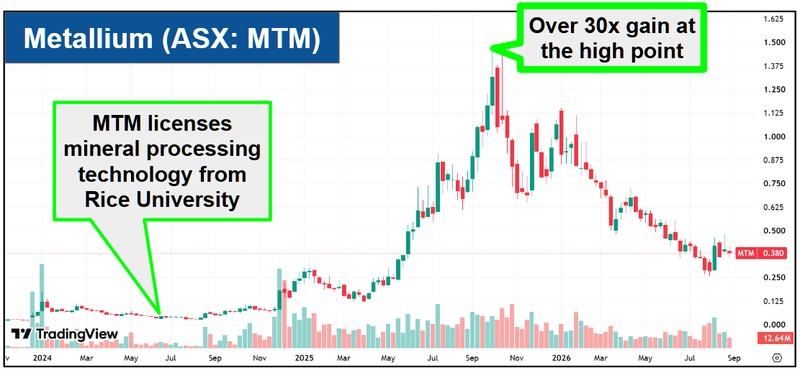
The biggest runner in the recycling tech small cap space last year was by far ASX listed Metallium - which at its peak was up over 30x in the 12 months following the completed agreement with Rice University:
(source)
The past performance is not and should not be taken as an indication of future performance. Caution should be exercised in assessing past performance. This product, like all other financial products, is subject to market forces and unpredictable events that may adversely affect future performance.
Metallium’s tech fits into the pyromet category, using huge amounts of energy to burn and incinerate everything except for the metals that need to be extracted.
That means Metallium’s technology can be a lot more energy intensive relative to ION’s tech.
Our bet is that ION can recover metals with a lower carbon footprint, with biodegradable solvents and no expensive energy requirements.
Another key reason why we Invested in ION was because we thought its tech could eventually be applied to different critical minerals.
As mentioned earlier ION’s tech can be applied to recover just about any critical mineral...
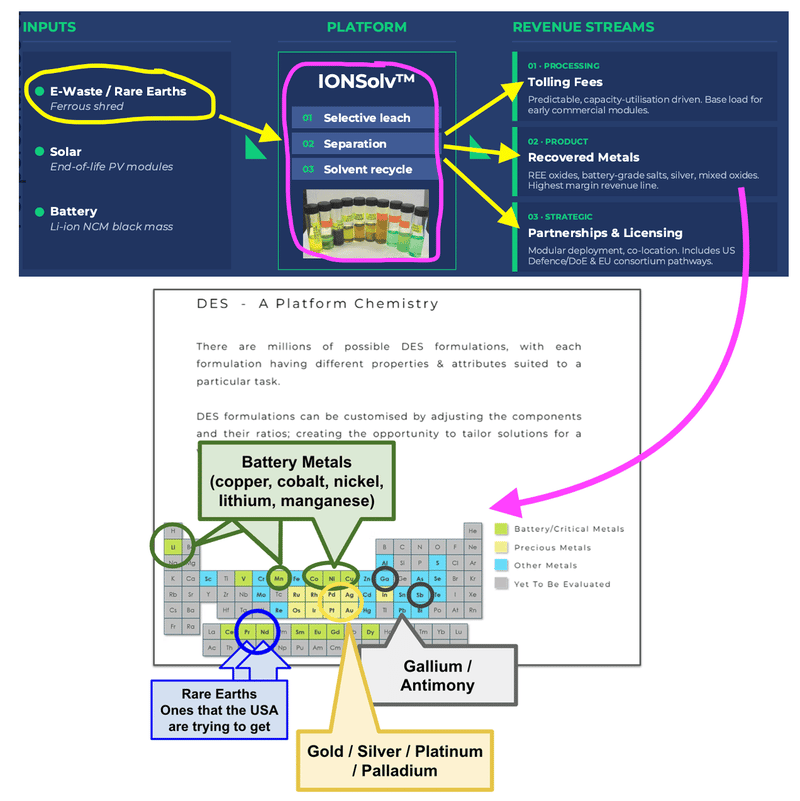
Note: the above chart shows metals amenable to Deep Eutectic Solvent chemistry in general, and have not necessarily been specifically tested by ION.
Outside of the rare earths program in the US - ION also has active programs across:
- Recovering silver and silicon from solar panels - initial bench scale testing achieved over 85% silver recoveries. The next step is looking to recover the silicon.
- A pilot plant currently being built - recovering nickel, lithium, cobalt and graphite from waste batteries.
ION also has the “minerals processing” X factor
Another reason we like ION is because ION is using its tech to solve extraction issues that miners have on mine sites (getting a certain mineral out of a certain type of rock).
ION is currently focused on two markets for mineral processing:
- Cobalt (also a critical mineral where the US is import dependent) - ION signed a binding term sheet with Latitude 66 to apply its technology on concentrates that would be produced from Latitude's project in the EU (Finland). (Source)
- Nickel - ION is testing its tech on US sourced feedstock in the nickel industry. (Source)
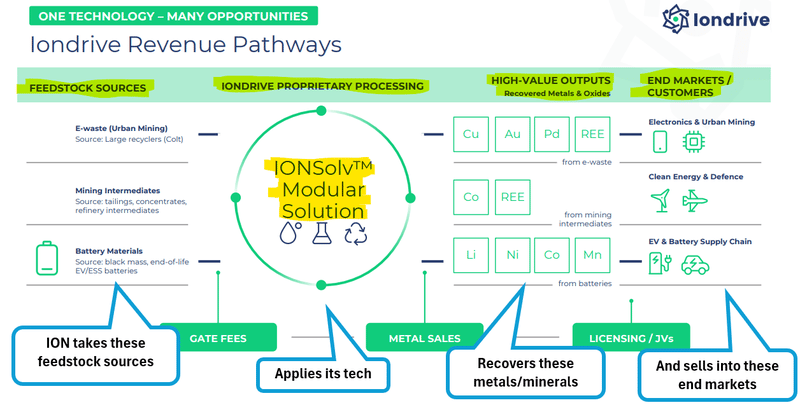
(source - ION investor presentation)
That IEA report we keep mentioning is also pretty bullish processing tech.
The report highlighted how critical minerals refining in the West had operating costs ~50% higher than China. (source)
Which makes tech like ION’s that could be lower cost and less energy intensive interesting...
No wonder the US Department of War set aside ~US$1BN in funding for demo/commercial plants "processing, recycling, or manufacturing critical materials".
Mineral processing technology can also be very valuable.
First because it can make projects that were not economically viable work from a financing perspective, and second, because the target market is essentially any mining/processing company in the world.
If a producer is able to get a better "recovery rate" it could mean millions of dollars of extra revenue generated (all from a process it's already doing - mining).
For context - one of ION's directors Hugo Schumann is the former CFO of Jetti Resources, which developed copper extraction tech.
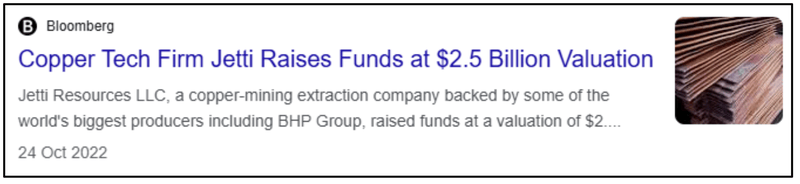
Jetti went on to raise Series C funding of US$50M and then Series D funding of US$100M which valued the company at US$2.5BN in 2022.
Jetti was backed by top industry investors like Freeport, BHP, Mitsubishi and Blackrock.
(source)
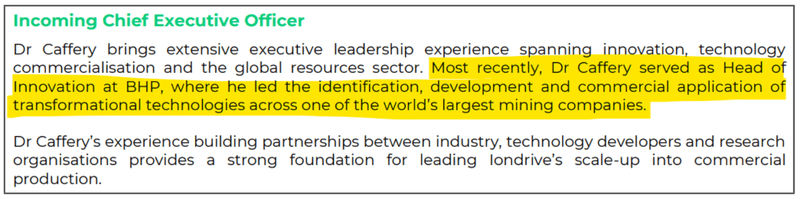
(And ION's NEW CEO Dr Grant Caffery - who literally started two days ago ran innovation at BHP - the world's biggest miner.)
(source)
NEW Investment Memo: Iondrive Ltd (ASX:ION)
Memo Opened: 07-09-2026
Shares Held: 25,913,727
What does ION do?
Iondrive (ASX:ION) is a critical minerals recycling and processing technology company.
ION’s tech uses biodegradable, non-toxic “Deep Eutectic Solvents” to dissolve scrap (old magnets, e-waste, batteries, solar panels) and recover the critical minerals inside.
ION’s two most advanced businesses are:
- Rare earth recycling from US e-waste in Oklahoma AND
- A battery metals recycling pilot plant currently under construction.
What is the macro theme?
The Pentagon's demand for rare earth magnets - for jets, missiles, drones and robots - is set to nearly triple by 2030.
China controls ~91% of rare earth refining, ~94% of magnet production and nearly all heavy rare earth supply.
The US is also forcing defence suppliers to buy American and banning e-waste exports so critical minerals get recycled at home.
Recycling US e-waste (and other scrap) is the fastest way to build out a domestic supply chain.
ION’s recycling tech can also be applied to recover other critical minerals - like silver, gallium, silicon and battery/robot metals.
Our ION Big Bet
"ION re-rates to a $1BN+ market cap by rolling out rare earth recycling modules across the US, and/or by securing important partnerships and funding with US downstream customers and government"
NOTE: our “Big Bet” is what we HOPE the ultimate success scenario looks like for this particular Investment over the long term (3+ years). There is no guarantee that our Big Bet will ever come true. There is a lot of work to be done, many risks involved, including technology risk, scale up risk, regulatory risk and development risk - just some of which we list in our ION Investment Memo.
Success will require a significant amount of luck. Past performance is not an indicator of future performance.
Why is ION our 2026 Small Cap Pick of The Year
- ION doing magnet rare earths recycling in the USA - where there is the most urgency, money and attention.
- ION is moving fast - and the pieces are in place.
- Trump executive orders are positive for ION
- The G7 group of countries is also bullish critical minerals recycling
- Recycling can be a lot faster than mining
- US$243M NPV for each module - ION can build multiples of them around the US (and more globally)
- A facility in Oklahoma, USA would be next door to $6BN USA Rare Earths which is explicitly looking for third party feedstock.
- Critical minerals recycling and processing tech is getting funded - by governments AND private capital, right now.
- ION's tech works on other critical minerals too
- ION also has the "minerals processing" X factor
What we want to see ION deliver
Objective #1: Produce and qualify rare earth oxide in the US
- We want to see ION complete its first production run and get its rare earth product qualified with potential downstream customers.
Milestones
✅ First ~5 tonnes of production underway.
🔄 1.4 tonnes of mixed rare earth oxide produced.
🔲 Product qualified by a customer (magnet maker / refiner / defence contractor)
🔲 First offtake or supply agreement
Objective #2: Non-dilutive funding OR downstream partnership for US rare earths facility
- We want to see ION receive non-dilutive funding OR sign a commercialisation deal with a downstream partner.
Milestones
🔲 US federal grant / loan
🔲 Strategic or downstream investment
🔲 Commercial roll out agreement in the US
Objective #3: Final Investment Decision on US rare earth plant
- We want to see ION reach FID on its Oklahoma rare earths plant.
Milestones
🔄 Front End Engineering Design (FEED) for the first module
🔲 Feedstock supply deal
🔲 Site selection, permitting and approvals
🔲 Final Investment Decision (FID)
🔲 Construction and commissioning
🔲 First commercial rare earth oxide production
Objective #4: Commission the battery recycling pilot plant
- We want to see ION complete construction of its battery recycling plant and bring it into first production.
Milestones
🔄 Construction and fabrication
🔲 Wet commissioning (targeted for Q4 2026)
🔲 First results from the pilot plant
Objective #5: Prove the tech can recover other critical minerals
- We want to see ION take its platform beyond rare earths and battery metals and prove it in other critical minerals (either in recycling or for mineral processing).
Milestones
🔄 Silicon recovery from solar panels
🔄 Cobalt processing testwork with Latitude 66
🔄 Nickel processing testwork on US feedstock
🔲 First commercial agreement in minerals processing or a second recycling market
What could go wrong?
Commercial / scale-up risk
Everything ION has demonstrated is at lab and bench scale. Moving to continuous plant operation is where recycling and processing technologies historically stumble - throughput, solvent recycle, feedstock variability, impurity build-up. There is no guarantee ION's validated recoveries translate into the same overall recoveries in a plant, or that the Oklahoma module reaches FID.
Feedstock availability risk
There is always a risk that ION cannot secure enough feedstock on acceptable terms which could mean production targets and planned margins are not met.
Commodity price risk
Module economics are highly sensitive to realised product prices - especially ex-China dysprosium pricing at ~12x Chinese levels.
If the Western price premium narrows, economics compress sharply.
Funding and dilution risk
ION is pre-revenue. Grants and incentives are competitive and discretionary; the Oklahoma support is a letter of support pending definitive documentation. If non-dilutive funding does not materialise, ION may need to raise equity, diluting shareholders.
Policy risk
Our thesis leans on US procurement policy. Export restrictions, sourcing rules and funding programs can change with an administration, a court ruling or a trade agreement with China. A softening would reduce the urgency driving capital into the sector.
Market risk
Smaller cap stocks like ION can get caught up in broader market sentiment. A market wide sell off or the US critical minerals macro cooling off could put selling pressure on ION’s share price even if it is making good progress towards cashflow.
What is our investment plan?
We are Invested in ION to see it develop its recycling tech and apply it to critical minerals.
Our plan is to hold the majority of our position in ION for 3 to 5 years which we hope is enough time to see ION to move towards development (see “our long term bet” above).
We have been Invested in ION since December 2024 and typically we start to apply our standard de-risking strategy after holding for ~12 months.
We may look to sell up to 20% of our holding if the company delivers on one or more of our Investment Memo objectives and/or the share price materially re-rates (or if the silver price runs really hard).
Any sell downs will be in accordance with our trading and hold policy disclosure.
You can see our current holdings in any stock at any time here.
General Information Only
This material has been prepared by StocksDigital. StocksDigital is an authorised representative (CAR 000433913) of 62 Consulting Pty Limited (ABN 88 664 809 303) (AFSL 548573).
This material is general advice only and is not an offer for the purchase or sale of any financial product or service. The material is not intended to provide you with personal financial or tax advice and does not take into account your personal objectives, financial situation or needs. Although we believe that the material is correct, no warranty of accuracy, reliability or completeness is given, except for liability under statute which cannot be excluded. Please note that past performance may not be indicative of future performance and that no guarantee of performance, the return of capital or a particular rate of return is given by 62C, StocksDigital, any of their related body corporates or any other person. To the maximum extent possible, 62C, StocksDigital, their related body corporates or any other person do not accept any liability for any statement in this material.
Conflicts of Interest Notice
S3 and its associated entities may hold investments in companies featured in its articles, including through being paid in the securities of the companies we provide commentary on. We disclose the securities held in relation to a particular company that we provide commentary on. Refer to our Disclosure Policy for information on our self-imposed trading blackouts, hold conditions and de-risking (sell conditions) which seek to mitigate against any potential conflicts of interest.
Publication Notice and Disclaimer
The information contained in this article is current as at the publication date. At the time of publishing, the information contained in this article is based on sources which are available in the public domain that we consider to be reliable, and our own analysis of those sources. The views of the author may not reflect the views of the AFSL holder. Any decision by you to purchase securities in the companies featured in this article should be done so after you have sought your own independent professional advice regarding this information and made your own inquiries as to the validity of any information in this article.
Any forward-looking statements contained in this article are not guarantees or predictions of future performance, and involve known and unknown risks, uncertainties and other factors, many of which are beyond our control, and which may cause actual results or performance of companies featured to differ materially from those expressed in the statements contained in this article. S3 cannot and does not give any assurance that the results or performance expressed or implied by any forward-looking statements contained in this article will actually occur and readers are cautioned not to put undue reliance on forward-looking statements.
This article may include references to our past investing performance. Past performance is not a reliable indicator of our future investing performance.