
Virtual reality: a (very) brief history, part 1
Published 23-NOV-2018 11:35 A.M.
|
3 minute read
Hey! Looks like you have stumbled on the section of our website where we have archived articles from our old business model.
In 2019 the original founding team returned to run Next Investors, we changed our business model to only write about stocks we carefully research and are invested in for the long term.
The below articles were written under our previous business model. We have kept these articles online here for your reference.
Our new mission is to build a high performing ASX micro cap investment portfolio and share our research, analysis and investment strategy with our readers.
Click Here to View Latest Articles
Virtual reality (VR) headsets burst onto the gaming scene in 2012, taking advantage of significant advancements in hardware.
Due to the sustained relevance of the gaming industry, the global VR market is projected to reach a sizeable US$3.3 billion this calendar year.
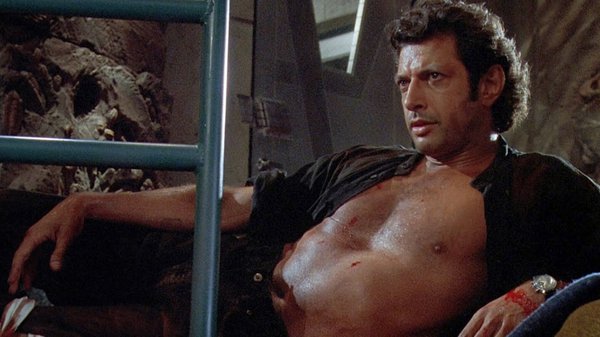
As someone who enjoys playing the occasional game with friends, the emergence of VR is pretty exciting. Whacking on a headset and hunting giant dinosaurs with a virtual Jeff Goldblum would make me at peace with the world.
For those that may not be aware, HTC, Oculus Rift, PlayStation, Google, Nvidia and Samsung are just some of the companies producing gaming VR headsets today.
Humble beginnings
While VR headsets looks like something straight out of a sci-fi film, the concept is actually kind of old.
In fact, there’s evidence to suggest VR could date back as far as the 1800s.
What?
I know, right? Here’s an exclusive look at the ‘very first’ VR headset from circa 1900.
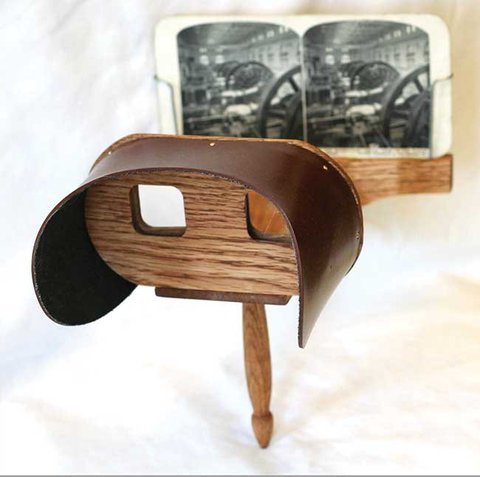
Sir Charles Wheatstone invented the stereoscope, which used a pair of simple wedge lenses to view images in 3D.
I feel that historians are making a bit of a reach with the 'stereoscope = VR' comparisons, which is why computer scientist, Jaron Lanier, is considered the founding father of VR technology.
Lanier founded VPL Research in 1984 and began developing the inaugural virtual reality system out of his San Francisco home.

During this time, VPL Research developed three products:
- The Data Glove: This device utilised 6502 microcontrollers and was hooked up to a computer. The fully interactive glove contained fiber-optic bundles which tracked and allowed users to manipulate and re-orient virtual objects in real time.
- The EyePhone: Long before the Apple iPhone came along, the VPL EyePhone was a thing. It was a mounted headset that could track user movement and provided immersive simulation.
- The Data Suit: As the name suggests, the Data Suit was VPL’s full body sensory device that provided intuitive feedback.
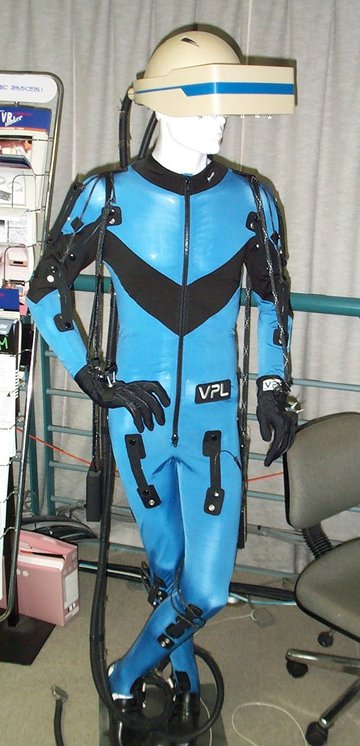
While VPL’s product suite never caught on (it filed for bankruptcy in 1990 and was bought out by Sun Microsystems in 1999), the foundation was laid.
Gaming behemoth, SEGA, had fans salivating when it unearthed its VR glasses at the Summer International Consumer Electrics Show (now known as CES) in 1993. They were intended for the company’s Sega Genesis/Mega Drive console but never went into production.
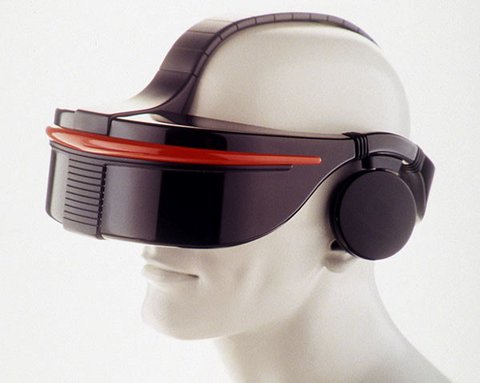
While these glasses never saw the light of day, the prototype was enough to make arch rival Nintendo say “Hold my beer” (in a manner of speaking).
In 1995, the SEGA arch rival introduced the Virtual Boy. The 32 bit console was marketed as the first console capable of displaying stereoscopic 3D graphics.
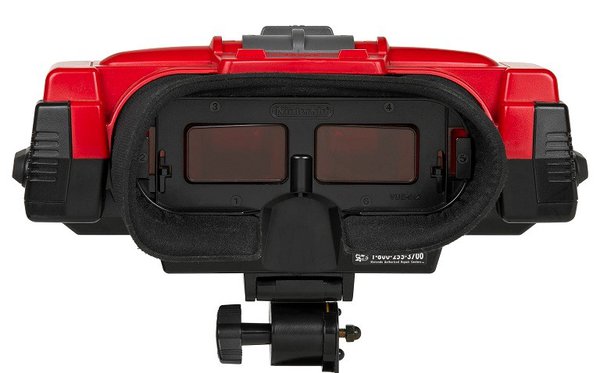
Unfortunately, Virtual Boy did not conform to the standards of ergonomics, and it was therefore almost impossible to use the system without dysfunction. Due to high production cost and poor commercial performance, Nintendo discontinued the console in favour of the Nintendo 64 (and we know how that panned out).
Between VPL's ultimate bankruptcy and the gaming industry's flash in the pan failure, VR became something of a meme.
In part two, I'll take a look at how The Matrix played a pivotal role in turning VR’s fortunes around, and why VR is going from strength to strength today.
General Information Only
This material has been prepared by StocksDigital. StocksDigital is an authorised representative (CAR 000433913) of 62 Consulting Pty Limited (ABN 88 664 809 303) (AFSL 548573).
This material is general advice only and is not an offer for the purchase or sale of any financial product or service. The material is not intended to provide you with personal financial or tax advice and does not take into account your personal objectives, financial situation or needs. Although we believe that the material is correct, no warranty of accuracy, reliability or completeness is given, except for liability under statute which cannot be excluded. Please note that past performance may not be indicative of future performance and that no guarantee of performance, the return of capital or a particular rate of return is given by 62C, StocksDigital, any of their related body corporates or any other person. To the maximum extent possible, 62C, StocksDigital, their related body corporates or any other person do not accept any liability for any statement in this material.
Conflicts of Interest Notice
S3 and its associated entities may hold investments in companies featured in its articles, including through being paid in the securities of the companies we provide commentary on. We disclose the securities held in relation to a particular company that we provide commentary on. Refer to our Disclosure Policy for information on our self-imposed trading blackouts, hold conditions and de-risking (sell conditions) which seek to mitigate against any potential conflicts of interest.
Publication Notice and Disclaimer
The information contained in this article is current as at the publication date. At the time of publishing, the information contained in this article is based on sources which are available in the public domain that we consider to be reliable, and our own analysis of those sources. The views of the author may not reflect the views of the AFSL holder. Any decision by you to purchase securities in the companies featured in this article should be done so after you have sought your own independent professional advice regarding this information and made your own inquiries as to the validity of any information in this article.
Any forward-looking statements contained in this article are not guarantees or predictions of future performance, and involve known and unknown risks, uncertainties and other factors, many of which are beyond our control, and which may cause actual results or performance of companies featured to differ materially from those expressed in the statements contained in this article. S3 cannot and does not give any assurance that the results or performance expressed or implied by any forward-looking statements contained in this article will actually occur and readers are cautioned not to put undue reliance on forward-looking statements.
This article may include references to our past investing performance. Past performance is not a reliable indicator of our future investing performance.