

ROC: Second Major Bank in two weeks... this one is overseas validating international expansion potential.
Disclosure: S3 Consortium Pty Ltd (the Company) and Associated Entities own 6,575,000 ROC Shares and Company’s staff own 125,000 ROC shares at the time of publishing this article. The Company has been engaged by ROC to share our commentary on the progress of our Investment in ROC over time. This information is general in nature about a speculative investment and does not constitute personal advice. It does not consider your objectives, financial situation, or needs.
Two major banks in two weeks.
RocketBoots (ASX:ROC) just signed up another paying customer on a trial for its Artificial Intelligence (AI) vision tech.
This time with “one of Mexico’s largest retail banks” which “operates over 1,000 bank branches”...
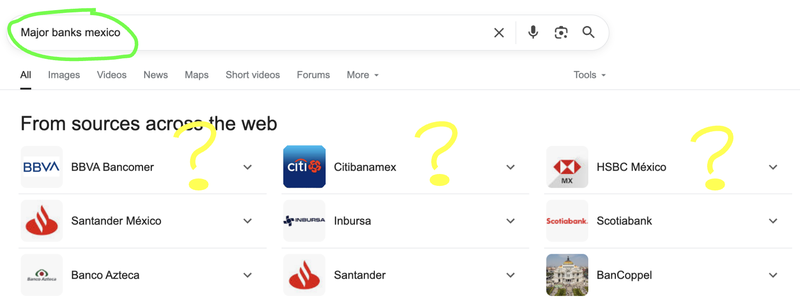
ROC has delivered a $140k contract for an initial trial. If successful after 3 months (or until Return on Investment is proven), there is potential to roll out ROC’s technology across up to 1,000 bank branches.
This trial contract provides validation of ROC’s international expansion potential.
ROC worked together on this deal with a “multi-national global consulting partner who is engaged with the client [the Mexican Bank]”.
And ROC and this global consulting company are “ working together on a number of other international opportunities”:

(source: today's ROC announcement)
ROC has developed “Vision Artificial Intelligence” technology for giant companies to analyse and respond to in-store customer behaviours.
(basically, this means using AI on live in-store camera footage to analyse customer behaviors, allowing the company to improve operations)
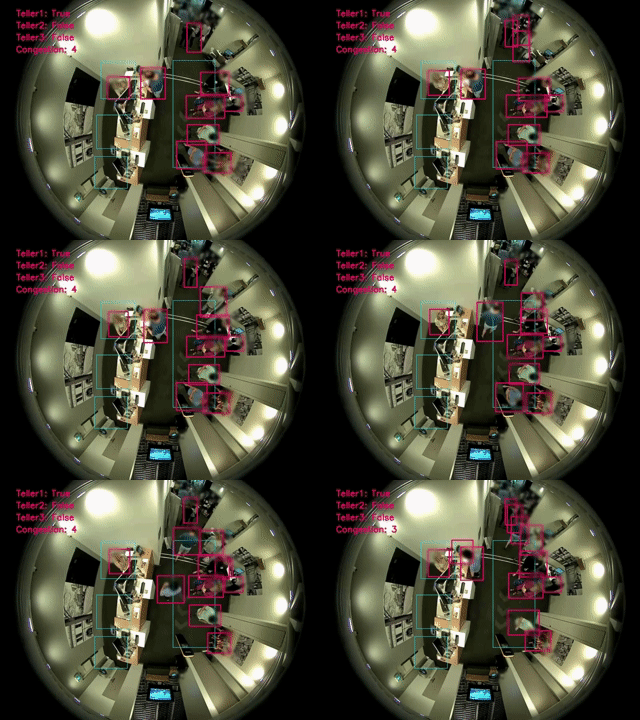
ROC’s technology is currently in use by TWO major, Australian household name companies - Suncorp in the banking sector and Bunnings in retail.

(Both Suncorp and Bunnings renewed and expanded their usage of ROC’s AI tech over many years, proving that the product works and is useful).
Last week, ROC added a new “Major Australian Retail Bank” in a paid trial across the six sites (read our update on this deal here).
(its common for major companies to request not to be named in trials or in the early stages of a roll out - especially when it is for tech integrations in security sensitive sectors like banking)
Today, ROC signed on one of the largest retail banks in Mexico, to a pilot trial over a small number of locations (bank branches).
If the trial is successful it could lead to deployment of ROC’s tech across more/all of its sites - which could deliver a material increase on ROC’s Annual Recurring Revenue.
How meaningful could today’s deal be for ROC if the paid trial is successful?
According to a ROC investor presentation in October last year, the company charges around $3,500 per site.
At 1,000 sites that is up to $3.5M in potential recurring revenue from just this one customer.
(This is just our back-of-the napkin calculations on potential revenue. It’s no guarantee to eventuate. It doesn’t account for any potential changes to ROC’s pricing structure over the past 10 months or into the future, nor discounts on bulk purchases, and if the trial is successful we don’t know how many of the 1,000 branches might deploy ROC’s technology)
So after a quiet few months since we first Invested in ROC in late March, it has now announced a second deal in the space of two weeks.
We estimate that the ~$20M capped ROC has ~$65M potential revenue in their “advanced stage sales pipeline” (based on the June quarterly report, with some assumptions from us shown below - again that potential revenue is no guarantee to be delivered, this is speculative early stage tech investing).
ROC reported $746k in cash received in FY25, so even converting just 10% of our estimated $65M potential revenue in their ADVANCED stage pipeline would be a 8.7x increase on ROC’s last reported cash received number.
Note the key word here is ‘potential’ - ROC will still need to convert its sales pipeline into actual revenue, and it may not be successful in doing this. Just because a potential contract is in the pipeline does not mean it will convert to a signed contract.
We like that ROC started developing its AI (artificial intelligence) way before AI became the hottest investment theme in recent memory.
Companies developing genuine AI with over a decade of development efforts AND internal knowledge on how to apply AI to solve a specific and real world problem are not that common on the ASX...
And in our view are the best positioned to leverage and apply the rapid recent advances in AI technology and tools to their specific sector of expertise.
As we noted above, ROC is currently in use by TWO major, household name companies - Suncorp in the banking sector and Bunnings in retail shopping.
(plus the “Major Australian Bank” signed last week)
The new trial signed today has a total contract value of ~$140k (US $93k), but we are more interested in what it could mean if the company rolls the technology out to more of its 1,000 branches.
The trigger for a discussion on assessing a broader rollout is:
- Completion of the trial period (3 months), or;
- Return on Investment is proven
Given that both Suncorp and Bunnings continue to renew and expand their usage of ROC’s AI tech over many years, we have evidence that ROC has a track record of proving out a return on investment for existing top tier customers in banking and retail shopping.
ROC is starting to deliver on smaller deals and trials that could expand to much bigger deals. We are waiting for the “company maker”
We think the market will reward ROC if they successfully convert one of their paid trials to a full roll out.
A big part of the reason we Invested in ROC was because of its pipeline of customers and potential to be ‘one big deal’ away from accelerating the growth of the company.
The kind of “hockey stick” growth potential we have seen when there is some sales momentum in the company.
We also like that its tech has many applications, not just loss prevention and workforce efficiency which are the two big markets for ROC right now.
Right now two markets ROC is focused on building its business out in are:
- Loss prevention - The market ROC is targeting for this are retailers that have implemented self-checkout systems. While they have been successful in reducing staff costs, they have led to “inventory shrinkage” (things like shoplifting, employee theft, administrative errors, spoilage, or damage) - in 2017 it was a US$47BN problem. ROC’s solution can help reduce this problem.
- Workforce optimisation - Together with its loss prevention tool, ROC sells a workforce management tool to both banks and retailers. (this is the part of the business today’s deal relates to).
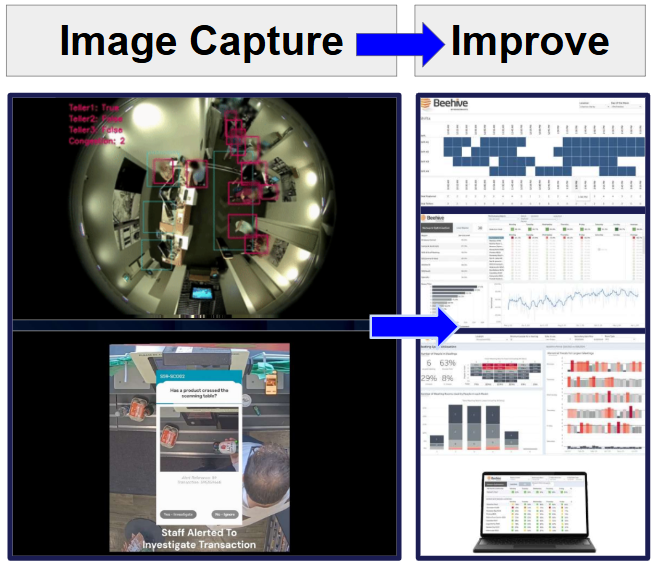
We think in the long run ROC’s AI tech can also be used in a number of different markets and applications.
As an example, we recently saw a video of “AI Vision” tech like ROC’s being used in swimming pools to save lives:
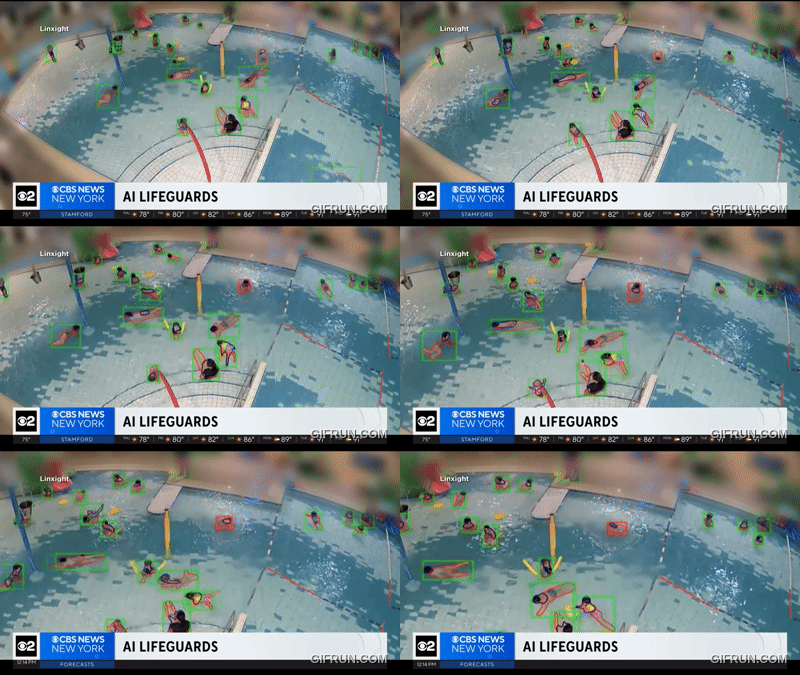
AI vision software has many different use cases: security, self-driving cars, smart cities and traffic flow... the list goes on.
We can see all of these becoming markets for ROC’s tech in the future.
ROC’s “advanced stage pipeline” almost doubled in a quarter...
We Invested in ROC in March after it had already spent years developing and marketing its AI tech.
At the time of our initiation on ROC, we estimated that the company had ~$35M in potential revenues in its “advanced stage sales pipeline”.
Following the June quarterly report, we estimate that the sales pipeline is now even bigger at ~$65M.
The basic assumption for our very rough potential revenue calcs is that ROC charges customers $3,500 per year per site for its technology (source, ROC investor deck slide 10).
With the new potential deals and now ~18,550 sites in the “Advanced Stage Pipeline”, our rough, basic calcs show that could translate to ~$65M in potential license revenue, ignoring bulk purchase discounts and set up fees.
Remember that ROC converting its pipeline to sales is not a guarantee to occur, lots of things can and do go wrong in scaling up a technology company.
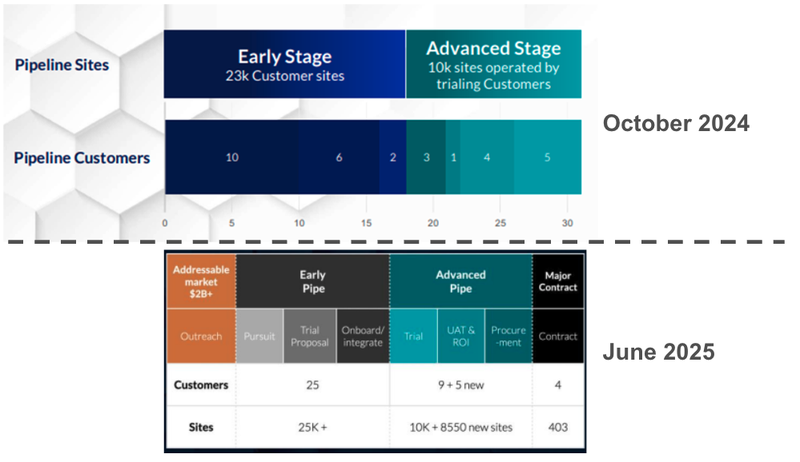
We did some quick maths, here is our rough calcs on how ROC’s sales pipeline improved over from what was reported in October 2024 compared to June 2025:
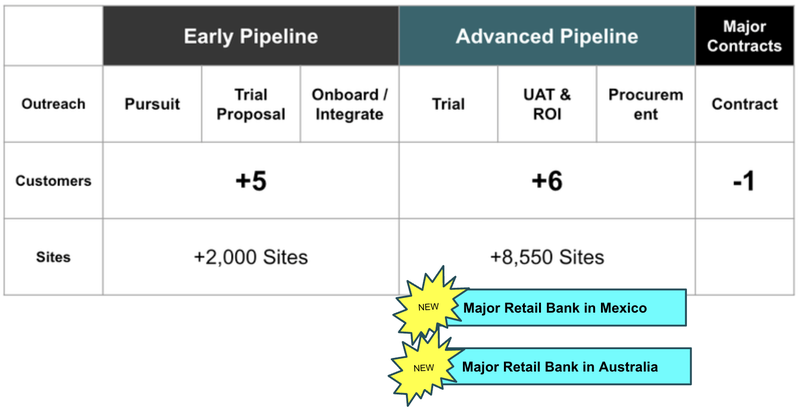
That’s ~5 additional potential customers and 2,000 additional potential sites in the early pipeline.
And 6 potential customers have moved into the advanced pipeline stage with ~8,550 additional sites.
“Early-stage pipeline” are prospects trialing or evaluating the product, while “Advanced-stage pipeline” are prospects closer to signing, with deal terms and rollout plans largely agreed.
Of course, like all investors, what we really want to see is ROC convert more of its sales ‘pipeline’ into actual sales (meaning more yearly recurring revenue for ROC).
If ROC was able to convert ~25% of these deals into signed, paying customers it would materially increase ROC’s existing revenues.
...and (we’d expect) re-rate the ROC share price.
(ROC is currently capped at ~$20M)
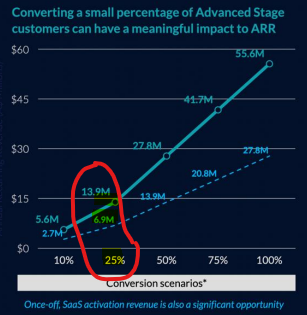
Converting all those ‘potential’ sales is no guarantee, and we saw last quarter that ROC were only able to bring in $5k of revenue for the quarter (quiet quarters can happen when sales cycles are long, like in ROC’s case).
This is a high risk early stage tech stock.
We like tech stocks because of that “hockey stick” style growth potential - and we are Invested in ROC with the hope that with one (or more) large signed deal in the near term, ROC can achieve something like this:
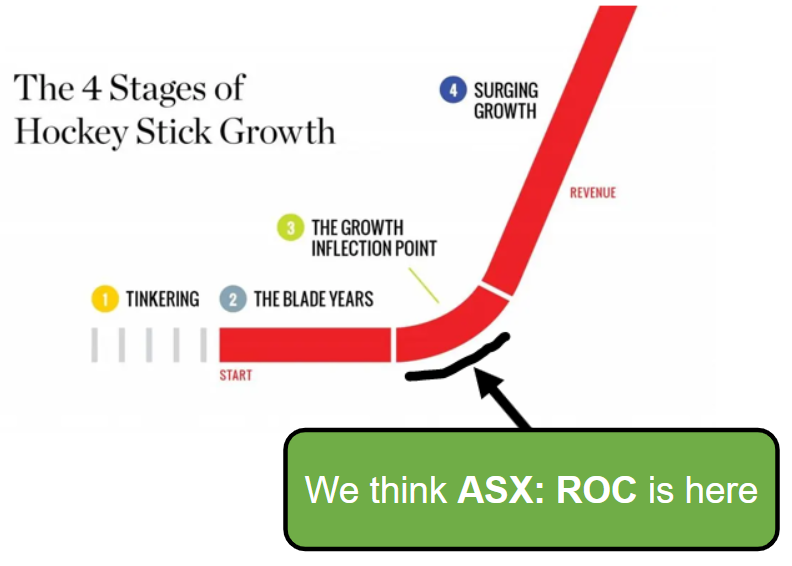
The above potential growth looks great but success can take longer (sometimes much longer) than expected... or never actually eventuate.
Today’s news is the second deal inside two weeks for ROC.
Now we watch to see if ROC can deliver more conversions to sales over coming months.
Ultimately, we are hoping that a combination of the above reasons helps it achieve our Big Bet which is as follows:
What is our Big Bet for ROC?
“ROC re-rates to a $200M market cap by securing multiple large recurring contracts with retail clients and scaling up its business”
NOTE: our “Big Bet” is what we HOPE the ultimate success scenario looks like for this particular Investment over the long term (3+ years). There is no guarantee that our Big Bet will ever come true. There is a lot of work to be done, many risks involved, including development risk, country risk and commodity price risk - just some of which we list in our ROC Investment Memo.
Success will require a significant amount of luck. Past performance is not an indicator of future performance.
RocketBoots
ASX:ROC
8 key reasons why we are Invested in ROC
Below is a reminder of the 8 key reasons why we like ROC from our 31 March initiation note.
We have added a few updates under a few of the reasons based on any new information from today’s announcement and ROC’s recent quarterly.
- ROC already has long term, paying enterprise customers including Bunnings and Suncorp.
Both Bunnings (large DIY goods retailer owned by Wesfarmers) and Suncorp (a bank owned by ANZ) are paying customers of ROC.
They have been customers since before ROC’s December 2021 IPO and continue to renew and expand their licence contracts 7+ years later.
This is strong evidence that ROC can sell its product to enterprise customers, and that those customers find long term value out of the service. - Over ~$35M in potential annual recurring sales from “advanced stage deal pipeline”
According to ROC’s most recent quarterly report, ROC had 10 customers in its “Advanced Pipeline”.
These customers represent over 10,000 sites in total.
At $3,500 per site per year, by our rough, basic calcs this represents over $35M in potential annual recurring revenue if ROC is able to convert into sales.
(using a basic $3,500 per site per year times number of sites calc, ignoring bulk discounts and setup fees)
Even if just 10% of that “advanced stage” pipeline is converted, it would be 3.5x ROC’s current revenues.
UPDATE:
Following the June quarterly report, ROC’s “advanced stage deal pipeline” almost doubled in one quarter.
As mentioned earlier ROC added another ~8,550 potential sites to this pipeline and our back of the napkin calcs show that could be worth ~$65M in potential annual recurring revenue.
Again - there is no guarantee these deals turn into revenues for ROC. - One large deal could multiply ROC’s current revenue
If ROC is able to sell to a large multinational contract it could have its product in thousands of stores through just one deal.
At a price point of $3,500 per store, one deal could be in the millions of dollars in recurring free cash flow.
These deals take a very long time to secure (as do most enterprise software deals).
ROC has shown that its enterprise customers tend to be incredibly “sticky” (stay on for a long time) - Partnership with Europe’s largest Point of Sale company: Gebit Solutions
Gebit Solutions sells self checkouts to supermarkets and retailers.
Gebit is the point of sale system for some of the largest supermarket retailers in Europe and Gebit will now support an “out of the box integration” with ROC’s software.
High-synergy partners like Gebit help improve ROC’s reputation to enter the conversation with big retailers, despite ROC being a smaller player in the space. - Original founding team still in place, with a new experienced tech chairman at the helm
The original team that developed ROC’s technology in the early 2010s are still running the company (including the CEO and CTO).
This is a positive sign for tech startups when a long term founding team has been working on the product for 10+ years.
Now however, ROC has a new chairman with experience in both private equity and tech enterprise sales.
ROC’s new chairman Roy McKelvie is also the chairman of an education technology company called Pathify that he helped to scale and raise US$25M at a A$180M valuation.
Roy invested $200,000 personally into ROC last year at 8.5 cents and a further $90,000 in the current placement. - Genuine AI and deep knowledge of how to apply AI to a specific problem
ROC’s AI and machine learning technology has been developed since 2010.
(well before AI became a big Investment theme)
Companies developing genuine AI with over a decade of development efforts AND internal knowledge on how to apply AI to solve a specific and real world problem are rare on the ASX...
And in our view are the best positioned to leverage and apply the rapid recent advances in AI technology and tools to their specific sector of expertise. - Vision capture technology valued in the US$250M-$500M range
In late 2022 a company called Trigo raised US$100M off the back of its grocery vision software.
In 2023 one of the largest companies in this space Everseen raised US$70M to advance a very similar technology.
Those large raises are evidence of the size of the opportunity in this space that investors are seeing.
If ROC is able to deliver more sales and capture market share, it could grow to the size of these larger competitors in the space. - ROC has a good capital structure with strong ownership represented in board and management
Following today’s capital raise news and its completion, ROC will have 154 million shares on issue.
The major shareholders are the original vendors of the technology and have proven to be sticky since the IPO.
The board and senior management represent ~44% of the shares on issue prior to this recent capital raise, which means they are very aligned to shareholders interests.
UPDATE:
Immediately following the March $3M capital raise at 8c, ROC attracted cornerstone backing from a major tech fund, Bombora Investment Management.
Bombora came into ROC with a $1M investment on the same terms as the $3M raise, and Bombora’s co-founder David Willington joined ROC’s board.
The Bombora Special Investments Growth Fund is now a substantial holder of ROC with 7.30% of shares. (source)
Bombora has had a previous win with ROC’s chairman which we covered here: ROC to bank another $1M, secures new strategic investor, and board member.
What’s next for ROC?
🔄Sales updates
We want to see ROC close deals, with updates that include the number of sites that ROC’s tech will be deployed to and contract dollar values.
We’ve outlined the types of deals that ROC is in the process of closing in our ROC Investment Memo:
New Sales: Retail/Supermarket
✅ New customer 1
🔲 New customer 2
🔲 New customer 3
New Sales: Consumer Banks
✅ New customer 1 (Unnamed Major Australian Bank last week)
✅ New customer 2 (Unnamed Major Mexican Bank today)
🔲 New customer 3
Existing customer re-signs or expands:
🔲 Contract re-sign with Bunnings
🔲 Contract re-sign with Suncorp
What are the risks?
We’re most focussed on sales/delay risk and market risk right now. On the sales and delay risk front it’s quite straightforward - ROC needs to sign contracts and bring in cash:
Sales and Delay Risk
ROC could lose key clients or not seal as many deals, hurting their revenue and share price.
Large organisations like the one’s ROC works with don’t tend to adopt new technology very often and the sales cycle can be long. This feature of ROC’s customer base can cause delays in sales that drag out over a long time,
Macro factors in the market including a recession can cause a reduction in spending on new technology, affecting ROC’s ability to make sales.
Source: 31 March 2025 ROC Investment Memo
We list more risks to our ROC Investment in our ROC Investment Memo here.
Other risks
ROC operates in a rapidly evolving AI vision market. Larger, better-funded competitors could emerge and challenge ROC’s position or put pressure on pricing.
The technology depends on in-store video and behavioural analytics. Changes in privacy regulations or public attitudes could increase compliance costs or limit deployment opportunities.
Currently, ROC’s revenue comes from a small number of key clients. Losing any one of these could have a significant financial impact.
Scaling from initial trials to broader rollouts will test ROC’s operational capabilities. Delays, integration challenges, or customer service issues could slow growth.
As a growth-stage business, ROC may require additional capital to fund its expansion plans. The availability and terms of future funding will depend on market conditions and investor sentiment.
Investors should consider these risks carefully and seek professional advice tailored to their personal circumstances before investing.
Our ROC Investment Memo
In our ROC Investment Memo, you can find the following:
- What does ROC do?
- The macro theme for ROC
- Our ROC Big Bet
- What we want to see ROC achieve
- Why we are Invested in ROC
- The key risks to our Investment Thesis
- Our Investment Plan
General Information Only
This material has been prepared by StocksDigital. StocksDigital is an authorised representative (CAR 000433913) of 62 Consulting Pty Limited (ABN 88 664 809 303) (AFSL 548573).
This material is general advice only and is not an offer for the purchase or sale of any financial product or service. The material is not intended to provide you with personal financial or tax advice and does not take into account your personal objectives, financial situation or needs. Although we believe that the material is correct, no warranty of accuracy, reliability or completeness is given, except for liability under statute which cannot be excluded. Please note that past performance may not be indicative of future performance and that no guarantee of performance, the return of capital or a particular rate of return is given by 62C, StocksDigital, any of their related body corporates or any other person. To the maximum extent possible, 62C, StocksDigital, their related body corporates or any other person do not accept any liability for any statement in this material.
Conflicts of Interest Notice
S3 and its associated entities may hold investments in companies featured in its articles, including through being paid in the securities of the companies we provide commentary on. We disclose the securities held in relation to a particular company that we provide commentary on. Refer to our Disclosure Policy for information on our self-imposed trading blackouts, hold conditions and de-risking (sell conditions) which seek to mitigate against any potential conflicts of interest.
Publication Notice and Disclaimer
The information contained in this article is current as at the publication date. At the time of publishing, the information contained in this article is based on sources which are available in the public domain that we consider to be reliable, and our own analysis of those sources. The views of the author may not reflect the views of the AFSL holder. Any decision by you to purchase securities in the companies featured in this article should be done so after you have sought your own independent professional advice regarding this information and made your own inquiries as to the validity of any information in this article.
Any forward-looking statements contained in this article are not guarantees or predictions of future performance, and involve known and unknown risks, uncertainties and other factors, many of which are beyond our control, and which may cause actual results or performance of companies featured to differ materially from those expressed in the statements contained in this article. S3 cannot and does not give any assurance that the results or performance expressed or implied by any forward-looking statements contained in this article will actually occur and readers are cautioned not to put undue reliance on forward-looking statements.
This article may include references to our past investing performance. Past performance is not a reliable indicator of our future investing performance.