RCM: Germanium...? Host mineral spotted in drill cores. Assays now a few weeks away...
Disclosure: S3 Consortium Pty Ltd (the Company) and Associated Entities own 13,213,572 RCM Shares at the time of publishing this article. The Company has been engaged by RCM to share our commentary on the progress of our Investment in RCM over time. This information is general in nature about a speculative investment and does not constitute personal advice. It does not consider your objectives, financial situation, or needs. Any forward-looking statements are uncertain and not a guaranteed outcome.
Us (and Eric Sprott) Invested in Rapid Critical Metals (ASX:RCM) for the silver.
While the silver price is going sideways, RCM decided to put a couple of drill holes into a gallium and germanium project it owned BEFORE it became a silver company.
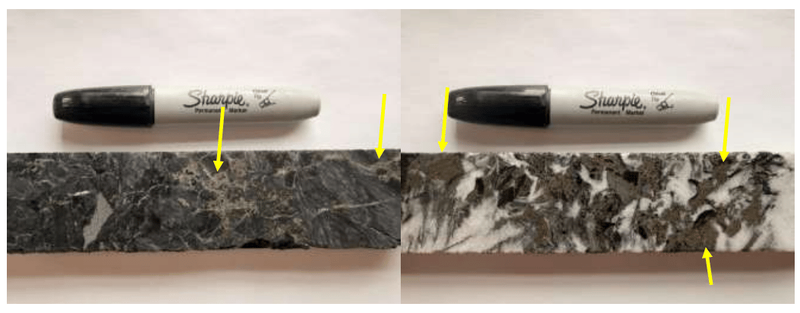
Today RCM released some photos of the drill cores (lab testing to confirm what they have is coming in the next few weeks).
We didn’t really care too much about this project...
BUT here is why we are now suddenly very interested in the upcoming assay results to test for the critical minerals germanium and gallium:
RCM has these lab assays on a rush turnaround, with results expected in mid-November.
(rush turnaround at the lab? RCM sound keen too...)
First of all, germanium is one of those critical minerals where the USA needs it, China controls global supply.
Germanium is used in fibre-optic networks supporting AI data centres, infrared optics for thermal vision in robots and drones, and military thermal-imaging, surveillance and targeting systems.
Below is why the RCM core visuals just released make us very interested to see the upcoming assay results where they test for the actual germanium content.
The “I’m too busy for geological details” summary is that based on the drill core visuals, if RCM’s assay results come back in the hundreds ppm of germanium - it could be onto a potential new critical minerals discovery in Canada.
We will find out when the assay results come in, due mid November - so only a few weeks to go.
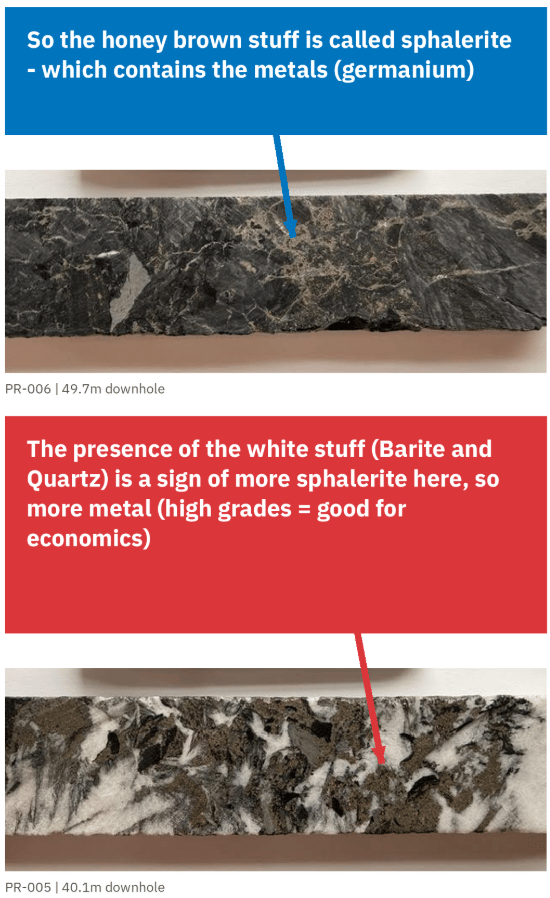
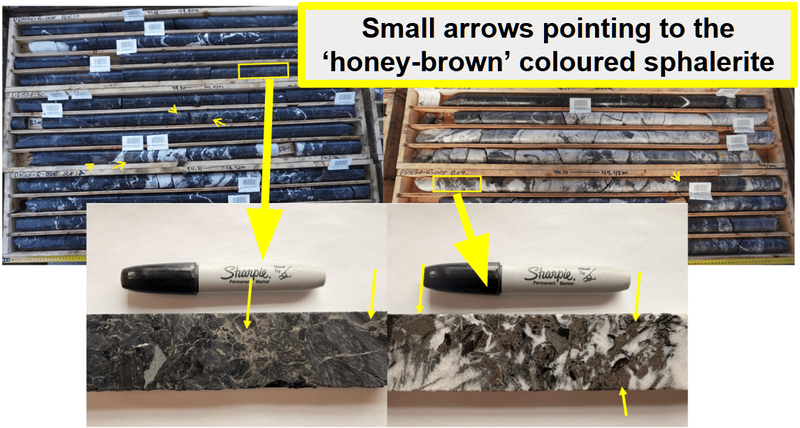
So the honey brown stuff is called sphalerite - which contains the minerals (germanium, gallium, zinc, lead).
The presence of the white stuff (barite and quartz) is a sign that the honey brown stuff is thicker, so has MORE of the metals.
Early days pre assays results but, more of the minerals = high grades = good for economics.
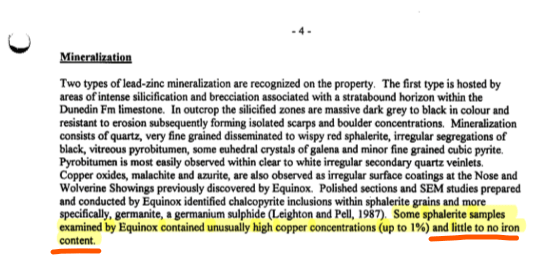
And finally, there was some work done on this project for lead-zinc back in the 1980s - and the metwork showed there is “little to no iron content” (source) (source) (source) (source)
(source)
In a mineral deposit like this, “little to no iron” is VERY GOOD in terms of extracting the germanium.
(less interference when separating out the germanium)
So thanks to these 1980s reports about the project, we already know in advance that if RCM does make a germanium discovery, extraction will be a lot easier.
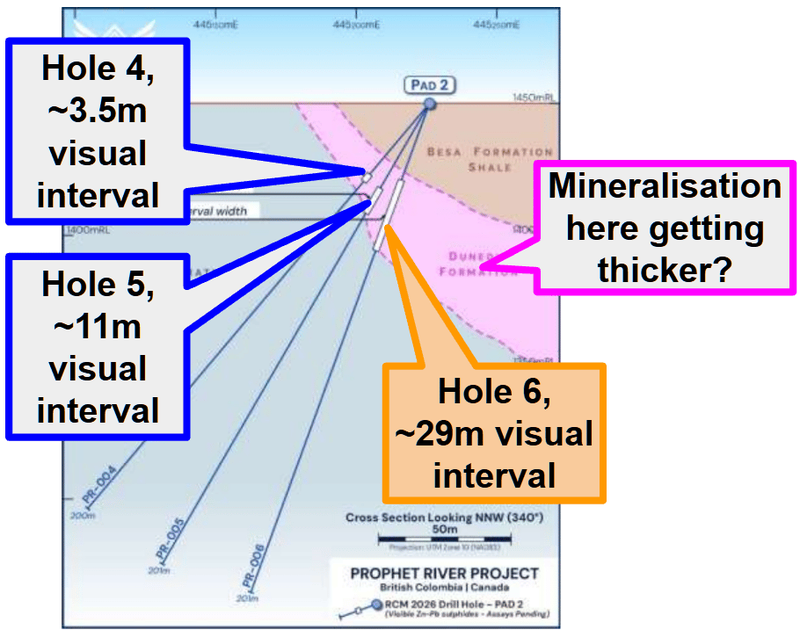
The visual drill hits were pretty good, getting bigger and bigger
Three holes from the same pad, started with a ~3.5m visual, then a ~11m visual, then the attention grabbing ~29m of visible mineralisation - getting bigger as RCM pointed the rig closer to vertical:
(source)
So the visuals are looking good, and the holes show the mineralisation is getting bigger...
Now we wait for D-Day: RCM to release the assay results where we all find the actual germanium grades (and other metals)
In our opinion: anything in the hundreds ppm germanium will be a big deal.
(just remember that assay results can come back with disappointing results, even if the visuals theory sounds great)
We’ll find out mid November...
China’s pause on its gallium and germanium export ban runs out on 27 November, a month from now (source).
The ban on selling to “military end users” never went away.
And the US is still stockpiling both minerals for defence.
So if RCM gets the assay results they are hoping for and declares a big discovery in Canada, the company may not still be valued at less than $25M.
(no guarantees of course)
We already know that RCM owns 100% of a gallium and germanium project in Canada which has some of "the highest germanium grades globally”. (source)
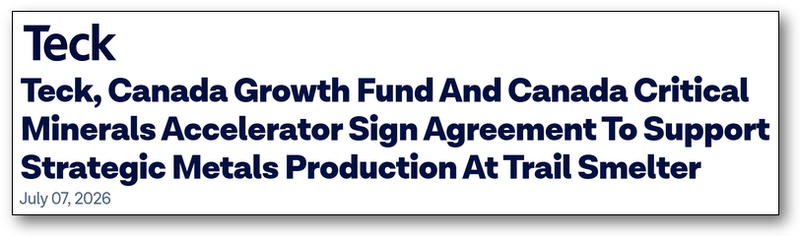
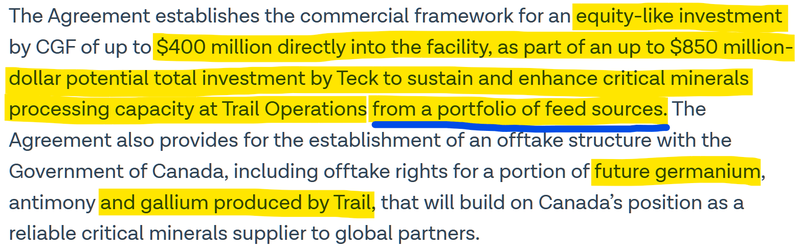
RCM’s project is in the same part of Canada where $42BN Teck is putting C$850M into processing critical minerals at one of its smelters -
“from a portfolio feed sources”.
Meaning IF RCM makes a big discovery - there is a realistic pathway to turning that find into North American critical mineral supply.
(source)
RCM started drilling the project back in September, where it drilled 7 diamond holes.
And today announced “sphalerite intervals”
Here is another look at the core pics:
(source)
Spharelite is the primary host mineral for zinc/lead AND can carry germanium/gallium...so seeing it in a drill core is fairly interesting...
RCM has visual estimates of up to 10% sphalerite across a ~29m intercept - so that assay should definitely be an interesting one when it comes out.
(source)
RCM’s project already has rock chips grading up to 763g/t germanium and 65.5g/t gallium in samples, so there is some precedent for this specific thing going on here. (source)
There is also a historic bulk sample which returned grades as high as ~1,500ppm germanium (1,500g/t), so equivalent to 1.5kg of germanium per tonne.
Plus a metwork estimation showing that bulk sample could be concentrated to ~4,090ppm amongst a 60% zinc concentrate, or near 4.1kg/tonne of germanium:

(source)
So there is a chance what we are seeing in the visuals is a continuation of what's at surface.
(fingers crossed - of course, exploration is risky and there have been thousands of times where visuals look good, but assays disappoint the market)
The positive now is that there is evidence of high grade germanium/gallium:
- At surface (from the rock chip sampling results announced in Jan-2026)
- From bulk samples (work done in the 1980’s - also showing it can be concentrated into a saleable product)
- And now potentially in drill core (based on the visuals announced today)
All sitting across a ~6km prospective area:
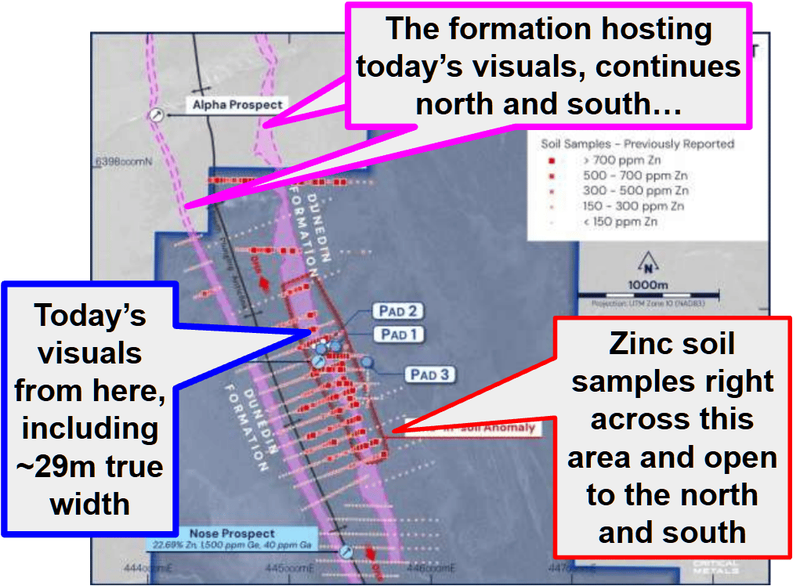
(source)
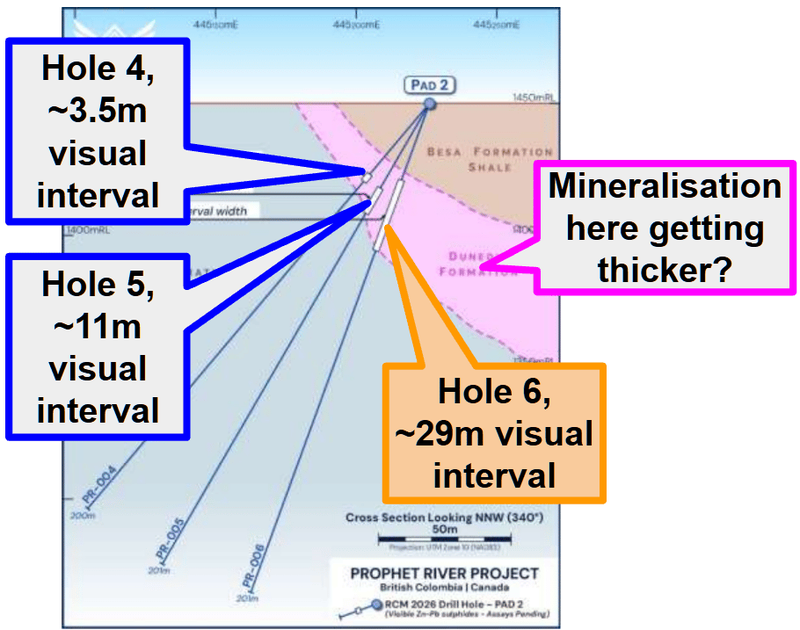
The best way to visualise what RCM may have on its hands is this cross section:
Three holes from the same pad, started with a ~3.5m visual, then a ~11m visual, then the attention grabbing ~29m of visible mineralisation - getting bigger as RCM pointed the rig closer to vertical:
(source)
Now it's all about seeing if the assay results come back and confirm a discovery.
(again, no guarantees here)
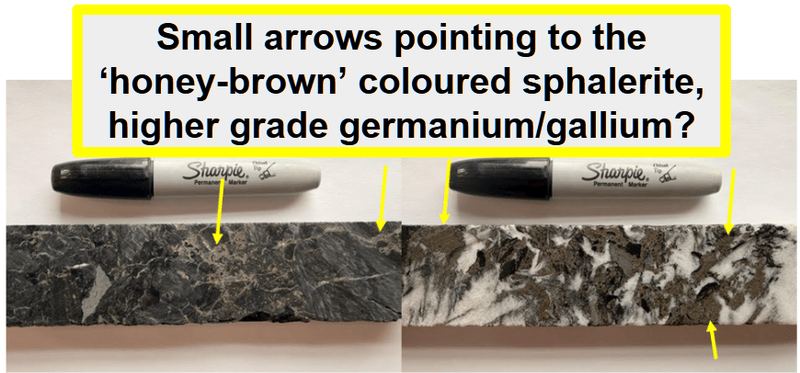
That white stuff (is barite-quartz) and is amongst the darker sphalerite - we won't pretend to know what that is, but we did ask AI about what this means and it said this:
If the assays show germanium travelling with the zinc at historic-like ratios, a low-iron (often associated with higher amount of barite-quartz), coarse, low-pyrite sphalerite in easily separated waste rock is close to ideal feed for a germanium-bearing zinc concentrate.
In the announcement RCM explains that the white stuff is barite and quartz. The brown parts inside it are sphalerite (the zinc sulphide), which could carry those critical minerals germanium and gallium.
Germanium is rarely mined on its own.
Most of the world’s germanium comes out as a by-product of zinc refining, and in deposits like this one, germanium and gallium usually sit inside the sphalerite.
So sphalerite with the white barite-quartz appears to be a really good initial indication that there might be some more than decent germanium grades and possibly gallium here too.
Especially when combined with the historical data from the project that aligns with this.
The key difference being that although this is a visual (and therefore needs assay results to confirm), that a long intercept makes things really interesting when combined with the historic data and results.
So, if the historic results here carry through to those core pics (which is no guarantee), then this is why the story at this early stage becomes interesting, IF they were to correlate.
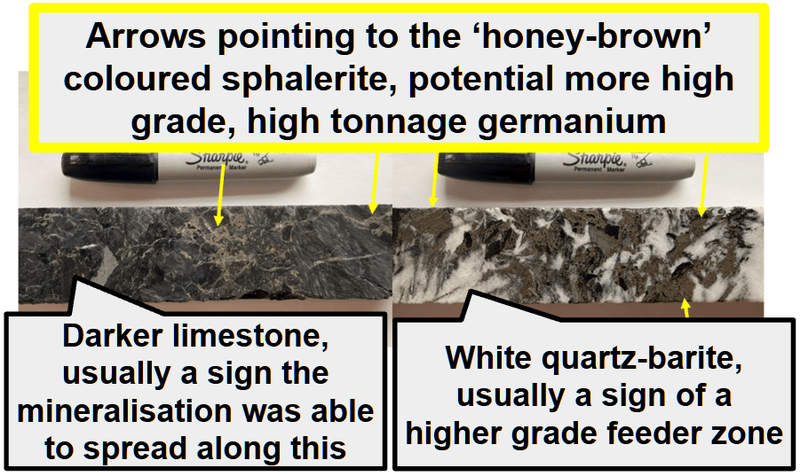
The left (from the announcement is your typical sphalerite, the brown coloured mineral among limestone, contains zinc and can have some other stuff including copper, silver and maybe some trace critical minerals (like germanium and gallium).
BUT it is the right side, those good chunks of that sweet sweet white stuff (which geo’s will probably know a lot more about then us - BUT is meant to be a sign that the sphalerite here is the really good stuff).
The presence of that white stuff (barite-quartz) generally indicates the remaining sphalerite will contain much higher concentrations of the more valuable stuff, plus be lower iron and therefore be friendlier to process to extract germanium and gallium:
(source)
The sphalerite appears to show up in two ways here:
- On the left - filling cracks in the limestone itself, and
- On the right - inside that white barite and quartz.
RCM thinks the barite and quartz (right side) may signal a “feeder” that brought the metals up, which could explain why the zone gets thicker with depth.
The left side indicates it has spread in the limestone on the left which may have resulted in the opportunity for some nice tonnage here.
So some decent widths like near 30m in today’s announcement are a positive early sign
Plus add on that the widths appear to increase at further depth...
Now, we have an anxious wait for the assays to confirm if the sampling results have carried through to the drilling and that this could quickly turn into something much bigger.
But before we get too far ahead of ourselves, remember the following.
It is way too early to say anything definitive here yet, we have been burnt by strong visuals in the past, more times than we can remember, possibly just as you have also.
A lot of exploration success is finding a few signs that may increase the chances of finding something more special than average.
At this early stage, it looks like it could be one of those.
BUT ultimately, we will need to see assays first to confirm the visual correlation from the drill cores to that of the historic sampled results here prior.
And on that, assays are at the lab on rush turnaround and are due in mid November. (source)
After that, RCM is planning a seismic survey (which could let us know the thickness of the mineralised formation).
Then fingers crossed if the assays come back positive AND then the seismic results also align, RCM goes back to drill (it can access the site year round).
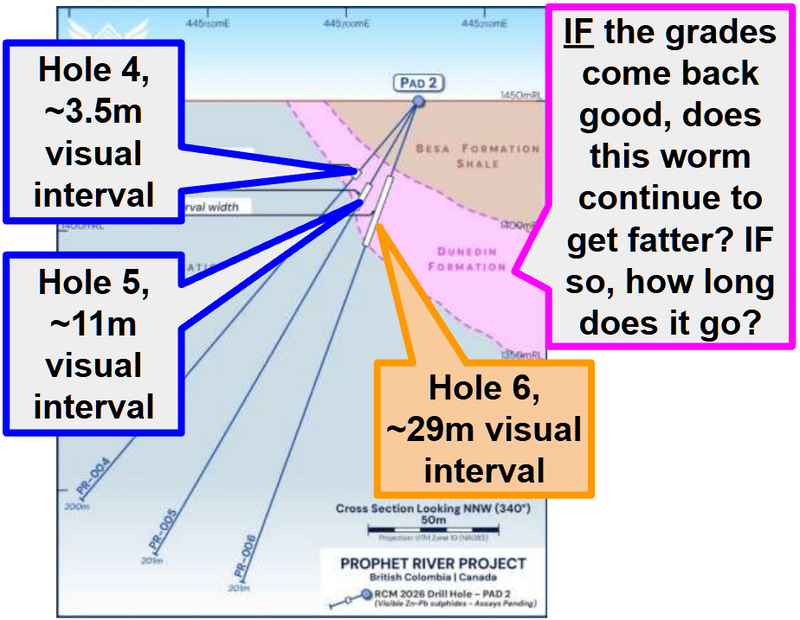
IF they do come back in line with those historic results though, then there will be an epic drill out to see just how fat that worm can get:
(source)
Wait, what is gallium and germanium and why should we care?
Gallium - used in military semiconductors for higher power/frequencies, and;
Germanium - used in fibre optic cables and infrared military systems.
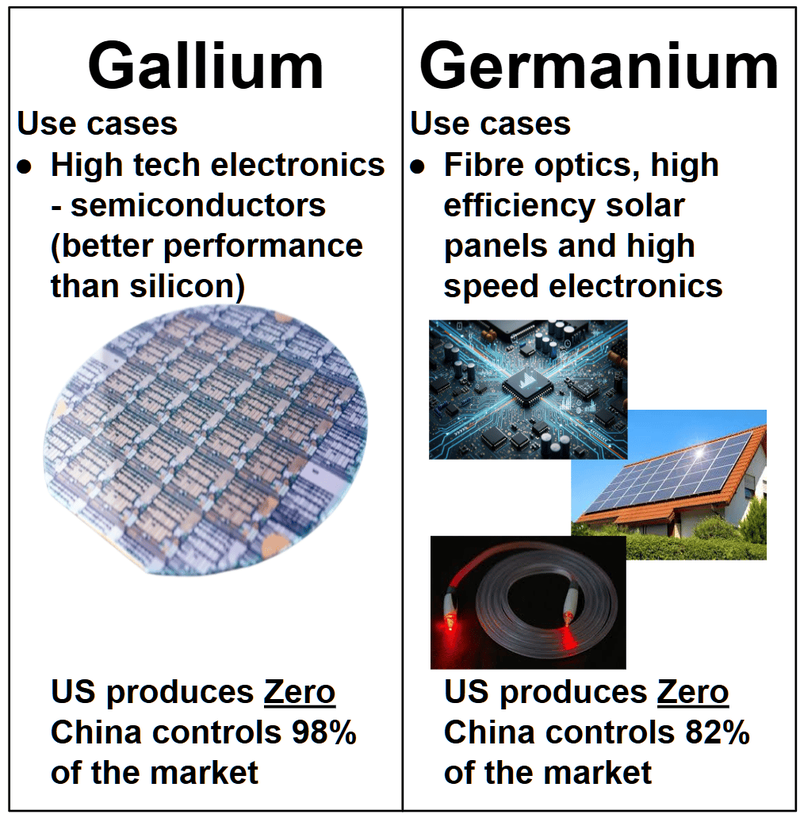
In 2024, China put export restrictions on critical minerals.
These restrictions kicked off the entire “US critical minerals” macro theme on the ASX and turned a few micro cap explorers into billion dollar companies.
Both gallium and Germanium were on the 2024 list of banned critical minerals.
China has since softened the broader critical minerals export bans while negotiating a trade deal with the US...
... BUT one thing that stayed was the ban on selling gallium and germanium to "military end-users".
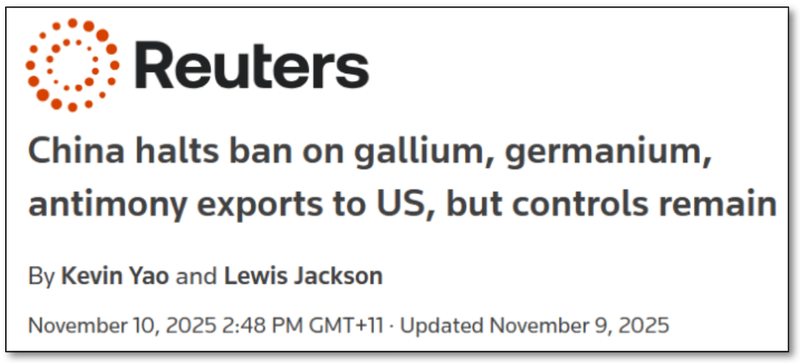
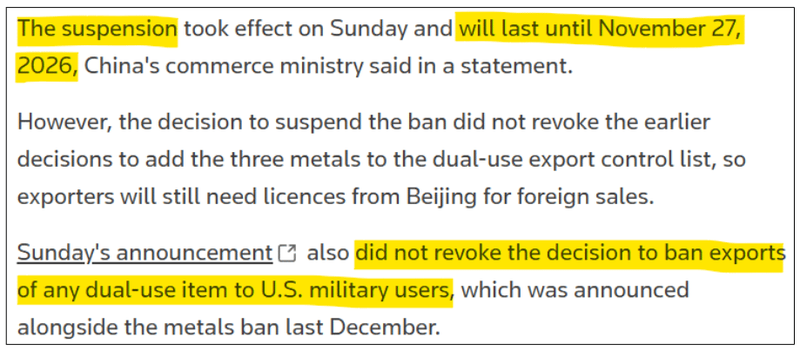
(source)
China controls roughly 98% of the world's gallium production and around 60% of its germanium.
So the US gallium/germanium supply problem is nowhere near solved - for the most critical of uses - national defence.
Which probably explains why the US Department of War is stockpiling gallium & germanium (source).
The DoW has some existing germanium stores with a small program recycling from army equipment to top it up.
Plus it had no gallium stockpiled as of at least 2024 (it isn’t exactly the sort of thing you would communicate and let your adversary know about). (source)
We think that the gallium/germanium side story gives RCM a bit of an X factor while we wait for sentiment to turn in the silver space...
Yes, RCM is still primarily a silver Investment for us
We came into RCM back in September last year, mainly for the silver assets in NSW where it had consolidated the region to own three resources close together.
This was the same round that Tribeca, Jupiter Asset Management and the silver bull himself Eric Sprott, came in at 3.5c per share.
Yes, that is the mining billionaire Sprott.
Sprott continued to buy on market, actually getting his stake up to 10.79% of RCM in PA and was doing that additional buying on market earlier this year at an average of 7.18c per share.
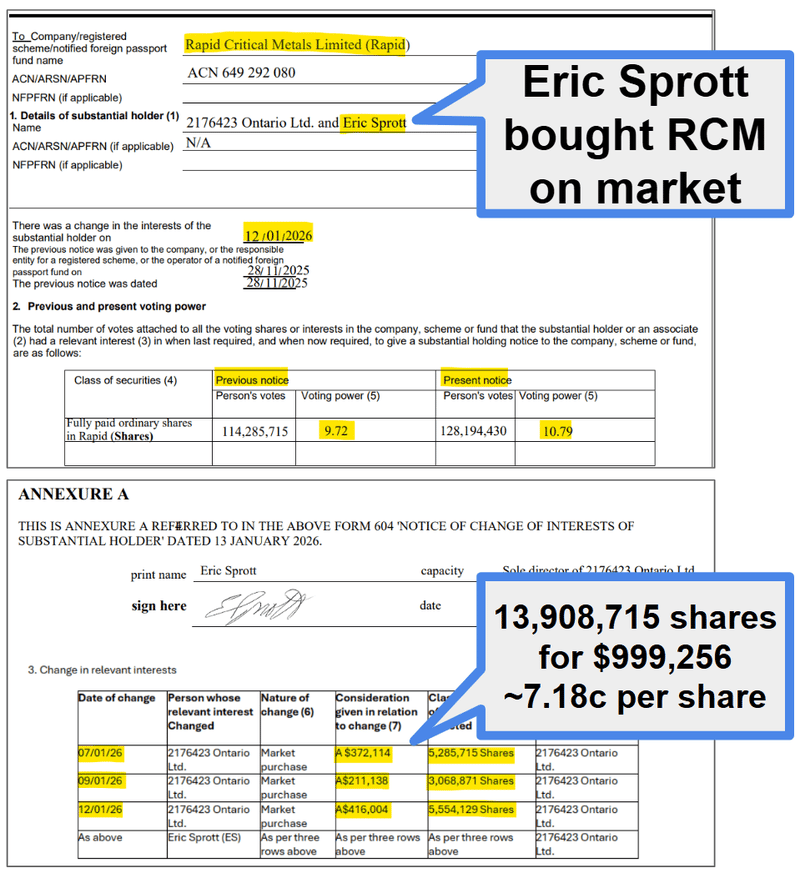
(source)
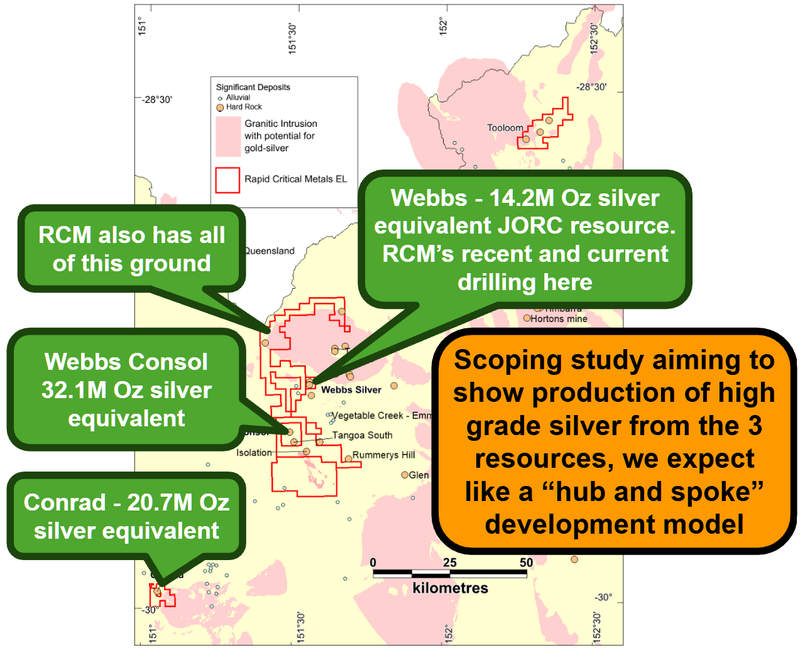
Across its three silver projects, RCM has 67 million ounces of silver equivalent resources in a JORC resource estimate and currently has a scoping study underway to look into processing.
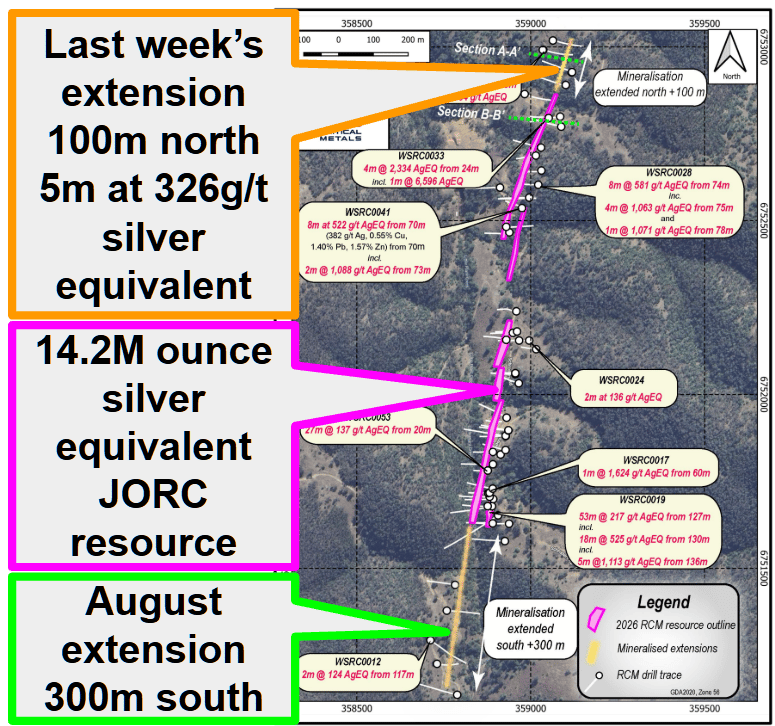
Just last week, RCM hit more high grade extensions to the Webbs project, with three drill rigs drilling and a fourth was set to arrive last week:
(source)
So while RCM’s share price has gone backwards since we Invested, RCM has added ~417m in cumulative strike to its Webbs deposit.
AND RCM confirmed last week that a fourth rig would be added to its three rig setup (to arrive last week), so plenty more drilling and results over the next few months to come.
Hopefully what RCM has hit to date is enough to take RCM closer to that “100M ounces in defined resources” sweet spot the company is targeting for its overall development plan.
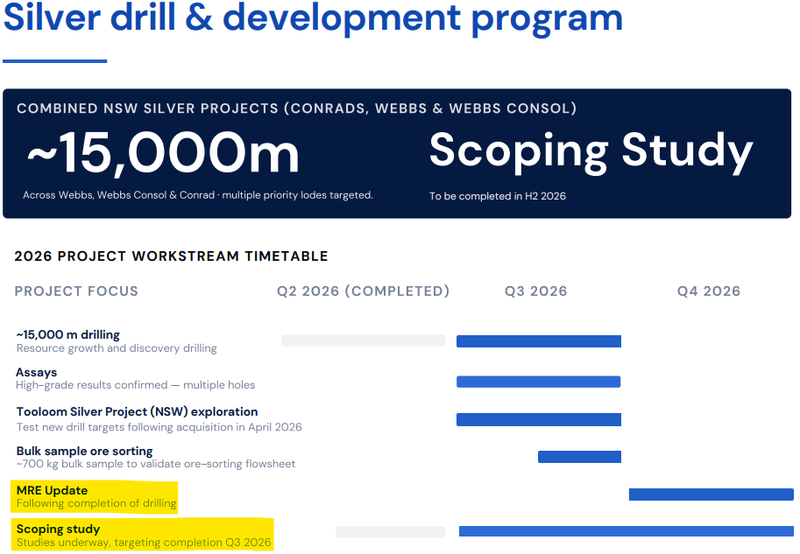
According to its July presentation, RCM is planning for an updated JORC resource estimate and a scoping study for its project to arrive before the end of this year.
(source)
We think the scoping study could be a major catalyst for RCM because it will be the first time the market gets a sense of the potential economics for RCM’s multiple deposits.
Because all three of RCM's silver projects sit fairly close to each other, the study is looking at a model where the company processes all three projects’ ore at one central facility.
(source)
We think that as long as the silver price is high, RCM could actually surprise the market to the upside with the economics in any study (especially if silver runs to US$100 per ounce or more).
And hopefully, with a study under its belt, before the next big silver run RCM will be one of the companies capturing the first wave of capital back into silver stocks.
We covered this last week, you can see that Deep Dive article on those silver assays here: RCM: Backed by billionaire precious metals legend Eric Sprott... in his PA account
Ultimately though, we think that a discovery in Canada OR progress on the silver assets will be what helps RCM achieve our Big Bet:
Our RCM Big Bet:
“RCM expands its existing silver resource through new discoveries into a silver bull market and re-rates by over 1,000% from our Initial Entry Price”
NOTE: our “Big Bet” is what we HOPE the ultimate success scenario looks like for this particular Investment over the long term (3+ years). There is no guarantee that our Big Bet will ever come true. There is a lot of work to be done, many risks involved, including development risk, country risk and commodity price risk - just some of which we list in our RCM Investment Memo.
Success will require a significant amount of luck. Past performance is not an indicator of future performance.
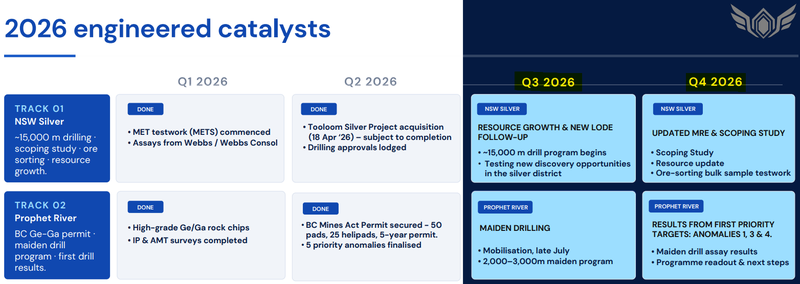
What’s next for RCM?
(source)
🔄 Gallium/Germanium drilling in Canada
RCM has drilled 7 holes in the program and reported the visuals on 3 assays, with these assays at the lab “on rush turnaround” and “are expected in mid November” (source).
So not long to wait on these assays, if the visuals from today’s announcement match the historic sampling results, then this project could get interesting very quickly.
(as always there is no guarantees on visuals which can be unreliable, so we wait for the assays first)
🔄 Silver drilling in NSW (Webbs project)
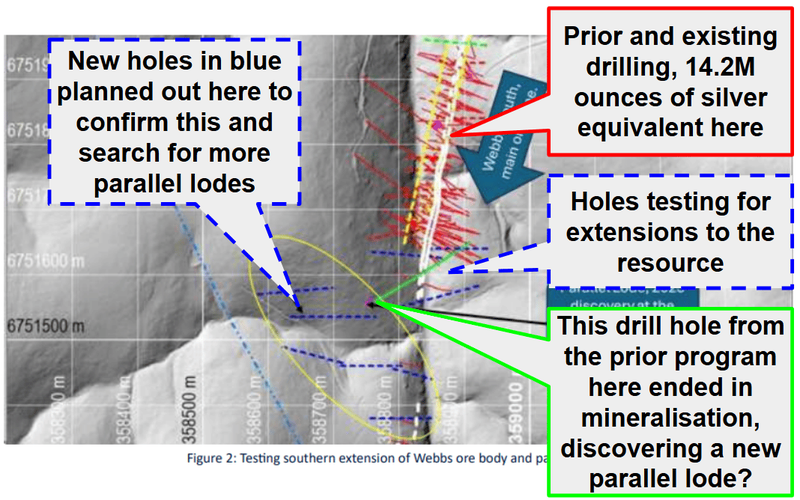
RCM’s current drill program is designed to do two things:
- Test extensions of the new parallel structure - southern corner of the project
- Extend the existing resource - along the south
The best part is the current drilling will happen from the opposite angle to that first program.
So we will definitely learn a lot of new things about the project this time around:
(source)
🔄 Scoping study across projects in NSW
RCM started the study in late January 2026 and according to its most recent presentation expects to have it completed in H2-2026. (source)
The scoping study will be the first time RCM publishes a meaningful look at how its three NSW silver projects might actually be developed and what they might be worth in NPV terms.
We should also see some numbers on operating costs and CAPEX.
The two numbers we'll be looking out for from the study:
- The CAPEX number - how much it costs to build the project
- The NPV - and especially the sensitivity tables at different silver prices
And of course the sensitivity of the project to silver prices (how the NPV changes with higher silver prices).
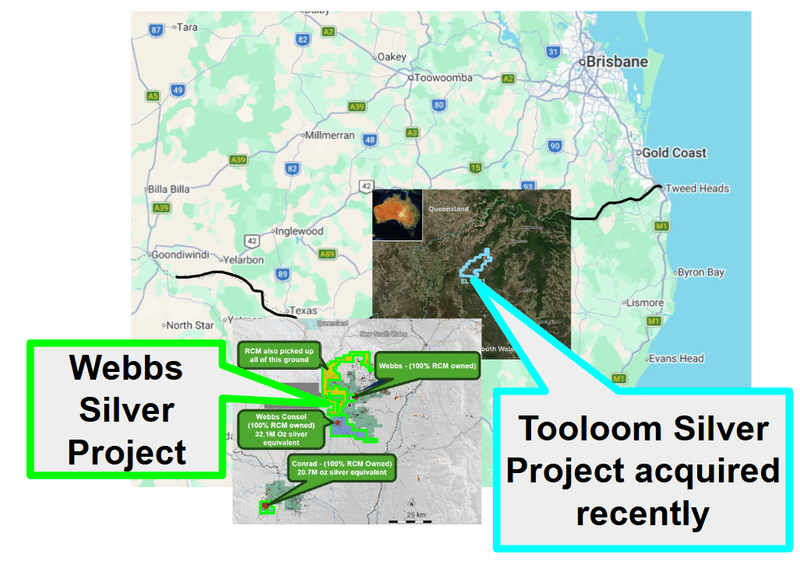
🔄 Target generation on newly acquired asset
On this asset we want to see the company complete LiDAR surveys, surface sampling and geophysics.
Ultimately, we want to see the historic results validated and then a bunch of drill targets ranked from most interesting to least ahead of a drill program on the project.
What are the risks?
The biggest risk for our RCM Investment right now is "exploration risk".
RCM is currently in the middle of a multi-rig 15,000m drill program on the silver project in NSW and also has assays pending for visuals at its Canadian gallium/germanium project.
There is no guarantee that any of it returns economic results, it is the assays that will confirm exactly what the story is for both of these.
Poor exploration results would negatively impact RCM's share price especially with the amount of capital that would be spent on a multi-rig program in NSW and the further exploration in Canada.
Exploration risk
There is no guarantee that RCM's upcoming drill programs are successful. RCM may fail to find economic silver resources, in which case we would expect the share price to re-rate lower.
Source: "What could go wrong" - RCM Investment Memo 17 Sep 2025
Other Risks
Like any junior mineral exploration and development company, RCM carries significant risk, here we aim to identify a few more risks.
Visual drill intercepts are not a guarantee of economic mineralisation, meaning upcoming lab assays may fail to confirm the high-grade germanium, gallium, or zinc hinted at by core inspections and historical sampling.
RCM is executing a capital-intensive, multi-rig campaign in New South Wales alongside ongoing exploration in British Columbia, Canada. This high ongoing cash burn creates the continuous risk of shareholder dilution if future capital raises are conducted at low share prices.
Managing dual exploration programs across both Australia and Canada risks stretching board and operational bandwidth across disparate regulatory, seasonal, and logistics environments.
The planned satellite processing model for the NSW silver deposits introduces complex logistics and transport costs between distinct pits, which could result in lower economic returns or higher-than-expected CAPEX in the upcoming scoping study.
RCM remains highly exposed to broader commodity price volatility, meaning a sustained downturn in silver, zinc, or critical mineral demand could undermine project economics regardless of drill success.
Investors should consider these risks carefully and seek professional advice tailored to their personal circumstances before investing.
Our RCM Investment Memo
Our Investment Memo provides a short, high-level summary of our reasons for Investing.
We use this memo to track the progress of all our Investments over time.
Click here to read our RCM Investment Memo where you will find:
- What does RCM do?
- The macro theme for RCM
- Our RCM Big Bet
- What we want to see RCM achieve
- Why we are Invested in RCM
- The key risks to our Investment Thesis
- Our Investment Plan
General Information Only
This material has been prepared by StocksDigital. StocksDigital is an authorised representative (CAR 000433913) of 62 Consulting Pty Limited (ABN 88 664 809 303) (AFSL 548573).
This material is general advice only and is not an offer for the purchase or sale of any financial product or service. The material is not intended to provide you with personal financial or tax advice and does not take into account your personal objectives, financial situation or needs. Although we believe that the material is correct, no warranty of accuracy, reliability or completeness is given, except for liability under statute which cannot be excluded. Please note that past performance may not be indicative of future performance and that no guarantee of performance, the return of capital or a particular rate of return is given by 62C, StocksDigital, any of their related body corporates or any other person. To the maximum extent possible, 62C, StocksDigital, their related body corporates or any other person do not accept any liability for any statement in this material.
Conflicts of Interest Notice
S3 and its associated entities may hold investments in companies featured in its articles, including through being paid in the securities of the companies we provide commentary on. We disclose the securities held in relation to a particular company that we provide commentary on. Refer to our Disclosure Policy for information on our self-imposed trading blackouts, hold conditions and de-risking (sell conditions) which seek to mitigate against any potential conflicts of interest.
Publication Notice and Disclaimer
The information contained in this article is current as at the publication date. At the time of publishing, the information contained in this article is based on sources which are available in the public domain that we consider to be reliable, and our own analysis of those sources. The views of the author may not reflect the views of the AFSL holder. Any decision by you to purchase securities in the companies featured in this article should be done so after you have sought your own independent professional advice regarding this information and made your own inquiries as to the validity of any information in this article.
Any forward-looking statements contained in this article are not guarantees or predictions of future performance, and involve known and unknown risks, uncertainties and other factors, many of which are beyond our control, and which may cause actual results or performance of companies featured to differ materially from those expressed in the statements contained in this article. S3 cannot and does not give any assurance that the results or performance expressed or implied by any forward-looking statements contained in this article will actually occur and readers are cautioned not to put undue reliance on forward-looking statements.
This article may include references to our past investing performance. Past performance is not a reliable indicator of our future investing performance.