Our New Investment: Harvest Technology Group (ASX: HTG)
Disclosure: S3 Consortium Pty Ltd (the Company) and Associated Entities own 61,250,000 HTG Shares at the time of publishing this article. Some Shares are subject to shareholder approval. The Company has been engaged by HTG to share our commentary on the progress of our Investment in HTG over time. This information is general in nature about a speculative investment and does not constitute personal advice. It does not consider your objectives, financial situation, or needs. Any forward-looking statements are uncertain and not a guaranteed outcome.
Our latest Investment is the defence (military tech) stock Harvest Technology Group (ASX: HTG).
HTG has developed a technology solving a modern-day battlefield problem that has recently arisen on all sides of a conflict.
The tech is proven in real life and is generating revenue for the company (including a major Five-Eyes defence customer).
This problem HTG solves is getting more urgent and impactful with the recent introduction of remotely operated and unmanned drones, robots, boats, submarines and vehicles onto the battlefield.
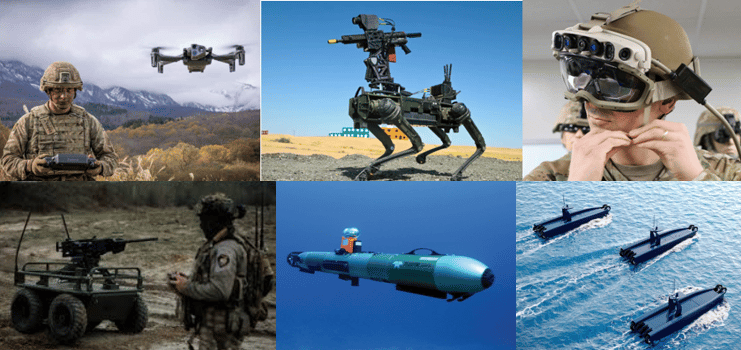
The surging numbers of remote operated, unmanned drones, robots, boats and vehicles all require communication links for remote-control, sending back full HD (ideally) video to the operator, receiving commands from the operator and sharing it all live with central command and control...
Which is all still done through a comms link.
(satellite, cellular, radio, wifi/Ethernet, or private networks)
The problem is: Disrupt the comms link - bye bye unmanned drones, robots, boats and vehicles and bye bye any chance of winning the battle.
So, of course, with all the new remotely operated unmanned weapons hitting the battlefield over the last couple of years, the first thing the other side will think is “how do we break their comms link”.
In 2026, battles are won on which side can best maintain comms and connectivity.
(Or which side can best jam, disrupt or disable the other side's comms links - think of it like your mate pulling out your Nintendo controller cable when you are winning in a 2-player game against them)
Helping solve this new problem has seen another ASX company (Elsight Ltd) run from 30c to a high of over $7 over just the last 12 months.
After Elsight cleverly pivoted its “comms link strengthening” technology from uses in the commercial sector to solving this newly emerging and urgent modern military battlefield problem.
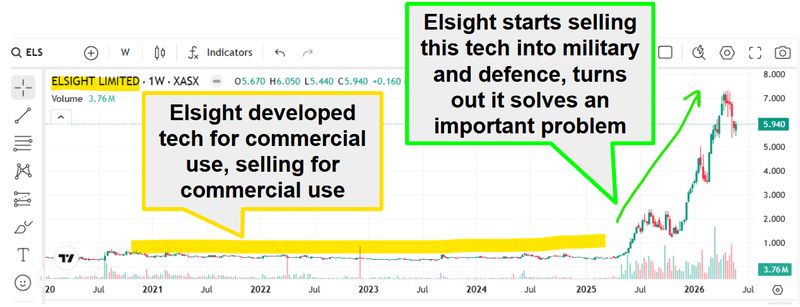
(source)
The past performance is not and should not be taken as an indication of future performance. Caution should be exercised in assessing past performance. This product, like all other financial products, is subject to market forces and unpredictable events that may adversely affect future performance.
Our new Investment HTG has a technology called Nodestream that solves this “comms link strengthening” problem (in a slightly different way).
HTG’s Nodestream tech COMPRESSES mission-critical data to survive the thinnest, most degraded pipes (comms links).
HTG’s Nodestream tech intelligently squeezes HD video, voice, telemetry, and control data through ANY connection that happens to be available: satellite, cellular, RF, or any combination.
When conventional systems break due to comms link congestion or electronic warfare, HTG’s Nodestream maintains real-time visibility and control.
HTG’s tech has been refined from years of commercial use by paying customers in the most demanding, difficult environments (oil rigs, shipping).
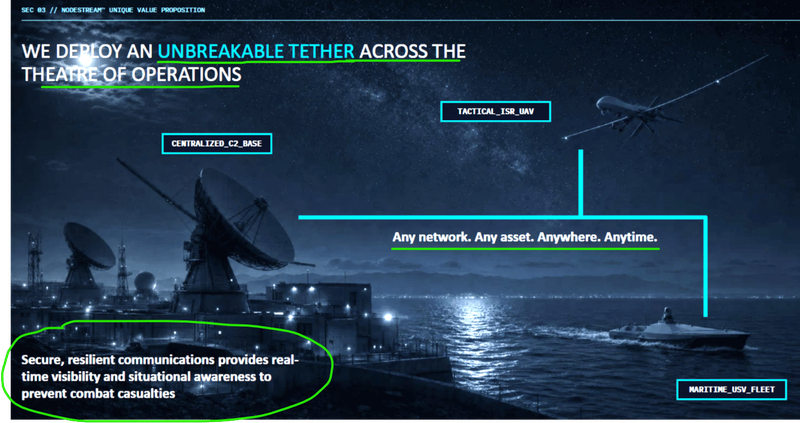
(source - HTG investor deck)
The tech has logged over 500,000 operational hours in commercial sectors already (shipping, oil & gas etc - and generated a total $12M revenue since 2021).
AND the tech is TRL 9 certified - the highest possible US Department of Defence “technology readiness” level. (source)
And as Elsight did in early 2025 when it was 30c, HTG is now accelerating its move into the military and defence sector.
Where there is clearly a surge in demand for this kind of solution, based on Elsight's defence sales-led share price run to highs of $7.
Note: the past performance of Elsight is not an indicator of the future performance of HTG.
In military and defence, HTG has already:
- Secured multiple orders from a significant Five Eyes defence customer (source)(source) (The Five Eyes is a premier intelligence alliance comprising Australia, Canada, New Zealand, the United Kingdom, and the United States) for intelligence, surveillance and reconnaissance applications, including the deployment of 60 units to military robotics company Guerrilla Technologies. (source)
- Supplied telemedicine remote kits to the European Union Defence Force (EUDF) for naval fleet use. (source)
- Orders from a major NATO contractor following successful field trials. (source)
- A US defence contractor is testing HTG’s technology within its drone product development program. (source), and
- Trialled its tech with drones in the Japanese Self-Defence Force (source)
- Brave1 accreditation, which is Ukraine's Government-backed defence-tech cluster (testing foreign vendors in real battlefield conditions) - think of it like Amazon for deliveries but it delivers pre-approved battle tech to locations in a battlefield. (source) Is currently going for
So far so good.
Elsight is capped at $1.3BN and we hope the ~$18M capped HTG can emulate the same strategy over time and hopefully see some kind of share price re-rate.
($18M? Why is HTG market cap so low? That's what we thought too when we first saw it and we’ll explain why it's so low in a second. Later we’ll also cover the specific sequence of events leading to and driving Elsight's share price run - spoiler alert: it’s increasing sales into defence.)
Here is HTG’s sales pipeline according to the latest investor deck released today:
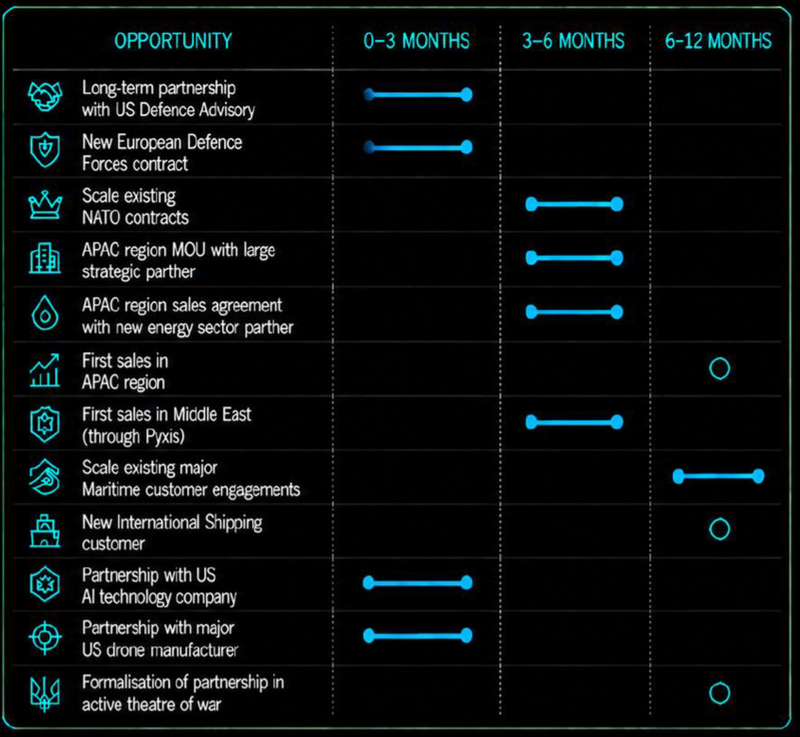
(source)
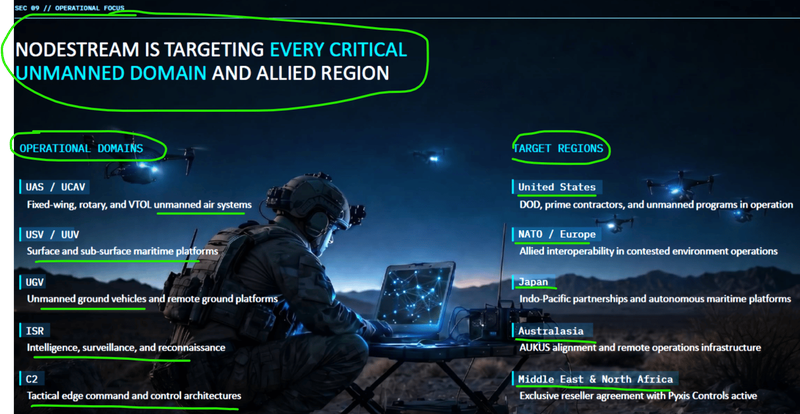
Next HTG says the plan is to take their Nodestream technology to “Every Critical Unmanned Domain and Allied Region”:
(source)
So, who at HTG is going to do all this?
HTG Executive Chairman is former Australian Army two star Special Forces General Jeff Sengelman.
How’s this for the HTG Executive Chairman's CV:
- Spent much of his career in special forces
- Earned his SAS Sandy Beret in 1987 at the age of 25
- Commanded 4th Battalion, Royal Australian Regiment (Commando) (2000–01)
- Commanded 6th Brigade (2010–11)
- Deployed on operations to East Timor and Iraq (Working as director of strategic operations with US General David Petraeus)
- Commander Forces Command (2011)
- Deputy Chief of Army (2011–2012)
- Head of Modernisation and Strategic Planning – Army (2012–2014)
- Special Operations Commander Australia (2014–2017, retirement)
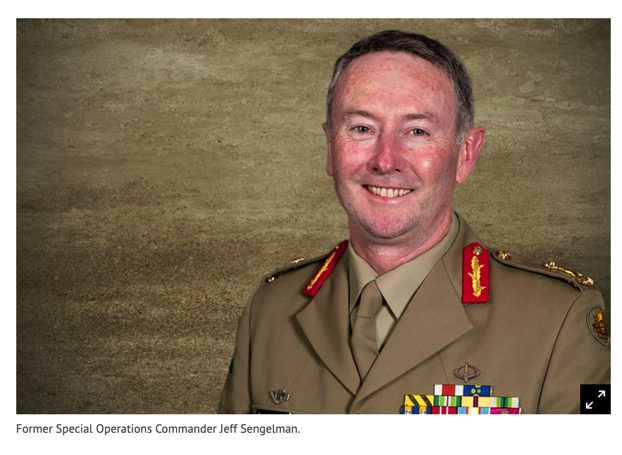
(Source)
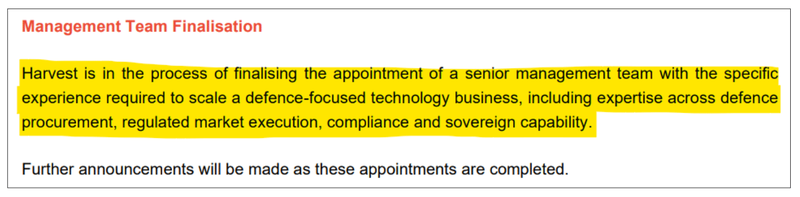
As part of HTG’s acceleration into the military and defence space, HTG’s executive chairman says that HTG:
“is in the process of finalising the appointment of a senior management team with the specific experience required to scale a defence-focused technology business including expertise across defence procurement, regulated market execution, compliance and sovereign capability.”
(source)
Recently, HTG appointed Veronica Bainton as its strategic advisor, who has a pretty impressive CV too:
- Optus Satellite & Space Systems. Former Director of Governance and Industry Engagement at
- The Australian Industry Capability Lead for Team AUSSAT's bid on a ~$4BN defence satellite comms contract... the biggest the ADF has ever run.
- Raytheon Australia in contracts management and Business Development. (Raytheon Australia is a subsidiary of $333BN RTX Corporation, a major US-based defence contractor who specialise in weapons and military electronics.) Spent time at
Now HTG has just raised $6.5M (we participated in this raise), giving the company a runway to execute the acceleration into defence.
(including appointment of a defence industry focused and experienced management team)
We are backing HTG management to deliver all important new material contract wins in the defence sector over the coming months.
Five weeks ago HTG announced the results of an “independent USA market entry assessment” that concluded HTG has:
“a credible and differentiated opportunity in the United States market, particularly within defence‐related applications where communications resilience under degraded and bandwidth‐constrained conditions is a documented and funded operational requirement.” (source)
This was done by an independent third party United States based advisory firm with extensive experience supporting the United States Department of Defence, intelligence community, defence industry and allied partners.
So why is HTG trading at just an ~$18M market cap (post the $6.5M just in)?
(we really like the entry point at this valuation for where HTG is)
We think three main reasons:
- After a strong share price run to a $250M market cap off the back of sales into oil & gas as well as shipping, sales in the commercial space plateaued and shareholders got impatient, bored and stale. (a setup we really like for our tech stocks)
- The previous management team that was focused on and experienced in the commercial space got booted a few months ago (to be replaced with a new team that specialises in military and defence sales.)
- There are a bunch of convertible notes, ~$13M in total, most converting at 2.2c maturing late this year - markets don’t like the uncertainty of con-notes approaching maturity (but this gets a lot easier to solve IF the share price is a lot higher with a few new defence sales).
These three factors combined (in our view) have weighed heavily on the HTG share price, especially as HTG was starting to run out of cash.
BUT now with a $6.5M cash runway, established and proven tech, traction in defence, accelerating defence strategy, and a new defence-focused team, we think this COULD be the inflection point for HTG.
We think HTG is just a couple of material new defence contracts away from shaking off the funk.
So what exactly is HTG’s tech?
Most of us have never entered into a real battlefield as a soldier relying on communications that could save our lives...
But what many of us mere mortals HAVE done is play video games.
Have you ever been playing an online multiplayer game... and your internet cut out?
It doesn’t matter how much you were “winning” at the time...
Without internet, you can’t see what is happening in the game OR make your character take any action.
You are a literal sitting duck that can’t see or respond to anything... and you will lose.
Even a 1 second lag can mean the difference between pressing a button in time.
Or has your Playstation controller battery ever died while battling the final boss... and you lose?

Many of us have been here
(or for the old multiplayer Nintendo it’s like your mate pulling out your controller cable when they were losing so they could get you)
Now apply that same logic to a high stakes battlefield where you are relying on remote controlled, unmanned drones, robots, boats and vehicles....
Plus vital information coming from the central command.
Stable and resilient comms links are critical.
We certainly aren’t battlefield comms experts, but here are just some of the places where we think resilient two way communications are critical to co-ordinate on a battlefield (shown with green arrows):
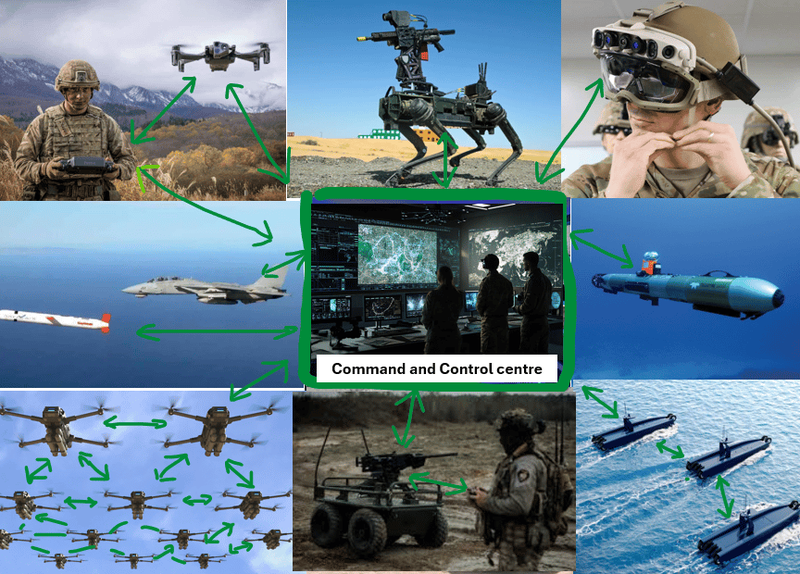
So how are comms done on a battlefield?
- Satellite
- Cellular (3G/4G/LTE/5G)
- Radio (HF, VHF, UHF)
- Wi-Fi / Ethernet / any IP network
- Private networks
But guess what?
The enemy is doing everything they can to block, scramble, shut down and mess up ALL comms channels, all the time, as much as they can.
(equivalent of cutting off your internet or pulling out your controller cable mid-game - the fastest way to hobble you and win)
How do they disrupt comms?
Physical destruction of towers and ground stations, RF jamming, fibre and sub-marine cable cuts, state-ordered shutdowns, GNSS spoofing, cyber attacks on management/ground infrastructure, signal interception, DDoS and congestion flooding, supply chain compromise
(plus about 50 more ways - too many to list.)
And as the use of remote operated and unmanned drones, robots, boats and vehicles surges in the battlefield...
stable, reliable, resilient comms in contested environments become EVEN more critical.
Again, HTG’s Nodestream tech compresses mission-critical data to survive the thinnest, most degraded pipes (comms links).
HTG’s Nodestream tech squeezes HD video, voice, telemetry, and control data through ANY connection that happens to be available: satellite, cellular, RF, or any combination.
When conventional systems break due to congestion or electronic warfare, HTG’s Nodestream maintains real-time visibility and control.
Every "fire-and-forget" smart weapon in the world depends on a working comms link or GPS signal.
Jam the link, lose the weapon.
In 2024, ~US$112,000 Excalibur GPS-guided artillery shells in Ukraine saw accuracy fall from 70% to 6% as Russian electronic warfare jammed their satellite guidance. (source)(source)
(so much that the US stopped sending these to Ukraine - all because of comms jamming)
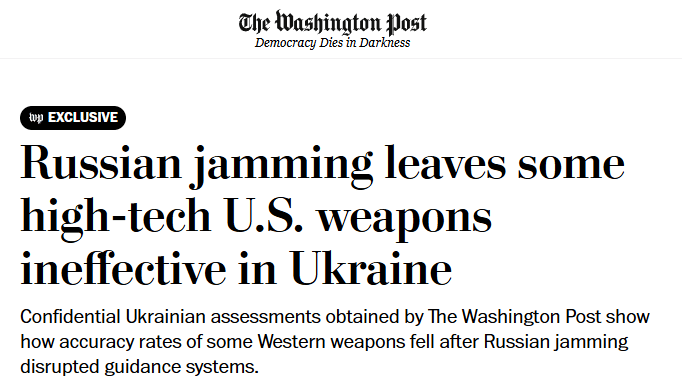
(source)
Even Australia's National Defence Strategy now explicitly calls "assured access to space-enabled communications" foundational to military effectiveness.
Another example, in Ukraine, Starlink has been called a "vital layer in Ukraine's overall communications network" by the Pentagon. (source)
Russian jamming systems are creating electronic interference so dense that drone video feeds dissolve into static.
When Ukraine deactivated Russian-held Starlink terminals earlier this year, the Ukrainian army recaptured ~400 km2 of territory in the weeks that followed.
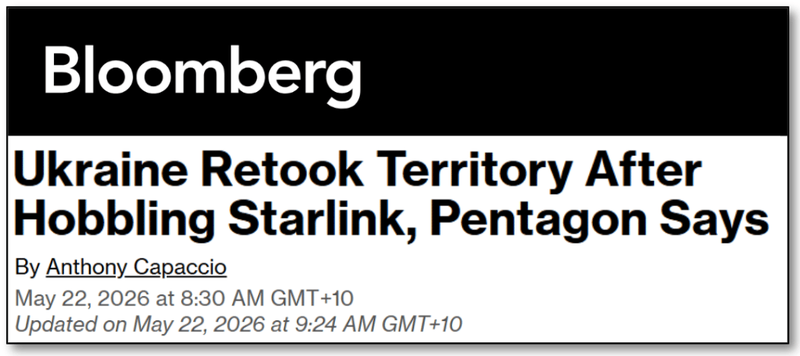
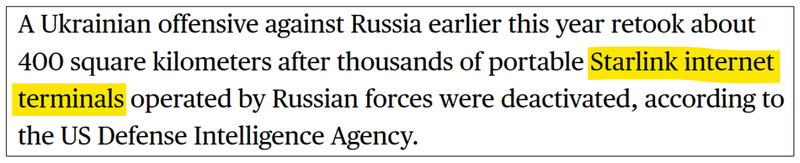
(source)
Combine HTG’s tech with something like Starlink then connect that all to drone swarms - you get where this is going.
(HTG’s tech was actually first developed to strengthen comms through weak satellite links for ships and oil rigs way out in the ocean, so HTG’s satellite game is very strong) (source)
Here is everything HTG has explicitly set as its target market for its Nodestream technology - and yes, it’s remotely operated and unmanned drones, robots, boats and vehicles... and the command and control centre:
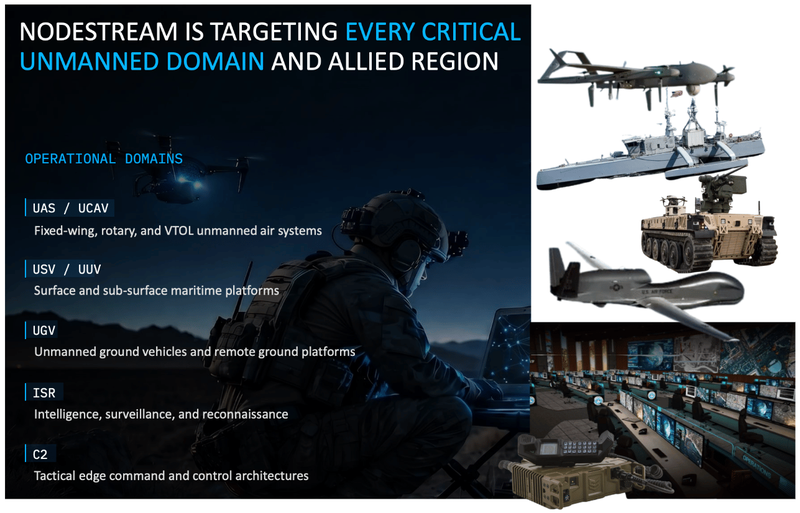
(source)
HTG reminds us of $1.3BN Elsight
A similar story to HTG that’s done very well recently is Elsight Ltd (ASX: ELS).
We think Elsight is a good measure of “what success could look like” for HTG.
And most importantly verifies that there is an urgent demand from the military/defence sector for comms resilience tech.
Elsight plays in a similar (but slightly different) field to HTG.
Elsight owns a drone connectivity platform that lets unmanned aircraft stay connected across LTE, 5G and satellite networks simultaneously.
Elsight’s tech works in drones and unmanned systems basically as a smart modem - taking whatever connection is available at any given time and then combining them into a single, more reliable connection.
So Elsight's strategy is essentially: "Use MORE networks to guarantee a connection."
HTG’s tech is more about bandwidth optimisation/compression technology - squeezing high-quality video, audio and data through a single weak, slow or unstable connection.
HTG’s tech is more so designed for when networks are being jammed or contested (like they are on battlefields).
So HTG's strategy is essentially: "Use LESS bandwidth so even one single bad connection works... on ANY type of connection that happens to be available"
Both spent years deploying and refining their tech in the civilian commercial space - now both are applying their tech to a new and urgent battlefield problem.
(interestingly, HTG and Elsight’s tech are complimentary and looks like they can be used together/ combined)
We actually Invested in Elsight’s IPO back in 2017 at 20c (we only put in a few thousand dollars and sold way too early - still kicking ourselves about that one).
That one went to $4 pretty quickly after the IPO in 2017 - then fell all the way back down to 25c in 2019.
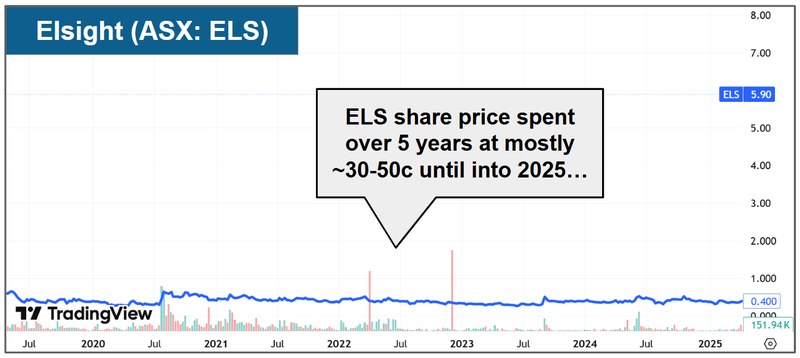
Then for the next 5 years the stock traded mostly sideways while they thrashed around in the commercial space where there just wasn't any real urgency to solve the comms strengthening problem.
Only 12 months ago, ELS was still trading at ~30c with a pretty modest $2.1M in revenues squeezed out of the commercial sector for FY24.
(source)
The past performance is not and should not be taken as an indication of future performance. Caution should be exercised in assessing past performance. This product, like all other financial products, is subject to market forces and unpredictable events that may adversely affect future performance.
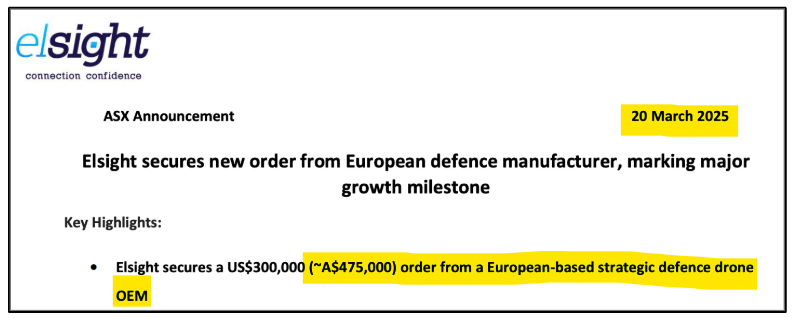
Then in March 2025 Elsight signed what at the time looked like a pretty small deal... with a European defence manufacturer for $475k:
(source)
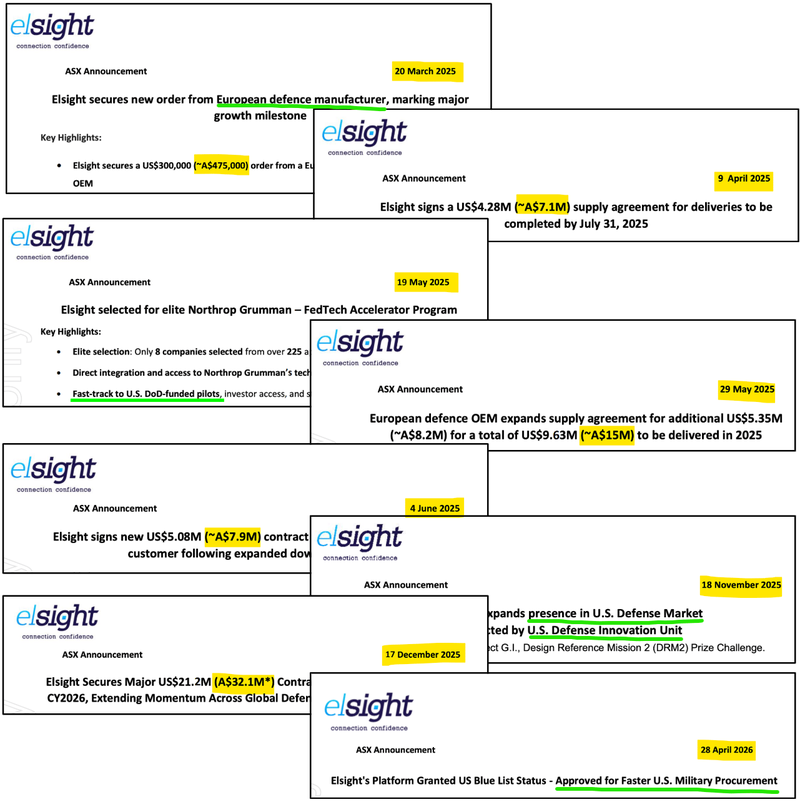
That single deal, which looked small in March 2025, opened the floodgates to much bigger US/European deals - over 7 individual contract wins worth tens of millions of dollars.
Here are some we took screenshots of while doing our Due Diligence on our Investment in HTG:
(source)(source)(source)(source)(source)(source)(source)(source)
We think that just goes to show how once you get one foot into the door in defence procurement, things can snowball pretty quickly.
Elsight has now in the last 12 months had:
- Lockheed Martin integrated its Halo tech into its Indago4 quadcopter.
- Northrop Grumman brought Elsight into its FedTech Accelerator (8 picked from 223 global applicants).
- The US Department of War's Drone Dominance Program added Elsight to its engagement list.
- European defence drone customer wrote ~A$32M of contracts in 2025 (a 600% jump on Elsight's entire FY24 revenue). A single
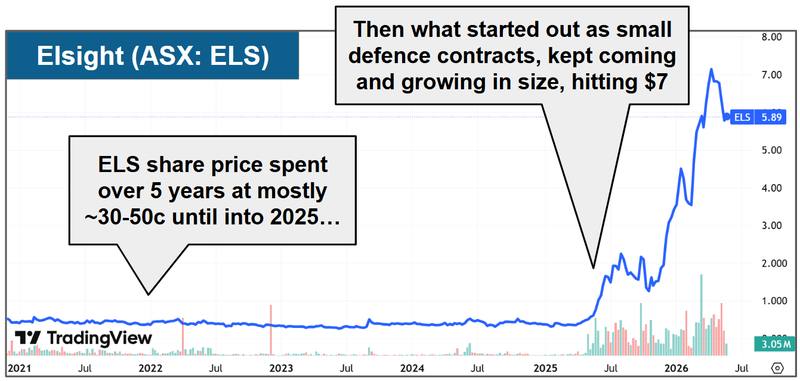
Now, Elsight’s market cap is ~$1.3BN and its share price at its peak was up almost 20x.
(source)
The past performance is not and should not be taken as an indication of future performance. Caution should be exercised in assessing past performance. This product, like all other financial products, is subject to market forces and unpredictable events that may adversely affect future performance.
Elsight’s revenues (and share price) then tracked the “hockey stick growth” chart that is typical of SaaS style businesses:
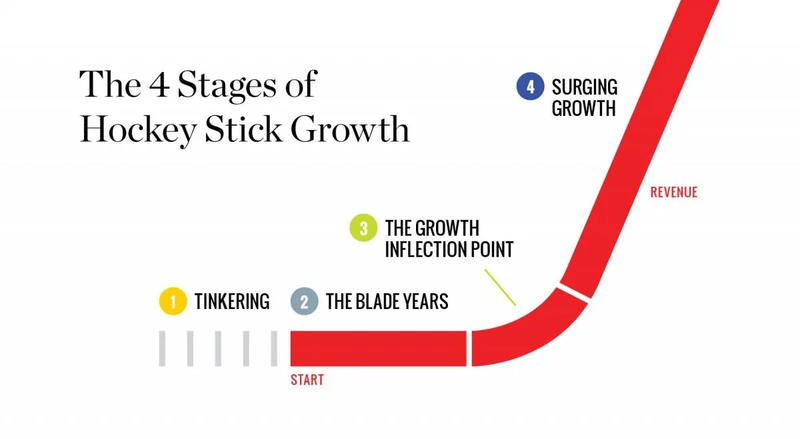
We are Invested in HTG to see it try to execute on a similar playbook.
Hopefully, we are coming in just before that big hockeystick moment... while acknowledging there’s no guarantee of future sales momentum.
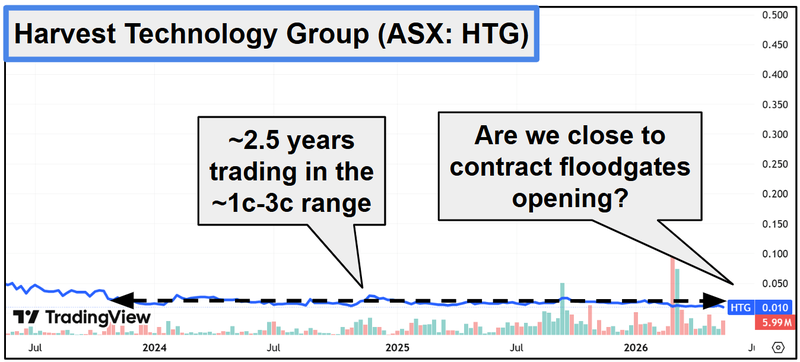
(source)
The past performance is not and should not be taken as an indication of future performance. Caution should be exercised in assessing past performance. This product, like all other financial products, is subject to market forces and unpredictable events that may adversely affect future performance.
Keep reading to see:
- If HTG’s tech and strategy is so good, why is its market cap only ~$18M?
- Why are we investing now?
And our HTG Investment Memo which lays out:
- What HTG does
- The macro theme for HTG
- Our HTG Big Bet
- Why we are Invested in HTG
- What we want to see HTG achieve
- The key risks to our Investment Thesis,
- Our Investment Plan
Before we get to those, here is a quick overview of 8 reasons why we Invested in HTG:
The 8 reasons we Invested in HTG
1. HTG’s tech enables remotely operated and unmanned drones, robots, boats, submarines and vehicles
HTG’s tech connects video and audio streams across remotely operated and unmanned drones, robots, boats, submarines, vehicles and infantry - anything that needs stable comms to be effective in contested and degraded communication channels.
(basically a way of bulletproofing network connectivity)
HTG’s tech can also be applied to other remote locations like offshore oil rigs, facilities in the middle of deserts and in parts of the world where connectivity is limited.
2. We are backing the defence focused team
HTG’s Executive Chairman is Jeff Sengelman - a retired 2-star major general who ran Australian Special Forces operations for years.
We think that Jeff’s networks in the highest levels of the AUKUS, Five Eyes and the NATO communications procurement stack can help generate new sales momentum in the defence industry.
We also think HTG’s recent strategic advisor appointment, Veronica Bainton, has the right set of expertise - Ex-Optus Satellite & Space Systems and Raytheon Australia (big US defence contractor).
3. Tired, stale shareholder base means opportunity for new Investors like us
Some of our best tech Investments have been companies with existing shareholders that are stale and tired given the years of delays landing the transformational “mega deal” that has been around the corner for years:
- Oneview Healthcare (ASX: ONE) in March 2021 at 6c per share - at its highest point ONE was up ~858%. We Invested in
- AML3D (ASX: AL3) in June 2024 at 6.4c per share - at its highest point AL3 was up ~431%. We Invested in
- Rocketboots (ASX: ROC) in March 2025 at 8c, at its highest point ROC was up ~513%. We Invested in
The past performance of ONE, AL3 and ROC is not an indicator of the future performance of HTG.
We think HTG is in a similar position to where those companies were when we first Invested - where there is fatigue in the current shareholder register and the market is pricing the company for the big mega deal never landing.
4. HTG’s tech has >500,000 operational hours and is TRL 9 certified.
HTG has logged >500,000 operational hours in commercial sectors already - shipping, oil and gas and even part of a NATO trial.
HTG’s tech has been used by companies the size of US$642BN Exxon Mobil. (source)
“Technology Readiness Level 9” (TRL 9) certified is the highest possible US Department of Defence technology readiness level.
It means HTG’s tech is actually deployed and proven in operations rather than "tested in a lab".
HTG’s tech has also been independently verified for defence-grade deployment with NATO-linked field testing and US contractor integration underway.
5. Full focus moving to defence
On the 2nd of April 2026 HTG released the outcome of an independent “Defence Strategy Review”. (source)
Straight after, HTG also commissioned an independent third-party technical validation of its technology with a "respected defence and aerospace advisory group" active across US and allied defence ecosystems.
Then on the 14th of April 2026, HTG announced the "Independent Assessment Supports US Defence Opportunity". (source)
We think this marks HTG’s full pivot to focusing its business on defence.
6. HTG already has defence market traction
HTG has already had:
- source)(source) (The Five Eyes is a premier intelligence alliance comprising Australia, Canada, New Zealand, the United Kingdom, and the United States) for intelligence, surveillance and reconnaissance applications, including the deployment of 60 units to military robotics company Guerrilla Technologies. (source)
Secured multiple orders from a significant Five Eyes defence customer ( - source) Supplied telemedicine remote kits to the European Union Defence Force (EUDF) for naval fleet use. (
- source)
Orders from a major NATO contractor following successful field trials. ( - source)
A US defence contractor is testing HTG’s technology within its drone product development program. ( - source), and Trialled its tech with drones in the Japanese Self-Defence Force (
AND is currently going for Brave1 accreditation, which is Ukraine's Government-backed defence-tech cluster (testing foreign vendors in real battlefield conditions) - think of it like Amazon for deliveries but it delivers pre-approved battle tech to locations in a battlefield.
7. ASX listed peer has gone from 30c to $7 per share on defence pivot
A similar story to HTG that’s done very well recently is Elsight Limited (ASX: ELS).
Elsight plays in a similar (but slightly different) field to HTG - it owns a drone connectivity platform that lets unmanned aircraft stay connected across LTE, 5G and satellite networks simultaneously.
Over the last 12 months Elsight’s business has transformed from a pivot to defence - integrating its tech with Lockheed Martin, Northrop Grumman, The US Department of War's Drone Dominance Program and winning orders from inside Europe.
Now, Elsight’s market cap is ~$1.3BN and its share price at its peak was up almost 20x.
(From ~30c to a high of $7 off the back of its defence pivot)
We think HTG has similar potential if it can execute a successful defence pivot too.
The past performance of Elsight is not an indicator of the future performance of HTG.
8. Small $18M market cap - leveraged to a re-rate
HTG is capped at ~$18M, just raised $6.5M and has ~$13M in convertible notes outstanding.
So its enterprise value is ~$24M.
We think HTG’s share price would have been multiples of where it is today IF the capital structure didn't have a convertible note overhang.
We see those notes as one of the reasons HTG is investable at this market cap.
Strip them away, and then we think underlying business should be worth multiples of where it trades today.
(no guarantees of course)
We think that IF HTG lands a defence contract big enough to get the share price moving, then the note overhang becomes less of a problem and the company’s share price is allowed to move higher on good news.
Ultimately, we are hoping the reasons above come together to achieve our HTG Big Bet which is as follows:
Our HTG Big Bet:
"HTG re-rates to a $200M+ market cap by embedding Nodestream into one or more major Western defence programs, attracting strategic interest from a defence contractor or satellite operator"
NOTE: our "Big Bet" is what we HOPE the ultimate success scenario looks like for this particular Investment over the long term (3+ years). There is no guarantee that our Big Bet will ever come true. There is a lot of work to be done, many risks involved, including technology adoption risk, defence procurement timing risk, dilution risk, and competition risk - just some of which we list in our HTG Investment Memo.
Success will require a significant amount of luck. Past performance is not an indicator of future performance.
So if HTG’s tech is so good, why is it capped at only ~$18M?
Because the company spent the last few years under a stack of convertible debt.
And this is still where it finds itself today.
$12.8M of debt, across 8 convertible notes - with expiry dates between October 2026 and December 2027.
Back in January 2021 - HTG traded at ~50c per share - a market cap of ~$250M.
Then the company started taking on debt - probably waiting for the next big contract to land that re-rates the company and extinguishes the debt.
Anyone who has invested in tech businesses (or any business?) before will know that sales cycles can often take longer than expected.
Then it looks like the market started losing faith in HTG’s ability to manage the convertible notes.
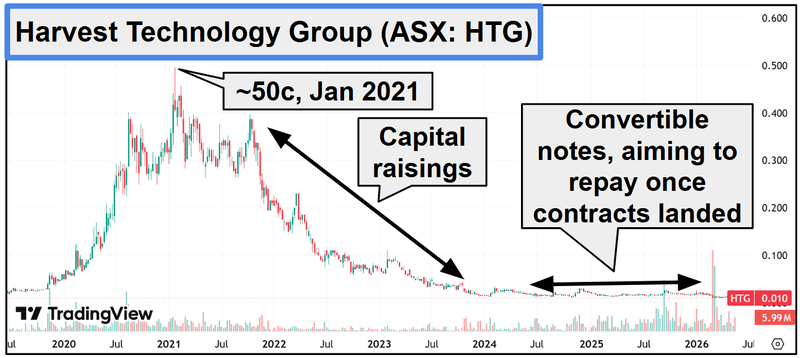
(source)
The past performance is not and should not be taken as an indication of future performance. Caution should be exercised in assessing past performance. This product, like all other financial products, is subject to market forces and unpredictable events that may adversely affect future performance.
We think HTG would be trading MUCH higher than where it is today if it weren't for those convertible notes.
Especially in the current macro environment for military tech.
A defence-comms software business with TRL 9 tech and US contractor integration underway.
...take away the convertible notes, give the company a decent cash runway, and we think HTG could be trading at many multiples of where it sits today...
That’s before any proper execution - just based on what the company has today.
Which is why we Invested in HTG today.
Whenever we look at these situations, we always think IF the problem is just about money and capital structure, there is a world where the tech shines through, the company makes a few sales and is in a better position to manage all of those things.
We think HTG’s tech solves a problem that could be strong enough to fix the capital issue.
Look - we could be totally wrong here - we know there are risks.
HTG will need to deliver revenue and newsflow (to grow its market cap) to be in the best position to extinguish that $12.8M convertible note stack.
But IF HTG executes its defence pivot well and can land one major contract from a big name customer...
Then we think the share price clears the 2.2c conversion price (for the majority of the notes) and the convertibles become much more manageable.
If HTG doesn't execute well, the convertible note will need to be dealt with - either by another cap raise to pay them out OR conversion at a renegotiated price, which could dilute existing holders (like us).
We are Investing for the first scenario to play out, but also recognise we might lose money on this Investment (like all small cap high risk investments).
The convertible note overhang has given us an excellent entry price (assuming HTG executes on its defence strategy) but we have understood and accepted the risk if they don’t execute (which is increased dilution from con note clear out)
The key difference today to last week is that HTG has just raised $6.5M to accelerate its defence strategy... and defence sales.
So why are we Investing in HTG now?
On the 2nd of April HTG released the outcome of an independent “Defence Strategy Review”. (source)
Straight after, HTG also commissioned an independent third-party technical validation of its technology with a "respected defence and aerospace advisory group" active across US and allied defence ecosystems.
12 days later, HTG announced the "Independent Assessment Supports US Defence Opportunity".
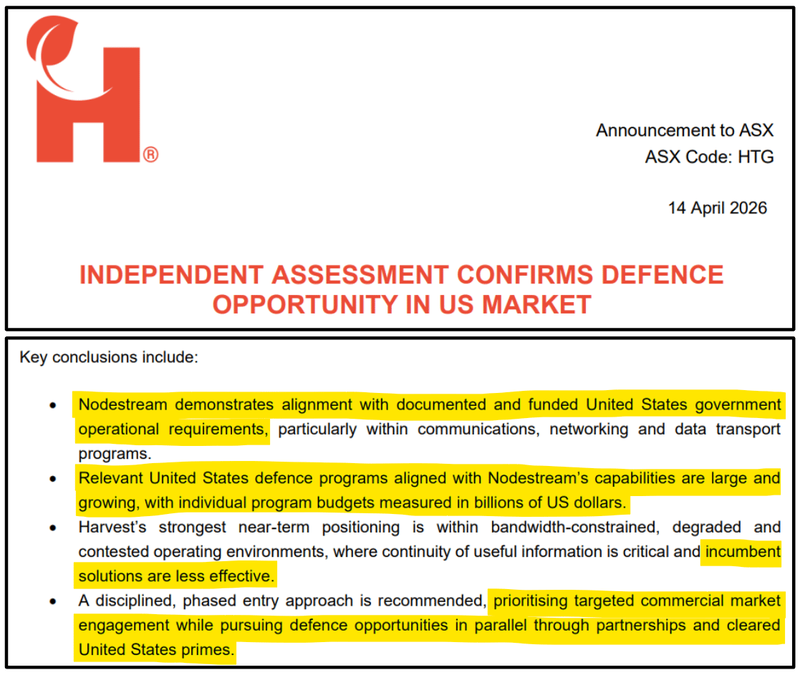
(source)
As mentioned earlier there is also the team pivot to be defence focused:
- Major General Jeff Sengelman went from non-executive chair to Executive Chair - meaning he is full-time with HTG, and
- In March HTG had already brought on Veronica Bainton as a strategic advisor.
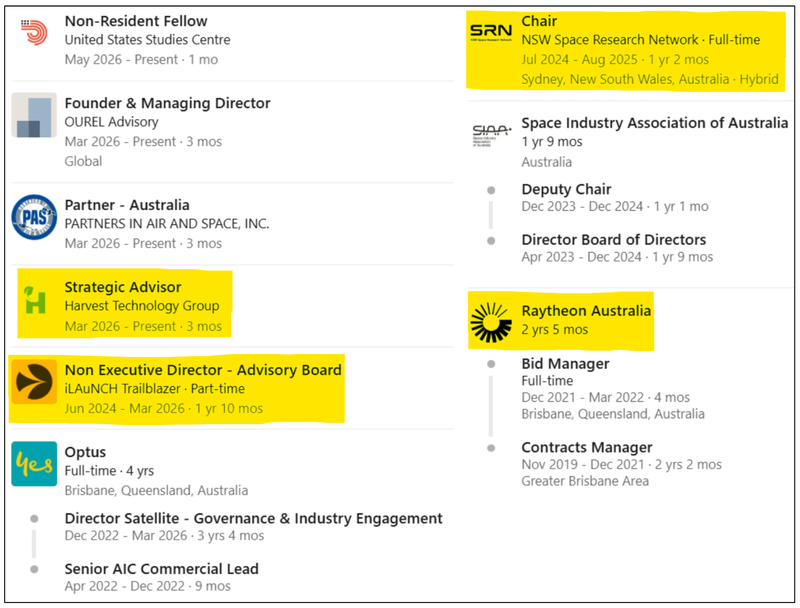
(source)
And then today, HTG raised $6.5M to give HTG a shot at executing the pivot to defence...
Our Investment case for HTG is pretty simple
We want to see HTG land contracts or partnerships with customers in the defence or telecom space.
The holy grail would be the Pentagon OR someone like SpaceX (Starlink).
IF HTG can embed its tech into Western defence programs (drones, surface vessels, submarines) then we think the market could start to believe in the defence pivot story for the business.
...and at that point, HTG’s technology enters stage 3 of the tech “hockey stick growth” trajectory - which we as Investors in these type business hope opens up more deals (stage 4):
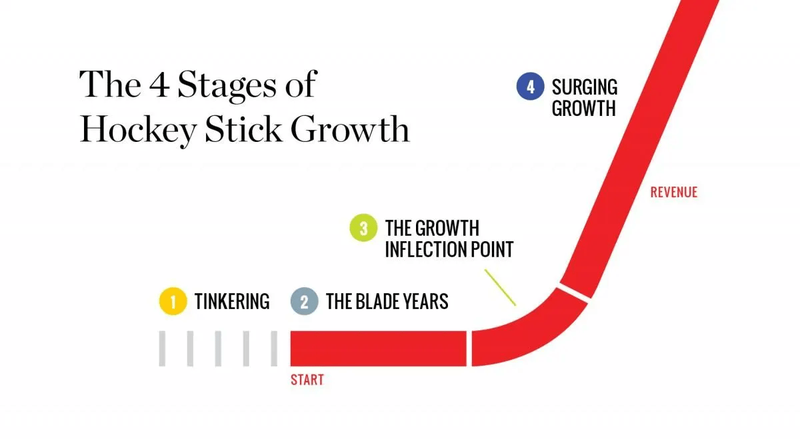
(We could be wrong of course. Plenty has to go right, but that’s the risk we are taking here)
Investment Memo 1: Harvest Technology Group (ASX: HTG)
Memo Opened: 27/05/2026
Shares Held: 61,250,000
What does HTG do?
Harvest Technology Group (ASX: HTG) has developed technology that allows for video, audio, and data to remain connected in HD over weak or unreliable networks with ~90% less data usage.
Think connectivity between control centres and remotely operated and unmanned drones, robots, boats, submarines and vehicles onto the battlefield - where conventional networks don't work.
What is the macro theme behind HTG?
Global defence budgets are at their highest levels since the Cold War.
AUKUS, the war in Ukraine, tension in the Indo-Pacific, NATO members lifting spending to 3%+ of GDP - governments are pouring money into modernising their militaries.
Modern warfare is being fought through drones, autonomous systems, ISR (intelligence, surveillance, reconnaissance) and command networks... all of which need ONE thing to work:
Secure, reliable communications that don't fall over when the enemy jams the signal or the bandwidth drops to almost nothing.
That's the problem HTG's tech is built to solve.
Our HTG Big Bet:
"HTG re-rates to a $200M+ market cap by embedding Nodestream into one or more major Western defence programs, attracting strategic interest from a defence contractor or satellite operator"
NOTE: our "Big Bet" is what we HOPE the ultimate success scenario looks like for this particular Investment over the long term (3+ years). There is no guarantee that our Big Bet will ever come true. There is a lot of work to be done, many risks involved, including technology adoption risk, defence procurement timing risk, dilution risk, and competition risk - just some of which we list in our HTG Investment Memo.
Success will require a significant amount of luck. Past performance is not an indicator of future performance.
The 8 Reasons We Invested in HTG
- HTG’s tech enables remotely operated and unmanned drones, robots, boats, submarines and vehicles
- We are backing the defence focused team
- Tired, stale shareholder base means opportunity for new Investors like us
- HTG’s tech has >500,000 operational hours and is TRL 9 certified.
- Full focus moving to defence
- HTG already has defence market traction
- ASX listed peer has gone from 30c to $7 per share on defence pivot
- Small $18M market cap - leveraged to a re-rate
What do we want to see HTG do next?
Objective #1: Land a major US or NATO defence contract
We want HTG to convert one of its current pilot/trials into a signed contract. Alternatively, we want to see HTG win new contracts outside of these trials.
Milestones:
- 🔄 CEO + CFO hires
- 🔄 Convert the existing NATO defence force trial into a paid contract
- 🔲 Sign a follow-on order with the existing Five-Eyes defence customer at a materially larger contract size
- 🔲 Contract with US defence contractors
- 🔲 Contract with EU defence contractors
Objective #2: Validate via Brave1 & Ukraine live deployment
HTG is going for Brave1 accreditation, which is Ukraine's Government-backed defence-tech cluster (testing foreign vendors in real battlefield conditions) - we want to see that convert into orders for HTG.
Milestones:
- 🔲 Secure Brave1 accreditation
- 🔲 Deploy HTG’s tech into a live Ukrainian defence-tech use case
- 🔲 Publish independent benchmarking results from Brave1 testing
Objective #3: Build out the company’s revenue base
We want HTG to turn contracts into revenues and for the business model to show up as cash on the balance sheet.
Milestones:
- 🔲 >$5M revenues in any FY.
- 🔲 >$10M revenues in any FY.
- 🔲 >$20M revenues in any FY.
- 🔲 Reach positive EBITDA
Objective #4 (BONUS): restructure/extinguish convertible notes
We want to see HTG clean up its balance sheet. Once that’s out of the way, we think the company’s share price will have more breathing room.
This one could happen at any moment and is highly dependent on where the company’s share price is, so we haven’t really put milestones around it.
What are the risks?
Capital structure risk
The single biggest risk for HTG is its balance sheet and capital structure.
HTG has ~$12.8M in convertible notes outstanding with 239M options on issue (with a weighted average share price of ~2.86c per share.
IF HTG’s market cap doesn’t re-rate to a level high enough to absorb/pay off its debts, existing shareholders could be seriously diluted.
On the other hand the 239M options mean there is also a weight on HTG’s share price when those options get in the money - so there will be a period of churn around ~3c per share.
IF the balance sheet/capital structure isn’t cleaned up through execution + cashflows then it could be a drag on HTG’s share price.
Defence procurement timing risk
Even when the defence customer is willing to buy, defence procurement cycles are notoriously slow.
NDAA compliance, Defence Federal Acquisition Regulation Supplement (DFARS), security clearances - any of these can add 6-18 months.
HTG's path to revenue depends on procurement clocks that HTG does not control.
Technology adoption risk
HTG’s tech, no matter how good can still face adoption risk.
Defence customers especially are conservative, even with TRL 9 certification, an embedded comms protocol gets rolled into a platform only after years of integration testing.
HTG could win the technical evaluation and still be 24+ months from material revenue.
Competition risk
The defence comms space has well-resourced incumbents: L3Harris, Viasat, Iridium, Speedcast (HTG's former reseller partner), General Atomics.
Most of them have orders of magnitude more salesforce and customer relationships than HTG. HTG has to compete on the protocol layer's actual technical edge - if a competitor matches the bandwidth profile, the moat narrows quickly.
Other risks
Like any small-cap defence technology company, HTG carries significant risk, here we aim to identify a few more risks.
The company is undergoing a major management overhaul and is still finalising its new, defence-focused leadership team.
If HTG struggles to successfully onboard these specialists or relies too heavily on the personal network of its Executive Chairman, execution of the new strategy could stall.
Transitioning from technical validation and small-scale pilot programs into full battlefield deployment introduces severe integration and supply chain risks.
Any software bugs or hardware manufacturing delays during this scale-up phase could permanently damage relationships with highly sensitive defence buyers.
Investors should consider these risks carefully and seek professional advice tailored to their personal circumstances before investing.
What is our Investment Strategy?
Our plan is to hold the majority of our position in HTG for 3 to 5 years which we hope is enough time to see HTG deliver on its defence pivot (see "Our Big Bet" above).
After 12 months, we will apply our standard de-risking strategy.
We may also look to sell up to 20% of our holding if the company delivers on one or more of our Investment Memo objectives and/or the share price materially re-rates.
Any sell downs will be in accordance with our trading and hold policy disclosure.
General Information Only
This material has been prepared by StocksDigital. StocksDigital is an authorised representative (CAR 000433913) of 62 Consulting Pty Limited (ABN 88 664 809 303) (AFSL 548573).
This material is general advice only and is not an offer for the purchase or sale of any financial product or service. The material is not intended to provide you with personal financial or tax advice and does not take into account your personal objectives, financial situation or needs. Although we believe that the material is correct, no warranty of accuracy, reliability or completeness is given, except for liability under statute which cannot be excluded. Please note that past performance may not be indicative of future performance and that no guarantee of performance, the return of capital or a particular rate of return is given by 62C, StocksDigital, any of their related body corporates or any other person. To the maximum extent possible, 62C, StocksDigital, their related body corporates or any other person do not accept any liability for any statement in this material.
Conflicts of Interest Notice
S3 and its associated entities may hold investments in companies featured in its articles, including through being paid in the securities of the companies we provide commentary on. We disclose the securities held in relation to a particular company that we provide commentary on. Refer to our Disclosure Policy for information on our self-imposed trading blackouts, hold conditions and de-risking (sell conditions) which seek to mitigate against any potential conflicts of interest.
Publication Notice and Disclaimer
The information contained in this article is current as at the publication date. At the time of publishing, the information contained in this article is based on sources which are available in the public domain that we consider to be reliable, and our own analysis of those sources. The views of the author may not reflect the views of the AFSL holder. Any decision by you to purchase securities in the companies featured in this article should be done so after you have sought your own independent professional advice regarding this information and made your own inquiries as to the validity of any information in this article.
Any forward-looking statements contained in this article are not guarantees or predictions of future performance, and involve known and unknown risks, uncertainties and other factors, many of which are beyond our control, and which may cause actual results or performance of companies featured to differ materially from those expressed in the statements contained in this article. S3 cannot and does not give any assurance that the results or performance expressed or implied by any forward-looking statements contained in this article will actually occur and readers are cautioned not to put undue reliance on forward-looking statements.
This article may include references to our past investing performance. Past performance is not a reliable indicator of our future investing performance.