
IVR’s Paris silver project in South Australia shows $1.15BN pre-tax NPV, 93% IRR, 11 month payback... and the silver price is rising
Disclosure: S3 Consortium Pty Ltd (the Company) and Associated Entities own 14,172,426 IVR Shares at the time of publishing this article. The Company has been engaged by IVR to share our commentary on the progress of our Investment in IVR over time. This information is general in nature about a speculative investment and does not constitute personal advice. It does not consider your objectives, financial situation, or needs. Any forward-looking statements are uncertain and not a guaranteed outcome.
The Definitive Feasibility Study arrived on Friday.
An institutional $55M funding round has been confirmed today - early construction works on the silver mine can commence.
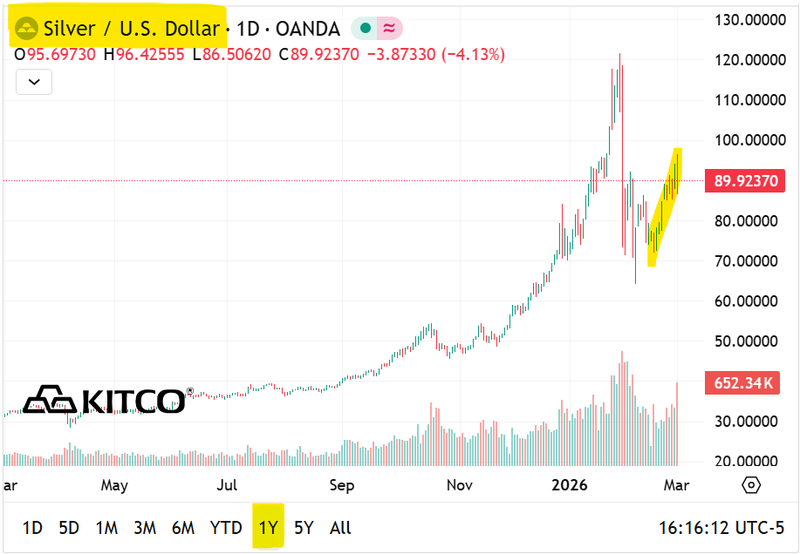
Silver is on the move up again - up 25% in the last two weeks.
And the trading halt has been lifted this morning...
Investigator Silver (ASX:IVR) has made two big steps forward in building Australia’s only pure play silver mine over recent days.
Last Friday, IVR went into a trading halt and delivered its Definitive Feasibility Study (DFS) for its Paris silver project in South Australia.
The DFS demonstrates a high-margin, finance-ready silver development project with strong leverage to the silver price and a practical near-term pathway to silver production.
The headline economic number was a $1.15BN pre-tax NPV using a US$80 silver price (more on this in a second).
And today IVR confirmed a $55M institutional capital raise has been completed at 8.6c/share.
IVR’s major holder Jupiter Asset Management (who held 14% of IVR before this raise) participated in the new round.
We did too (we bid $100k and got $39k - telling us the round was substantially overbid).
With a strengthened balance sheet (as well as the new $55M, IVR also had ~$13M cash at the end of last quarter), IVR has made an immediate shift into execution mode.
IVR is now funded to a Final Investment Decision on building its silver mine.
The new capital will allow IVR to move fast in the next level of engineering and approvals readiness, and it can start early stage construction works aimed at bringing forward first silver production.
We Invested in IVR because we think it could be one of the few companies to get its silver project financed, developed and into production during the current silver bull run.
(assuming silver keeps going, which we think it will)
IVR owns 100% of the 57M ounce Paris silver project in South Australia - one of Australia’s highest grade, pure play silver projects.
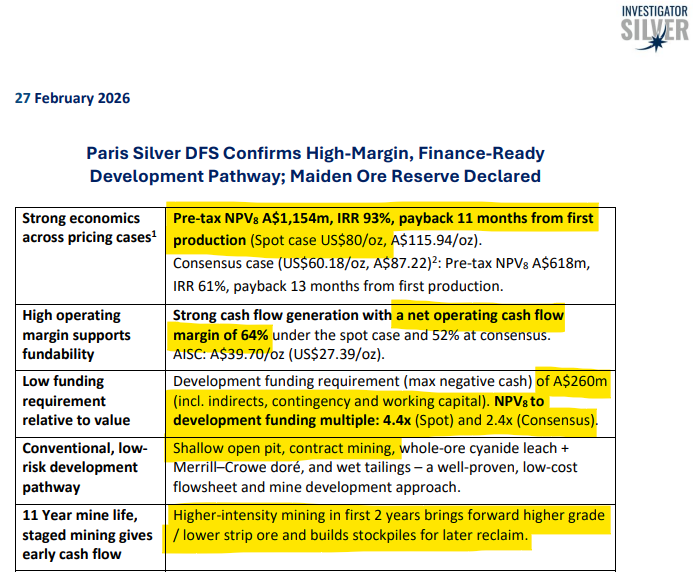
On Friday, IVR’s DFS demonstrated:
- Pre-tax Net Present Value (NPV) of A$1.154BN,
- CAPEX of A$260M,
- Internal Rate Of Return (IRR) of 93%,
- And an 11-month payback on the CAPEX of just 11 months from first production.
Over the 11 year mine life, the project is capable of generating ~$1.86BN in free cash.
Those economics are based on an US$80 silver price.
(Silver is currently trading at ~US$90 per ounce)
(source)
For every US$1/oz increase in the silver price the project’s NPV increases by ~A$27M.
At the cap raise price of 8.6c per share IVR will be capped at ~A$225M with ~$68M in cash ($55M capital raised and $13M cash at 31 Dec 2025).
So, every time the silver price goes up US$1 per ounce, IVR’s project’s NPV increases by more than ~1/10th of its current market cap.
And silver is trading at ~US$90 per ounce ...
(at ~US$90 per ounce that’s $270M more in pre-tax NPV versus IVR’s US$80 silver scenario)
(source)
The past performance is not and should not be taken as an indication of future performance. Caution should be exercised in assessing past performance. This product, like all other financial products, is subject to market forces and unpredictable events that may adversely affect future performance.
The next big things we will be looking out for from IVR will be:
- Permitting,
- Financing of the ~$A260M CAPEX, likely via a combination of debt and equity,
- High density drilling to derisk production startup,
- Execution readiness pre Final Investment Decision, and;
- Ongoing project optimisation.
Now armed with its DFS, IVR can show potential project financiers in detail its plans, in order to secure whatever debt/equity funding mix is needed to get the project built.
We spent the weekend poring over IVR’s 128 page DFS document. Today we’ll cover our key takeaways from it including:
- Why IVR is front loading high grade silver material in the mine plan.
- Why IVR is building up stockpiles FAST
- The project's conventional, well-trodden processing pathway (lowering technical risk)
- The recent pit optimisation work isn’t in this DFS ...yet
- And how we think IVR could bring down its overall CAPEX number.
Ultimately, we want to see IVR capitalise on the current bullish silver environment and secure financing for its project - while the silver price is high and capital is willing to back projects into development.
With IVR, we are backing IVR’s MD, Lachlan Wallace, to get the job done.
Lachlan is the former CEO and MD of Hillgrove Resources where he led the design, permitting, financing and restart of the Kanamantoo copper mine, also in South Australia.
Lachlan is a mining engineer by background - exactly what’s needed for a company at the stage IVR is at.
Hillgrove’s mine was the most recent mining project to get permitted and brought into production in South Australia.
So Lachlan should know a thing or two about the permitting regime in South Australia.
Hopefully, Lachlan makes it 2 out of 2 with IVR.
And in IVR, we think he has the right asset with which to get it done.
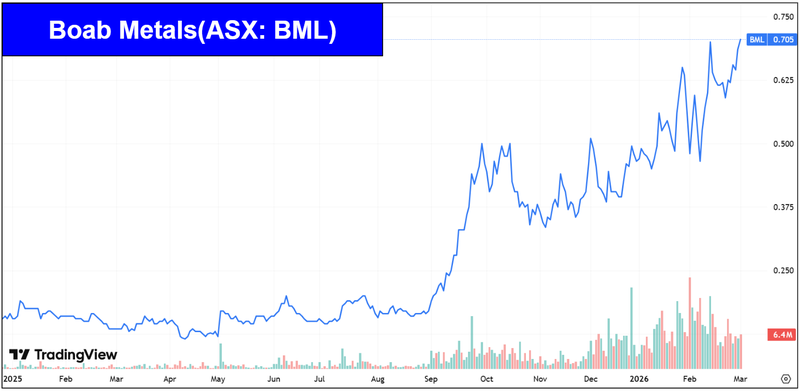
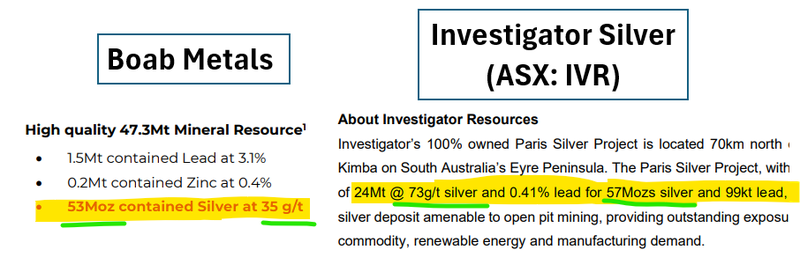
We have seen ASX-listed silver peer Boab Metals get its financing sorted for a project with 4M less silver ounces in resource, at less than half the grade.
Boab’s share price is up 250% over the last 7 months:
(source)
The past performance is not and should not be taken as an indication of future performance. Caution should be exercised in assessing past performance. This product, like all other financial products, is subject to market forces and unpredictable events that may adversely affect future performance.
Here are the two projects' resources side by side:
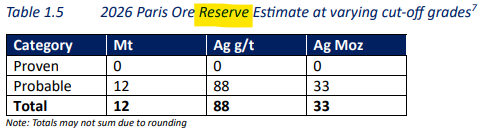
Also in Friday’s DFS announcement, IVR also put out a maiden ore reserve for its project.
Ore reserves are the most de-risked resource estimation category.
The ore reserve came in with even higher grades at 88g/t silver for over half the projects resource:
(source)
Higher grades and a more de-risked resource estimate is exactly what we would want to see going into the project financing stage.
Surely, if the market is willing to finance Boab’s project into development...
Then IVR, whose project is bigger and higher grade should also be just as backable...
Coming back to today’s DFS.
It's a monster 128 page document - we have spent the last few days going over it, and as always there are some solid nuggets of information buried inside.
Aside from the headline economics on the first few pages that confirm a high margin, finance ready asset, here’s some other key takeaways that might not be obvious on first glance.
Here are our 5 key takeaways from IVR’s DFS
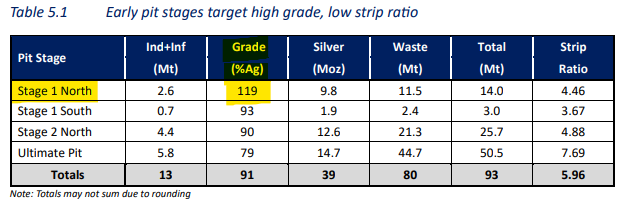
1. IVR is front loading high grade silver material in the mine plan.
It looks like a big part of the IVR strategy to make the project more attractive to financiers is to increase the upfront capital investment in order to get to the highest grade ore as quickly as possible.
The DFS says IVR’s development strategy will see “head grades averaging 131g/t Ag over the first two years of processing, compared with the average LOM head grade of 91 g/t Ag”.
(source)
Anyone who has ever seen their Investments go from development stage into production will know the production ramp up in the first 2-3 years are the scariest times to hold onto your stock.
We like that IVR is already thinking about that ramp-up stage and has prioritised bulletproofing those first few years of production.
(we assume financiers will also appreciate that forward thinking)
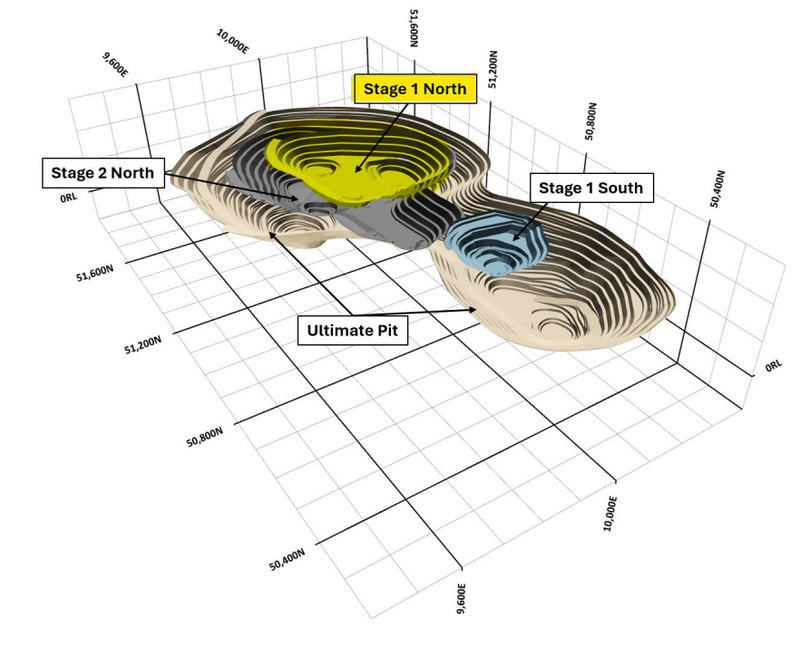
Here is that staged mining approach in visual format:
(source)
2. IVR is focusing on building up stockpiles FAST
IVR’s development plan is also focused on stockpiling low grade material (that still contains recoverable, payable, silver) far beyond the project’s processing capacity.
It looks like IVR wants to have some material ready for processing beyond capacity, so that if there are any delays to mining, processing is unaffected (again tackling potential ramp-up issues head first).
A major positive is that those stockpiles can be tapped whenever there are mining delays.
AND a major secondary benefit is that IVR will have stockpiles it can point to as real, ready to go material - what IVR is calling “net realisable value” in its DFS.
By the end of the first year of processing, forecast low-grade stockpiles contain ~1.3 Moz of recoverable payable silver.
The DFS says that IVR would have “net realisable value” in its stockpiles of ~$120M in year 3 and ~$493M by the end of year 5. (all of this is based on US$80 silver prices)
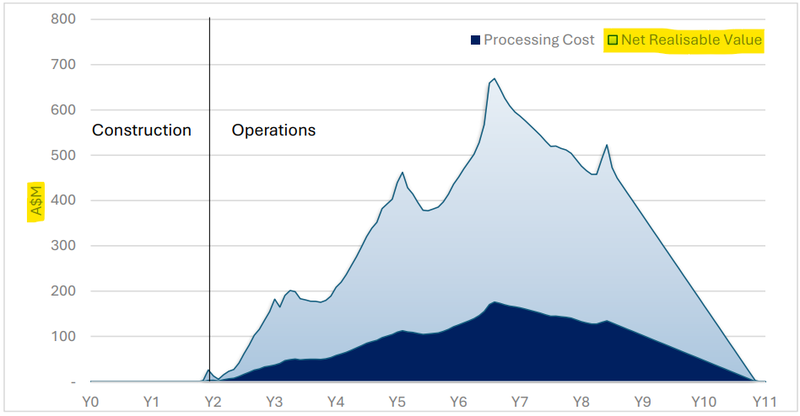
(source)
So this strategy sees IVR going hard from day one building low grade stockpiles.
From a financier perspective it offers tangible value to mitigate any ramp-up concerns they might have.
Again, this one seems to us like something financiers would love to see in a DFS from a pre revenue development company.
3. Conventional, well-trodden processing pathway = lower technical risk
Simple, well understood, tried and tested processing is best when it comes to mining processing flowsheets.
Exactly what we want to see as Investors - and what financiers will be wanting to see.
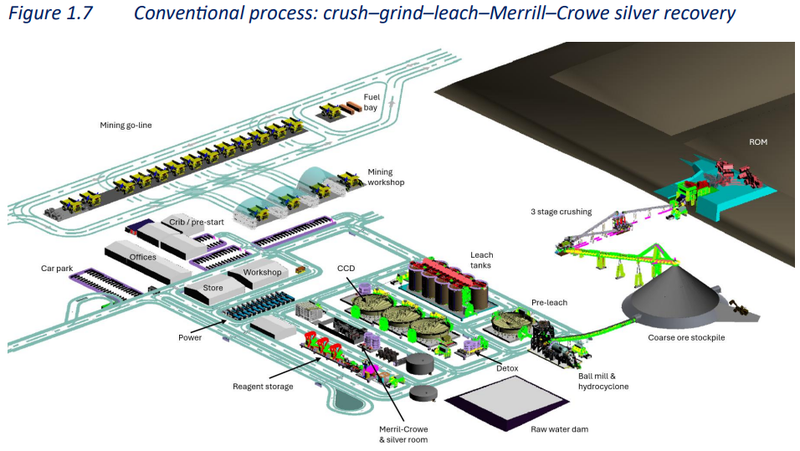
(source)
4. Recent pit optimisation work isn’t in this DFS... yet
Late last year, IVR “found” an additional 13M ounces of silver to bring into its mine plan by optimising its pit designs. (Source)
The 13M ounces of silver at today’s silver price would be an extra ~US$1.17BN in silver.
(remember of course never take that kind of dollar figure of number at face value. It costs money to get silver out of the ground and takes years to do, and over that time the silver price can vary)
The extra 13M ounces of silver would also increase the current resource by ~23%.
None of that silver in the optimised pit shell is in today’s DFS.
So we think there is still potential to upgrade the silver production profile being modelled in today’s DFS.
Below is the “optimised pit shell” IVR had redesigned to get those extra ounces. The grey areas are the optimised pit shell and the yellow what IVR is using in today’s DFS - it looks like two wings either side of the pit circled in green is where IVR is mainly getting those extra ounces from.
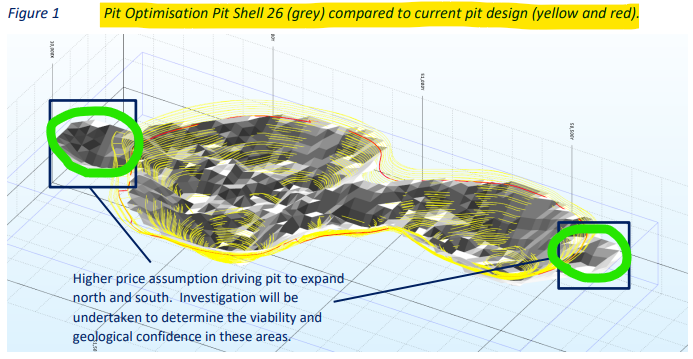
(source)
5. We think there is scope to bring down the overall CAPEX estimate.
The top three costs in IVR’s CAPEX numbers are “Mining Pre-strip”, “Contingency” and “Power”.
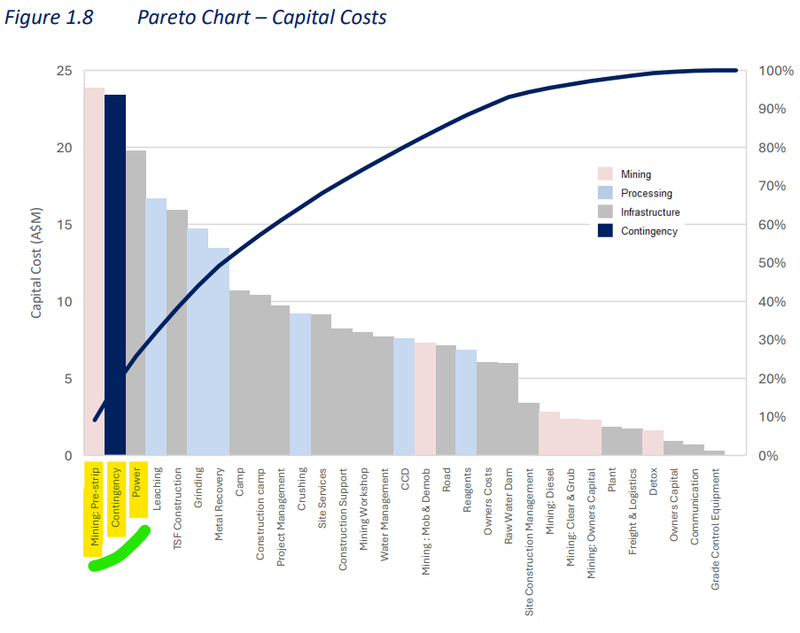
(source)
We think there could be a few easy wins for IVR to reduce the DFS CAPEX estimate.
The second biggest cost is “contingency” - while this is a standard inclusion in feasibility studies this is also the easiest to try and find cost savings when a study moves from the desktop into actually being executed.
The other one is power costs.
IVR confirmed in today’s announcement that during the Front End Engineering Design (FEED), IVR would look at third party energy providers to reduce upfront CAPEX and reduce execution/operating risks.

(source)
Overall it feels to us like IVR has put together a very robust study with a lot of redundancy - again something financiers will want to see.
No one likes unwanted surprises and to us it looks like IVR has its bases covered and is ready to move quickly into the financing stage.
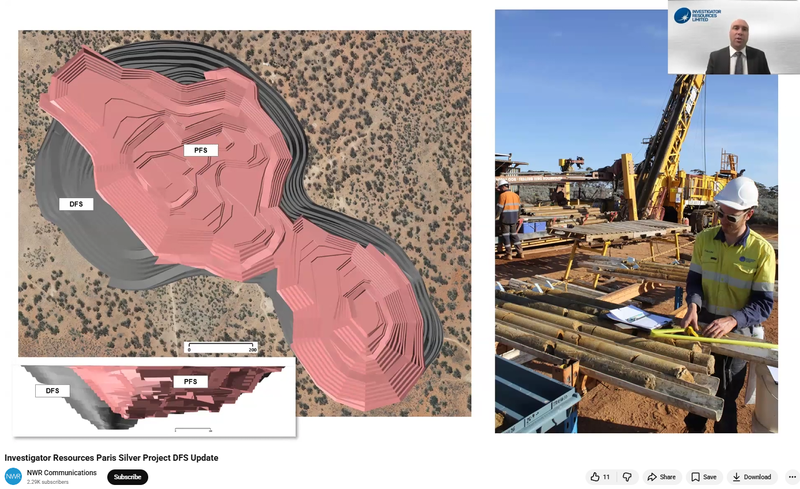
In one of his first webinars after becoming MD of IVR, Lachlan said he was going to bulletproof the DFS from a funding perspective.
Here is what Lachlan said in that webinar word for word:
”So the mission here is not really just to publish a DFS on its own, but it's to produce a plan that I can take directly to financiers. So the mine plan has already been stress tested against their benchmarks and stands up as a financeable plan from day one”
(source)
Clearly, the study has been put together to present to potential financiers who would fire away the typical due diligence questions they have about confidence in a resource and processing risks during ramp-up, etc.
All problems that IVR’s DFS has (hopefully) already answered.
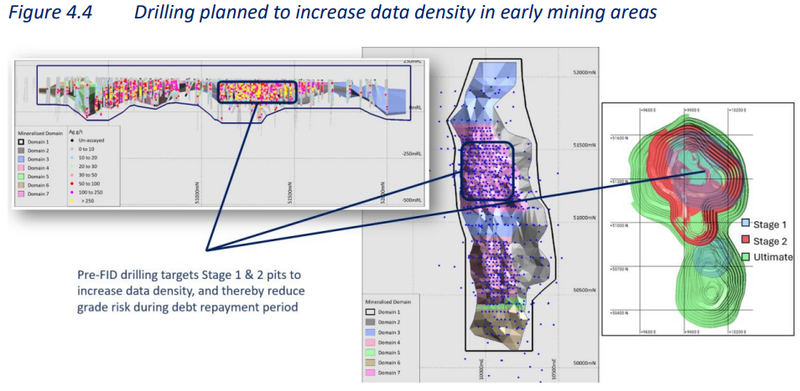
We also liked that IVR also addressed one of the risks to the project by committing to another round of “grade control” drilling around its high-grade sections.
Grade control drilling is essentially reducing space between drillholes and checking to see that the silver continues in those gaps.
So again, IVR can take its resource to financiers and say ‘here is how confident we are in our resource’.
Here is where that drilling will be focused:
(source)
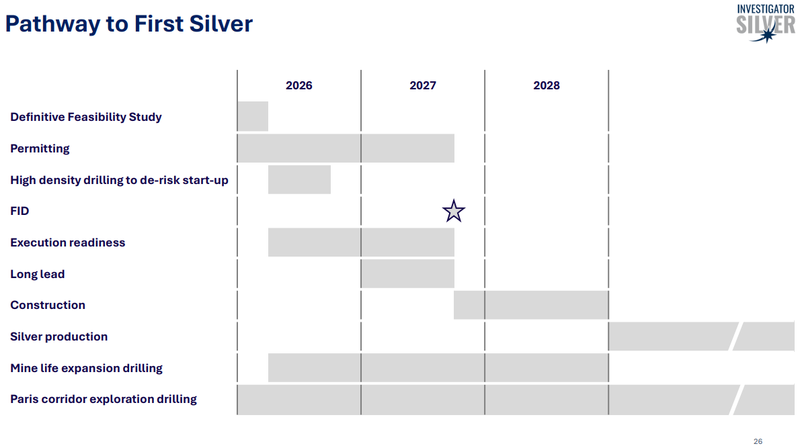
So now, over the next 18 months, while IVR works on permitting and project financing, we will get to see another round of drilling on the project.
Here is the Gantt chart IVR had in today’s presentation announcement, with when to expect key milestones to arrive:
(source)
Exploration is also a part of the IVR story
Even though IVR’s project is advanced and the next major catalysts will be related to project development, we think exploration upside is still in play for the company.
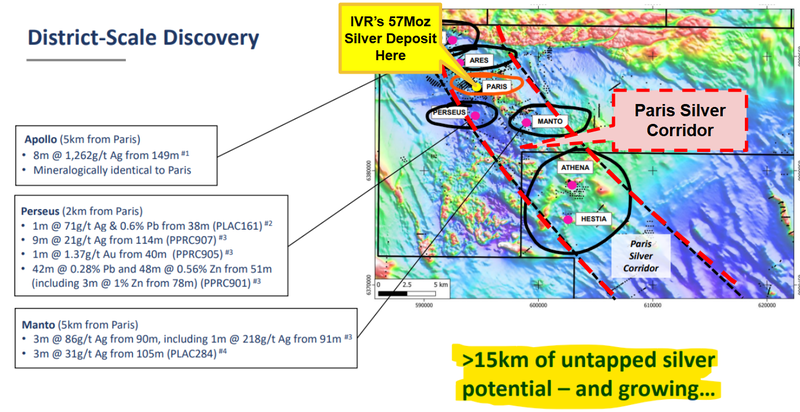
IVR holds ground to the south-east of its deposit, where any new major discoveries, especially if they are high grade, could be plugged into the front end of a development plan and further improve the economics of a development scenario.
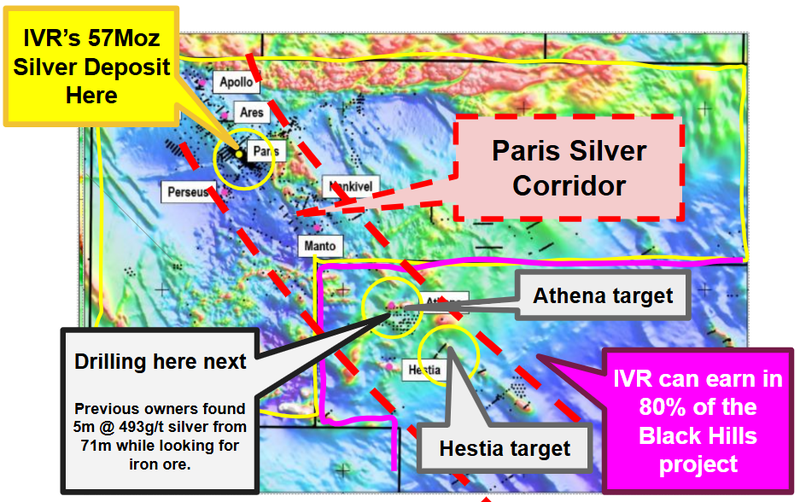
IVR has dubbed it the “Paris Silver Corridor” - over 15km of untapped silver potential.
New discoveries could extend the 7 years of mining (and 11 years of processing) that IVR has planned under the DFS.
Both high grade tonnage and longer life mines are what potential financiers want to see - first because higher grades early in the mine life mean a quicker payback on development CAPEX, and second because a longer mine life de-risks the project over the long run.
(source)
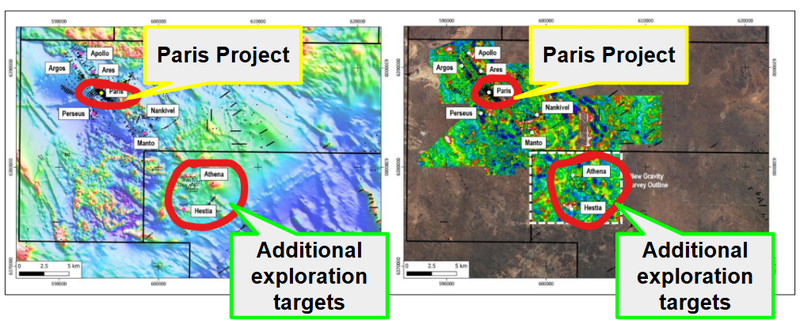
IVR recently added two new high-priority targets (Athena and Hestia) to its portfolio of regional exploration targets.
The Athena prospect was previously drilled in 2012 and 2013, mostly with no testing of the surrounding geology for precious metals.
Later re-assays from those holes returned intercepts like 5m at 493g/t silver from 71m.
Since then, the prospects haven’t really been explored (especially for silver).
(Source)
At the Apollo prospect, to the north of the Paris deposit, IVR has hits as high as 8m @ 1,262g/t Ag from 149m.
So, the “Paris Silver Corridor” presents the company with many exploration opportunities as it advances the Paris deposit through to production.
(Source)
While the focus now is on getting the Paris Silver Project into production, we think exploration will play a big role in future proofing the project IF/When IVR can get its project into production.
8 reasons why we Invested in IVR
We first Invested in IVR on the 3rd of October 2025.
Here are the 8 reasons why we Invested from that initiation note (we have included updates for anything that has changed since then).
1. IVR has one of the highest-grade silver projects in Australia
IVR’s project has an estimated 57M ounces of silver at an average grade of 73g/t.
That makes it one of the highest grade primary silver deposits in Australia.
Update: IVR also announced a maiden ore reserve to go with its DFS today.
An ore reserve is the highest confidence classification for a resource estimate - usually the “lowest risk” from an estimation point of view.
IVR’s reserves are 12mt at 88g/t silver for 33M ounces of silver.
(source)
2. IVR project is at the advanced DFS stage
It is hard enough to go and make a mineral discovery, it is even harder to get a mine into production.
For the DFS stage companies that are in the market during a hot commodity cycle, securing project financing can become a whole lot easier.
We like that IVR is at this DFS stage and it can potentially be one of those companies that ‘survives the cycle’ and becomes a mine during this current silver bull run.
We also think that with a running silver price, IVR’s DFS could surprise the market to the upside in terms of project economics.
Update: Today IVR released the DFS with the following project economics:
- Pre-tax NPV8 of A$1.1BN, 93% IRR, and rapid 11-month payback from first production.
- A$260 million development funding requirement, A$39.70/oz AISC, and a 64% operating margin.
- 33 Moz Maiden Ore Reserve, 11-year mine life, and 30 Moz total silver production in doré.
3. We are investing alongside Jupiter Asset Management
Jupiter Asset Management owned 14% of IVR (before today’s capital raise - that they also went into) and we are following them into the story.
Jupiter is a huge resources fund out of the UK with over £47.1 billion in assets under management.
We have had success investing alongside Jupiter with another silver story Mithril Silver & Gold, which is up 515% from our Initial Entry Price.
Also, Jupiter came into one of our recent silver picks Rapid Critical Metals which is up 111% since our Initial Entry Price.
(past performance is not an indicator of future performance)
Jupiter have been major holders in IVR for years now and have followed their money into IVR’s capital raises - including the most recent one.
Update: IVR confirmed Jupiter Asset Management once again invested in this latest funding round.
4. We think silver could go on a ‘once in a generation’ run to new highs
Silver is now at 14 year highs, and we think it's about to go on a “once in a generation” run to new all time highs... taking all silver stocks with it.
(no guarantees, past performance is not a reliable indicator of future performance)
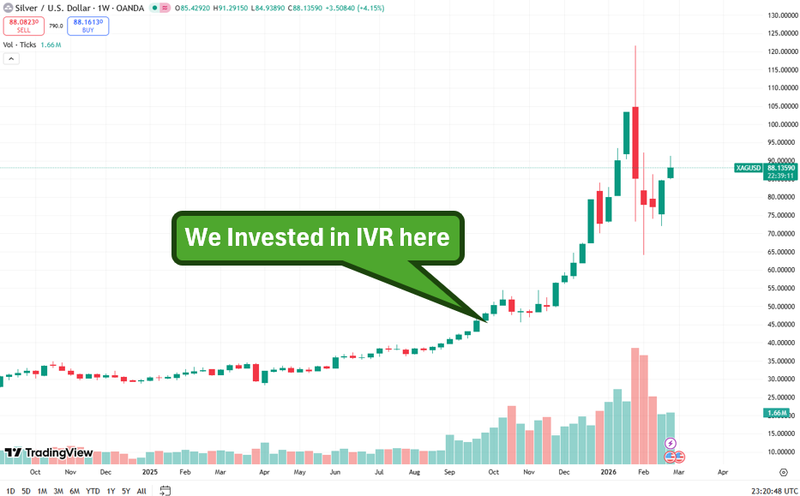
Update: When we Invested in IVR, the silver price was trading at around US$50 per ounce.
Since then, it has run as high as roughly US$125 per ounce and is now trading at US$88 per ounce.
(source)
The past performance is not and should not be taken as an indication of future performance. Caution should be exercised in assessing past performance. This product, like all other financial products, is subject to market forces and unpredictable events that may adversely affect future performance.
5. Very few silver stocks on ASX
There are very few silver stocks on the ASX.
Even less ‘pure play’ silver stocks.
If silver runs, there could be a lot of capital chasing silver exposure in only a handful of names.
This scarcity could mean valuations run from where they are now.
6. Exploration upside (three projects that haven’t been systematically drilled)
IVR just did a deal on the ground next door to its 57M ounce JORC resource estimate.
IVR now has a 15km corridor of exploration targets where it can look to make repeat discoveries (similar to its existing deposit).
Drilling so far has shown district scale potential.
7. IVR’s project being designed to work even in the event of a lower silver price
IVR updated its project's resource in 2023 and started working on its Definitive Feasibility Study (DFS) later that year.
The study started when silver prices were trading in the mid US$20 per ounce.
That means IVR has been designing the project to work in a low silver price environment.
The silver price is now more than double where it was when IVR started its DFS.
Update: IVR’s DFS had an overall project All In Sustaining Cost (AISC) of US$27.39 per ounce.
AISC defines the long-run cost to produce from IVR’s project. So technically, IVR’s project should be economically feasible in any scenario where silver is above ~US$28 per ounce.
8. IVR’s new MD has brought an asset online in South Australia before
Lachlan was previously Managing Director of ASX-listed Hillgrove Resources where he led the design, permitting, financing and restart of the Kanamantoo copper mine...
That project is also in South Australia ~60km south east of Adelaide.
So he knows his way around permitting in South Australia.
We are backing Lachlan to do it all again with IVR’s project, also in South Australia.
Ultimately, we want to see IVR achieve our Big Bet which is as follows:
Our IVR Big Bet:
“IVR takes advantage of the high silver price environment and puts its project into production. At that point, we would expect IVR to be capped at multiples of our Initial Entry Price”
NOTE: our “Big Bet” is what we HOPE the ultimate success scenario looks like for this particular Investment over the long term (3+ years). There is no guarantee that our Big Bet will ever come true. There is a lot of work to be done, many risks involved, including development risk, country risk and commodity price risk - just some of which we list in our IVR Investment Memo.
Success will require a significant amount of luck. Past performance is not an indicator of future performance.
What comes next for IVR?
Permitting of the Paris Silver Project 🔄
Now that the DFS is published, we will be watching IVR go through all of the permitting workstreams on its project.
We especially want to see the project get a mining licence and an environmental permit granted for the project as soon as possible.
Here are the milestones we are tracking:
- 🔄 Environmental permits
- 🔄 Project infrastructure permits
- 🔄 Mining licence granted
Project financing 🔄
Now that the DFS is published the next major catalyst for IVR will be project financing.
While permitting is progressing, we want to see IVR make progress debt/equity financing commitments for the project CAPEX of A$260M.
Grade control drilling 🔄
We want to see IVR complete infill drilling at its resource and upgrade the resource in terms of classification.
Drilling on regional targets 🔄
We also want to see IVR drill out the 15km corridor of targets that sit around its 57M ounce JORC resource estimate.
The ultimate success from these drill programs would be a discovery similar to IVR’s existing resource.
IVR expects to be drilling on these targets in the first half of next year (source).
Here are the milestones we are tracking:
- ✅ Geophysics/Geochemistry work
- ✅ Identify drill targets
- 🔲 Drilling starts
- 🔲 Drilling results
What are the risks?
In the short term, the key risk is “commodity price risk”.
IVR’s share price will likely fluctuate with movements in the silver price.
If silver’s breakout is only temporary and the price starts falling dramatically, then capital could flow out of silver stocks in general which would impact IVR’s share price negatively.
Commodity price risk
The performance of commodity stocks are often closely linked to the value of the underlying commodities they are seeking to extract. Should silver prices fall, this could hurt the IVR share price.
Source: “What could go wrong” - IVR Investment Memo 03-Oct-2025
Other risks
Like any stock market investment, investing in IVR carries a range of risks that may affect the company’s value. Some risks are identifiable, while others are unpredictable.
IVR’s main asset is the Paris Silver Project in South Australia. It is at the Definitive Feasibility Study (DFS) stage but is not yet a producing mine. There is a risk the project never reaches production.
The company is pre-revenue and reliant on raising capital to fund development. Any equity raise may dilute existing shareholders, and debt funding may not be available on favourable terms.
Permitting and approvals pose another risk. Mining licences and environmental permits can take longer than expected or face objections that delay project timelines.
Development risk is also material. Building a mine involves technical, financial, and operational challenges. Cost overruns or delays could hurt the share price.
IVR’s share price has already moved with silver’s recent strength. Current levels may partially reflect anticipated upside, increasing the risk of pullbacks if silver softens or milestones slip.
Finally, market and macro risks apply. A downturn in equity markets or sentiment towards junior explorers could weigh on IVR regardless of company progress.
Investors should carefully consider these risks and seek professional advice before making an investment decision.
Our IVR Investment Memo
You can read our IVR Investment Memo in the link below.
We use this memo to track the progress of all our Investments over time.
Our IVR Investment Memo covers:
- What does IVR do?
- The macro theme for IVR
- Our IVR Big Bet
- What we want to see IVR achieve
- Why we are Invested in IVR
- The key risks to our Investment Thesis
- Our Investment Plan
General Information Only
This material has been prepared by StocksDigital. StocksDigital is an authorised representative (CAR 000433913) of 62 Consulting Pty Limited (ABN 88 664 809 303) (AFSL 548573).
This material is general advice only and is not an offer for the purchase or sale of any financial product or service. The material is not intended to provide you with personal financial or tax advice and does not take into account your personal objectives, financial situation or needs. Although we believe that the material is correct, no warranty of accuracy, reliability or completeness is given, except for liability under statute which cannot be excluded. Please note that past performance may not be indicative of future performance and that no guarantee of performance, the return of capital or a particular rate of return is given by 62C, StocksDigital, any of their related body corporates or any other person. To the maximum extent possible, 62C, StocksDigital, their related body corporates or any other person do not accept any liability for any statement in this material.
Conflicts of Interest Notice
S3 and its associated entities may hold investments in companies featured in its articles, including through being paid in the securities of the companies we provide commentary on. We disclose the securities held in relation to a particular company that we provide commentary on. Refer to our Disclosure Policy for information on our self-imposed trading blackouts, hold conditions and de-risking (sell conditions) which seek to mitigate against any potential conflicts of interest.
Publication Notice and Disclaimer
The information contained in this article is current as at the publication date. At the time of publishing, the information contained in this article is based on sources which are available in the public domain that we consider to be reliable, and our own analysis of those sources. The views of the author may not reflect the views of the AFSL holder. Any decision by you to purchase securities in the companies featured in this article should be done so after you have sought your own independent professional advice regarding this information and made your own inquiries as to the validity of any information in this article.
Any forward-looking statements contained in this article are not guarantees or predictions of future performance, and involve known and unknown risks, uncertainties and other factors, many of which are beyond our control, and which may cause actual results or performance of companies featured to differ materially from those expressed in the statements contained in this article. S3 cannot and does not give any assurance that the results or performance expressed or implied by any forward-looking statements contained in this article will actually occur and readers are cautioned not to put undue reliance on forward-looking statements.
This article may include references to our past investing performance. Past performance is not a reliable indicator of our future investing performance.