ION: Critical Minerals recycling tech - punished for no news? Well it’s back now...
Disclosure: S3 Consortium Pty Ltd (the Company) and Associated Entities own 21,953,727 ION Shares and the company’s staff own 460,000 ION Shares at the time of publishing this article. The Company has been engaged by ION to share our commentary on the progress of our Investment in ION over time. This information is general in nature about a speculative investment and does not constitute personal advice. It does not consider your objectives, financial situation, or needs. Any forward-looking statements are uncertain and not a guaranteed outcome.
We think critical minerals recycling/processing tech companies could be the biggest winners from the east/west divide in critical minerals markets.
(and where the next big wave of capital is flowing to next in the US).
We expect to see more and more deals like the one from earlier this week - US$600M from the US Export Import Bank and Export Finance Australia for a rare earths refinery in WA. (source)
Our exposure to the critical minerals recycling theme is Iondrive (ASX:ION).
ION is developing Deep Eutectic Solvents (DES) recycling tech (which it's also applying to critical minerals processing for mining companies).
It sounds complicated, but it's essentially just applying biodegradable, benign solvents to recover metals and critical minerals.
ION has an exclusive worldwide license for the technology developed by the University of Adelaide.
Today ION announced rare earths recovery rates (>90%) from its tech on ~250kg of end of life magnet materials - recovering neodymium (Nd) and praseodymium (Pr) the main inputs for rare earth magnets.
More on those results in a second - but first...
What’s happened with ION’s share price lately?
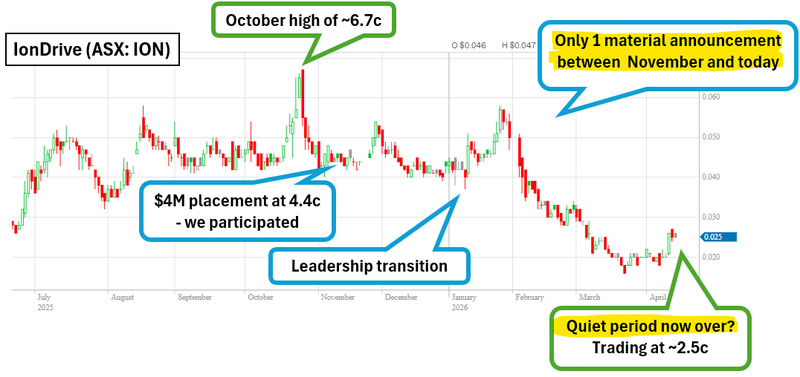
In November last year, ION raised $4M at 4.4c. We participated in this raise, alongside existing investors, well known institutions, and family offices on at least a pro rata basis, plus one new institution joining the register...
Since then the share price got as low as 1.6c, and is now at ~2.5c per share.
Why did the share price go down?
It’s our view that the market has recently punished ION for its lack of material news since the capital raise, especially considering the pilot plant being built was meant to be up and running early this year.
The markets are impatient and hate silence... ‘no news’ can be viewed as ‘bad news’ by the market.
Especially if there’s delays to previously communicated timelines for no reason.
That changed today - this morning ION delivered two material announcements and a new investor presentation... So is the quiet period now over?
ION is currently capped at $32M and had $8.4M cash at 31 December 2025.
The past performance is not and should not be taken as an indication of future performance. Caution should be exercised in assessing past performance. This product, like all other financial products, is subject to market forces and unpredictable events that may adversely affect future performance.
This newsflow comes just as everything heats up in the critical minerals space again - especially related to processing and recycling...
What’s become clear over recent months, following the news and the flow of capital, is that the US is trying to rebuild a circular critical minerals supply chain of its own in the West - especially for rare earths.
No surprise really - rare earths are used in high performance magnets, defence & aerospace, the green energy transition and electronics - and China dominates the entire supply chain and has implemented sweeping export controls.
And a few months ago US Secretary of State Marco Rubio hosted a conference with allies and explicitly mentioned the focus being a “whole of supply chain” fix for the critical minerals in the West. (source)
The US started by throwing billions of dollars at the rare earth miners first - a US$400M deal between the US government and $15BN MP Materials - the USA’s only rare earths miner. (source)
Then more recently the US government has been offering capital into processing projects via coordinated letters of support or interest. This week, there was the US$600M in potential financing announced for a rare earths refinery. (source)
We think the next critical minerals sector that government funding could target is in the recycling space.
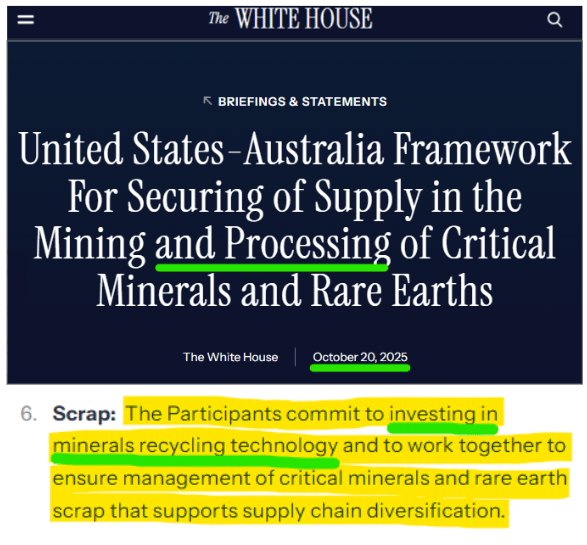
Minerals recycling technology was explicitly mentioned in the US$8.5BN US-Australia ‘framework’ signed in October last year:
(source)
There were also more explicit mentions of the minerals recycling sector in December with the U.S. Department of Energy making US$134M available to projects that recover rare earths from mine tailings and electronics. (source)
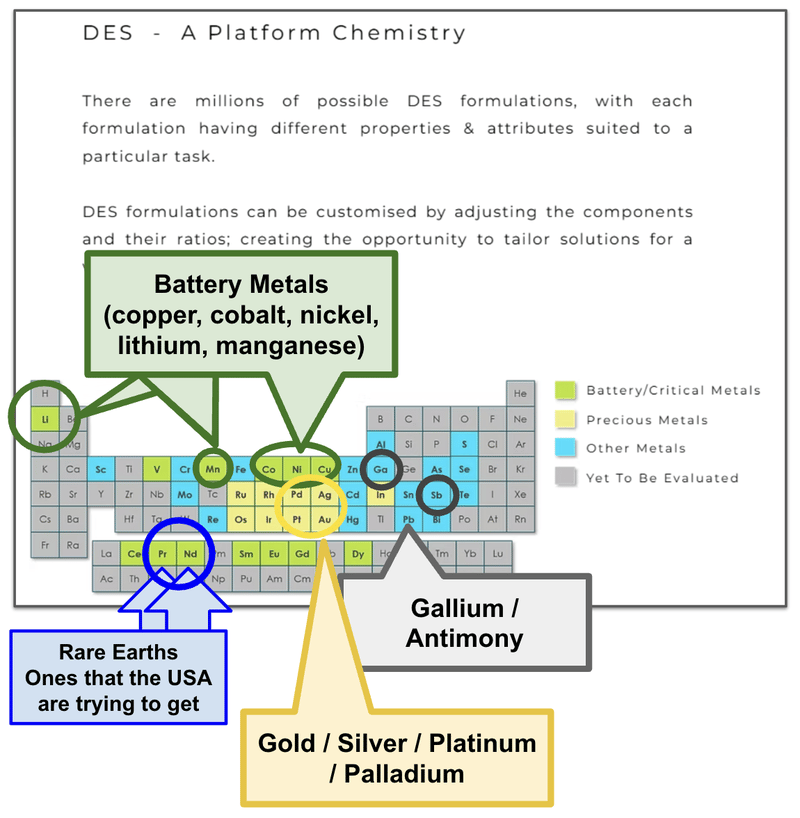
Our Investment ION’s Deep Eutectic Solvents (DES) recycling technology can recover valuable metals and minerals like:
Rare earths, copper, gold, cobalt, lithium, gallium, silver and antimony...
from things like e-waste, printed circuit boards and solar panels.
Here is a list of everything ION’s tech could be applied to:
(source)
Note: the above chart shows metals amenable to Deep Eutectic Solvent chemistry in general, and have not necessarily been specifically tested by ION.
ION is currently building a pilot plant - focused on recovering nickel, lithium, cobalt and graphite from waste batteries - with the plant expected to be commissioned by Q4 of this year.
BUT the announcement that really caught our attention today was the rare earths one.
Within the last 12 months, ION has already signed a binding agreement for rare earths recycling in the USA with “Colt Recycling” - one of the USA’s largest and most advanced eWaste recycling companies.

(source)
In the US alone, Colt processes ~40 million lbs (18 million kilograms) of eWaste every year.
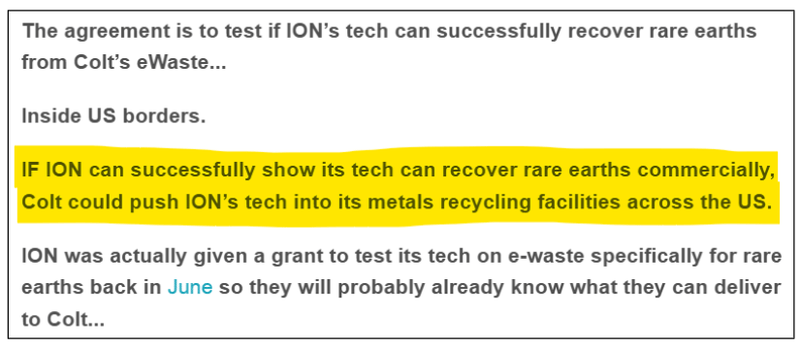
That agreement signed in September was to test if ION’s tech can successfully recover rare earths from Colt’s eWaste.
We said the following in our note last year on that news:
“IF ION can successfully show its tech can recover rare earths commercially, Colt could push ION’s tech into its metals recycling facilities across the US”. (source)
(source - our September note)
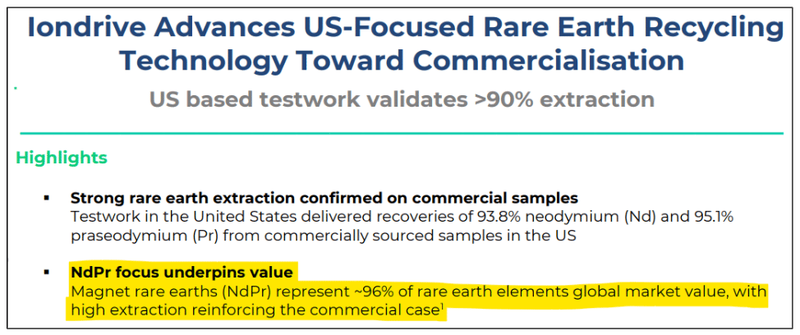
And today, ION announced that its tech had been tested on “end-of-life permanent magnet materials”.
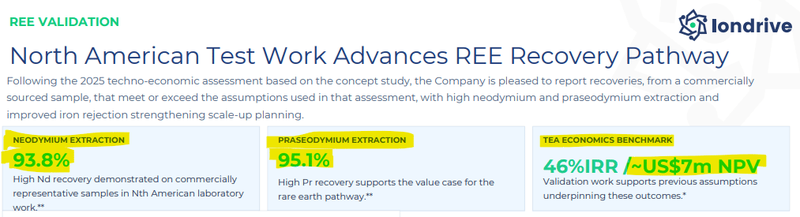
ION’s tech returned recoveries of 93.8% neodymium (Nd) and 95.1% praseodymium (Pr) from commercially sourced samples in the US.
(Nd and Pr are the more valuable magnet rare earths found in EVs - they are 96% of rare earth elements global market value, and are found in wind turbines plus defence and robotics markets).
(source)
So now, ION’s got that binding agreement with Colt & data to back up any discussions the two companies might be having about rolling out ION’s tech across its recycling network.
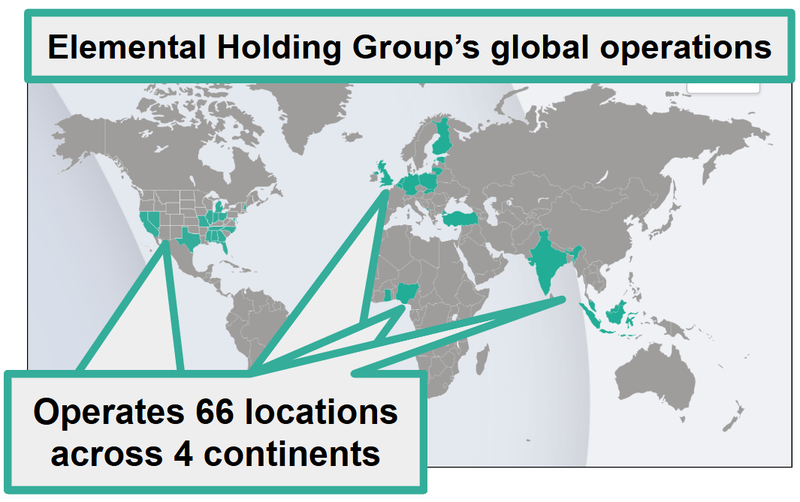
Oh and, Colt is also part of the Elemental Holding Group, which has advanced recycling operations in more than 20 countries across four continents - so rolling out in the US for rare earths could also open the door for an international expansion too:
(source)
Here is where ION’s other announcement from today comes into play
As mentioned earlier, ION is also building a pilot plant right now for its tech - primarily focused on recovering battery metals and anode-grade graphite from black mass (waste batteries).
One thing we noticed in that second announcement today was that ION had completed a review of the construction costs for the plant AND identified “enhancements” to make sure the pilot plant is suitable to process other recycling feedstocks too.
(source)
This is a signal to us that ION wants to have that plant capable of showing its tech can be scaled up across other sets of feedstock - recovering other critical minerals.
Maybe it's a chance to replicate today’s rare earth recoveries, but at a pilot plant scale?
We already know what the potential economics of rolling out ION’s tech across “e-waste hubs” could look like.
Here are the results from economic studies ION did for small modular plants - operating over 10 years: (source)
- Average annual production: ~115 t of mixed rare-earth oxides
- Post-tax NPV of ~US$7M
- Payback period: 2.6 years
- CAPEX of ~US$4.6M.
That would be from just one small modular plant - IF ION were to install a few of these at each of Colt’s facilities, then the numbers scale pretty quickly.
(source)
The big kicker here is that IF ION can replicate those recovery rates in a pilot plant, ION could attract US government funding to fund larger demonstration plants.
(OR funding to get its small modular plant rollout off the ground - with non-dilutive funding).
Interestingly, ION explicitly said in a previous quarterly that it was engaged “across multiple potential U.S grant pathways”:

(source)
And in October last year, ION participated “in a fully funded Australian Government-led delegation to the U.S. focused on critical minerals and energy security”
Including an:
“invitation-only investment and R&D roundtables in San Francisco with U.S. officials, defence representatives, and innovation leaders” (source)
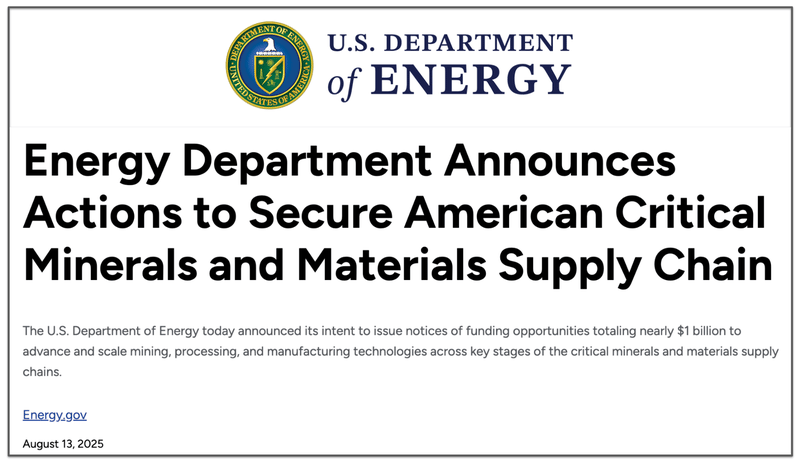
All of that while the US government, through the Department of Energy (DOE), is looking to put to work ~US$1BN in grant funding for:
“demonstration/commercial facilities”, “processing, recycling, or manufacturing critical materials”, “that are contained within commercially available batteries, such as rare earth elements”.
(Source, US Department of Energy)
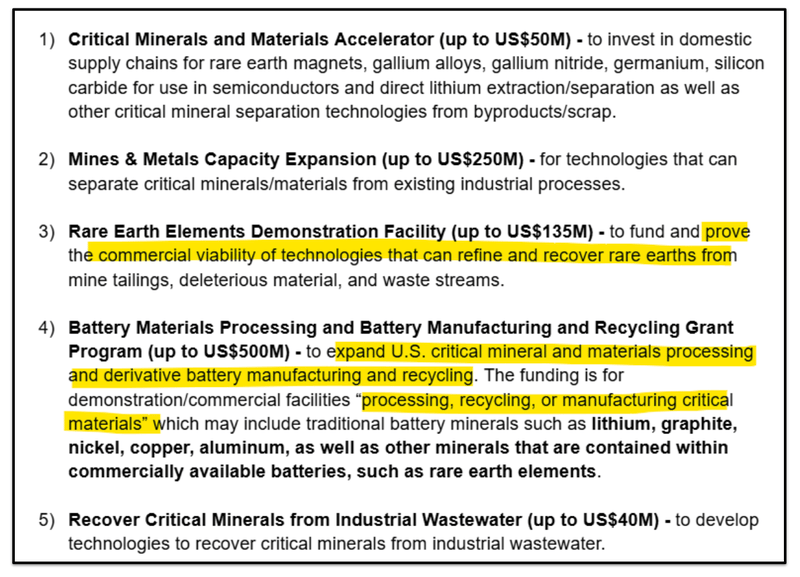
The US DoE funding was split into five separate pools of cash.
We think ION’s tech fits into pool #3 and pool #4 of the two DoE grant areas (totalling ~US$635M of the US$1BN in DOE funding pool).
(Source, US Department of Energy)
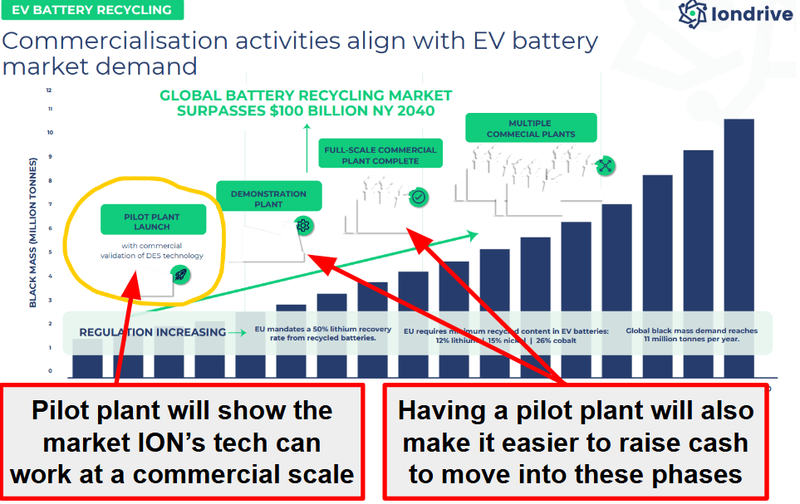
So, ION could actually be a pretty strong candidate for US government funding because it could have a pilot plant up and running that can recover critical minerals.
The pilot plant will take ION’s tech out of the lab and to a point where it can run demonstrations for potential financiers who are seeking to fund something on a larger scale.
(source)
We think critical minerals recycling tech companies could be where the next wave of capital from inside the US flows into.
And the sector more broadly will be the biggest winners from the east/west divide in critical minerals markets.
Especially within the US (and allied countries) where prices trade at different levels to the rest of the world.
What we are hoping is that ION is one of those companies that stands to benefit - either for its rare earths work or for one of the many other critical minerals its tech can recover.
ION is also tackling minerals processing
Another reason we are Invested in ION is because it's also applying its tech to minerals processing at the mine site.
ION is essentially using its tech to solve extraction issues that miners would face (getting a certain mineral out of a certain type of rock).
ION is currently focused on two markets for mineral processing:
- Cobalt - ION recently signed a binding term sheet with Latitude 66 to apply its technology on concentrates that would be produced from Latitude’s project in the EU (Finland). (Source)
- Nickel - ION is testing its tech on US sourced feedstock in the nickel industry. (Source)
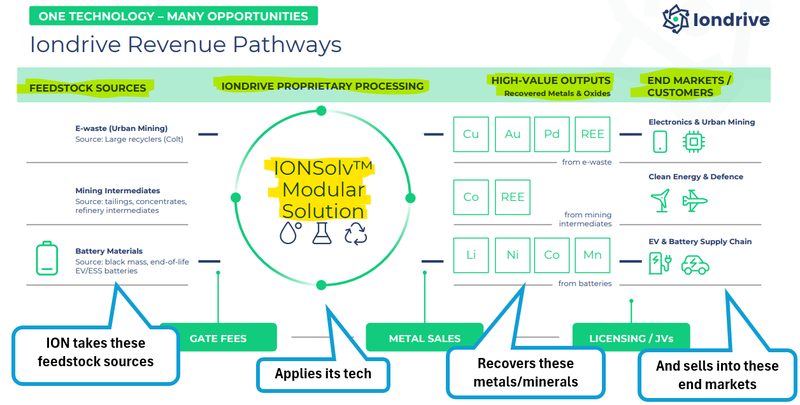
Again, we think ION’s tech can be applied across other minerals too:
(source)
Mineral processing technology can be very valuable - when it works (which is hard... which is why it's valuable...)
First because it can make projects that were not economically viable work from a financing perspective, and second, because the target market is essentially any mining/processing company in the world.
If a large mining producer is able to get a better “recovery rate” on converting its ore into a concentrate, it could mean millions of dollars of extra revenue generated - all from the same mine.
ION has a team with first hand experience in this field.
One of ION’s directors Hugo Schumann was the former CFO of Jetti Resources, which developed copper extraction tech.
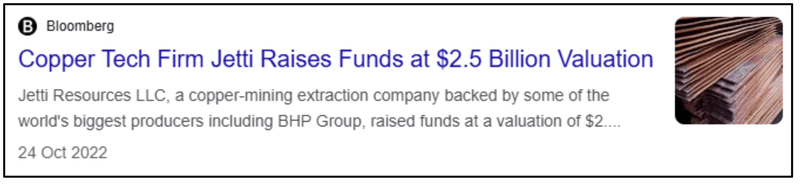
Jetti went on to raise Series C funding of US$50M and then Series D funding of US$160M which valued the company at US$2.5BN in 2022.
Jetti was backed by top industry investors like Freeport, BHP, Mitsubishi and Blackrock - proof of the maturity of the minerals processing industry relative to the recycling industry.
(Source)
The way we see it, ION only has to be successful in one metal/mineral, in one industry (processing or recycling).
Commercialising its tech in just one part of either industry could be a company maker for ION.
And then ION can use that commercialised tech as a springboard into other markets.
It should also de-risk ION’s tech from a market/investor facing side - which could mean the business trades at a completely different valuation.
But of course, finding that ‘company making success’ can be difficult, there’s no guarantee that ION will get there. There’s plenty of hurdles ahead.
The question is which one comes to the front and becomes that has the potential to become a company maker?
Our ION Big Bet:
“ION re-rates to a +$150M market cap on successful large-scale production of commercial quantities of battery materials through its recycling process and/or by securing important partnerships in the recycling industry.”
NOTE: our “Big Bet” is what we HOPE the ultimate success scenario looks like for this particular Investment over the long term (3+ years). There is no guarantee that our Big Bet will ever come true. There is a lot of work to be done, many risks involved, including technology risk, scale up risk, regulatory risk and development risk - just some of which we list in our ION Investment Memo.
Success will require a significant amount of luck. Past performance is not an indicator of future performance.
What’s next for ION?
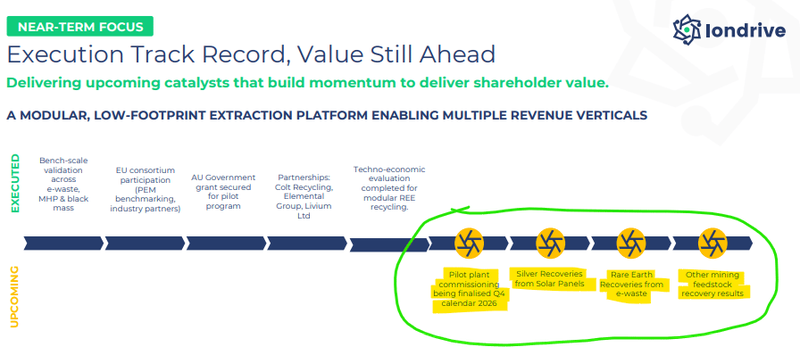
ION had a new updated presentation out today - here is the key slide on what’s next:
(check out the full presentation here)
Below are the next bunch of catalysts that we think could re-rate ION’s valuation from where it is today.
But before we dive in, let's be clear - there’s no guarantee ION re-rates in the future, it's a high risk, small cap stock.
OK here’s what could happen that could see a re-rate:
1. US rare earths partnership (possibly the most market topical right now)
ION will now test its tech on e-waste feedstock to see if it can commercially recover rare earths. Today’s announcement showed it can recover it from end of life magnets which is a positive signal it could work on things like e-waste.
2. Pilot plant build commissioning
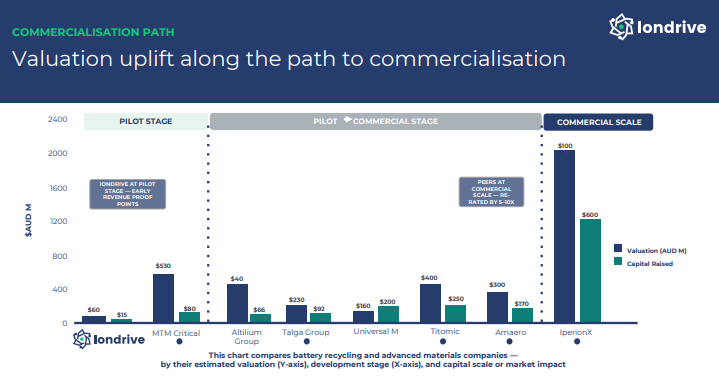
We think this will be a big inflection point for ION, because it takes ION’s tech out of the lab and into a pilot plant. ION expects to have the plant commissioned by Q4 2026. Here is a handy slide showing how valuations re-rate when tech goes out of the lab and into pilot plants:
(source)
Again, to be clear, ION is a small cap speculative investment, there’s no guarantee its valuation will rise in the future.
3. ION’s mineral processing tech gets de-risked
Any news across the multiple mineral processing testworks ION is doing right now could trigger a re-rate in ION’s share price - especially if it’s in a material that the market is looking for exposure to (ION is testing cobalt and nickel to begin with and then hopefully many more critical minerals).
4. Application into new markets
ION is aiming to recover copper, gold, silver, osmium and rare earth elements from e-waste (Printed Circuit Boards). Results from these tests could come at arbitrary times. We could see the market re-rate ION if the results are positive.
Again - these are just potential re-rate catalysts - there’s no guarantee that A. the company achieves them, and B. even if it does, the market may not care.
What are the risks?
The main risk for ION in the short term is “Scale up / Technology risk”.
Now that ION is moving into new markets, there is no guarantee ION’s tech is able to produce the recovery rates needed for its tech to be deemed ‘commercially viable’.
There is also no guarantee that ION is able to replicate its bench scale performance in a larger pilot plant setting.
IF the market starts to price in expectations of positive results and ION is unable to deliver it could impact the company’s share price in a negative way.
Scale up / technology risk
There is no guarantee that the Pilot Plant is able to replicate the results from the large lab study. Also “feedstock reliability” both in terms of supply and consistency of material is a big risk for ION to scale up its operations.
Source: “What could go wrong” - ION Investment Memo 03 December 2024
We list more risks to our ION Investment in our ION Investment Memo here.
Other risks
Like any early-stage minerals technology company, ION carries significant risk, here we aim to identify a few more risks.
The company is currently working toward securing various US government grants, but these processes are highly competitive and there is no guarantee that ION will be successful in receiving this funding.
If grant funding does not materialise, the company may need to raise additional capital from the market to fund its pilot plant and ongoing R&D, which would likely result in shareholder dilution.
While the lab results for rare earth recoveries are very high, the transition from a controlled lab environment to a continuous pilot plant operation often uncovers unforeseen engineering challenges.
There is also a commercialisation risk, as even successful pilot trials do not guarantee that partners like Colt Recycling or Latitude 66 will commit to a full-scale, revenue-generating rollout of the technology.
Finally, ION’s economic model relies on the market price of the minerals it recovers; a significant sustained drop in rare earth or battery metal prices could make recycling less attractive compared to traditional mining.
Investors should consider these risks carefully and seek professional advice tailored to their personal circumstances before investing.
Our ION Investment Memo
Our Investment Memo provides a short, high-level summary of our reasons for Investing.
We use this memo to track the progress of all our Investments over time.
Click here to read our ION Investment Memo where you will find:
- What does ION do?
- The macro theme for ION
- Our ION Big Bet
- What we want to see ION achieve
- Why we are Invested in ION
- The key risks to our Investment Thesis
- Our Investment Plan
General Information Only
This material has been prepared by StocksDigital. StocksDigital is an authorised representative (CAR 000433913) of 62 Consulting Pty Limited (ABN 88 664 809 303) (AFSL 548573).
This material is general advice only and is not an offer for the purchase or sale of any financial product or service. The material is not intended to provide you with personal financial or tax advice and does not take into account your personal objectives, financial situation or needs. Although we believe that the material is correct, no warranty of accuracy, reliability or completeness is given, except for liability under statute which cannot be excluded. Please note that past performance may not be indicative of future performance and that no guarantee of performance, the return of capital or a particular rate of return is given by 62C, StocksDigital, any of their related body corporates or any other person. To the maximum extent possible, 62C, StocksDigital, their related body corporates or any other person do not accept any liability for any statement in this material.
Conflicts of Interest Notice
S3 and its associated entities may hold investments in companies featured in its articles, including through being paid in the securities of the companies we provide commentary on. We disclose the securities held in relation to a particular company that we provide commentary on. Refer to our Disclosure Policy for information on our self-imposed trading blackouts, hold conditions and de-risking (sell conditions) which seek to mitigate against any potential conflicts of interest.
Publication Notice and Disclaimer
The information contained in this article is current as at the publication date. At the time of publishing, the information contained in this article is based on sources which are available in the public domain that we consider to be reliable, and our own analysis of those sources. The views of the author may not reflect the views of the AFSL holder. Any decision by you to purchase securities in the companies featured in this article should be done so after you have sought your own independent professional advice regarding this information and made your own inquiries as to the validity of any information in this article.
Any forward-looking statements contained in this article are not guarantees or predictions of future performance, and involve known and unknown risks, uncertainties and other factors, many of which are beyond our control, and which may cause actual results or performance of companies featured to differ materially from those expressed in the statements contained in this article. S3 cannot and does not give any assurance that the results or performance expressed or implied by any forward-looking statements contained in this article will actually occur and readers are cautioned not to put undue reliance on forward-looking statements.
This article may include references to our past investing performance. Past performance is not a reliable indicator of our future investing performance.