ILA: Bio-terrorism defence and stopping virus outbreaks
Disclosure: S3 Consortium Pty Ltd (the Company) and Associated Entities own 3,459,256 ILA Shares at the time of publishing this article. The Company has been engaged by ILA to share our commentary on the progress of our Investment in ILA over time. This information is general in nature about a speculative investment and does not constitute personal advice. It does not consider your objectives, financial situation, or needs. Any forward-looking statements are uncertain and not a guaranteed outcome.
The US midterms are finally out of the way.
Global markets are roaring up overnight.
(so are most small ASX stocks, having just watched the first couple of minutes of trading this morning)
Hopefully this is the start of the bounceback for a lot of way oversold (in our opinion) small ASX stocks.
Especially those stocks that have been beaten down from the broader market sentiment - despite having made huge amounts of progress AND are close to announcing a major share price catalyst or two.
Like our 2025 Biotech Pick of The Year, Island Pharmaceuticals (ASX:ILA) - who is developing an antiviral drug for bio-terror defence.
This drug could be stockpiled by governments to counter bioterrorism and / or used to stop major global virus outbreaks.
Like we are seeing now with the Ebola outbreak in Africa OR for weaponisable viruses like Marburg.
ILA has made huge amounts of progress over the last 18 months. The share price was nicely moving up...
but then it got caught up in the “indiscriminate small cap sell off” of the last ~2 months:
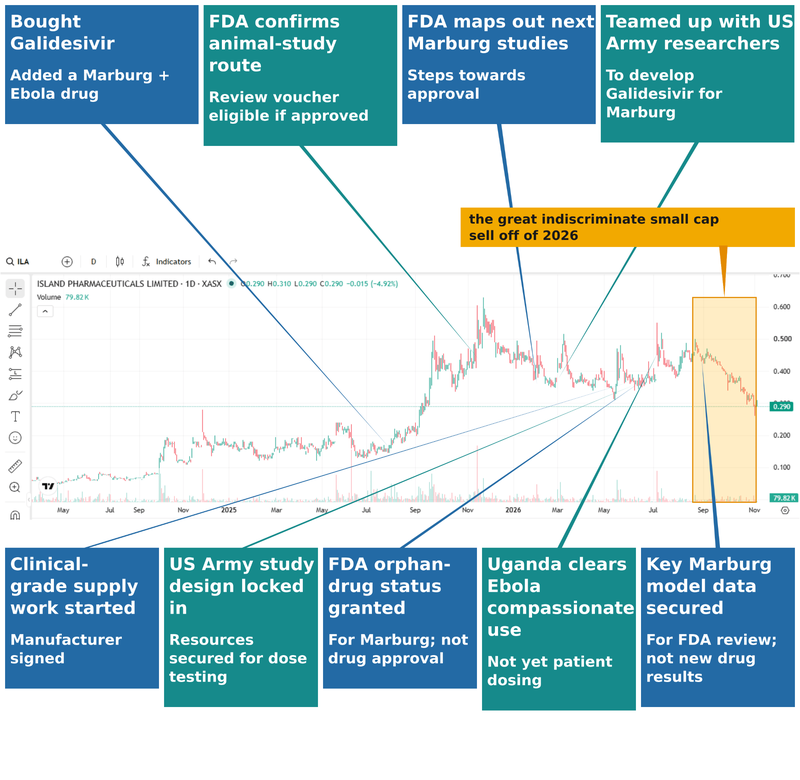
The past performance is not and should not be taken as an indication of future performance. Caution should be exercised in assessing past performance. This product, like all other financial products, is subject to market forces and unpredictable events that may adversely affect future performance.
ILA acquired the drug called Galidesivir in 2025 - and the share price started going up.
(past performance is not an indicator of future performance)
Over 10 years ago, US government agencies deployed over US$70M in funding to develop and test ILA’s drug against multiple viral diseases.
Galidesivir ALREADY has Phase 1 safety data (in humans) and effectiveness (in animals) against Ebola, Marburg and also has lab activity against 20+ other viral diseases.
ILA decided to develop the drug for the Marburg virus first.
(The Soviet Union developed the Marburg virus as part of its massive, clandestine biological weapons program - Marburg virus was favoured over Ebola because Marburg proved more stable and adaptable for weaponisation and aerosol delivery.)
There is no licensed or FDA-approved specific antiviral drug or vaccine for Marburg virus disease.
The US Strategic National Stockpile has no stockpile of treatment against this virus.
ILA is working to develop the treatment and sell stockpiles to the US Strategic National Stockpile - a contract that could be worth hundreds of millions of dollars.
ILA is working with a US Army research lab to conduct Non Human Primate clinical trials to determine the effectiveness of its drug.
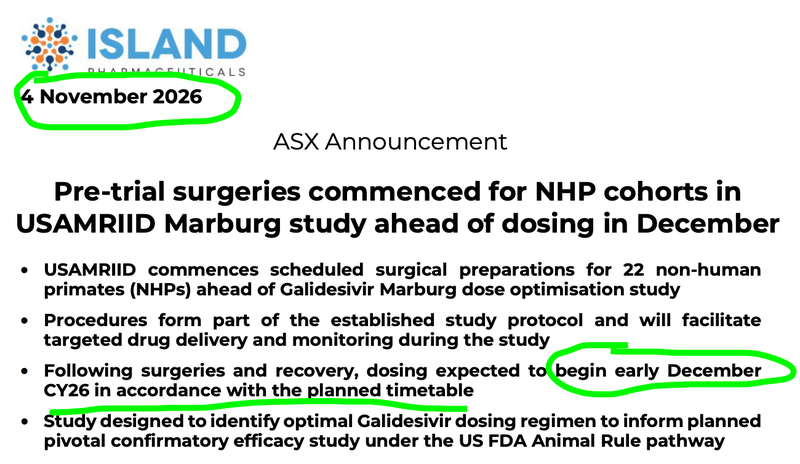
Yesterday, ILA announced its primates are just about ready to start stage one of the two stage animal studies - the precursor for FDA approvals under the "Animal Rule" process.
(Animal Rule approvals are allowed when diseases are so dangerous that running multi-year human clinical trials is considered unethical - so the FDA can grant approvals on animal data alone)
🎓 We have covered the Animal Rule process in detail before here: The journey for ILA to get a drug to market in under 12 months
So ILA has confirmed its dose optimisation study for Non Human Primates is locked in to start in early December...
... this is a 28 day study - so by doing the maths, we should be getting top line data in early January.
(source)
As we said above, ILA chose Marburg first because the virus is the only Category A bioterrorism threat (the highest level) with NO current vaccine or FDA-approved treatment.
There is no approved treatment and hence no biodefence treatment stockpile, and approval can be fast-tracked with the FDA.
Enter Ebola...
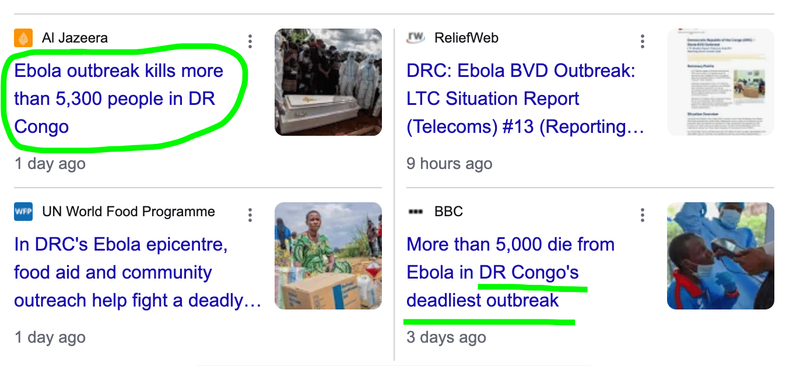
While ILA was busy working up the Marburg virus trial for its Galidesivir drug earlier this year, on 15th May 2026 a massive Ebola outbreak started in Central Africa:
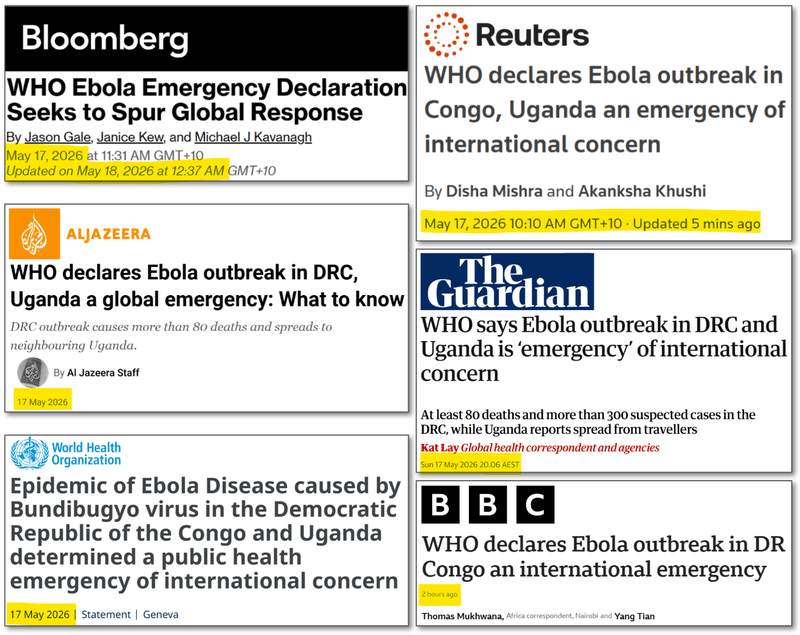
By October this outbreak had reached over 10,000 cases and 5,000 deaths, making it the second-biggest on record, behind West Africa’s 2014 to 16 outbreak with roughly 28,600 cases and 11,300 deaths.
There's been close to US$1BN in orders for ebola drugs inside the last three years.
Nine days ago the US government ordered US$270M of one drug.
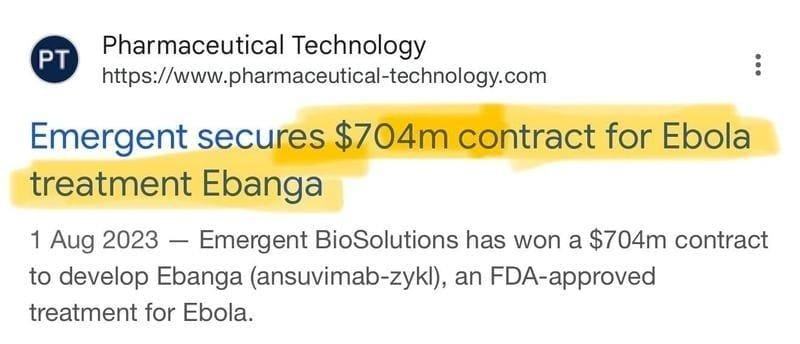
And three years ago another contract for US$704M again just for ebola.
Neither of those drugs works against the current strain of ebola that is spreading in Central Africa.
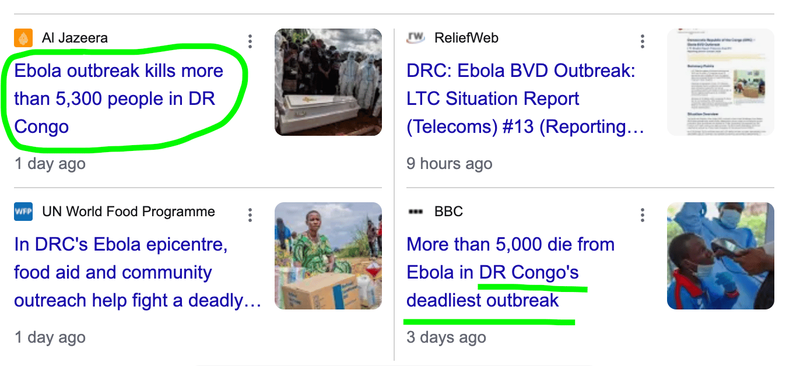
Which has caused the DRC's worst outbreak ever - and the second worst on record anywhere - killing around half the people it infects:
(source)
ILA is weeks away from sending its drug to Uganda for use against the current ebola outbreak’s strain (bundibugyo).
(under a WHO-recognised emergency-use program - funded by the Ugandan government and its partners)
Partners = The ACCEPT-Africa Consortium and the Infectious Diseases Institute at Makerere University.
We did a quick Google search of who is part of that “ACCEPT-Africa Consortium” and saw:
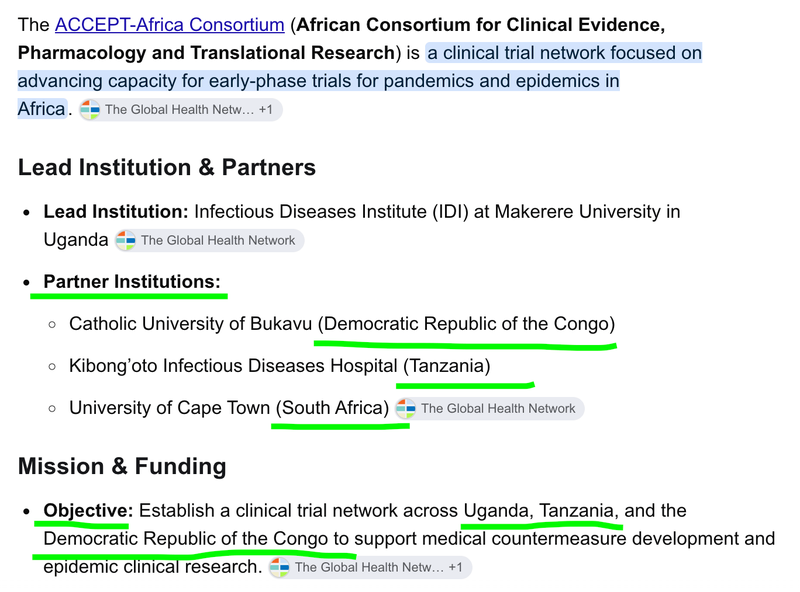
So the work that gets done with ILA’s drug in Uganda, could also be part of a strategy to roll it out across Tanzania OR the DRC... where the outbreak is currently out of control...
ILA’s drug will be one of only four drugs anywhere in the world lined up for use against the current ebola outbreak strain.
The other three are Mapp Biopharmaceutical, US$99BN Regeneron and US$216BN Gilead Sciences.
ILA expects to have its drug in Uganda before the end of this year, and real human data between now and Q2 CY27.
(hopefully unlocking FDA fast tracked approvals and mega orders like the ones we mentioned earlier given how catastrophic the outbreak has been so far)
Now back to those Marburg trials...
At the same time, ILA is also developing its drug for Marburg disease.
So ILA is weeks away from starting the first stage of what is the equivalent of a Phase 3 trial...
AND ILA says topline results remain on track for this quarter.
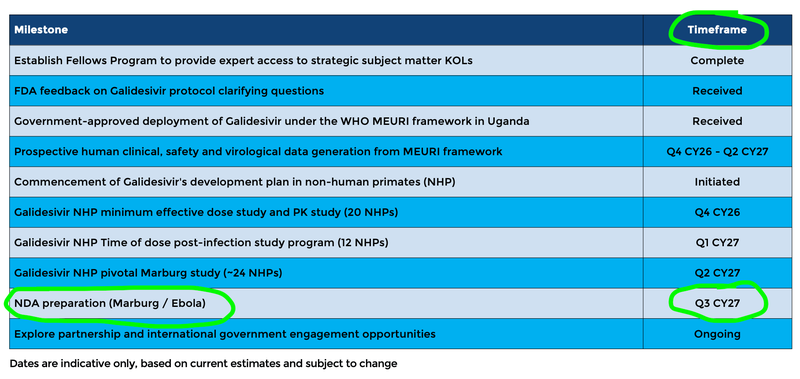
According to ILA’s most recent presentation - ILA expects to be ready for a NDA’s (New Drug Applications) for marburg and ebola by Q3-2027.
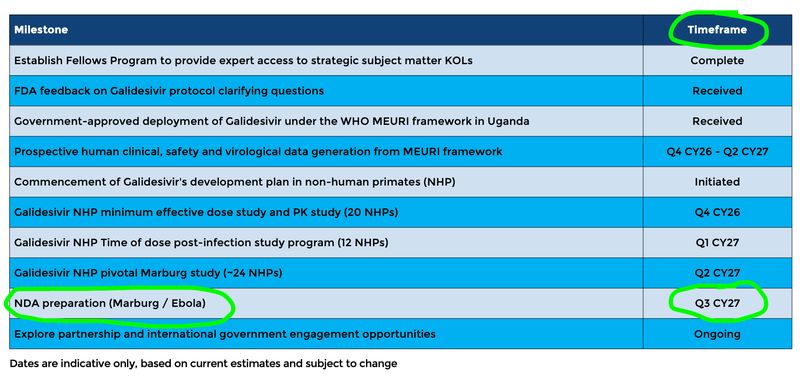
Which means, inside the next ~12 months, $85M capped ILA could have two shots (Ebola and Marburg) at:
- A tradeable Priority Review Voucher (ebola and marburg are both eligible for these) - sort of like a “thank you” from the FDA giving drug developers tradeable fast-track vouchers - three of which have recently sold for US$180M, US$200M and US$205M.
- AND becoming a candidate for those multi hundred million dollar stockpiling contracts all over the world - stockpiling ILA’s drug just in case an outbreak happens in any particular country, like ebola is right now.
IF approvals come in for either indication just the PRV alone would be multiples of ILA’s current market cap.
So where is ILA at with its Ebola drug?
At the moment there is animal data showing ILA's drug was 100% effective against ebola within the first 48 hours.
(the drug also has positive Phase 1 clinical human safety data)

(source)
We think ILA's Ebola drug is a lot closer to approvals than the market is pricing in right now, because there is a precedent for the playbook ILA is running.
During the last ebola epidemic in 2018-19 - "Ebanga" was tested in the middle of a live outbreak. (source)
People who took that drug died ~35% of the time, patients who did NOT take it died 49% of the time. (source)
So a ~14% point drop in death rate was enough to convince the US government to give the drug FDA approvals in 2020. (source)
And it was enough to hand the company a stockpiling contract worth up to US$704M from the U.S. Biomedical Advanced Research and Development Authority (BARDA).
(stockpiling for the next outbreak).
(source)
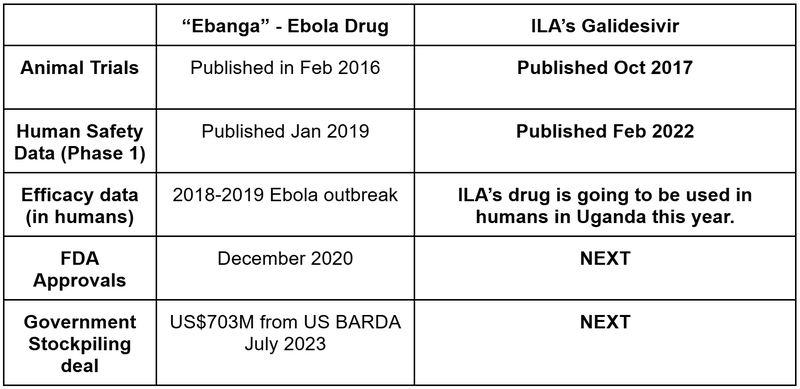
Here is where ILA’s drug is relative to the timelines leading up to that US$704M contract for Ebanga:
(sources - Ebanga - (source)(source)(source)(source)(source)
(sources - Galidesivir - (source)(source)
From human data to FDA approvals it took ~12-18 months for FDA approvals and then ~3 years for a big stockpiling contract.
In July, ILA secured government, regulatory and ethics approvals to use its drug in Bundibugyo Ebola patients in Uganda.
Part of an emergency use pathway that allows an unregistered drug to be used in an outbreak when nothing approved exists.
ILA started another batch of manufacturing on the 1st of October with ~700 to 800 treatment courses of its drug ready and expected to be shipped to Africa before the end of this year.
ILA's own guidance has prospective human data being generated across Q4 CY26 to Q2 CY27.
(Fingers crossed it helps - and if it does, we suspect it could be quickly rolled out across some of those consortium partnership countries)
So inside the next 3-6 months we could have REAL HUMAN clinical data for ILA’s ebola drug.
(Fingers crossed it’s at least a ~14% point drop in the death rate - the bar that was set by Ebanga).
ILA’s drug is also being advanced for Marburg disease
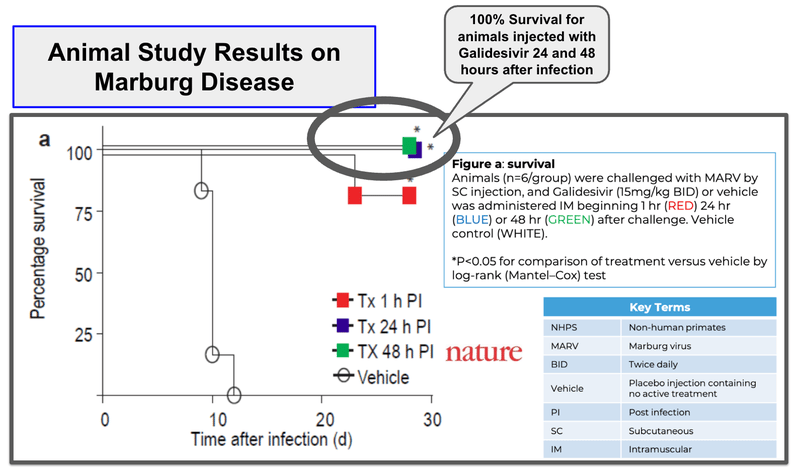
ILA’s drug has also shown 100% survival rates against Marburg in animals 24-48 hours after infection, relative to placebo, where survival rates are 0%.
Overall, ILA’s drug has shown survival rates of up to 94% versus 0% survival in placebo:
(Source)
As mentioned earlier Marburg is the only Category A bioterrorism threat (the highest level) with NO current vaccine or FDA-approved treatment - which also makes it the biggest biowarfare risk.
That also means the US has no stockpiles of any Marburg treatments or vaccines.
Making an FDA-approved Marburg drug a strong candidate for US government stockpile contracts.
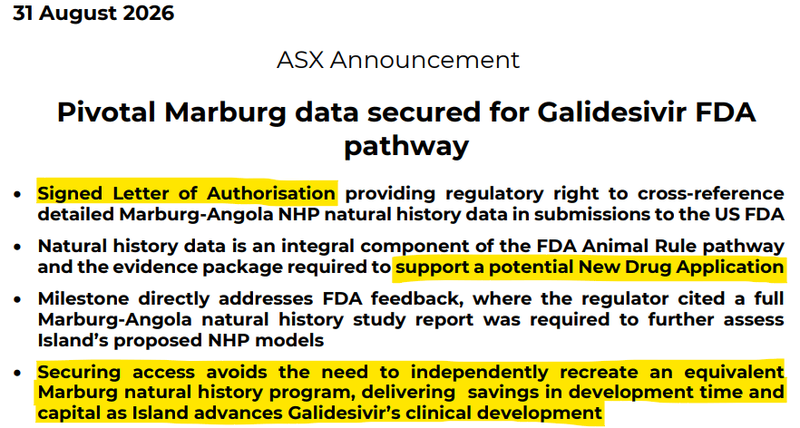
Back in August, ILA secured a signed Letter of Authorisation (LOA) giving it the regulatory right to cross-reference a detailed Marburg-Angola natural history study in its FDA submissions.
(source)
That LOA de-risks ILA’s approvals process massively - because without that natural history study, ILA would have nothing to compare its animal data to.
Now, ILA doesn't have to go and run an entire natural history study itself, instead it just needs to do the studies the FDA has already given guidance on.
And then submit its data to the FDA together with that natural history study.
(A big part of the reason why we made ILA our Biotech Pick of The Year back in November 2025 was because ILA has received confirmation that it is eligible for the Animal Rule pathway)
ILA now needs to complete the following two step trial process:
- The first stage is an optimisation study - to work out the optimal dose and when to administer that dose
- The second pivotal confirmatory study will follow right after - The pivotal study will be when we see how effective ILA’s Marburg drug really is. Fingers crossed it improves on the previous studies, which had survival rates of up to 94%.
For stage 1 ILA has already locked in:
- With USAMRIID (US Army Medical Research Institute of Infectious Diseases) - giving ILA’s drug 24-48 hours after infection.
- With Texas Biomedical Research Institute - “after clinical signs appear” (typically three to five days post-exposure).
The first of those is supposed to start in "early December 2026".
ILA says topline from USAMRIID remains on track for this quarter, with Texas Biomed's infection and treatment phase targeted for Q1 CY27.
Remember - we already know there is animal data showing 100% survival rates when administered 24-48 hours after - so hopefully we see that repeated...
Then it will be all about running the clinical validation study - ahead of an FDA submission.
ILA expects to be in a position where it is ready for an “NDA” (New Drug Application) for Marburg also in Q3-2027:
What re-rates ILA between now and the two “New Drug Applications” in Q3-2027?
We think it will be the trial data across both indications.
And according to ILA’s guidance there are a fair few catalysts dropping between now and the NDA’s:
- THIS QUARTER - USAMRIID dose optimisation study, dosing “begins early December” and ILA’s CEO was quoted yesterday “results remaining on track for this quarter.” (source)
- Q1 CY27 - The second dose optimisation study and its results (Texas Biomed)
- In Q2 CY27 - Human data from ebola program in Uganda
- Also in Q2 CY27 - Data from phase two of the marburg animal studies (pivotal study)
- Finally - Q3 CY27 - New Drug applications for both Marburg/Ebola.
As mentioned throughout today’s note - ebola and Marburg are eligible for Priority Review Vouchers and stockpiling contracts:
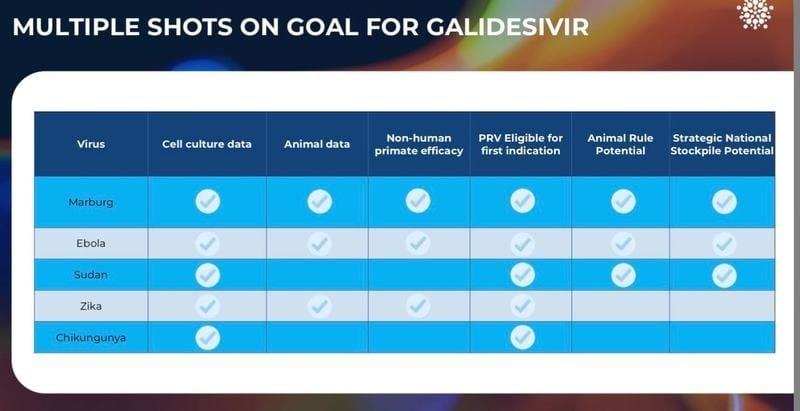
(source)
Then, IF any one of those two are approved we could see ILA land:
1) A Priority Review Voucher (PRV)
Filovirus diseases - which covers both Ebola and Marburg - were added to the FDA’s tropical disease PRV program back in December 2014. (source)
Meaning an approved drug for either earns its developer a PRV (Priority Review Voucher), this entitles the PRV holder to have a drug application reviewed within 6 months. (source)
PRVs matter because they are TRADEABLE - companies can sell them for cash.
The three most recent PRV sales went for US$180M, US$200M and US$205M.
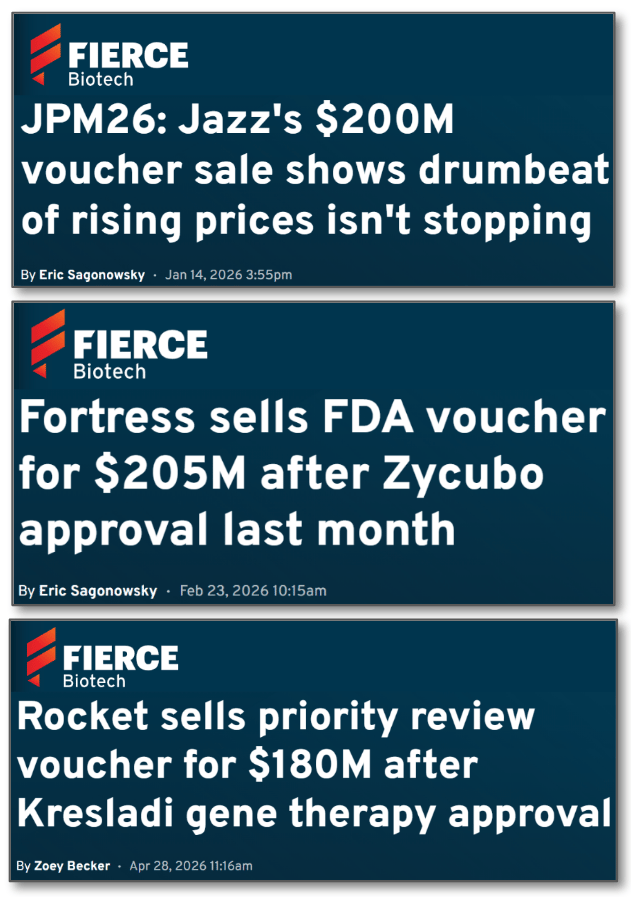
2) Eligibility for US government stockpiling contracts
Which range between US$100M to US$1.2BN in lifetime sales (source)
The table below shows existing stockpiling deals the US government has done for other Category A bioterror threats:
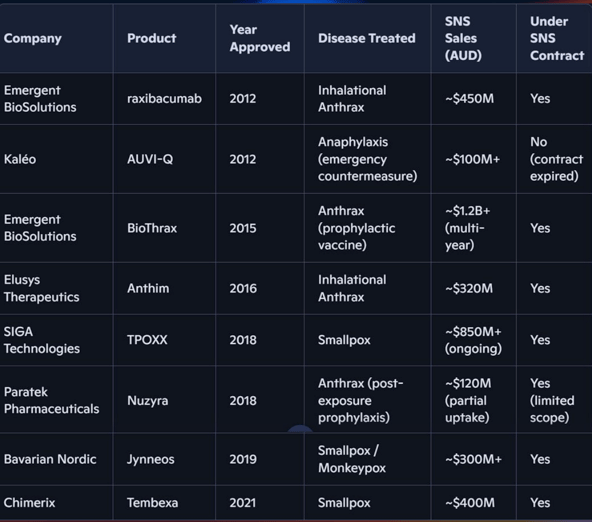
(source)
The US tries to maintain stockpiles of treatments against all kinds of nasty diseases that can be weaponised.
But it has nothing to counter Marburg disease.
Marburg disease is the only ‘Category A’ bioterror threat gap that remains unfilled.
We Invested in ILA as we think it has a very good chance of filling this gap, and it can be paid handsomely for it.
The US government has already shown it's willing to spend hundreds of billions on a critical military minerals stockpile.
In these times you can imagine how much they could be willing to spend to protect against biological weapons - the threat its own intelligence says is coming from Iran - the country it's currently at war with.
Right now ILA is capped at ~$85M - multiples less than the value of a single PRV...
Ultimately, we are Invested in ILA to see it achieve our Big Bet as follows:
Our Big Bet for ILA
“ILA re-rates to a $500M+ market cap by developing its dengue fever or Galidesivir drug”.
NOTE: our “Big Bet” is what we HOPE the ultimate success scenario looks like for this particular Investment over the long term (3+ years). The scenario is speculative and does not represent a valuation or forecast. There is no guarantee that our Big Bet will ever come true. There is a lot of work to be done, many risks involved - just some of which we list in our ILA Investment Memo.
Success will require a significant amount of luck. Past performance is not an indicator of future performance.
What's next for ILA?
🔄 Ebola (Uganda deployment):
- ✅ Government + regulatory approvals for compassionate use in Uganda
- 🔄 Drug supply / manufacturing scale-up (additional supply commissioned) (source)
- 🔲 First patients dosed (due within CY2026) - (source)
- 🔲 First human efficacy, safety and virological data from the field
- 🔲 Any expansion of deployment beyond Uganda (DRC?)
🔄 Animal rule approvals process for Marburg disease
Here are the two next major milestones for ILA’s Galidesivir drug:
- Stage 1 - Optimisation study - Working out the optimal dose and the best time to administer it.
- Stage 2 - Pivotal confirmatory study - The big one - this will determine how effective Galidesivir really is. Fingers crossed it improves on that 94% survival rate.
Here are the milestones we are tracking for the trials:
Stage 1 - Optimisation study:
- ✅FDA confirmed Animal Rule eligibility
- ✅ FDA confirmed staged approach for approvals
- ✅ CRADA (Cooperative Research and Development Agreement) signed with USAMRIID (US Army’s premier infectious disease research institute) and Geneva Foundation (highly influential non-profit that manages nearly US$383M in military medical research funding)
- 🔄 Optimisation study (commencing soon - Q4-2026)
Stage 2 - Pivotal study:
- 🔲 Pivotal study design completed
- 🔲 Pivotal study commences
- 🔲 Pivotal study results
- 🔲 FDA submission (NDA)
Here is an indicative timeline on when to expect all of the above from ILA’s recent presentation:
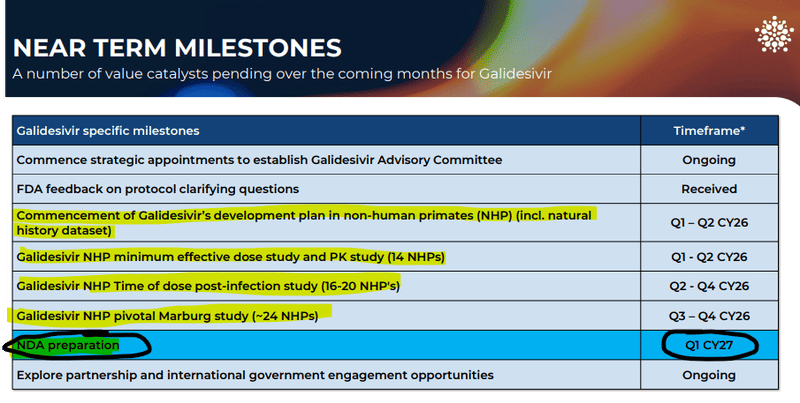
(source)
What are the risks?
The primary risk for ILA now is “clinical trial risk”.
ILA de-risked its drug from a regulatory perspective, getting approved for the Animal Rule process (for Marburg).
But there is no guarantee that the dose optimisation studies deliver results strong enough to warrant proceeding with a validation study.
Even then, there is no guarantee the validation study delivers results that the FDA deems suitable for FDA approvals.
For ebola, there is also no guarantee the in human trial data is sufficient enough to get FDA approvals.
ILA may need to run additional clinical trials, which could have significant cost overruns and time delays.
Negative clinical trial results could hurt the ILA share price.
Source: “What could go wrong” - ILA Investment Memo 21 May 2025
Other risks
Like any small-cap biotechnology company, ILA carries significant risk, here we aim to identify a few more risks.
ILA held ~$7.8M in cash at 30 September and has ~$3.2M of in-the-money options that could add to that. With large R&D costs expected until its animal studies are complete, the company may still need to raise further capital, which could lead to dilution for existing shareholders.
While ILA's approvals in Uganda position its drug in the region should cases return or the outbreak spread further, the timing of human data now depends on where and when patients can be treated. Any expansion into neighbouring countries like the DRC would require further approvals, which could delay that data.
Real-world use in an outbreak gives ILA a rare chance to generate human data, but it is not the same as a controlled clinical trial. There is no guarantee the FDA will consider this data strong enough to support approvals on its own.
ILA's drug is one of only four lined up against the current Ebola strain, which shows how few options exist. However, it sits alongside drugs from Mapp, Regeneron and Gilead, and larger, better-funded competitors could reach approval or secure stockpiling contracts first.
ILA is running two complementary dose optimisation studies, testing Galidesivir both early after infection and after symptoms appear. If the results show the drug works best only when given early, a narrow treatment window could limit its real-world use, as Marburg is often diagnosed later.
ILA has laid out a clear run of catalysts through to its planned New Drug Application in Q3 CY27. Each one depends on the one before it, with the pivotal study design relying on the dose optimisation results, so any delays at USAMRIID or Texas Biomed could push that timeline back.
Investors should consider these risks carefully and seek professional advice tailored to their personal circumstances before investing.
Our ILA Investment Memo
You can read our ILA Investment Memo here.
We use this memo to track the progress of all our Investments over time.
Our ILA Investment Memo covers:
- What does ILA do?
- The macro theme for ILA
- Our ILA Big Bet
- What we want to see ILA achieve
- Why we are Invested in ILA
- The key risks to our Investment Thesis
- Our Investment Plan
General Information Only
This material has been prepared by StocksDigital. StocksDigital is an authorised representative (CAR 000433913) of 62 Consulting Pty Limited (ABN 88 664 809 303) (AFSL 548573).
This material is general advice only and is not an offer for the purchase or sale of any financial product or service. The material is not intended to provide you with personal financial or tax advice and does not take into account your personal objectives, financial situation or needs. Although we believe that the material is correct, no warranty of accuracy, reliability or completeness is given, except for liability under statute which cannot be excluded. Please note that past performance may not be indicative of future performance and that no guarantee of performance, the return of capital or a particular rate of return is given by 62C, StocksDigital, any of their related body corporates or any other person. To the maximum extent possible, 62C, StocksDigital, their related body corporates or any other person do not accept any liability for any statement in this material.
Conflicts of Interest Notice
S3 and its associated entities may hold investments in companies featured in its articles, including through being paid in the securities of the companies we provide commentary on. We disclose the securities held in relation to a particular company that we provide commentary on. Refer to our Disclosure Policy for information on our self-imposed trading blackouts, hold conditions and de-risking (sell conditions) which seek to mitigate against any potential conflicts of interest.
Publication Notice and Disclaimer
The information contained in this article is current as at the publication date. At the time of publishing, the information contained in this article is based on sources which are available in the public domain that we consider to be reliable, and our own analysis of those sources. The views of the author may not reflect the views of the AFSL holder. Any decision by you to purchase securities in the companies featured in this article should be done so after you have sought your own independent professional advice regarding this information and made your own inquiries as to the validity of any information in this article.
Any forward-looking statements contained in this article are not guarantees or predictions of future performance, and involve known and unknown risks, uncertainties and other factors, many of which are beyond our control, and which may cause actual results or performance of companies featured to differ materially from those expressed in the statements contained in this article. S3 cannot and does not give any assurance that the results or performance expressed or implied by any forward-looking statements contained in this article will actually occur and readers are cautioned not to put undue reliance on forward-looking statements.
This article may include references to our past investing performance. Past performance is not a reliable indicator of our future investing performance.